UNEP funds Northern Corridor green freight push from Mombasa port
Key points
- NCTTCA signed UNEP support (~$200,000 / about Sh25.8m) for the Northern Corridor Green Freight Strategy 2030.
- Uses: greenhouse-gas tracking, Port of Mombasa operations electrification study, and programmes to raise women’s participation in freight.
- Wider partner pot already about $1.6m (Sh207m), including GIZ and the Kühne Climate Centre.
- Corridor moves an estimated 75,000 tonnes daily on 2,000–3,000 trucks; only eight heavy-duty electric trucks are in pilot use.
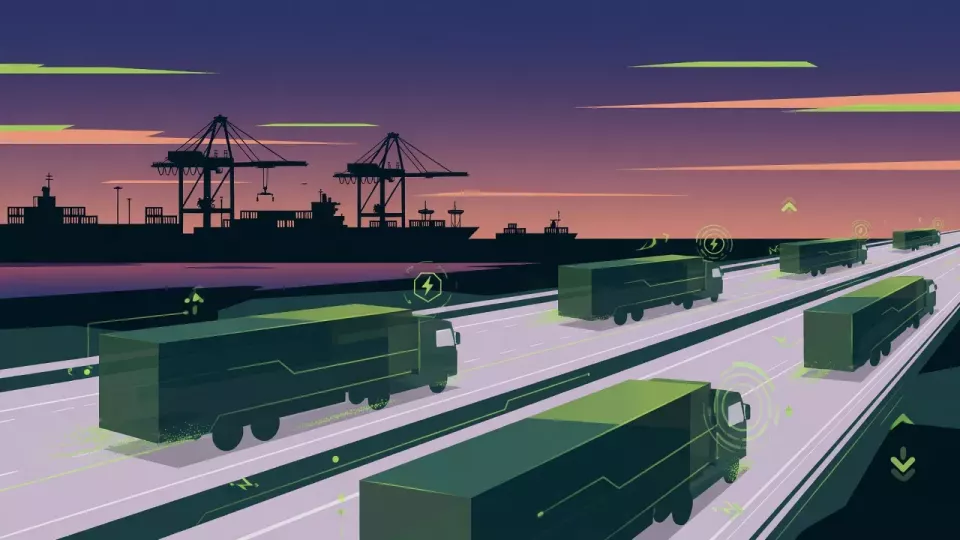
East Africa’s busiest land bridge to the sea is also one of its largest diesel pipes. The Northern Corridor Transit and Transport Coordination Authority (NCTTCA) has secured fresh United Nations Environment Programme funding to push cleaner freight — starting with data, a port electrification study and gender inclusion work rather than overnight fleet replacement, The Standard reported from the Nairobi signing.
UNEP’s latest contribution is about $200,000 (Sh25.8 million), while the green-freight programme has already mobilised roughly $1.6 million (Sh207 million) from partners including Germany’s GIZ and the Kühne Climate Centre. The corridor links the Port of Mombasa with Kenya, Uganda, Rwanda, Burundi, South Sudan and the Democratic Republic of Congo (also serving Ethiopia and Somalia traffic patterns), moving an estimated 75,000 tonnes of cargo daily on 2,000 to 3,000 trucks.
Port as “captured fleet” and a long road to 2030
NCTTCA Executive Secretary John Deng said the authority’s role has grown beyond trade facilitation to environmental sustainability after four decades of logistics growth. “Today thousands of trucks use the corridor every day, emitting greenhouse gases into the atmosphere,” he said, calling for institutional foundations that protect environment, business and economies. A flagship funded piece is a feasibility study on electrifying truck movements and cargo-handling equipment inside the Port of Mombasa. UNEP’s Rob de Jong described ports as a “captured fleet” environment where vehicles operate in a controlled space, making charging infrastructure easier to deploy than on open highways.
The agreement also finances updating greenhouse-gas emissions data in Kenya, Uganda and Rwanda and extending baselines to Burundi, DRC and South Sudan. Strategy targets include making the regional freight sector electric-vehicle-ready by 2030, aiming toward net-zero by 2050, and cutting freight-related emissions by about 10 per cent annually through monitoring, cleaner tech and policy. Deng cautioned that the transition is early: only eight heavy-duty electric trucks currently run as corridor pilots. “Commercialisation has to make economic sense,” he said. A gender-inclusion framework will map barriers limiting women’s participation in freight. Environment desk: Environment. Verified funding sizes, cargo volumes, pilot truck count and strategy goals from The Standard; scale-up still depends on commercial EV economics and further investment beyond seed studies.
Based on The Standard reporting of the NCTTCA–UNEP funding agreement and Green Freight Strategy 2030 framing. Partner contracts and technical studies control final programme scope.