list of registered tea manufacturers in kenya
Agriculture

List of Registered Tea Manufacturers in Kenya.

Tea is the main cash crop grown in Kenya and earns the country a lot of money. There are various factories in Kenya that supply Kenya with tea for both local use and foreign exchange. These factories are registered by Tea Board of Kenya.

Therefore the registered tea factories in Kenya include:

  • Arroket factory – Sotik Tea Company limited.

  • Chagaik factory – UTK limited.

  • Changana factory – JFK limited.

  • Changoi tea factory – WTK limited.

  • Chebut tea Factory Company limited.

  • Chelal tea.

  • Chemoni factory – EPK limited.

  • Chinga tea Factory Company limited.

  • Chemogonday factory – JFK limited.

  • Eastern produce Kenya limited.

  • Eberege tea Factory Company limited.

  • Gacharage tea Factory Company limited.

  • Gachege tea Factory Company limited.

  • Gathuthi tea Factory Company limited.

  • Gatitu tea factory.

  • Gatunguru tea Factory Company limited.

  • Gianchore tea Factory Company limited.

  • Githambo tea Factory Company limited.

  • Githongo tea Factory Company limited.

  • Gitugi tea Factory Company limited.

  • Igembe tea Factory Company limited.

  • Ikumbi tea Factory Company limited.

  • Imenti tea Factory Company limited.

  • Iriani tea Factory Company limited.

  • Itumbe tea Factory Company limited.

  • James Finlay (Kenya) limited.

  • Jamji factory – UTK limited.

  • Kagwe tea Factory Company limited.

  • Kaimosi tea Factory Company limited – WTK limited.

  • Kaisugu tea Factory Company limited.

  • Kambaa tea Factory Company limited.

  • Kangaita tea Factory Company limited.

  • Kanyenyaini tea Factory Company limited.

  • Kapchebet tea Factory Company limited.

  • Kapcheluch tea factory limited.

  • Kapchorua Tea Company limited.

  • Kapkatet Tea Company limited.

  • Kapkoros tea Factory Company limited.

  • Kapsara tea Factory Company limited.

  • Kapset tea Factory Company limited.

  • Kapsumbeiwa factory – EPK limited.

  • Kaptumo tea Factory Company limited.

  • Karirana estates limited.

  • Kathangariri tea Factory Company limited.

  • Williamson tea Kenya limited.

  • Weru tea Factory Company limited.

  • Unilever tea factory limited.

  • Toror tea Factory Company limited.

  • Tombe tea Factory Company limited.

  • Tirgaga tea Factory Company limited.

  • Tinderet tea estate (1989) limited _ WTK limited.

  • Kebirigo tea Factory Company limited.

  • Kericho factory – UTK limited.

  • Kibwar limited.

  • Kiptagich tea estate limited.

  • Mara Mara instant – JFK limited.

  • Mudete tea Factory Company limited.

  • Nandi tea estates – Nandi hills.

  • Nyayo tea zones development corporations.

  • Nyankoba tea Factory Company limited.

Read More
how to make money out of pomegranate farming in kenya
Agriculture

How To Make Money Out Of Pomegranate Farming In Kenya

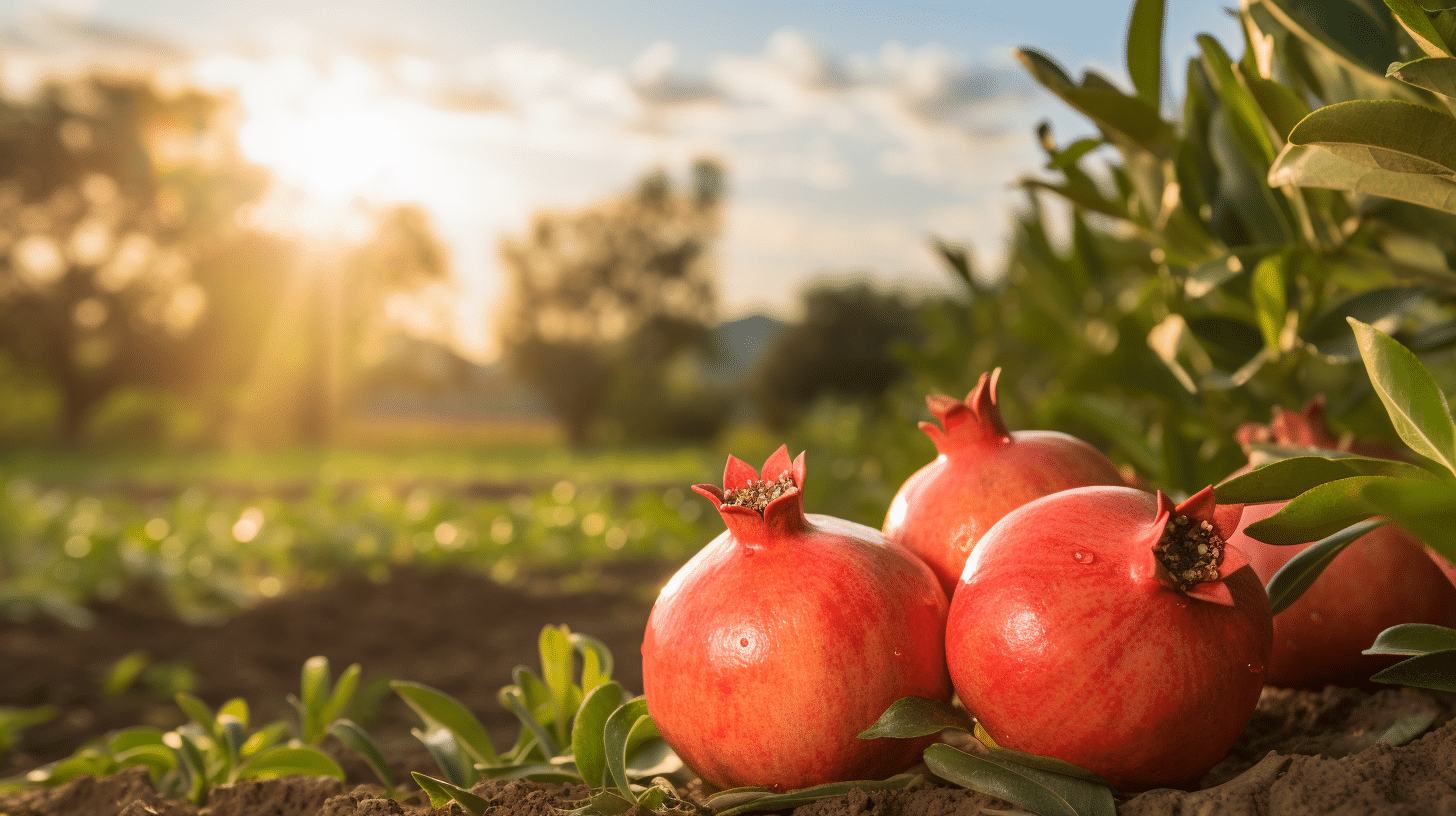
Kenya has discovered a new wonder fruit. The pomegranate fruit in Kenya. Pomegranate fruit in Kenya is a red fruit with a tough outer bark like layer, and it originated from Persia a long time ago. Pomegranate fruit is a type of fruit found on many people`s fences in Kenya and probably eaten by birds but not anymore after this breakthrough. Pomegranate fruit is a fruit in Kenya the size of an apple with many small seeds covered by a skin which looks like a tree bark. People in Kenya usually chew the seeds of pomegranate fruit or just make juice with them. Nutritionists in Kenya advice that one should eat the pomegranate fruit seeds when they are the freshest and juiciest since this is when they are most beneficial. One can also sprinkle the pomegranate seeds on a fruit salad in Kenya.

Research in Kenya shows that that pomegranate fruit increases the level of oxygen in the body particularly in the heart. Pomegranate fruit in Kenya also helps to fight erectile dysfunction among men in Kenya, and it also fights arthritis (ageing of bones).

Pomegranates in Kenya are packed with antioxidants equal to those in green tea or wine. Pomegranate fruits in Kenya are loaded with vitamin c and minerals like potassium. The Pomegranate fruit has punicalagins, a compound in the fruit which has, through research in Kenya, it has been proven to reduce blood pressure and reduces heart blockages (atherosclerosis). The punicalagins compound found in pomegranate fruits also reduces cancer occurrences in Kenya.

A few farmers in Kenya are practicing pomegranate fruits type of farming. For example in Murang`a, there is an organization called the Murang`a County Medicinal Plants Initiative that is committed to giving advice to farmers and clients in pomegranate fruits.

Pomegranate trees in Kenya usually grow in tropical areas, and they also grow in cold areas, but they should be protected from extreme cold and frost. However, pomegranate trees in Kenya prefer very hot sun. This pomegranate tree is a particularly thorny plant with small waxy leaves and it has a hardy plant they can do well in any area in Kenya whether arid or semi arid. High temperatures tend to enhance the flavor of the fruit. This Pomegranate plant in Kenya does well in clay, sand, silt and gravel soils. Pomegranate farmers in Kenya can also put fertilizer on the plant to increase production and fruit count. One pomegranate fruit in Kenya retails at about 100kshs to 200kshs. The pomegranate fruits are very costly in Kenya, and given that one tree produces an average of 25 fruits per season, this is a very viable venture in Kenya.

This pomegranate fruit farming in Kenya is a feasible idea, since one does not need a lot of space per tree and if well taken care of and watered, the fruits will be big. The pomegranate farming has taken root in Kenya, and most people are advised to take up the farming as a source of income and a tool of alleviating poverty in most areas of Kenya. Farming is a very vibrant industry in Kenya and those who invest their time, energy and money on it, are smiling all the way to the bank. People in Kenya are very health conscious in this day and age, and if one would centre their small scale or large scale business in Kenya here, it is a niche. Look at how people in Kenya went crazy with the quail business in Kenya because quail products in Kenya had medicinal value.

Well those who have taken up the Pomegranate farming in Kenya claim that it is not capital intensive since all you need to do is get the seed or cuttings of pomegranate, plant it and take care of it, and in a few months the returns are massive.

Read More
irrigation methods used farmers in kenya
Agriculture

Irrigation Methods Used Farmers In Kenya

Irrigation in Kenya is being used as one of the ways that can be used to enhance farming and boost agricultural productivity in the country. Several methods are used by Kenyan farmers to practice irrigation and the following are some of the major ways used to carry out irrigation.

Surface irrigation method

It includes water being pumped from a certain source of river into the area to be irrigated. The three common surface methods used in Kenya are flood irrigation where water will enter the land uncontrollably and does not need any minimum amount of land to be invented. The border irrigation includes water entering the irrigation place as one controlled sheet of water that leads to less amounts of water being lost. Furrow irrigation includes water being directed to shallow channels that can be constructed using the ordinary farm machinery.

Sub-surface

Water is eventually directed to the various  subsoil in the places that are supposed to be irrigated. Ground water table is controlled by the amount of water being pumped into the place. It is reported to be the least commonly used method of irrigation found in many countries. Water seeps slowly into the subsoil to give maximum time for it to moisten the roots of crops.

Sprinkler irrigation

Water is applied to the areas for irrigation informs that mimics the action of rain. This is achieved through distributing the available water through pipelines under the pressure to the various types sprinkler that spray the water from above and into the crops and land. The devices can be fixed, portable and can also be mobile depending on the preference of the farmer.

Drip irrigation method

Water is applied to each plant through one or more emitters. Areas with high temperatures are more suitable for this type of irrigation and that having limited resources of water.Accurate application of water without loss is ensured by the system and hence care needs to be done to ensure that the correct procedures is often adapted.


).


Read More
nazareth medical college in kenya
Agriculture

Nazareth Medical College in Kenya.

Nazareth medical college is one of the medical colleges in Kenya that trains health care providers. This institution is a mission based college that is managed by Catholic Church. It is located in Nairobi city. It was begun in 2005 as an initiative of Franciscan sisters of immaculate Heath of Mary.

Nazareth began offering distance learning to upgrading enrolled nursing that takes two and half years but now, it is offering a diploma course in Kenya Registered Community Health Nursing (KRCHN). This course is the longest diploma in Kenya because full training takes a minimum of three and half years and half unlike other ordinary diploma that takes three years. Nursing is the only medical course offered in this institution. There is a well-equipped library that has the latest nursing textbooks for students. The skills laboratory is equipped with all the practical models and equipment for better learning.

Admission requirements for KRCHN in Nazareth medial college In Kenya

The institution has currently one intake which is done in the month of March and it admits both male and female students. The applicant must obtain a mean grade of C (plain) or equivalent at Kenya certificate of secondary education (KCSE) and passes in the following subjects:

  • English C (plain).

  • Mathematics C- (minus).

  • Biology C (plain).

  • C (plain) in any other science subject.

Application is usually received throughout the year but the interviews are normally done in August and once an applicant has passed the interview, he/she will report on March the following year.

Contacts of Nazareth medical college in Kenya

If you want more information about this institution, you can contact the institution through the following contacts:

Nazareth Hospital,

P.O. Box 49682 – 00100

Nairobi, Kenya.

Telephone number: 020 2017401 and 020 6750945

Cell phone number: 0722405166, 0711930741 and 0734143735

Email address: [email protected], [email protected], [email protected] and [email protected].

Fax: 020 2017402

Read More
contacts of african agricultural technology foundation aatf offices in nairobi kenya
Agriculture

Contacts Of African Agricultural Technology Foundation (AATF) Offices In Nairobi, Kenya

African Agricultural Technology Foundation Offices are located in ILRI Campus on Old Naivasha Road in Nairobi.

The postal address of African Agricultural Technology Foundation Offices in Nairobi is P.O. Box 30709- 00100 Nairobi.

The email address of African Agricultural Technology Foundation Offices is [email protected]

The telephone contacts of African Agricultural Technology Foundation Offices are 254-20 422 3700. The Fax is 254-20 422 3701.

The website of African Agricultural Technology Foundation Offices in Kenya is at http://www.aatf-africa.org/.

Read More
how to start a profitable fish farming in kenya
Agriculture

How to start a profitable fish farming in Kenya

Fish farming is a form of aquaculture in kenya; it is one of the most rewarding farming projects in Kenya. Fish is a very marketable white meat not only in the African Market but also overseas. Fish is known to be a very nice meat to expectant mothers for they help in brain formation of the unborn baby. Anyone can grow fish as long as they have passion of growing it.

Fish farming and harvesting has initially been known to be practiced in Coastal and around Lake Victoria i kenya. The Government, with the aid of ministry of fisheries gives a special assistant to anyone willing to do fish farming. Through Agricultural research even farmers can practice fish farming. Ministry of fisheries in kenya has come up with cheap ways to make a fish pond. Initially fish ponds were known to be constructed using expensive materials like ballast and a lot of cement. Skilled labor was also needed in the construction of the fish pond. Contrary to the above complexity in starting a profitable fish farming project, ministry of fisheries has come up with a cheap way to do it.

Requirements

Own a piece of land, water should be sufficient for fish pond, little capital ranging from fifteen thousand Kenya Shillings and above according to the quantity of fish you want to grow. the farmer is required to visit the ministry of agriculture offices and get the guided and educated appropriately, the Ministry of fisheries provides all the necessary equipments and services and also Markets the fish once they are ready for market.

The land has to be dung according to the instructions given by the Ministry; this will include the length and the depth of the fish pond. One of the construction materials will include a polythene paper which is laid on the ground to fit the size of the pond; the polythene paper is fixed to prevent water leakage. After the polythene paper is fixed pump in enough water then put the baby fish.

Benefits

Good use of idle land, the idle land gets utilized with a profitable project, no much labor required; the project needs only a daily check up to feed the fish. It is a profitable project because fish does not need much marketing; customers are ready to buy it once it’s in the market. It is a source of food; fish is known to be good food which can be consumed by any one, expectant mothers are advised to take it for brain formation of the unborn baby. The project grows fast according to the effort and the passion of the farmer. The farmer is promoted to an advisor and recognized in the field of agriculture by the ministry, it keeps the mind busy; this will be a wonderful project to keep one busy on the ground or through supervision.

The farmer should follow the instructions given by the ministry this will include the mode of feeding the fish and keeping the pond clean. While fishing the farmer should have the appropriate fishing tools. The ministry also helps in search of the market if the farmer cannot find the market. Next time you think of a project try this one and you won’t regret if you focus and do it with passion.

Read More
tomato pests and diseases affecting kenyan farmers
Agriculture

Tomato Pests and Diseases Affecting Kenyan Farmers

Tomatoes are a major source of income for farmers in Kenya and several measures need to be taken to ensure that the fruits are well protected from attack by pests. It is good for farmers to control the spread of diseases affecting the plants for the main purpose of ensuring that they gain maximum profit from them and that they have better ways of preventing any harmful damage to the plants.

American bollworm

Is the larva stage of a moth that may be brown, green or pink in color? It is the most destructive stage of the moth and attacks fruits of tomatoes. It lays several eggs on young fruits that bear holes on the fruits upon them hatching. The worm feeds with its head inside the tomato fruit.

Control

Spraying the tomatoes can be the best alternative for the control measures. A good insecticide should be used in the process. Other minor tomato pests include cutworm, red spider, mite and nematodes.

Tomato blight

It is a major fungal disease caused by phytophthora infestans.It is the most serious of the tomato diseases. Dry brown lesions on stems, leaves and fruits are some of the symptoms of attack by the crop. Fungal spores germinate when there is moisture in the leaves and fruits.

Bacterial wilt

Tomato plants that are attacked by this parasite will eventually wither and die when the weather conditions of a particular place. Certified seeds are used in the control of the pest.

Blossom end rot

Manifested in the roots where the blossom ends appear rotten and water –soaked plants. Regular watering ensures that the produce does well in places with plenty supply.


Read More
contacts of national irrigation board offices in nairobi kenya
Agriculture

Contacts Of National Irrigation Board Offices In Nairobi, Kenya

National Irrigation Board in Kenya has offices in Unyunyizi House on Lenana Road in Nairobi.

The postal address of National Irrigation Board offices in Kenya is P.O Box 30372-00100, Nairobi.

The telephone contacts of National Irrigation Board in Nairobi are +254 722321653, +254 0202711380 and 2711468. The Fax details are +254 020 2722821 and 2711347.

The email address of National Irrigation Board office in Nairobi is [email protected].

The website of National Irrigation Board is at http://www.nib.or.ke/.

Read More
182 eggs incubator trays in kenya for quail farmers
Agriculture

Eggs Incubator Trays in Kenya for Quail Farmers

Eggs Incubator Trays in Kenya for Quail Farmers

by

‘I am looking for a high quality incubator for quails and hens with a big capacity preferably above 1000 hatching capacity and preferably with automatic turning and a fun. I won’t also mind if it comes with a generator.’ This has been most people’s wishes and requests. The demand for incubators with multiple functions has been going on for a long while since this type of farming hit the market in Kenya. I am here to introduce the eggs incubator trays that are newly created.

The eggs incubator trays use both dc n ac power. This means that the eggs incubator trays are adaptable to any environment of the farmer. The farmers need friendly machines to work with in their fams to make it successful. The eggs incubator trays in Kenya are going to be in stock by 10th November 2013. The new eggs incubator trays are on high demand. You need to put orders before the date to get this new innovation.

Eggs incubator trays come in several types. The first type of the eggs incubator tray holds 168 eggs and the second type of the tray holds 48 eggs. The cost of the incubator trays varies with size.  The eggs incubator tray that holds 48 eggs costs shs 23,000 while the eggs incubator tray holding 264 eggs goes for ksh 75,000 etc.

To purchase or book the incubators trays, contact digital farm. www.facebook.com/engoho.kukufarmer

There is the presence of quail cages, incubator trays, eggs for hatching on sale. Two weeks old quail chicks are now going for 400-500 each in Nairobi. In case you are new to this type of farming, temperatures where the chicks are kept should be 90 to 95 degrees for the first week of purchasing or of hatching. The farmer of quails should reduce the temperatures by 5 degrees per week until you get to 70 degrees and then stop. Then they shouldn’t need any more heat. The best male – female ratio for quails to be successful in quail farming, you need to allow the chicks to become accustomed to you as their caretaker by gently holding and handling them each day. This gives you a chance to inspect the health of each chick. You area able to detect any problems and resolve them in advance before they get out of hand and affect all the flock.

Now, farmers are able to take advantage of the innovations that are cropping up. Use the eggs incubator trays for saving costs and making work easier. The farming can never get any friendlier.

Article source: https://www.zakenya.com/Agriculture/182-Eggs-Incubator-Trays-in-Kenya-for-Quail-Farmers.html

General

Image:


Read More
beef farming in kenya
Agriculture

Beef Farming In Kenya

Beef farming refers to the keeping of large numbers of cattle for met and is mainly done on large pieces of land commonly known as ranches. The faming is practiced mainly in areas that receive low rainfall amounts. These areas do not support crop faming unless under irrigation. These areas are hot and have low population densities. 

The ranches are divided into smaller units which are known as paddocks. Cattle are moved rotationally from one paddock to another so as to allow sufficient time for the growth of new and fresh pastures in the vacated paddocks. It also reduces overgrazing which can lead to major problems such as soil erosion and desertification due to bare barren soils.

Cattle dips for the animals so as to reduce external pests such as ticks are also constructed in the ranches. Veterinary services from qualified officers are intensively provided to ensure that the cattle are constantly kept in good health. Boreholes are drilled in the ranches and pipes are put up to supply sufficient water to all the paddocks to provide the animals with a constant water supply.

When the pasture is not adequate, the animals are fed on fodder such as hay to supplement the little pastures present. However this is quite expensive because the hay is bought and transported from far areas, a better option nowadays is making silage so that the cattle can be fed on it when the pasture is minimal.

Crossbreeding is usually carried out to improve on the quality of breeds of the animals. The crossbreeds produce more meat and are resistant to diseases. Examples of the common breeds in Kenya are Zebu, Sahiwal and Boran.a few pure exotic breeds such as Hereford and Aberdeen Angus are also reared.

The Kenya meat commission buys cattle from ranches for slaughter and processing into beef products. Apart from beef from ranches, many other animals are slaughtered from pastoralists to provide beef.

Read More