zk 009 27
Business

Security Gains and Growing Colleges Powering Murang’a Town’s Rapid Expansion

Murang’a town is no longer the quiet county headquarters it once was. With a population now exceeding 50,000 residents, the town is undergoing a remarkable transformation — one pulling investors, landlords, and ordinary Kenyans away from the congestion and steep costs of Nairobi in search of a better quality of life at more manageable prices.

A significant driver behind the town’s growth has been the marked improvement in public security. County Commissioner Hassan Bulle attributes the steady influx of new settlers to what he describes as “improved security, followed by intensive police patrols.” That visible law enforcement presence has built confidence among property buyers and entrepreneurs who might previously have looked past Murang’a when deciding where to invest or settle.

Equally transformative has been the concentration of learning institutions calling Murang’a home. Kiharu Technical College, Murang’a University of Technology, and Kenya Medical Training College collectively channel thousands of students into the town every semester, generating persistent demand for rental housing, eateries, shops, and a wide range of everyday services.

Kiharu Technical College Director George Njau points directly to the institution’s 3,623 students as a catalyst for commercial activity in surrounding neighbourhoods. The college currently houses 867 students in its hostel, with expansion plans underway to raise that figure to 1,500. Areas such as Maragi, once subdued, have recorded tangible business growth that traces back to the college’s expanding footprint.

Municipality Manager Bernard Mugo acknowledges that zones previously regarded as rural on the town’s outskirts are “now fast-growing owing to the demand for urbanisation.” Property developers have responded accordingly — buying up land and putting up rental units to absorb demand from students, institutional staff, and the broader wave of incoming residents.

The pace of growth has, however, pressed the town’s infrastructure. Officials have had to accelerate garbage collection schedules and step up drainage maintenance to keep up with a rising population. The municipality is working to ensure that service delivery does not fall behind the physical and demographic changes reshaping the town.

Commissioner Bulle further noted that the presence of colleges has revived buildings that previously sat vacant, while drawing in new property investment across Murang’a. For many Kenyans priced out of Nairobi, the town is fast becoming a credible and affordable alternative — a place where opportunity is quietly, but unmistakably, on the rise.

Read More
zk 008 27
Business

Maritime Experts Push for Greater Marine Insurance Adoption as Kenya’s Trade Expands

Kenya’s trade sector is growing at a remarkable pace, drawing billions in blue economy investments and deepening ties to global supply chains. Yet industry experts are sounding the alarm: too many businesses are leaving themselves dangerously exposed by failing to adequately insure cargo moving across international waters.

The scale of the risk is difficult to ignore. Kenya brings in imported goods worth more than Sh2.7 trillion every year, yet the take-up of marine insurance among local businesses remains strikingly low. Professionals in the sector describe this as a critical protection gap — one that could leave importers facing devastating losses with no financial safety net in place.

The issue was placed squarely on the table at a marine insurance forum held in Nairobi, where Britam General Insurance Chief Executive Officer James Mbithi urged businesses to rethink their approach to risk management. Mbithi argued that enterprises routinely underestimate the damage a supply chain disruption can cause. “Marine insurance is a critical business continuity tool that enables enterprises to move goods across borders with greater certainty and resilience,” he told delegates at the forum.

At the heart of these concerns sits the Port of Mombasa, a gateway that serves the entire East and Central Africa region and handles millions of tonnes of cargo every year. Despite its strategic importance, the port remains exposed to a wide range of threats. A single incident — whether a vessel collision, an onboard fire, a piracy attack, severe weather, or straightforward cargo damage — can generate losses running into millions of shillings. That exposure is especially serious for importers handling high-value goods such as machinery, electronics, and industrial equipment.

MarinaiR Surveyors Chief Executive Officer Joe Kamomoe reinforced the message by highlighting just how tightly interwoven global trade has become. Disruptions in one corner of the world, he noted, can spread rapidly through supply chains thousands of kilometres away. “Strong risk mitigation measures, supported by robust marine insurance coverage, are key for businesses seeking to protect assets,” Kamomoe said.

Regulators have now decided that voluntary adoption is no longer sufficient. The Insurance Regulatory Authority has issued directives requiring that all goods imported into Kenya be insured through locally licensed companies, with the new rules taking effect on July 1. The move is designed to both protect Kenyan importers and channel more premium revenue through the domestic insurance market.

For businesses that depend on imported stock, the directive signals a clear turning point. Industry voices are united in calling on importers, freight forwarders, and supply chain managers to stop treating marine insurance as an optional overhead and start recognising it as a fundamental pillar of doing business in an increasingly unpredictable global trading environment.

Read More
zk 019 12
Business

Why Africa’s raw commodity exports are costing the continent trillions in lost value

Africa is rich in natural resources, yet the continent keeps giving away the most valuable part of those resources for almost nothing. African leaders and experts are now sounding an urgent alarm: it is time to stop shipping out raw commodities and start building industries that turn those materials into finished products — creating jobs and keeping wealth on the continent where it belongs.

The pattern is as old as colonialism and just as damaging. Africa grows cocoa, harvests coffee, and fells timber, then ships these raw materials overseas to foreign factories. Those factories process the goods into chocolate, branded beverages, and furniture, which are then sold back to African consumers at steep markups. One expert captured the absurdity in a single line: “We export the bean and import the chocolate.” The gap between what Africa earns on its exports and what it pays for the finished equivalents represents a colossal drain on the continent’s economies.

The proposed remedy centres on developing processing and manufacturing industries around tree-based resources — timber, bamboo, shea, and gum arabic among them. Rather than shipping these materials out in their raw state, the case being made is that Africa should be refining them at home, generating employment at every stage of the value chain from harvest all the way to finished product.

The scale of what is being left on the table is staggering. Leaders at the forum described the untapped potential as “a trillion-dollar opportunity for Africa.” The gains would not be purely financial either — building out these industries would also advance climate goals, since many tree-based value chains naturally align with conservation and sustainable land management.

Seizing that opportunity, however, will require far more than goodwill. The forum made clear that success hinges on deliberate collaboration between governments, research institutions, investors, and private-sector players working in concert. Equally critical are targeted investments in processing infrastructure and the development of supportive policies that actively incentivise local manufacturing over raw export.

Kenya’s own Principal Secretary for Science offered a frank assessment of the challenge facing the country and the broader continent. The problem, the PS pointed out, is not a shortage of ideas or knowledge — African research institutions have generated plenty of both. The real obstacle is “the inability to convert research into commercial success,” a gap that demands a much stronger bridge between the laboratory and the factory floor.

For Kenya — a country whose export earnings rest heavily on raw tea leaves, green coffee beans, and unprocessed horticultural produce — the message hits uncomfortably close to home. The potential to earn significantly more by adding value before export is not a new discovery. The pressing question is whether the political will, the private investment, and the enabling policy environment will finally converge to turn that potential into reality.

Read More
zk 012 24
Business

Four Kenyan AI Startups Among 15 to Complete Google for Startups Accelerator Africa

On June 18, 2026, fifteen AI-focused startups drawn from eight African countries successfully completed the Google for Startups Accelerator Africa programme, a three-month hybrid initiative tailored for technology companies at the growth stage. The cohort brought together entrepreneurs from Nigeria, Kenya, South Africa, Uganda, Tanzania, Senegal, Côte d’Ivoire, and Angola, working across fintech, mobility, healthtech, agritech, and SaaS sectors.

The graduating class made a strong financial case for African AI entrepreneurship. Sixty percent of the fifteen companies were already operating profitably by the time they crossed the finish line, with participants averaging monthly revenues of $60,000. Collectively, the cohort had attracted $1.1 million in funding — figures that signal growing investor confidence in AI-driven businesses on the continent.

Kenya had particular reason to celebrate. Four Kenyan startups were singled out for the way they are using artificial intelligence to address deep-rooted infrastructure gaps that affect millions of Kenyans daily.

Coamana is digitising Kenya’s informal food markets using AI, providing real-time data visibility to traders and buyers who have historically operated without such tools. Duck gives retail brands instant insight into shop floor inventory levels and shifting demand patterns — a solution with clear relevance for Kenya’s fast-moving consumer goods sector. ReportsAI converts unstructured data into compliance-ready reports, serving impact organisations that often lack the capacity to handle reporting requirements manually. Meanwhile, VunaPay is tackling a persistent pain point for smallholder farmers: delayed payments. Its agricultural-focused fintech solution aims to get money into the hands of farmers faster, supporting the livelihoods of the millions of Kenyans who depend on small-scale agriculture.

The Google for Startups Accelerator Africa programme has been running since 2018 and has grown into one of the continent’s most significant tech incubation platforms. Since inception, it has supported more than 190 startups spread across 17 African countries. The results speak volumes: alumni companies have collectively raised upwards of $400 million and are responsible for creating roughly 3,500 jobs across the continent. Google has contributed $11 million in equity-free funding and product credits to support these ventures.

For Kenya’s technology sector, the graduation of four homegrown startups from such a prestigious programme reinforces Nairobi’s standing as a leading tech hub in Africa. With solutions addressing food markets, retail intelligence, compliance reporting, and farmer payments, these companies reflect the breadth and ambition of Kenya’s AI innovation scene — and the kind of real-world problem-solving that attracts global attention and capital.

Read More
zk 002 26
Business

Tourism PS Julius Bitok Tells Visitors Kenya Is Safe Amid Ebola Cancellation Wave

Tourism Principal Secretary Julius Bitok has moved to reassure both local and international visitors that Kenya remains a safe destination, even as the country’s hospitality industry grapples with a wave of booking cancellations fuelled by fears over the Ebola outbreak in neighbouring countries.

Bitok made the declaration while addressing industry players at a Kenya Association of Hotelkeepers and Caterers (KAHC) symposium held in Malindi. He was categorical that Kenya has recorded no Ebola case and that health authorities have already put preventive measures in place across the country. “Kenya is safe,” he told delegates, urging them not to allow unfounded fears to dent the nation’s hard-won tourism reputation.

The PS used the Malindi forum to lay out the government’s ambitious target of attracting five million tourists annually by year’s end — a figure that would mark a significant leap from the approximately 1.5 million visitors Kenya currently draws each year. Bitok called on tourism promotion agencies to ramp up their marketing campaigns to close that gap, saying the current numbers fall well short of what the country is capable of achieving.

The reassurances come at a critical moment for Kenya’s hospitality sector. Stakeholders report that bookings have been dropping, with travellers citing Ebola concerns as their reason for cancelling trips to Kenya. While the ongoing outbreak has been reported in the Democratic Republic of Congo, the proximity of that crisis has been enough to rattle confidence among would-be visitors.

Malindi Member of Parliament Amina Mnyazi weighed in on the controversy surrounding Kenya’s establishment of quarantine facilities, which some have interpreted as a sign of an outbreak within the country. Mnyazi clarified that the facilities are purely precautionary, put in place because of the constant population movement between Kenya and the DRC, where active cases have been confirmed.

KAHC National Chairman Christopher Musau was frank about the toll misinformation has taken on the sector. “Misinformation has hit the tourism sector very hard,” he said, adding that the government needs to do more to counter false narratives that wrongly link Kenya to the Ebola outbreak. He called for a coordinated campaign to set the record straight, both locally and on international platforms.

Kenya’s tourism industry is among the country’s largest foreign exchange earners, and any sustained dip in arrivals carries serious economic consequences. Stakeholders are now looking to the government and marketing bodies to move quickly — not just with words of reassurance, but with a visible, well-resourced communication strategy that can push back against the tide of misinformation before the damage to the sector deepens.

Read More
Business

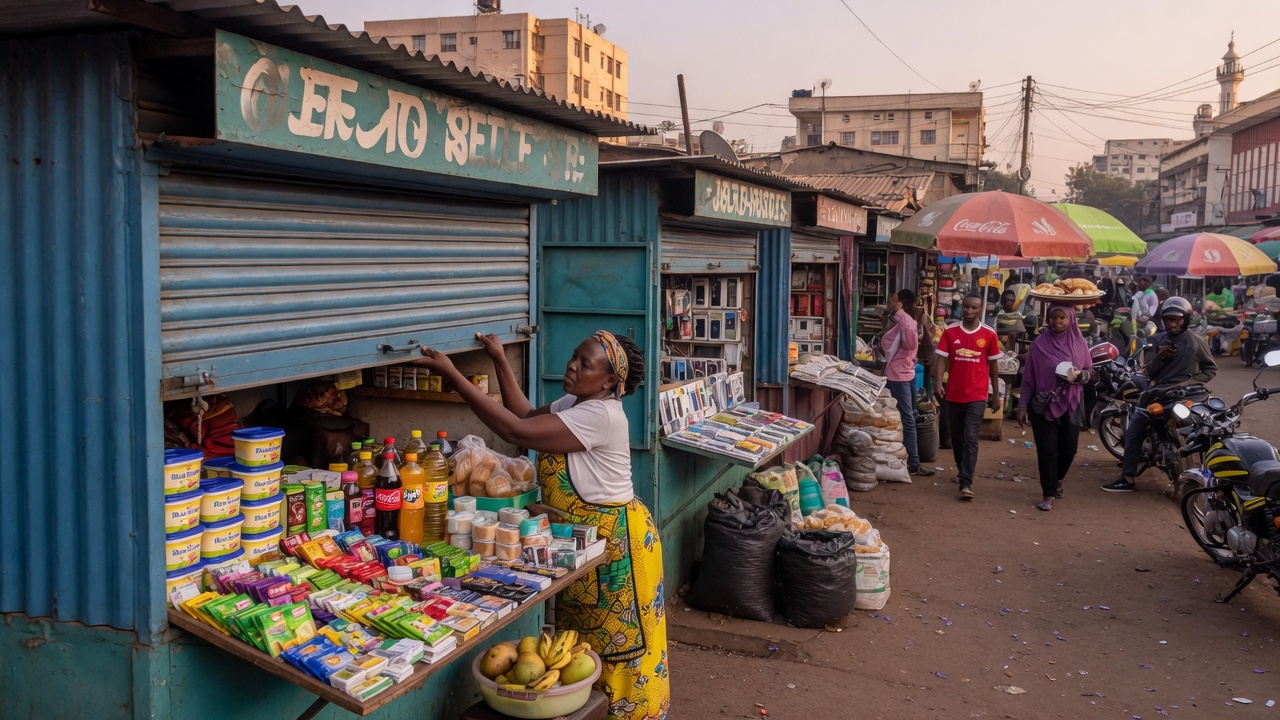
The Downside of Using Digital Credit to Restock Your Small Business in Kenya

For many Kenyan traders, digital credit has become the go-to lifeline when shelves run dry. The convenience of instant mobile loans — accessible within minutes — has made it tempting to borrow first and think later. But financial experts and real-life experiences across the country are now painting a darker picture of what happens when entrepreneurs rely on credit to fuel their restocking decisions.

Amos Chege, who runs a dairy and pastry business in Nakuru, experienced this danger firsthand. When a period of community mourning brought an unexpected surge in demand, Chege turned to digital credit to build up his stock and meet incoming orders. At the time, it seemed like a sensible move — customers were buying, and business was brisk.

The turnaround, however, was swift and brutal. Once the mourning period passed, so did the demand. Chege found himself holding excess stock alongside mounting loan repayments, carrying interest rates that his lender had set well above what the Central Bank of Kenya recommends. Unable to break free from the cycle, he eventually shut down his shop entirely.

Personal banker John Mathu says Chege’s experience is far more common than most people realise. “You take that credit facility and order stock. But in a short time, that craze is gone, and you’re left with dead stock and a loan to clear,” Mathu explains. His view is that the core problem lies in the impulsive nature of credit-driven restocking — decisions made on excitement rather than sound business judgment.

The risks Mathu identifies are wide-ranging. Traders who chase short-lived trends using borrowed money frequently end up with dead inventory — goods that nobody wants to buy — while still owing creditors. Missing repayment deadlines also strains relationships with distributors and suppliers, gradually eroding the trust and goodwill that small business owners spend years building. Worse, some traders resort to taking out new loans just to clear old ones, locking themselves into debt traps that become increasingly difficult to escape.

Perhaps the most insidious risk of all is that heavy reliance on credit can conceal the deeper rot within a business. Problems such as poor financial management, wasteful spending, or weak sales strategies can go undetected for months when borrowed money keeps the shelves full. By the time the credit dries up, the damage is often irreversible.

Mathu’s advice to small business owners is straightforward: build a personal inventory reserve covering roughly 40 percent of your regular stock. That buffer means you can ride out slow months without reaching for a lender every time the shelves need refilling. In Kenya’s unpredictable retail environment, that kind of financial discipline could well be the difference between keeping your business alive and closing your doors for good.

Read More
zk 010 22
Business

Little Cab syncs billing platform with eTIMS as Kenya pushes digital tax compliance

Ride-hailing firm Little Cab has connected its corporate billing platform to the Kenya Revenue Authority’s electronic Tax Invoice Management System, commonly known as eTIMS, in a move that brings automated, tax-compliant invoicing to its business clientele. The integration places Little Cab among the growing number of Kenyan companies responding to KRA’s push for digital tax compliance across the private sector.

For corporate customers who rely on Little Cab for staff transport and business travel, the practical change is immediate — invoices will now be generated automatically in line with eTIMS requirements, removing the friction that has long characterised manual billing between transport providers and finance departments. The system is also expected to improve accuracy and give businesses cleaner records when reconciling travel expenses.

Little Cab Corporate Affairs Manager Nyawira Maina said the integration reflects the kind of infrastructure that modern enterprises now expect as standard. “Businesses today require seamless and transparent systems that support both operational efficiency and regulatory compliance,” she said, framing the move as a response to real demand from the company’s corporate client base rather than merely a regulatory obligation.

Beyond smoother invoicing, the tie-up delivers a cluster of benefits that finance and operations teams in Kenyan organisations will appreciate: eTIMS-compliant documentation, tighter billing accuracy, simplified expense reconciliation, and greater overall transparency in how transport costs are tracked and reported. Together, these gains are expected to reduce the administrative load that currently falls on company accounts departments.

KRA Assistant Commissioner Caroline Wacuka praised the integration, noting that collaborations of this kind illustrate how technology can lower the compliance burden for taxpayers while simultaneously raising the integrity of business transactions. Her remarks point to KRA’s broader strategy of embedding compliance into the tools that businesses already use, rather than relying on enforcement after the fact.

The Little Cab announcement comes against the backdrop of a national eTIMS rollout that has seen KRA pressing businesses of every size to migrate their invoicing processes onto the platform. The authority views eTIMS as a cornerstone of its effort to widen the tax base and recover revenue lost through VAT leakages — a challenge that has persisted despite years of reforms in tax administration.

For Little Cab, the timing is strategic. As competition in Kenya’s corporate mobility market remains stiff, demonstrating alignment with government compliance systems could strengthen its appeal to large organisations and public institutions that are themselves under pressure to maintain clean financial records. The company has positioned the eTIMS integration as evidence of its commitment to technology-driven transport solutions that work for both clients and the country’s fiscal goals.

Read More
zk 005 22
Business

How Aviation Policies Are Holding Back Kenya’s Tourism Numbers, Hoteliers Warn

Kenya’s hotel and catering industry has raised serious concerns about aviation policies it says are strangling the country’s tourism numbers, with operators calling for an urgent rethink of regulations that cap the number of airlines and weekly flights permitted to land in the country. The alarm was sounded at the Kenya Association of Hotel Keepers and Caterers (KAHC) Annual Symposium, held in the coastal town of Malindi.

Kenya welcomed 2.7 million tourists in 2025 — a figure that, while notable, fell well short of the ambitious 5 million visitor target the industry had set its sights on. According to hotel operators attending the symposium, the shortfall is not down to any shortage of global interest in Kenya as a destination, but rather to aviation rules that restrict how many carriers and how many flights can operate routes into the country each week.

KAHC chairperson Christopher Musau argued that loosening these restrictions would give Kenya’s tourism sector the breathing room it needs to grow. He pointed to the country’s strong competitive advantages and urged the government to back that up with infrastructure improvements on the ground — specifically by extending runways at the Malindi and Diani airstrips and upgrading the road networks that connect key tourism corridors.

Tourism Principal Secretary Julius Bitok acknowledged the industry’s frustrations and signalled that the Kenya Kwanza administration was willing to take a fresh look at the limits placed on airline operations and flight frequencies. He was measured in his response, however, making clear that any policy changes would need to carefully account for “airport capacities, security considerations and other national interests” before being rolled out.

Bitok also turned the challenge back on the private sector. He posed a direct question to operators gathered at the symposium: “If I convince the Government to create a more enabling aviation environment by opening up our skies, will the industry be ready?” The remark served as a pointed reminder that government reforms alone will not be enough — the hospitality sector must scale up its capacity and raise its service standards to match any increase in visitor volumes.

The PS took time to map out the full breadth of Kenya’s tourism offering, citing wildlife, national parks, Indian Ocean beaches, and the growing MICE sector — meetings, incentives, conferences and exhibitions — as pillars capable of driving arrivals far beyond current levels. He urged players across the hospitality industry to deepen investment in staff training, create more opportunities for youth employment, and ensure fair labour practices are upheld throughout the sector.

With Kenya still well short of its 5 million tourist target, the pressure is building on both government and industry to move beyond words. Whether aviation liberalisation will be the catalyst that unlocks the country’s full tourism potential remains to be seen, but the message from Malindi is unambiguous: the skies over Kenya need to open wider.

Read More
zk 003 22
Business

AG Dorcas Oduor stands firm on Sh154bn JKIA modernisation deal as transparency questions mount

Attorney General Dorcas Oduor has come out strongly to defend the Sh154 billion contract awarded for the modernisation of Jomo Kenyatta International Airport, insisting that her office conducted a thorough and diligent review of the agreement before it was executed. Oduor made clear that the scrutiny applied to the deal was both genuine and comprehensive, aimed squarely at protecting Kenya’s national interests.

Speaking in Nairobi on Friday, June 27, Oduor pushed back forcefully against growing criticism that her office had merely rubber-stamped the deal involving China Road and Bridge Corporation without meaningful oversight. She was emphatic that the Attorney General’s office was not a passive bystander in this process but rather an active participant in scrutinising the contract and carefully evaluating the risks it could pose to Kenya.

On the question of transparency, Oduor maintained that the tender process was conducted openly and in accordance with the law. She noted that all relevant documentation was published through newspaper announcements and official government channels, ensuring that interested parties had reasonable access to procurement information from the outset.

She further assured Kenyans that the final contract signed mirrors the original tender documents in all material respects. According to the AG, no significant alterations were introduced between what was initially advertised and what was eventually agreed upon and executed — a point she appeared to stress directly in response to fears that the terms may have been quietly amended along the way.

Oduor’s statements come at a moment when public scrutiny over the JKIA modernisation project has been building steadily. Critics, civil society voices, and members of the public have raised sharp questions about how a deal of such enormous scale was negotiated and approved, and whether the process adequately served the interests of ordinary Kenyans.

The Sh154 billion contract with China Road and Bridge Corporation has attracted considerable attention partly because of the sheer size of the investment, but also because JKIA sits at the heart of Kenya’s economic connectivity. As the country’s busiest and most significant international airport, it handles millions of passengers and vast quantities of cargo each year, making any major decisions about its development a matter of broad public concern.

With the AG’s office now on record defending the process, pressure will continue to mount on the government to provide full disclosure of the contract’s terms and a clear implementation roadmap. Many Kenyans will be watching closely to ensure that a project of this magnitude ultimately delivers the transformation the country’s premier gateway so urgently needs.

Read More
zk 011 21
Business

Kenya and Italy Seal 2026–2029 Action Plan to Deepen Strategic Partnership

Kenya and Italy have sealed a detailed four-year joint action plan spanning 2026 to 2029, setting out a clear roadmap to strengthen their strategic partnership across a broad range of sectors. The agreement was finalised during President William Ruto’s official state visit to Rome, where he sat down with Italian Prime Minister Giorgia Meloni and both leaders endorsed the framework together.

On the political front, the two governments have pledged to sustain regular high-level engagements, backed by structured exchanges between their respective foreign ministries. They have also committed to a more coordinated stance within international bodies — the United Nations chief among them — where both nations intend to align positions on shared global challenges including climate change and migration.

Trade and investment form the backbone of the new plan, with Kenya and Italy jointly targeting growth in infrastructure, renewable energy, manufacturing, and agriculture. A sector that received particular attention is Kenya’s leather industry, which the action plan aims to modernise and position more competitively on world markets — a development that could translate into meaningful export gains for Kenyan producers and workers along the value chain.

Sustainable development commitments cover food security, the coffee sector, and the blue economy, alongside collaboration on circular bio-economy systems and sound waste management practices. The two countries will also work together on water resource management and environmental protection, areas where both face mounting pressure from climate variability and ecological strain.

Science, technology, and education occupy a prominent place in the deal. Joint research initiatives are planned, together with collaboration on artificial intelligence channelled through the Mattei Plan AI Hub. Kenya’s Malindi Space Center is flagged as a key national asset, opening the door to shared space-sector ventures between the two countries. On education, the plan calls for expanded technical and vocational training, stronger university-to-university links, and structured exchange programmes connecting Italian and Kenyan youth.

Defence and security cooperation rounds out the agreement, anchored by a new bilateral defence arrangement that targets maritime security and counterterrorism. The two sides were careful to frame this within a framework that fully respects each country’s territorial sovereignty — presenting it as a partnership between equals rather than a security imposition.

The 2026–2029 action plan is nested within Italy’s wider Mattei Plan for Africa, through which Rome is building strategic ties with key African economies, with Kenya holding a prominent position in that vision. For Nairobi, the agreement adds another significant pillar to President Ruto’s drive to diversify Kenya’s international alliances and pull fresh investment into productive sectors of the economy.

Read More