Rigathi Gachagua Impeached: Kenya's Historic First DP Removal
Politics

Rigathi Gachagua Impeached: Kenya’s Historic First DP Removal

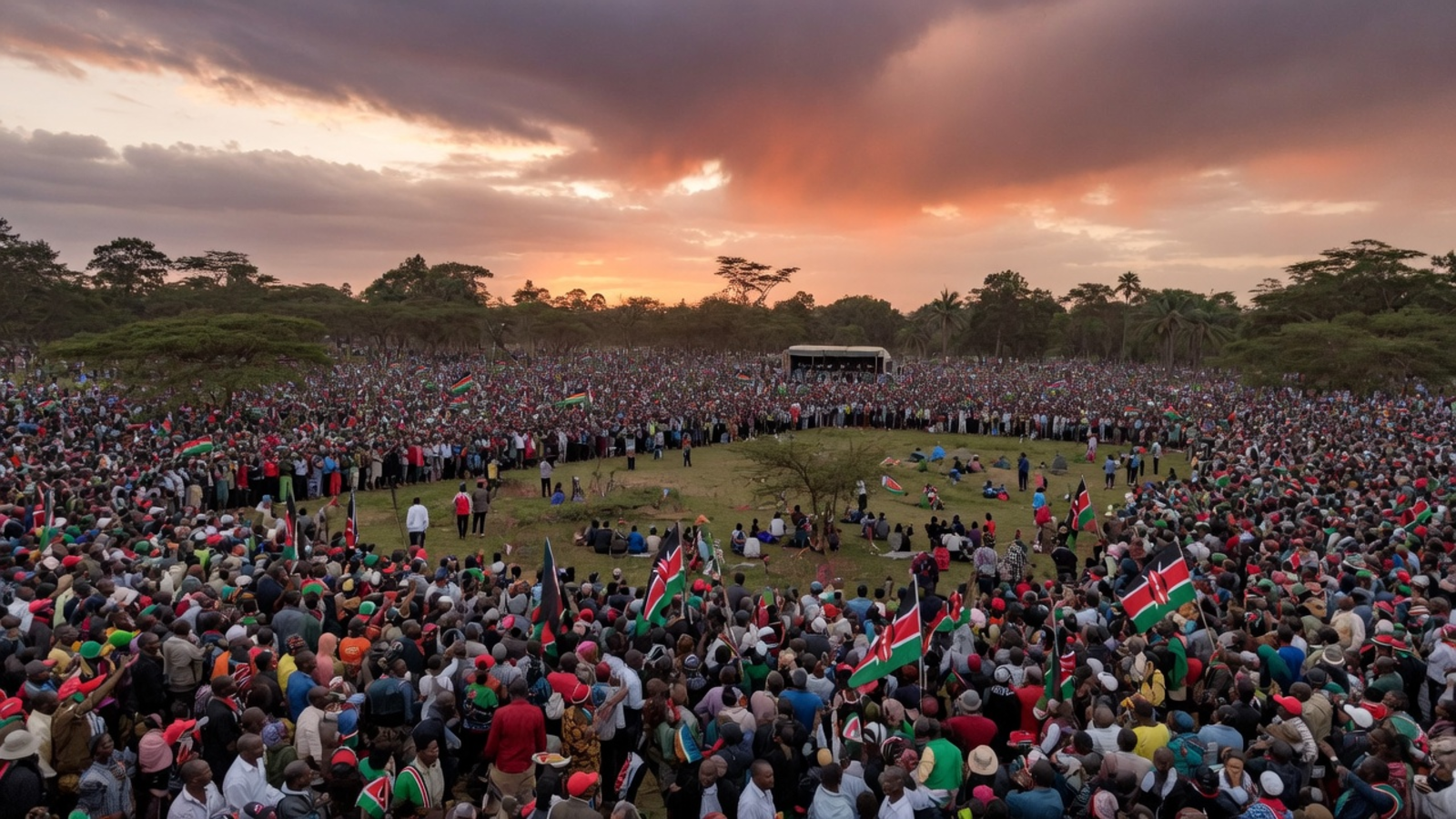
On October 17, 2024, Kenya made constitutional history when the Senate voted to uphold the impeachment of Deputy President Rigathi Gachagua, making him the first person ever to be removed from the country’s second-highest office since the promulgation of the 2010 constitution. The landmark removal came just days after the National Assembly passed an impeachment motion by a sweeping margin, sending shockwaves through Kenya’s political landscape and marking an unprecedented moment in the nation’s democratic journey.

The process began on October 8, 2024, when Kenya’s National Assembly voted 281 to 44 in favor of impeaching Gachagua. Lawmakers cited a range of serious charges, including corruption, ethnic discrimination, and the deliberate undermining of President William Ruto’s administration. The scale of the vote underscored the extent to which Gachagua had lost political support within the ruling coalition, with more than six times as many MPs backing the motion as opposing it. Nine days later, the Senate deliberated on the eleven charges forwarded from the lower house and upheld five of them, formally completing the removal process and cementing Gachagua’s place in Kenya’s political history books.

Gachagua had been elected on the same ticket as President William Ruto in the 2022 general election, but relations between the two leaders had grown increasingly strained over the course of their time in office together. Reported disagreements over government policy direction, resource allocation, and Gachagua’s outspoken public style were widely cited as contributing factors to the breakdown of their political partnership. Kenya’s 2010 constitution had introduced, for the first time in the country’s history, a formal legal mechanism for the impeachment of a sitting deputy president — a provision that had existed on paper for over a decade before October 2024 finally put it to the test.

Gachagua and his legal representatives contested the removal vigorously in court, arguing that due process had been violated and that the proceedings were politically motivated rather than grounded in genuine constitutional concern. The legal challenges extended well into 2025, placing complex and novel constitutional questions before Kenya’s judiciary and keeping the matter prominently in the public eye long after the Senate had delivered its verdict. While the courts deliberated, a new deputy president was sworn into office and the government moved forward, though the unresolved legal proceedings continued to cast a long shadow over the legitimacy of the process.

The political fallout from the impeachment proved to reshape Kenya’s opposition landscape in ways few had anticipated. Rather than retreating from public life, Gachagua emerged as a prominent and energetic critic of the Ruto administration, becoming a rallying figure for those disillusioned with the government. The episode demonstrated, in the clearest possible terms, that the impeachment clause in the 2010 constitution is an active and enforceable instrument, not merely a theoretical safeguard. For Kenyan voters and future officeholders alike, the events of October 2024 set a lasting precedent — one that no position, however senior, is beyond the reach of democratic accountability.

Read More
Kenya's Opposition Unites: Matiang'i and Maraga Eye 2027 Vote
Politics

Kenya’s Opposition Unites: Matiang’i and Maraga Eye 2027 Vote

Former Interior Cabinet Secretary Fred Matiang’i and former Chief Justice David Maraga have stepped up efforts to build a formidable unified opposition ahead of Kenya’s 2027 general election. The two prominent figures held a series of high-level consultations in early 2026, signaling a serious push to consolidate opposition forces and field a single presidential candidate capable of mounting a credible challenge against President William Ruto. The talks represent one of the most significant political developments in Kenya this year, drawing attention from analysts, civil society groups, and ordinary citizens anxious about the country’s direction.

Central to the discussions is Matiang’i’s uncompromising stance on how a joint opposition candidate should be identified. The former Interior CS has publicly called for a transparent, public-driven selection process, cautioning his peers against the kind of secretive backroom deals that have repeatedly undermined opposition unity throughout Kenya’s political history. Matiang’i argued that for any alliance to command genuine public trust and voter enthusiasm, the process of choosing a flag-bearer must be open, inclusive, and seen to reflect the democratic aspirations of Kenyans rather than the narrow interests of a small circle of political elites negotiating behind closed doors.

The broad coalition being assembled under the United Opposition banner brings together influential figures from across Kenya’s political spectrum. Wiper Democratic Movement leader Kalonzo Musyoka, a seasoned presidential contender who has come close to capturing the presidency in previous election cycles, is a key pillar of the alliance. Equally significant is the participation of allies aligned with former Deputy President Rigathi Gachagua, who was controversially impeached in October 2024. Gachagua’s camp commands substantial support in the Mount Kenya region, a critical electoral bloc, and their involvement could prove decisive in determining whether the United Opposition achieves the regional breadth needed to unseat a sitting president.

Kenya’s opposition politics have long been plagued by fragmentation, last-minute defections, and coalition collapses that have historically delivered victory to incumbents. The 2022 general election saw Ruto’s Kenya Kwanza alliance defeat the broad Azimio la Umoja coalition led by Raila Odinga, in part because of deep fissures within the opposition camp. Since then, a series of economic pressures — including contested tax measures that triggered widespread youth-led protests in mid-2024 — have eroded public confidence in the current administration. The mood on the ground, many observers argue, creates a genuine opening for a well-organized opposition if it can overcome its traditional tendency toward self-defeating internal divisions.

The coming months will test whether the Matiang’i-Maraga alliance can move from consultations to a structured, functioning coalition with a clear roadmap. Political observers warn that the true measure of the United Opposition’s viability lies in its ability to institutionalize the candidate selection process and build a policy platform that speaks directly to the economic anxieties of ordinary Kenyans. If successful, the coalition could fundamentally reshape Kenya’s 2027 electoral landscape and present President Ruto with the most organized opposition challenge in years. For now, the talks signal a new and consequential phase in Kenya’s pre-election politics, one that millions of voters across the country will be watching closely.

Read More
Kenya Deputy President Kindiki Faces Legitimacy Crisis After Ruling
Politics

Kenya Deputy President Kindiki Faces Legitimacy Crisis After Ruling

Kenya’s Deputy President Kithure Kindiki is at the centre of a deepening constitutional crisis after the Court of Appeal ruled in May 2025 that the High Court bench that validated his swearing-in was improperly constituted, casting a long legal shadow over one of the country’s most powerful offices.

The appellate court’s judgment focused sharply on the role of Deputy Chief Justice Philomena Mwilu, who the court found had acted outside her constitutional mandate when she assembled the bench that heard and dismissed the original petition challenging Kindiki’s appointment. While the ruling stopped short of directly nullifying Kindiki’s position, it effectively undermined the judicial foundation upon which his legitimacy had rested since he was sworn in on November 1, 2024. Legal experts warned that the decision opened the door for further challenges that could directly threaten his tenure.

Kindiki’s path to the deputy presidency unfolded against the backdrop of one of the most turbulent episodes in Kenya’s recent political history. His predecessor, Rigathi Gachagua, made history in October 2024 as the first sitting Kenyan deputy president to be successfully impeached, after both the National Assembly and the Senate voted to remove him amid a highly publicised falling-out with President William Ruto. Parliament cited grounds that included gross violation of the Constitution and conduct unbecoming of the office. Within a matter of days, Kindiki — then serving as Cabinet Secretary for Interior and National Administration — was nominated by Ruto, vetted, approved by Parliament, and sworn in. The breathtaking pace of the process drew criticism from legal observers and opposition figures who argued that due constitutional timelines had been bypassed.

The Court of Appeal ruling triggered an immediate wave of demands for Kindiki to resign or step aside while the courts resolved the matter. Opposition politicians, civil society organisations, and legal scholars argued that an official whose appointment rests on a constitutionally defective judicial process has an ethical obligation to vacate office until the legitimacy question is fully settled. Kindiki rejected those calls without hesitation, maintaining a packed schedule of county engagements and public duties. Government allies closed ranks behind him, dismissing the resignation demands as political theatre with a legal veneer.

The ruling places Kenya’s constitutional framework under the harshest scrutiny it has faced in years. If subsequent judicial proceedings affirm that the entire process of clearing Kindiki was fundamentally flawed, the country would be navigating genuinely uncharted territory — a sitting deputy president whose legal title to office is contested at the highest levels of the judiciary, with no established constitutional mechanism to swiftly resolve such a dispute. The episode has reignited broader debate about the pace and propriety of Kenya’s political succession processes and stands to leave a significant imprint on how the country interprets presidential succession law and judicial accountability in the years ahead.

Read More
Ruto's Double Cabinet Reshuffle Reshapes Kenya's Government in 2025
Politics

Ruto’s Double Cabinet Reshuffle Reshapes Kenya’s Government in 2025

President William Ruto moved to reshape the composition of Kenya’s Cabinet twice in the opening months of 2025, executing a sweeping reshuffle in January followed by a second round of changes on March 26. The moves signalled a deliberate recalibration of ministerial portfolios as the administration sought to sharpen its focus on key national development priorities amid mounting pressure from citizens and political stakeholders across the country.

The January reshuffle saw Ruto reach across political lines by appointing Mutahi Kagwe, a veteran administrator who served prominently in President Uhuru Kenyatta’s government, to head the Ministry of Agriculture. The appointment drew immediate attention given Kagwe’s extensive profile and the strategic weight of agriculture to Kenya’s economy, with the sector employing more than 40 percent of the country’s workforce and contributing roughly a quarter of GDP. Alongside Kagwe, Lee Kinyanjui was named Cabinet Secretary for Investments, tasked with driving the government’s agenda to attract foreign capital, while William Kabogo took over the Information and Communications Technology docket — a portfolio considered central to Kenya’s ambition to cement its status as a technology and innovation hub for East Africa.

The second reshuffle, announced on March 26, 2025, brought further realignments within the Cabinet. Aden Duale, who had been serving as Cabinet Secretary for Environment and Climate Change, was transferred to the Ministry of Health, placing one of Ruto’s most trusted political allies at the helm of a sector long grappling with chronic underfunding and widespread healthcare access challenges. Simultaneously, Deborah Barasa was moved to the Environment docket, a portfolio increasingly in the spotlight as Kenya navigates its international climate commitments and confronts the growing threat of erratic weather patterns affecting millions of farmers and pastoralists.

Cabinet reshuffles have become a recurring feature of Kenyan political life, with successive presidents using ministerial changes both as a tool of political management and as a public signal of shifting policy priorities. Ruto’s administration has faced particular scrutiny since the widespread anti-government protests of mid-2024, which forced the withdrawal of a controversial finance bill and resulted in the dismissal of most of the Cabinet at the time. The reconstituted Cabinet that emerged from that crisis was widely understood to be a work in progress, and the early 2025 changes are broadly seen as part of that ongoing realignment rather than a clean break.

For Kenyan citizens, the reshuffles carry real and immediate consequences. The appointment of an experienced hand like Kagwe to Agriculture arrives at a moment when food security remains a pressing concern, with erratic rains and rising input costs squeezing smallholder farmers from the Rift Valley to the Coast. The transfer of Duale to Health will be closely watched given ongoing debates about the rollout of the Social Health Authority, Kenya’s universal health coverage scheme that has faced significant implementation hurdles since its launch. As 2025 progresses, the performance of these newly placed ministers will be a key measure of whether Ruto’s repeated reshuffles are delivering the stable, results-oriented governance Kenyans have long demanded.

Read More
Ruto Signs Finance Bill 2026 Into Law as Kenya Braces for Protests
Politics

Ruto Signs Finance Bill 2026 Into Law as Kenya Braces for Protests

President William Ruto signed the Finance Bill 2026 into law on June 23, 2026, at State House Nairobi, formally authorizing the government to implement a record Ksh4.8 trillion national budget. The signing marks the culmination of a deeply contentious legislative process that has drawn sharp criticism from opposition leaders, civil society groups, and ordinary Kenyans already strained by the high cost of living.

Parliament passed the bill on June 18, 2026, in a vote that exposed significant divisions within the National Assembly. A total of 122 Members of Parliament voted in favour of the bill, while 40 opposed it and a striking 187 chose to abstain — a reflection of the political caution surrounding legislation that many lawmakers feared could ignite public anger. The unusually wide margin of abstentions suggests that even members of the ruling coalition harbored reservations about certain provisions, though they ultimately declined to vote the bill down.

At the heart of the controversy are two measures critics say disproportionately burden Kenya’s most vulnerable citizens. The bill introduces new taxes on digital financial transactions, which advocacy groups warn will erode the savings and earnings of millions of Kenyans who rely on mobile money platforms such as M-Pesa for everyday commerce. Proposed import levies on mitumba — the second-hand clothing trade that provides affordable garments to low-income households and livelihoods to tens of thousands of traders in markets across Nairobi, Mombasa, and Kisumu — have drawn particular fury from the informal sector. Opponents argue that taxing mitumba imports is, in effect, a tax on poverty itself.

The signing has reignited memories of the Gen Z-led protests that swept Kenya between 2024 and 2025. Those demonstrations, fueled in part by opposition to the Finance Bill 2024, saw young Kenyans take to the streets in unprecedented numbers, with protesters storming Parliament in June 2024 and demanding greater government accountability. Several demonstrators were killed and hundreds injured during clashes with security forces. The Ruto administration ultimately withdrew portions of that earlier bill, but the underlying grievances — high unemployment, rising inflation, and the perception that government policy favors the elite over the poor — were never fully resolved.

Opposition leaders and civil society organizations have already vowed to mobilize against the new law, with activist networks that were prominent during the 2024 unrest signaling readiness to organize fresh demonstrations. The government has defended the Finance Bill 2026 as essential for funding roads, hospitals, schools, and security services, maintaining that without new revenue measures Kenya cannot sustain critical public investments or service its growing debt obligations.

The weeks ahead will serve as a critical test of both the administration’s resolve and Kenya’s democratic resilience. If mass protests materialize, President Ruto will once again face pressure to engage directly with demonstrators or risk prolonged political instability. The Finance Bill 2026 may now be law, but the debate over who bears the heaviest tax burden in Kenya is far from settled. For millions of ordinary citizens, the real consequences of this legislation will not be felt in the chambers of Parliament — they will show up in weekly household budgets, mobile money statements, and the prices at local mitumba stalls across the country.

Read More
Kenya's Gen Z Protests Return in June 2025: Over 65 Dead
Politics

Kenya’s Gen Z Protests Return in June 2025: Over 65 Dead

Fresh anti-government protests erupted across Kenya in June 2025, reigniting the Gen Z movement that had first shaken the country the previous year. The demonstrations were sparked by the death of blogger Albert Ojwang in police custody, a flashpoint that sent thousands into the streets of Nairobi and other major towns. By the time the unrest subsided, more than 65 people had been killed and over 500 injured in clashes between protesters and security forces.

The protests drew immediate comparisons to the June 2024 demonstrations in which young Kenyans had forced President William Ruto to withdraw a contentious finance bill after demonstrators stormed parliament. This time, the catalyst was not taxation but the custody death of a citizen journalist. Albert Ojwang’s case became a rallying cry that transcended social media and poured into the streets, tapping into long-simmering anger over police brutality and government impunity.

The government’s response was swift and assertive. Interior Cabinet Secretary Kipchumba Murkomen announced that authorities had made 1,500 arrests, with those detained facing serious charges including terrorism and murder. The scope of the crackdown drew sharp condemnation from human rights organizations and opposition leaders, who argued the charges were being deployed as instruments of political suppression rather than legitimate law enforcement.

Amnesty International documented a troubling new dimension to the crackdown: Kenyan authorities had systematically deployed digital surveillance tools and social media suppression to disrupt the protests. Demonstrators reported suspended accounts, intercepted communications, and organizers being targeted before they could mobilize. The findings raised serious questions about the erosion of digital rights in a country that has long positioned itself as the technology and innovation hub of sub-Saharan Africa.

Kenya’s Gen Z movement had emerged in 2024 as one of Africa’s most consequential youth uprisings in recent memory. Energized by social media and fed up with corruption, unemployment, and the rising cost of living, young Kenyans demonstrated a capacity for leaderless, decentralized activism that caught the political establishment off guard. The June 2025 protests confirmed that the underlying grievances remained unaddressed and that the movement had lost none of its intensity.

The death toll of more than 65 people and the wave of mass arrests signal a deepening fracture between Kenya’s government and its youth population that shows no signs of closing. International pressure is mounting on Nairobi to investigate the killings, release political detainees, and end the surveillance of activists. How the Ruto administration responds in the coming months will define Kenya’s democratic trajectory and determine whether the country’s political future is shaped by dialogue or by further confrontation.

Read More
Kenya's Raila Odinga Loses AU Commission Chair Race to Djibouti
Politics

Kenya’s Raila Odinga Loses AU Commission Chair Race to Djibouti

Kenya’s veteran opposition leader and former Prime Minister Raila Odinga suffered a stinging defeat in February 2025, losing the race for African Union Commission Chairperson to Djibouti’s Foreign Minister Mahamoud Ali Youssouf. The vote, held at the AU Summit in Addis Ababa, Ethiopia, stretched to seven rounds before Youssouf emerged victorious with 33 votes, ending Odinga’s long-anticipated continental campaign and dealing a sharp blow to Nairobi’s ambitions of securing Africa’s most prominent multilateral leadership post.

Odinga had entered the race as one of the frontrunners, carrying the full weight of President William Ruto’s government and Kenya’s diplomatic machinery behind him. His candidacy was presented domestically as a historic opportunity for East Africa to take the helm of the AU’s administrative body, with Nairobi committing substantial political capital to lobbying across the continent. However, the seventh round of voting revealed deep cracks in what had appeared to be a solid coalition. Youssouf, a seasoned diplomat who had served as Djibouti’s foreign minister for nearly two decades, proved capable of assembling a decisive majority from diverse African blocs that Odinga’s campaign had failed to fully secure.

Analysts who followed the campaign closely identified several compounding reasons for the Kenyan candidate’s loss. Kenya’s diplomatic miscalculations in the run-up to the vote were cited prominently, including a failure to consolidate support across North and West Africa. The influence of France, which maintains deep institutional ties with Francophone nations, was flagged as a structural force that tilted key votes away from Nairobi. Religious bloc voting also played a significant role, with Muslim-majority member states reportedly coalescing around Djibouti’s candidate. Shifting regional alliances within the Horn of Africa further complicated Kenya’s lobbying efforts and exposed limits in Nairobi’s continental reach.

The AU Commission Chairperson role carries considerable prestige and real administrative authority, overseeing the daily operations of the 55-member continental body and shaping Africa’s collective responses to peace, security, trade, and development. Odinga, who had served Kenya in various senior capacities across decades of public life including as Prime Minister and repeated presidential contender, had positioned himself as a unifying pan-African figure. President Ruto publicly championed the bid, viewing a Kenyan at the AU’s helm as a vehicle to elevate the country’s standing globally and cement East Africa’s influence within broader African institutional structures.

The defeat carries meaningful consequences for Kenya’s foreign policy posture going forward. Having invested considerable political and diplomatic capital in Odinga’s campaign, Nairobi must now reassess its continental strategy. Observers suggest the loss exposed vulnerabilities in Kenya’s approach to multilateral coalition-building and highlighted the need for sustained, long-term relationship management across Africa’s diverse regional groupings. For Kenya, the path ahead requires learning from the experience and rebuilding influence within AU structures through alternative avenues, ensuring the country remains an active and credible voice as the continent navigates its most consequential decades of growth and integration.

Read More
Raila Odinga Dies at 80 After Cardiac Arrest, Kenya Mourns
Politics

Raila Odinga Dies at 80 After Cardiac Arrest, Kenya Mourns

Former Kenyan Prime Minister Raila Amolo Odinga died on October 15, 2025, at Devamatha Hospital in Kerala, India, following a sudden cardiac arrest. He was 80 years old. The passing of one of Africa’s most recognizable political figures sent shockwaves across Kenya and the wider continent, where Odinga had spent more than five decades at the centre of public life, reshaping the country’s democracy through sheer force of will and an unmatched ability to mobilize mass support.

According to family sources confirmed by Kenya’s Ministry of Foreign Affairs, Odinga had been undergoing treatment at the Kerala facility for a combination of serious chronic conditions, including diabetes, hypertension, and chronic kidney disease. He collapsed during a morning walk near the hospital grounds, a routine he reportedly maintained as part of his recovery. Despite emergency intervention by medical staff, he could not be revived. The news reached Nairobi in the early afternoon and spread rapidly through social media and broadcast networks, prompting an outpouring of grief from politicians, clergy, civil society leaders, and ordinary citizens.

Raila Odinga’s political journey was among the most turbulent and consequential in Kenyan history. The son of Kenya’s first Vice President, Jaramogi Oginga Odinga, he entered politics in the 1980s and was detained without trial under President Daniel arap Moi following a failed coup attempt in 1982. He survived detention, exile, and multiple electoral defeats to become Prime Minister of Kenya between 2008 and 2013, under a power-sharing agreement reached after post-election violence that claimed more than 1,000 lives. He contested the presidency four times — in 1997, 2007, 2013, and 2017 — and while he never reached State House, he consistently defined the terms of Kenyan political competition and gave voice to millions who felt excluded from power.

Odinga’s remains were repatriated to Kenya in the days following his death. A state funeral attended by regional heads of state, senior government officials, foreign dignitaries, and tens of thousands of Kenyans was held before he was buried on October 19, 2025, at his family’s ancestral homestead in Bondo, Siaya County, in western Kenya. The site lies near the grave of his father Jaramogi, cementing the Odinga family’s place in the national story. President William Ruto declared three days of national mourning and ordered flags across government buildings to fly at half-mast in tribute to a man he described as an irreplaceable pillar of Kenyan public life.

Odinga’s death leaves a significant vacuum in Kenyan opposition politics that will not be easily filled. For decades, his movement — organized at various times under the Orange Democratic Movement and successive political formations — served as a structural counterweight to governing coalitions and amplified the grievances of marginalized communities from Nyanza to the coast. With the 2027 general election already drawing interest from potential presidential contenders, political parties, civic organizations, and the broader opposition now face the urgent challenge of reorganizing without the one figure who, for better or worse, had defined what it meant to stand outside power in Kenya for a generation.

Read More
Freedom of Information Requests: Practical Steps in Kenya
Politics

Freedom of Information Requests: Practical Steps in Kenya

Key takeaways

  • Focus topic: access to information Kenya
  • Covers: ATIA, timelines, appeals, practical tips for residents and visitors
  • Best for: residents, diaspora returnees and visitors planning around Kenya
  • Next step: follow the checklist, then verify official fees and dates

Freedom of Information Requests: Practical Steps in Kenya is a practical ZaKenya guide built around search intent for access to information Kenya. Kenya continues to attract people who want clear, practical information about local life, travel and opportunity. Below you will find steps, costs context and local tips you can use immediately.

Why This Matters in Kenya Today

Interest in access to information Kenya has grown because Kenyans and guests want dependable answers without jargon. Understanding the landscape helps you plan budgets, avoid delays and make safer choices. This topic connects daily life with wider trends in infrastructure, digital services and county-level delivery.

ZaKenya publishes location-aware explainers so readers can move from curiosity to action — whether that means booking a trip, filing a form, starting a side hustle or improving a home.

Key Facts and Practical Context

  • ATIA: A core piece of the puzzle when researching access to information Kenya in Kenya — note how it interacts with transport, cost and seasonality.
  • Timelines: A core piece of the puzzle when researching access to information Kenya in Kenya — note how it interacts with transport, cost and seasonality.
  • Appeals: A core piece of the puzzle when researching access to information Kenya in Kenya — note how it interacts with transport, cost and seasonality.
  • Practical tips for residents and visitors: A core piece of the puzzle when researching access to information Kenya in Kenya — note how it interacts with transport, cost and seasonality.
  • Local variation: Nairobi, Mombasa, Kisumu and smaller towns can differ in price, availability and paperwork.
  • Digital first: Many services now start online (eCitizen, bank apps, booking platforms) before an in-person visit.

Step-by-Step Guidance

  1. Clarify your goal. Write down what success looks like for access to information Kenya — budget, timeline and who else is involved.
  2. Gather documents and tools. ID, phone number registered to you, payment method (often M-Pesa) and any reference numbers.
  3. Compare two reliable sources. Check an official page plus one recent community or editorial guide for practical caveats.
  4. Execute in order. Complete online steps first when available, then schedule physical visits early in the day.
  5. Keep proof. Save receipts, SMS confirmations and screenshots in a single folder for follow-up.
  6. Review outcomes. If something fails, note the error message or office feedback before retrying.

Costs, Timing and Common Mistakes

Budgets for access to information Kenya vary by county, season and provider quality. Build a simple list: fixed costs (fees, transport, materials) versus optional upgrades. Add a 10–15% contingency for fuel, queues or last-minute document copies.

Common mistakes include arriving without photocopies, trusting unverified social media prices, underestimating travel time on rainy days, and skipping written agreements for services. Peak holidays and school breaks also change queues and rates.

Plan for process, not just price. In Kenya, the smooth path is usually the one with verified contacts, realistic timing and backup payment options.

Local Tips from Across the Counties

In major urban centres, digital tools and ride-hailing make logistics easier. In rural counties, early starts, cash float and local referrals matter more. Ask neighbours, chamas or ward administrators for current contacts — phone numbers change often.

When dealing with tourism, conservation or agriculture topics, respect community conservancies and private land rules. Always seek permission before filming people or entering fenced property. For business and finance topics, verify licences and never share OTPs or M-Pesa PINs.

Related reading on ZaKenya spans agriculture, education, environment, finance and lifestyle — use category pages to deepen your research after finishing this guide on access to information Kenya.

Frequently Asked Questions

Who is this guide for?

Residents, returning diaspora, students and visitors who need actionable Kenya-focused advice on this topic.

Is this information official?

This is editorial guidance based on commonly used public processes. Always confirm fees and forms on official portals before applying or travelling.

How often should I recheck details?

Rules, prices and seasons change. Review key numbers before travel, applications or investments.

Does this apply outside major cities?

Yes. Where processes differ by county, start with your county website or local office and adapt the steps.

Conclusion

Freedom of Information Requests: Practical Steps in Kenya does not have to feel overwhelming. With a clear checklist, realistic budget and local awareness, you can move faster and with fewer surprises. Bookmark this page and share it with family members who need the same information.

ZaKenya will keep updating practical Kenya guides as policies, seasons and digital tools evolve. Explore more articles in the Politics category for related stories and how-to resources.

Read More
Land Dispute Resolution Options Available to Kenyans
Politics

Land Dispute Resolution Options Available to Kenyans

Key takeaways

  • Focus topic: land dispute resolution Kenya
  • Covers: NLC, courts, mediation, practical tips for residents and visitors
  • Best for: residents, diaspora returnees and visitors planning around Kenya
  • Next step: follow the checklist, then verify official fees and dates

Land Dispute Resolution Options Available to Kenyans is a practical ZaKenya guide built around search intent for land dispute resolution Kenya. Whether you live in Nairobi, the Coast or a rural county, reliable guidance saves time and money. Below you will find steps, costs context and local tips you can use immediately.

Why This Matters in Kenya Today

Interest in land dispute resolution Kenya has grown because Kenyans and guests want dependable answers without jargon. Understanding the landscape helps you plan budgets, avoid delays and make safer choices. This topic connects daily life with wider trends in infrastructure, digital services and county-level delivery.

ZaKenya publishes location-aware explainers so readers can move from curiosity to action — whether that means booking a trip, filing a form, starting a side hustle or improving a home.

Key Facts and Practical Context

  • NLC: A core piece of the puzzle when researching land dispute resolution Kenya in Kenya — note how it interacts with transport, cost and seasonality.
  • Courts: A core piece of the puzzle when researching land dispute resolution Kenya in Kenya — note how it interacts with transport, cost and seasonality.
  • Mediation: A core piece of the puzzle when researching land dispute resolution Kenya in Kenya — note how it interacts with transport, cost and seasonality.
  • Practical tips for residents and visitors: A core piece of the puzzle when researching land dispute resolution Kenya in Kenya — note how it interacts with transport, cost and seasonality.
  • Local variation: Nairobi, Mombasa, Kisumu and smaller towns can differ in price, availability and paperwork.
  • Digital first: Many services now start online (eCitizen, bank apps, booking platforms) before an in-person visit.

Step-by-Step Guidance

  1. Clarify your goal. Write down what success looks like for land dispute resolution Kenya — budget, timeline and who else is involved.
  2. Gather documents and tools. ID, phone number registered to you, payment method (often M-Pesa) and any reference numbers.
  3. Compare two reliable sources. Check an official page plus one recent community or editorial guide for practical caveats.
  4. Execute in order. Complete online steps first when available, then schedule physical visits early in the day.
  5. Keep proof. Save receipts, SMS confirmations and screenshots in a single folder for follow-up.
  6. Review outcomes. If something fails, note the error message or office feedback before retrying.

Costs, Timing and Common Mistakes

Budgets for land dispute resolution Kenya vary by county, season and provider quality. Build a simple list: fixed costs (fees, transport, materials) versus optional upgrades. Add a 10–15% contingency for fuel, queues or last-minute document copies.

Common mistakes include arriving without photocopies, trusting unverified social media prices, underestimating travel time on rainy days, and skipping written agreements for services. Peak holidays and school breaks also change queues and rates.

Plan for process, not just price. In Kenya, the smooth path is usually the one with verified contacts, realistic timing and backup payment options.

Local Tips from Across the Counties

In major urban centres, digital tools and ride-hailing make logistics easier. In rural counties, early starts, cash float and local referrals matter more. Ask neighbours, chamas or ward administrators for current contacts — phone numbers change often.

When dealing with tourism, conservation or agriculture topics, respect community conservancies and private land rules. Always seek permission before filming people or entering fenced property. For business and finance topics, verify licences and never share OTPs or M-Pesa PINs.

Related reading on ZaKenya spans agriculture, education, environment, finance and lifestyle — use category pages to deepen your research after finishing this guide on land dispute resolution Kenya.

Frequently Asked Questions

Who is this guide for?

Residents, returning diaspora, students and visitors who need actionable Kenya-focused advice on this topic.

Is this information official?

This is editorial guidance based on commonly used public processes. Always confirm fees and forms on official portals before applying or travelling.

How often should I recheck details?

Rules, prices and seasons change. Review key numbers before travel, applications or investments.

Does this apply outside major cities?

Yes. Where processes differ by county, start with your county website or local office and adapt the steps.

Conclusion

Land Dispute Resolution Options Available to Kenyans does not have to feel overwhelming. With a clear checklist, realistic budget and local awareness, you can move faster and with fewer surprises. Bookmark this page and share it with family members who need the same information.

ZaKenya will keep updating practical Kenya guides as policies, seasons and digital tools evolve. Explore more articles in the Politics category for related stories and how-to resources.

Read More