Raila Odinga Dies at 80 After Cardiac Arrest, Kenya Mourns
Former Kenyan Prime Minister Raila Amolo Odinga died on October 15, 2025, at Devamatha Hospital in Kerala, India, following a sudden cardiac arrest. He was 80 years old. The passing of one of Africa's most recognizable political figures sent shockwaves across Kenya and the wider continent, where Odinga had spent more than five decades at the centre of public life, reshaping the country's democracy through sheer force of will and an unmatched ability to mobilize mass support.
According to family sources confirmed by Kenya's Ministry Of Foreign Affairs, Odinga had been undergoing treatment at the Kerala facility for a combination of serious chronic conditions, including diabetes, hypertension, and chronic kidney disease. He collapsed during a morning walk near the hospital grounds, a routine he reportedly maintained as part of his recovery. Despite emergency intervention by medical staff, he could not be revived. The news reached Nairobi in the early afternoon and spread rapidly through social media and broadcast networks, prompting an outpouring of grief from politicians, clergy, civil society leaders, and ordinary citizens.
Raila Odinga's political journey was among the most turbulent and consequential in Kenyan history. The son of Kenya's first Vice President, Jaramogi Oginga Odinga, he entered politics in the 1980s and was detained without trial under President Daniel arap Moi following a failed coup attempt in 1982. He survived detention, exile, and multiple electoral defeats to become Prime Minister of Kenya between 2008 and 2013, under a power-sharing agreement reached after post-election violence that claimed more than 1,000 lives. He contested the presidency four times — in 1997, 2007, 2013, and 2017 — and while he never reached State House, he consistently defined the terms of Kenyan political competition and gave voice to millions who felt excluded from power.
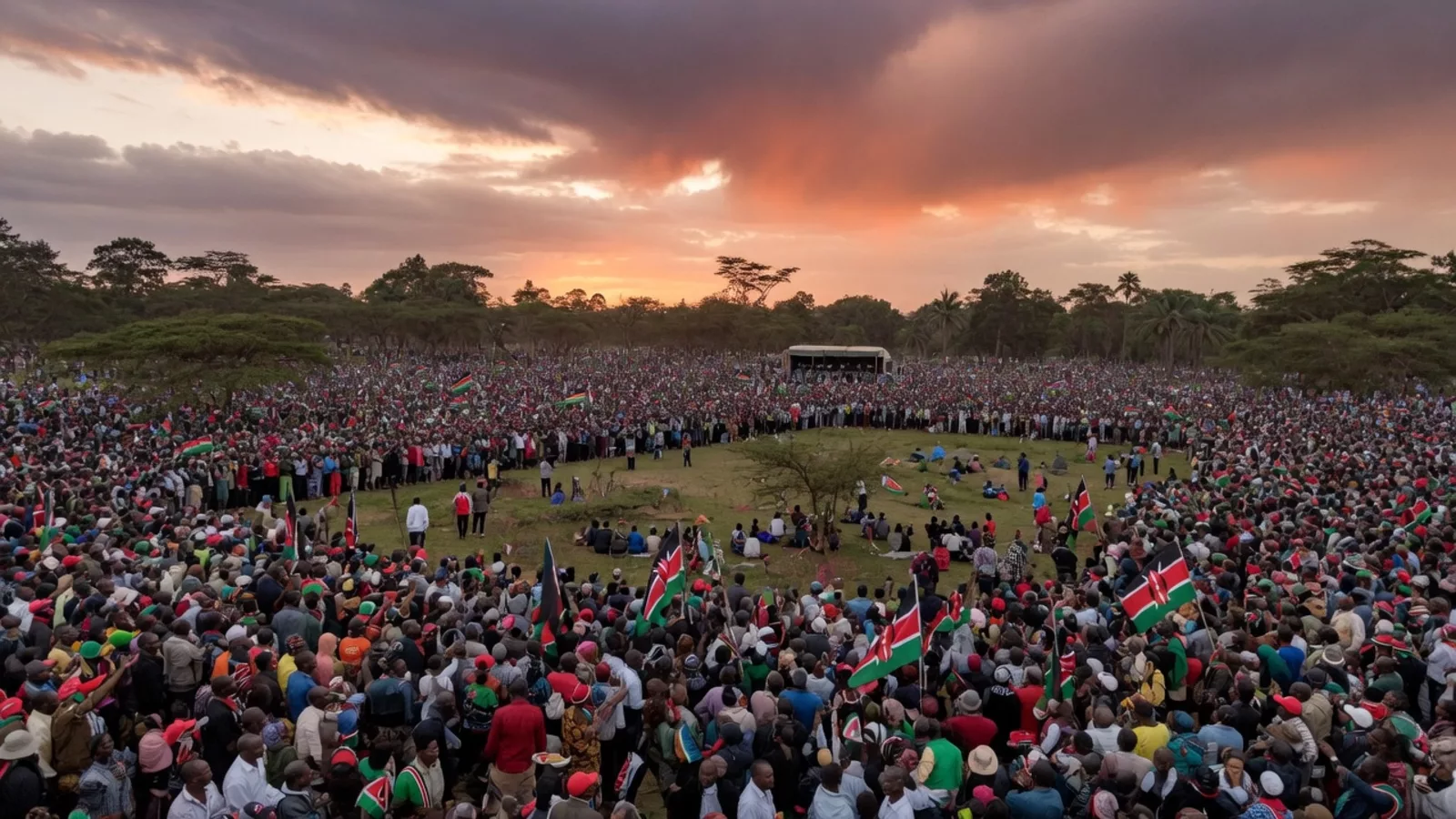
Odinga's remains were repatriated to Kenya in the days following his death. A state funeral attended by regional heads of state, senior government officials, foreign dignitaries, and tens of thousands of Kenyans was held before he was buried on October 19, 2025, at his family's ancestral homestead in Bondo, Siaya County, in western Kenya. The site lies near the grave of his father Jaramogi, cementing the Odinga family's place in the national story. President William Ruto declared three days of national mourning and ordered flags across government buildings to fly at half-mast in tribute to a man he described as an irreplaceable pillar of Kenyan public life.
Odinga's death leaves a significant vacuum in Kenyan opposition politics that will not be easily filled. For decades, his movement — organized at various times under the Orange Democratic Movement and successive political formations — served as a structural counterweight to governing coalitions and amplified the grievances of marginalized communities from Nyanza to the coast. With the 2027 general election already drawing interest from potential presidential contenders, political parties, civic organizations, and the broader opposition now face the urgent challenge of reorganizing without the one figure who, for better or worse, had defined what it meant to stand outside power in Kenya for a generation.