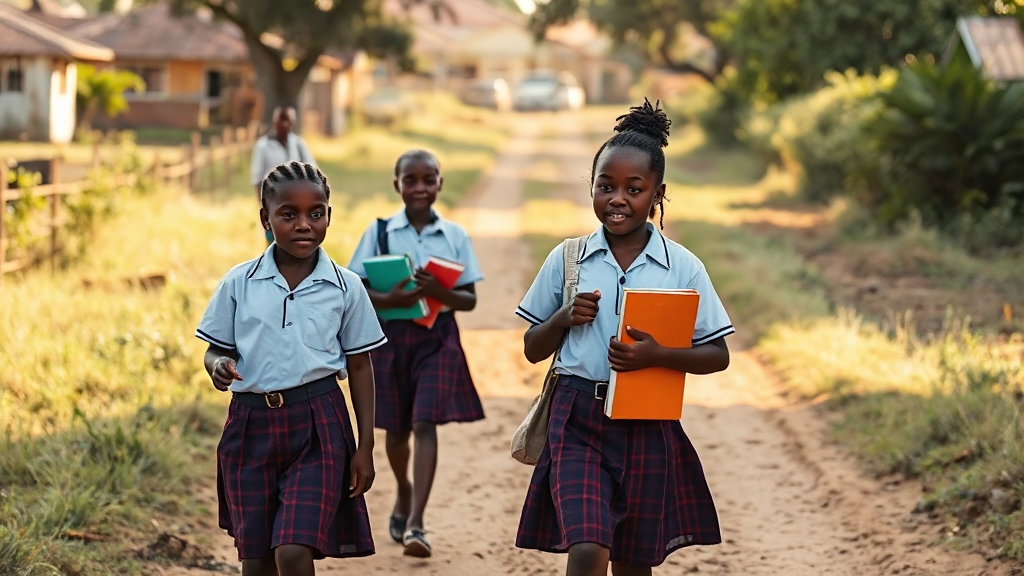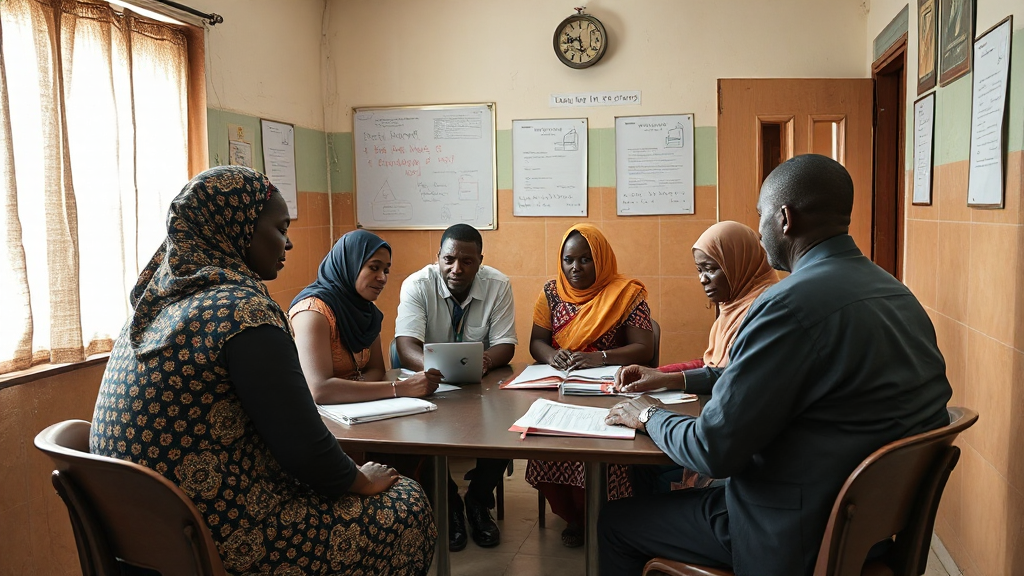

Kenya’s education system reached a milestone it has been building towards since 2017: in January 2026, the pioneer cohort of the Competency-Based Curriculum (CBC) formally transitioned into Senior School — the final three-year phase of basic education that replaces the old Kenya Certificate of Secondary Education structure. Approximately 876,000 learners entered Grade Ten across 3,412 public and private Senior Schools gazetted by the Ministry of Education, a moment that Education Cabinet Secretary Julius Ogamba described as “the moment theory becomes practice.”
The transition has been years in preparation and months in controversy. Critics ranging from teachers’ unions to university dons have questioned whether the country’s physical infrastructure, teacher capacity, and assessment systems are ready for a model that demands project-based learning, subject specialisation tracks, and continuous assessment rather than the single high-stakes final examination that defined the old Form Four system.
Three Pathways, Many Questions
Senior School under CBC offers learners three broad pathways: Arts and Sports Science, Social Sciences, and Science, Technology, Engineering, and Mathematics (STEM). Each pathway contains compulsory and elective subjects, and students are expected to select their pathway at the end of Grade Nine based on aptitude results, parental input, and career interest inventories conducted by school counsellors. The Kenya National Examinations Council (KNEC) has designed a new Senior School Certificate to replace the KCSE, with continuous school-based assessments contributing 40 per cent of the final grade.
In practice, the pathway system has exposed acute resource disparities. A survey by the Kenya Secondary School Heads Association (KESSHA) conducted in March 2026 found that 61 per cent of public Senior Schools lack dedicated science laboratory equipment for STEM learners, and 44 per cent have fewer than three subject teachers per pathway. Schools in arid and semi-arid counties — including Turkana, Wajir, and Mandera — reported particularly severe shortfalls, with some institutions offering only one of the three pathways due to teacher and facility constraints.
“The curriculum on paper is excellent,” said KESSHA Chair Kahi Indimuli. “The curriculum on the ground in Turkana is a different matter. A child’s pathway should not be determined by what their school can afford to offer.”
Government Response and Investments
The Ministry of Education has countered that significant investments are under way. A Sh14 billion Senior School Infrastructure Fund, financed jointly by the national government and the World Bank, is constructing or refurbishing 1,800 science laboratories and 620 arts and sports facilities, with completion targeted for December 2026. An emergency teacher recruitment round in April 2026 added 12,400 specialist subject teachers to the payroll — though the Teachers Service Commission (TSC) acknowledges this represents roughly 60 per cent of the requirement.
The government has also deployed a digital learning package — tablets preloaded with CBC-aligned content from the Kenya Institute of Curriculum Development (KICD) — to 7,200 Senior Schools through an expanded partnership with Safaricom’s education division and Equity Group Foundation. In areas with reliable 5G or 4G connectivity, learners can access supplementary video lessons and peer-assessment tools through the Soma Link platform launched in February 2026.
Parents and Learners Navigate the New Terrain
For the learners themselves — who have grown up as what educators call the “CBC generation” — the Senior School transition brings a mix of excitement and anxiety. Grace Auma, 16, from Olympic Secondary School in Nairobi’s Kibera constituency, told ZaKenya.com she had chosen the Social Sciences pathway after her Grade Nine aptitude results pointed towards law and public policy. “My parents wanted me in STEM because they think it pays more. But the aptitude test showed my strengths, and my teacher helped me explain that to them,” she said.
University admission criteria under the new system remain a subject of active negotiation between the Ministry, KNEC, and the Kenya Universities and Colleges Central Placement Service (KUCCPS). A provisional framework published in May 2026 proposes minimum Senior School Certificate scores per pathway for various degree programmes, but university vice-chancellors have asked for more time to assess how the 40 per cent continuous assessment component will be standardised across schools of vastly different resources before they commit to fixed cut-offs.
The transition, in short, is a work in progress — but a consequential one. How the pioneer CBC class navigates Senior School will shape Kenya’s human capital development for a generation, and will determine whether a reform conceived with genuine ambition delivers on the promise of educating not just the head, but the hand and the heart.