Girl Child Education Drive: Kenya Achieves Gender Parity in Secondary School Enrolment
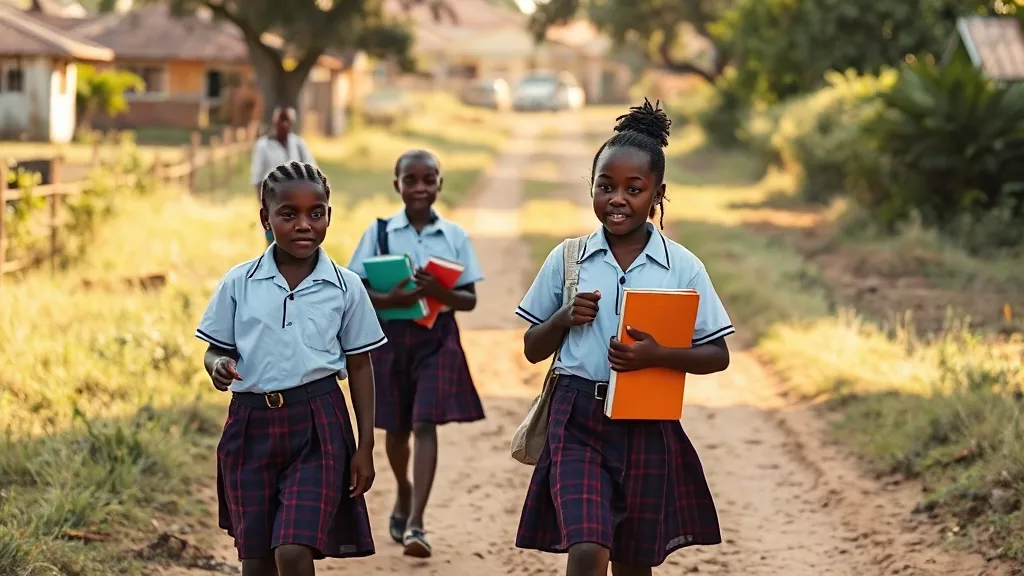
Kenya has achieved a landmark milestone in its pursuit of educational equity: for the first time since independence, the country's secondary school enrolment figures show an equal proportion of girls and boys — a parity index of 1.00 recorded in the 2025/2026 academic year, according to official data released by the Ministry of Education last month.
The figure, confirmed in the Ministry's Annual Education Statistics Report, shows 2.87 million girls enrolled in Forms One through Four alongside 2.86 million boys — a reversal of a gap that as recently as 2015 showed girls trailing boys in secondary enrolment by nearly 12 percentage points. The shift places Kenya among only a handful of sub-Saharan African nations to have achieved this benchmark, alongside Rwanda, Namibia, and South Africa.
A Decade of Deliberate Policy
Education analysts are careful to note that parity in enrolment does not automatically translate into equality in outcomes — completion rates, quality of learning, and post-secondary transition figures tell a more complex story. But they equally acknowledge that reaching this enrolment milestone required a sustained, multi-faceted policy effort that many observers doubted was achievable within a decade.
The interventions credited with driving the shift include the abolition of secondary school examination fees for girls in 2019, the expansion of the sanitary towel programme to cover all public secondary schools from 2021, the construction of dedicated girls' dormitories in 1,200 schools in ASAL counties between 2020 and 2024, and — critically — sustained government messaging through the Inua Msichana campaign that framed girls' education as a family economic investment rather than a charity.
"We did not get here by accident," said Education CS Julius Ogamba, announcing the figures at a ceremony marking the International Day of the Girl. "We got here because successive governments made this a priority and because communities across Kenya changed their minds about what girls deserve."
The Role of Bursaries and Mentorship
The government's constituency bursary system, reformed in 2023 to ring-fence 50 per cent of allocations for female beneficiaries, is widely cited as a critical financial lever. In counties such as Kilifi, Kwale, and Marsabit — where early marriage and the cost of school fees historically drove girls out of the system — the bursary reforms coincided with measurable jumps in female enrolment of between 15 and 19 per cent in a single academic year.
Equally significant has been the proliferation of peer mentorship programmes run by organisations including Educate!, Girl Effect, and the Kenyan government's own Vijana na Elimu initiative, which pairs female secondary students with professional mentors — predominantly young women who have navigated higher education and entered professional careers. Program evaluations suggest that girls with a mentor are 31 per cent less likely to drop out before sitting KCSE.
Grace Akinyi, a Form Three student at Siaya Girls' High School, told ZaKenya.com that her mentor — a software developer based in Nairobi — had fundamentally changed her perception of what was possible. "She calls me every two weeks. She was the first person I knew personally who had gone to university from a village like mine," Grace said. "Before I met her, secondary school felt like a destination. Now it feels like a departure point."
The Next Frontier: Retention and Quality
The achievement is tempered by data showing that while girls are entering secondary school in equal numbers to boys, their completion rates remain lower. The Ministry's own figures show that girls account for 49.2 per cent of KCSE candidates — slightly below the 50 per cent enrolment share — indicating that a meaningful proportion drop out before sitting the final examination, disproportionately in counties where teenage pregnancy rates remain elevated.
Advocacy groups are pressing the government to extend its re-admission policy — which theoretically allows girls who fall pregnant to return to school after delivery — with real enforcement and stigma-reduction support at the school level. "Parity in enrolment is a headline," said Daisy Amdany, Executive Director of the Centre for Rights Education and Awareness (CREAW). "Our headline should be parity in KCSE completion. We are not there yet, and the 2027 election cycle should not let politicians rest on this milestone before that work is done."
The Ministry says a dedicated retention strategy — including expanded school-based counselling and revised teacher training guidelines on handling pregnant students and young mothers — will be piloted in 10 counties from January 2027.