
Remote Work Opportunity: 50,000 Kenyans Now Work for International Companies from Home
Careers

Remote Work Opportunity: 50,000 Kenyans Now Work for International Companies from Home

A quiet economic revolution is unfolding in Kenya’s middle-class households, co-working spaces, and rural towns with reliable fibre connections. As of mid-2026, an estimated 50,000 Kenyan professionals are employed directly by international companies — on payroll contracts, not just freelance assignments — and are conducting their work entirely from Kenyan soil. The figure, compiled from a joint survey by the Kenya ICT Authority and the Konrad Adenauer Stiftung, does not include the far larger cohort of freelancers and gig workers, making the true scale of Kenya’s international remote workforce considerably broader.

The implications for household incomes are profound. Workers in this category earn a median gross income of approximately USD 2,400 per month — the equivalent of roughly Ksh 310,000 at current exchange rates — placing them in Kenya’s top 5 per cent of earners by income. Many are employed in software development, data science, customer experience, content and UX design, and financial analysis, fields where the global talent shortage has eroded the logic of geography-based salary discrimination.

Infrastructure as Enabler

Three infrastructure developments have converged to make large-scale remote work viable in Kenya in a way that was impossible even five years ago. Safaricom’s 5G network, which as of June 2026 covers all 47 county headquarters and is active in 23 secondary towns, has brought broadband-class connectivity to areas previously dependent on congested 4G. The TEAMS and EASSy submarine cable upgrades, completed in 2024, increased Kenya’s international internet capacity by 40 per cent, reducing latency on video calls to levels comparable to European offices. And M-Pesa’s integrations with Wise, PayPal, and Payoneer have, for the first time, given Kenyan employees a frictionless mechanism to receive foreign-currency salaries and convert them to shillings at near-market rates.

“When I joined a Berlin-based fintech in 2024, my biggest worry was payments. Within three months I had a Wise account feeding directly to my M-Pesa. The whole thing runs on autopilot now,” said Grace Wanjiru, a 29-year-old product designer from Thika who has worked remotely for three consecutive European employers. “My rent, my SACCO contributions, everything — my salary lands and it just flows.”

Policy Gaps and the Taxation Question

The boom has, however, exposed serious gaps in Kenya’s regulatory and tax architecture. Kenya Revenue Authority has acknowledged that a significant portion of internationally earned income by resident Kenyans is not being declared for income tax purposes, either because workers do not understand their obligations or because the intersection of double taxation agreements and Kenya’s source-based income rules creates genuine ambiguity.

KRA Commissioner General Humphrey Wattanga signalled at a May 2026 stakeholder forum that the authority would be publishing guidance specifically for remote workers earning foreign income before the end of the third quarter. “We are not approaching this as an enforcement first issue,” he said. “We want voluntary compliance, and that requires clarity we have not yet provided.” Tax specialists note that Kenya’s relatively low top marginal rate of 30 per cent and the existence of a Double Taxation Agreement with most major source countries mean that, for most remote workers, the tax liability is manageable once properly structured.

Labour law presents a separate puzzle. Remote workers employed directly by foreign companies operate entirely outside the Employment Act’s protections — there is no minimum leave entitlement, no statutory notice period, and no employer contribution to NSSF or SHA. The National Assembly’s Labour Committee has received a petition from the Kenya Remote Work Association calling for a specific legal framework, but progress has been slow against a crowded legislative calendar.

Despite these challenges, demand among young Kenyan professionals to access the international remote labour market has never been higher. Bootcamps and upskilling programmes oriented specifically towards international job placement — including the government-backed Ajira Digital programme, which has trained over 200,000 young people since its relaunch in 2024 — are consistently oversubscribed. Kenya’s competitive advantages are clear: a young, English-speaking, technically literate workforce, a time zone that overlaps usefully with both European mornings and North American evenings, and a cost of living that makes Nairobi an attractive base even by East African standards. The 50,000 figure is, most observers agree, a floor rather than a ceiling.

Read More
Top 10 Highest-Paying Careers in Kenya in 2026: Tech and Finance Lead
Careers

Top 10 Highest-Paying Careers in Kenya in 2026: Tech and Finance Lead

Kenya’s labour market has undergone a significant re-pricing over the past three years, and in 2026 the distance between the best-compensated professionals and the median worker has never been wider. A combination of global demand for African tech talent, the deepening of Nairobi’s financial services hub, and the premium placed on specialised skills in a tightening talent pool has pushed top salaries to levels that would have seemed extraordinary a decade ago. Based on compensation surveys from Deloitte East Africa, BrighterMonday, and the Kenya Human Resource Management Professional Centre, here are the ten careers commanding the highest packages in 2026.

Technology and Data Sciences Dominate the Top Tier

1. Cloud Solutions Architect. Monthly packages range from Ksh 450,000 to Ksh 750,000 for professionals with AWS, Azure, or Google Cloud certifications and five or more years of enterprise experience. Demand is driven by the aggressive cloud migration underway across Kenya’s banking sector and the regional headquarters of multinationals.

2. Data Scientist / Machine Learning Engineer. The AI investment cycle has created acute scarcity. Experienced ML engineers at firms such as Safaricom, M-Kopa, and the regional offices of Google and Microsoft earn between Ksh 400,000 and Ksh 650,000 monthly, with equity components common at growth-stage startups.

3. Cybersecurity Specialist. As Kenya processes over Ksh 8 trillion annually through digital payment rails, demand for professionals who can protect those systems has outrun supply. Senior cybersecurity roles now attract Ksh 380,000 to Ksh 600,000 per month, with international firms paying dollar-denominated salaries to retain talent.

4. Software Engineer (Senior / Staff Level). Full-stack and backend engineers with proficiency in Python, Go, or Rust and experience in distributed systems earn Ksh 300,000 to Ksh 550,000 at the senior level. Engineers employed by international remote-first companies often earn at international rates, effectively decoupling their income from the Kenyan salary market altogether.

5. Investment Banker / Corporate Finance Manager. Nairobi’s position as East Africa’s undisputed financial capital sustains a cohort of investment banking professionals whose all-in compensation — base salary, bonuses, and carried interest — ranges from Ksh 350,000 to Ksh 600,000 per month. The NSE’s growing derivatives market and East Africa’s active M&A pipeline keep demand for deal-making talent robust.

Medicine, Aviation, and Law Round Out the Rankings

6. Petroleum Engineer. Upstream activity in Turkana and the offshore blocks in the Indian Ocean keeps petroleum engineering among the highest-paid disciplines. Salaries range from Ksh 320,000 to Ksh 500,000, though the number of active positions remains limited relative to other sectors.

7. Medical Specialist (Surgeon / Cardiologist / Anaesthesiologist). Despite the ongoing brain drain to the United Kingdom and Germany, those specialists who remain in the private sector command Ksh 300,000 to Ksh 480,000 per month at Nairobi Hospital, Aga Khan, and MP Shah. The SHA transition has boosted patient volumes at accredited private facilities, marginally improving specialist earnings.

8. Commercial Pilot. With East African aviation expanding and Kenya Airways rebuilding its fleet ahead of anticipated tourism growth tied to the 2028 Los Angeles Olympics promotion cycle, captains earn Ksh 350,000 to Ksh 450,000 monthly. First officers earn considerably less but enjoy a defined career trajectory.

9. Actuary. The IRA’s new risk-based capital requirements have created intense demand for qualified actuaries across both insurance and pension fund management. Fully qualified Fellows of the Institute and Faculty of Actuaries (FIAs) earn between Ksh 280,000 and Ksh 420,000, with multinational reinsurers paying at the upper end.

10. Tax and Transfer Pricing Specialist. Kenya Revenue Authority’s aggressive enforcement agenda under the IMF programme has paradoxically enriched the private-sector tax advisory community. Senior transfer pricing experts at the Big Four earn Ksh 250,000 to Ksh 380,000 monthly, with partners earning substantially more through profit-sharing arrangements.

For young Kenyans plotting a career path, the message from the 2026 salary data is unambiguous: invest in deep technical skills, pursue global certifications, and position yourself in a sector where scarcity is structural rather than cyclical. The returns, in an economy where most formal workers earn under Ksh 50,000 per month, are transformative.

Read More
Insurance Regulatory Authority Cracks Down on 23 Non-Compliant Insurers
Finance

Insurance Regulatory Authority Cracks Down on 23 Non-Compliant Insurers

The Insurance Regulatory Authority (IRA) has taken enforcement action against 23 insurance companies operating in Kenya, in what officials are describing as the most comprehensive compliance sweep the sector has seen in more than a decade. The crackdown, announced in June 2026, targets persistent failures to settle legitimate claims, chronic capital shortfalls, and opaque corporate governance structures that the regulator says have eroded consumer confidence in a sector that ought to be a cornerstone of Kenya’s financial resilience.

Of the 23 firms cited, six have had their licences suspended pending recapitalisation, while 11 have been issued with show-cause notices and given 60 days to demonstrate solvency or risk outright cancellation. The remaining six received administrative fines totalling Ksh 340 million for mis-selling practices and delayed claims settlement, some involving policyholders who had been waiting for payouts for over three years.

A Sector Under Scrutiny

IRA Commissioner-General Godfrey Kiptum was unapologetic about the severity of the action. “Insurance exists to honour promises. When a company collects premiums for years and then invents reasons not to pay a claim, it is not operating a business — it is running a fraud,” he said at a press briefing in Nairobi. “The era of regulatory tolerance is over.”

The timing of the crackdown is significant. Kenya’s new Social Health Authority (SHA), which replaced the National Hospital Insurance Fund in 2025, relies heavily on private insurers as complementary health finance vehicles for middle-income earners who opt out of the state scheme. Several of the firms cited had health insurance portfolios where claim rejection rates exceeded 40 per cent — a figure that, in the regulator’s assessment, could not be explained by legitimate underwriting criteria alone.

Kenya Re and other mid-tier reinsurers have welcomed the move, arguing that the presence of under-capitalised primary insurers distorts pricing across the industry. “If a company is not holding adequate reserves, it can offer premiums that no financially sound insurer can match. That is not competition; it is a race to insolvency that ultimately harms policyholders,” said a senior actuary at a Nairobi-based consultancy who asked not to be named.

Capital Adequacy and the 2024 Legacy

The root of many of the capital shortfalls identified by the IRA lies in the El Niño rains of late 2023 and early 2024, which triggered a surge in agricultural and property claims that several smaller insurers had not adequately reserved for. Premium income failed to keep pace with loss ratios, and some firms quietly drew down on solvency buffers to fund operations rather than disclosing their true financial position to the regulator.

New IRA rules effective from January 2026 require all general insurers to maintain a risk-based capital surplus of at least 150 per cent, up from the previous minimum of 100 per cent. Life insurers face a separate set of stress-testing requirements linked to long-tail actuarial liabilities. The 23 firms flagged in June had all failed at least one element of these requirements in their 2025 statutory returns.

Consumer advocacy groups have praised the IRA’s resolve while calling for faster resolution mechanisms for aggrieved policyholders. The Kenya Insurance Ombudsman processed 4,200 formal complaints in the first quarter of 2026 alone, a 37 per cent increase year-on-year, underscoring the depth of public frustration. Civil society organisations have called for a statutory compensation fund — similar to the Policyholders Protection Board that exists in South Africa — to provide a backstop for claimants whose insurer is placed into administration.

President Ruto’s administration, heading into the 2027 electoral cycle, has identified consumer financial protection as a visible governance win, and Treasury officials have signalled that amendments to the Insurance Act may be tabled before Parliament before the end of the year. For now, Kenya’s insurance industry faces a reckoning that is long overdue — and the 23 firms in the IRA’s crosshairs are only the most visible face of a deeper structural challenge.

Read More
Literacy Rate in Kenyan Pastoralist Communities Rises to 74% After Mobile Schools Programme
Education

Literacy Rate in Kenyan Pastoralist Communities Rises to 74% After Mobile Schools Programme

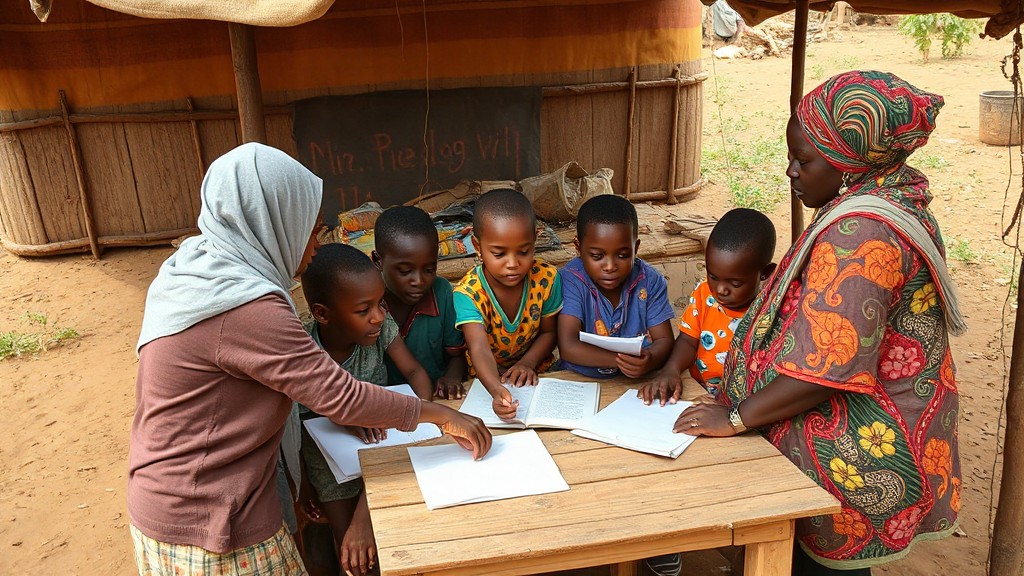
Literacy rates among children in Kenya’s pastoralist communities have reached 74 per cent, according to data published by the Kenya National Bureau of Statistics (KNBS) in its 2026 Arid and Semi-Arid Lands Education Survey — a figure that represents a remarkable 31 percentage-point improvement from the 43 per cent rate recorded in the same survey in 2015. Officials and researchers credit the gain primarily to the Mobile School Programme, a nomadic-education initiative that has over the past decade dispatched collapsible classrooms, trained mobile teachers, and digitally equipped learning hubs to follow pastoralist communities across Kenya’s northern and north-eastern counties.

The programme operates in Turkana, Marsabit, Samburu, Isiolo, Garissa, Wajir, Mandera, and Tana River counties — a combined area of approximately 500,000 square kilometres representing roughly 90 per cent of Kenya’s ASAL geography. In communities where cattle, camel, and goat herds must move seasonally in search of pasture and water — patterns further disrupted by El Niño flooding in 2023 and drought cycles in 2024 — fixed-location schools have historically been irrelevant to families who cannot leave their children behind while the community moves.

How the Mobile Schools Work

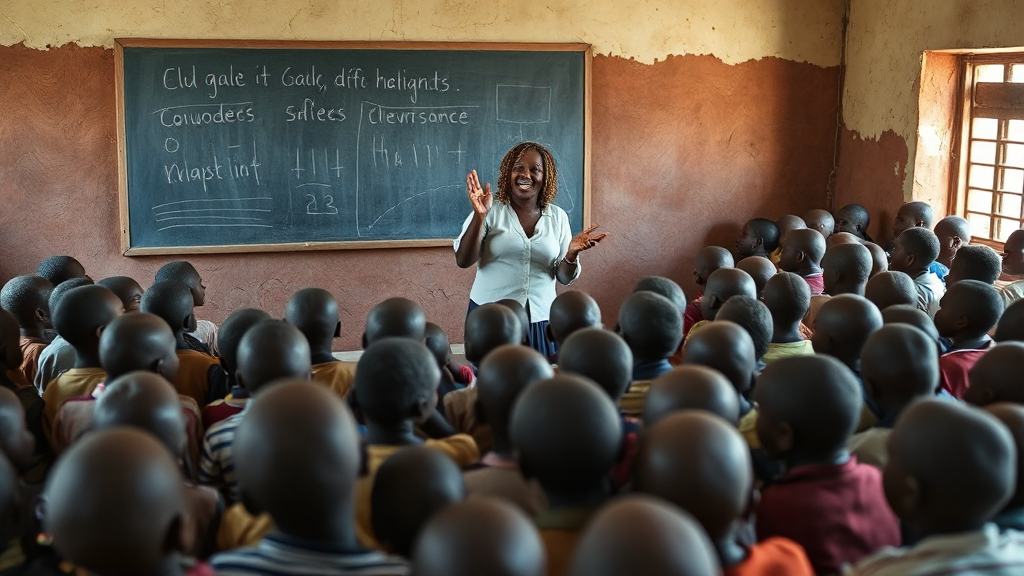
The Mobile School Programme deploys 620 mobile learning units — a combination of purpose-built tented classrooms and retrofitted solar-powered buses — that move on a pre-mapped schedule tracking the seasonal migration routes of the twelve largest pastoralist communities. Each unit serves between 80 and 150 learners and is staffed by two teachers trained in multilingual instruction, covering Swahili, English, and the relevant community language (Turkana, Borana, Samburu, or Somali) as the medium of instruction in lower classes.

A lesson typically lasts 90 minutes, delivered in the morning before the heat peaks and community activities dominate. The KICD has developed a condensed curriculum — known internally as the Nomadic Learning Framework — that covers the CBC competencies in a sequence calibrated for irregular attendance, so that a child who misses two weeks because the community has moved outside the mobile unit’s schedule does not fall hopelessly behind when the unit returns.

“My mother never went to school because the school was not where we were. Now the school is where we are,” said Naomi Lochom, 13, a Turkana learner from a community along the Kerio River whose unit visited every three weeks. Naomi reads fluently in Turkana and Swahili and is studying numeracy at what her teacher assessed as a Grade Five level — well above the average for her age cohort three years ago.

Technology as an Enabler

The programme’s recent acceleration owes much to technology investments that have made mobile delivery more effective and less dependent on teacher availability. Each mobile unit carries a set of forty solar-charged tablets preloaded with offline CBC content, enabling self-directed learning on days when the unit is between communities or when the single teacher is occupied with assessment tasks. Safaricom’s Loon-successor satellite connectivity pilot, operating in northern Turkana since late 2024, has given fourteen of the most remote mobile units reliable internet access for the first time, enabling video lessons from Nairobi-based teachers and real-time attendance data submission to the Ministry.

The KNBS survey also credits a complementary initiative: the Mother Tongue Literacy Campaign, run jointly by the Ministry and UNESCO, which has trained 1,800 community members — primarily women — as paraprofessional literacy facilitators who conduct evening sessions for adults and parents in parallel with the mobile school’s work with children. Adult literacy in pastoralist communities, measured at 51 per cent in the 2026 survey compared to 31 per cent in 2015, has risen significantly as a direct result of this parallel stream.

Challenges That Remain

A 74 per cent literacy rate, while historically exceptional for these communities, still trails the national average of 86 per cent and leaves roughly one in four pastoralist children outside the reach of functional literacy. Climate disruption — El Niño-driven flooding destroyed three mobile school units in Turkana West in November 2023, and extreme heat events have forced the cancellation of learning sessions with increasing frequency — remains the programme’s most unpredictable operational threat.

Transition to higher education remains the other outstanding challenge. Mobile school learners who complete Grade Six face a structural cliff: Kenya’s junior and senior schools are fixed-location institutions that require settlement, a condition many pastoralist families cannot or will not adopt. The Ministry of Education is piloting boarding junior schools in Lodwar, Marsabit town, and Garissa that are specifically designed for pastoralist learners, with school calendars adjusted to align with seasonal migration patterns so that students can return to their communities during peak movement months without losing academic continuity.

“Seventy-four per cent is not the destination — it is proof of direction,” said Education CS Julius Ogamba, who visited a mobile unit in Samburu County in April 2026. “The destination is a Kenya where a child born in a manyatta in Turkana has the same shot at their dreams as a child born in Karen. We are not there yet. But we are closer than we have ever been.”

Read More
Top Kenyan Students Win 14 Scholarships to Ivy League Universities in 2026
Education

Top Kenyan Students Win 14 Scholarships to Ivy League Universities in 2026

A record fourteen Kenyan students have secured full scholarships to Ivy League universities in the 2026 admissions cycle, the highest number ever recorded in a single year and a milestone that the Ministry of Education has attributed to the growing reach of scholarship mentorship programmes, improved access to standardised test preparation, and a cohort of public school graduates who have demonstrated that academic excellence in Kenya is not confined to elite private institutions.

The fourteen scholars — whose awards span Harvard, Yale, Princeton, Columbia, and the University of Pennsylvania — include nine graduates of public national schools, a proportion that scholarship advocates say represents a meaningful shift from the pattern of previous years when private schools such as Aga Khan Academy, Brookhouse, and Braeburn dominated Kenya’s Ivy League admission results. Among the cohort are students from Alliance High School in Kikuyu, Starehe Boys’ Centre in Nairobi, Kisumu Girls’ High School, and St Joseph’s High School in Kitale.

Who the Scholars Are

The group is diverse in gender, geography, and intended field of study. Eight of the fourteen are young women — itself a record for a single Kenyan cohort — and their academic interests range from computational biology and public health to international law and architecture. Faith Wanjiku, 19, from Limuru Girls’ Secondary School, will study Computer Science at Princeton on a full financial aid package after her research project on machine-learning applications for detecting counterfeit medicines caught the attention of the Princeton admissions office through the African Leadership Academy’s Bridge to University programme.

Omar Hassan, 18, from Garissa — a county where education infrastructure has historically been among the most fragile in the country — will read Economics at Yale following a near-perfect score on the SAT and an essay on fiscal policy for conflict-affected economies that his Yale interviewer reportedly described as “more sophisticated than most undergraduate thesis proposals we receive.” Hassan attended a Garissa County day school and prepared for the SAT using free resources and a mentorship partnership between his school and the Aga Khan Education Service.

“These students are not anomalies,” said Dr Anne Muigai, Executive Director of the Kenya Scholarship Network, which coordinates application support across 34 counties. “They are what Kenya produces when talented young people get information about opportunities, help navigating a complex application process, and encouragement to aim beyond what their immediate environment tells them is possible.”

The Role of Mentorship Infrastructure

The record result in 2026 is not accidental. Over the past four years, a network of organisations including the Kenya Scholarship Network, the US Embassy’s EducationUSA programme, the Mastercard Foundation Scholars programme, and the Africa-America Institute has substantially expanded its presence in public schools outside Nairobi. Annual SAT preparation camps — held in Nairobi, Mombasa, Kisumu, Nakuru, and Eldoret — enrolled 3,200 students in 2025, up from 650 in 2021. Online application workshops delivered by Kenyan alumni at US universities, many of them conducted via Zoom with groups in county libraries using Safaricom’s 5G-enabled connectivity, have democratised access to application coaching that previously required a family’s ability to pay for a private consultant.

The US Embassy in Nairobi has played a facilitative role, issuing student visas for 97 per cent of Kenyan Ivy League and US university-bound students within fifteen days in 2025 — a processing speed that compares favourably with many other nationalities and which Embassy officials attribute partly to Kenya’s strong diplomatic relationship with Washington, reinforced by President Ruto’s state visit in May 2024 and Kenya’s peacekeeping contributions in Haiti.

Brain Drain Debate Reignited

The scholarships have inevitably reignited the periodic debate about brain drain and the tension between celebrating individual achievement and retaining human capital in Kenya. A vocal segment of social media commentary — led, characteristically, by Gen Z voices on X and TikTok — has questioned whether the education system’s ultimate measure of success should be the number of students it exports to American elite universities or the number it equips to transform Kenyan institutions.

Dr Muigai rejects the dichotomy. “A Kenyan with a Harvard degree in public health who returns to work at the Ministry of Health, or starts a health-tech company in Nairobi, is not a brain drain — they are a brain gain. The question is not whether to send students abroad but whether we build the conditions at home that make return worth choosing.” The Kenya Diaspora Investment Network, for its part, has launched a returnee incentive package in partnership with Nairobi County offering affordable office space and business registration support to graduates returning within five years of completing their studies.

Read More
Kenya's Special Needs Education Gets Ksh 4 Billion Allocation in 2027 Budget
Education

Kenya’s Special Needs Education Gets Ksh 4 Billion Allocation in 2027 Budget

Kenya’s draft 2027 budget, tabled in the National Assembly by Treasury Cabinet Secretary John Mbadi on 12 June 2026, contains a Ksh 4.02 billion allocation for special needs and inclusive education — the largest single-year commitment to this sector in the country’s post-independence history, and an increase of 67 per cent over the Ksh 2.4 billion allocated in the previous financial year. The announcement has been received with cautious optimism by disability rights organisations that have long argued Kenya’s roughly 2.7 million children and youth living with disabilities have been systematically underserved by an education system designed overwhelmingly for learners without additional needs.

The allocation will be managed through the Ministry of Education’s Special Needs Education directorate and will be distributed across four principal expenditure heads: capital development of special schools and resource centre facilities (Ksh 1.4 billion), procurement and distribution of assistive devices and learning materials (Ksh 1.1 billion), training and allowances for special needs teachers (Ksh 980 million), and a new Community Inclusive Education programme targeting out-of-school children with disabilities in rural and ASAL counties (Ksh 540 million).

What the Funding Will Deliver

The Ministry has published a detailed implementation framework linked to the budget line, a level of transparency that observers credit to sustained advocacy from the Kenya Disability Parliamentary Caucus. Under the framework, 48 Special Schools will receive comprehensive facility upgrades — replacing ageing dormitory blocks, installing accessible sanitation, and equipping multi-sensory learning rooms designed for learners with visual, hearing, intellectual, and physical disabilities. A further 1,200 mainstream public schools will receive resource room conversions, enabling them to support learners with mild to moderate disabilities within inclusive classroom settings rather than requiring full transfer to residential special schools.

The assistive devices component — one of the most tangible and politically visible aspects of the package — will fund the procurement of 85,000 hearing aids, 32,000 braille learning kits, 12,000 motorised wheelchairs adapted for school use, and 9,600 communication devices for learners with autism spectrum conditions or cerebral palsy. Procurement will be managed through the Kenya Medical Supplies Authority (KEMSA) to secure economies of scale, with distribution coordinated by county education directors.

“For decades, families with deaf children have been told to raise money for a hearing aid on their own or watch their child fall behind,” said Millicent Adhiambo Odhiambo, MP for Rangwe and Chair of the Disability Parliamentary Caucus. “This budget says: the state sees you. The state has a duty to you. That is a different conversation from anything we have had before.”

Teacher Training: A Critical Bottleneck

The allocation for special needs teacher training addresses what experts consistently identify as the system’s most critical bottleneck. Kenya currently has approximately 5,800 trained special needs teachers serving a school-age population with disabilities estimated at 910,000 — a ratio of 1 teacher per 157 learners, compared to a target ratio of 1 per 20. The Ksh 980 million training component will fund an emergency intake at the Kenya Institute of Special Education (KISE) in Nairobi, creating 1,200 new trained special needs educators annually from 2027, alongside a distance-learning programme for 4,500 existing mainstream teachers to acquire basic inclusive education competencies.

KISE Principal Dr Ruth Njoroge welcomed the funding but called for a corresponding review of teacher terms of service. “We train excellent teachers, and then we watch them leave for NGOs or international schools because the TSC’s special needs allowance of Sh5,000 per month has not been reviewed in seven years,” she said. The TSC has indicated it is in discussions with Treasury on revising the allowance, though no commitment has been announced publicly.

CBC Alignment and International Obligations

The increased allocation also reflects Kenya’s obligations under the UN Convention on the Rights of Persons with Disabilities, ratified in 2008, and the specific demands of the CBC curriculum, whose inclusive education framework — written into the curriculum design from its inception — has consistently outpaced what the physical and human resources of public schools could deliver. The Community Inclusive Education programme, which will deploy trained special needs educators on mobile outreach to identify and support out-of-school children with disabilities, echoes the mobile school model credited with raising literacy rates in Kenya’s pastoralist communities and represents an adaptation of that model for the disability context.

Civil society organisations including the African Autism Alliance, the Kenya Society for the Blind, and Inclusion Kenya have broadly welcomed the allocation while noting that implementation quality will determine whether the funds translate into genuine outcomes. “We have seen large special needs budget lines before that got spent on furniture and walls while children waited,” said Inclusion Kenya CEO Dr James Mwangi. “We will be watching the procurement and distribution very carefully, and Parliament will hear from us if we see slippage.”

Read More
Technical and Vocational Training Boom: TVET Enrolments Rise 55% in Three Years
Education

Technical and Vocational Training Boom: TVET Enrolments Rise 55% in Three Years

Kenya’s Technical and Vocational Education and Training sector has recorded enrolment growth of 55 per cent over the three financial years from 2023 to 2026, with the TVET Authority reporting a total of 873,000 registered students across 1,847 public and private institutions as of May 2026. The figure represents a dramatic acceleration from the 563,000 enrolments recorded in 2022–23, and officials and education economists attribute the surge to a convergence of policy shifts, funding availability, demographic pressure, and changing perceptions of vocational training among Kenyan families.

“Three years ago, a parent who wanted their child in TVET felt they were making a concession — admitting that the child was not clever enough for university,” said TVET Authority Director-General Dr Margaret Mwangi at the release of the enrolment data in Nairobi on 19 June 2026. “Today, we have parents actively choosing TVET because they see graduates entering the job market with skills that are immediately employable and earning salaries that exceed what many degree-holders take home in their first five years.”

Drivers of the Growth

Several factors explain the acceleration. The government’s decision in 2023 to extend the capitation grant system — previously reserved for primary and secondary schools — to public TVET institutions has reduced fees for learners substantially, with average annual costs at public institutions falling from Sh45,000 to Sh22,000. HELB’s extension of loan eligibility to TVET students in 2024 further widened access, with 68,000 TVET learners drawing HELB loans in the 2025–26 academic year compared to fewer than 12,000 in 2022–23.

The CBC curriculum has also directed a significant stream of learners toward TVET. The Junior School technical education component, introduced from Grade Seven onwards, has systematised exposure to practical skills — welding, textiles, food production, ICT hardware — in a way that the old 8-4-4 system never did for this age group. Many learners arriving at Senior School for the first time in January 2026 already had a clear vocational orientation and used the Arts and STEM pathways as steppingstones to diploma programmes rather than as university preparation.

Employer demand has played an equally important role. Kenya’s construction sector, buoyed by the government’s affordable housing programme targeting 250,000 units annually, is consuming skilled tradespeople at a pace that training institutions struggle to match. The SGR expansion programme, which is extending the Standard Gauge Railway toward Kisumu, has created demand for civil engineering technicians, electrical fitters, and track maintenance personnel. And the green energy transition — solar installation mandates, EV charging infrastructure, wind farm construction in Turkana — is generating a new category of demand for technically trained workers that simply did not exist in significant volume five years ago.

What Students Are Studying

ICT-related programmes remain the most popular TVET category, accounting for 23 per cent of enrolments, followed by construction and building technology at 19 per cent, electrical and electronics engineering at 14 per cent, and hospitality and tourism at 11 per cent. A notable growth area is automotive technology, driven by the rapid expansion of electric vehicle service requirements: TVET institutions in Nairobi, Mombasa, and Eldoret have introduced EV maintenance and diagnostics modules in partnership with Japanese aid agency JICA and Chinese EV brands that have entered the Kenyan market since 2024.

“My father wanted me to become a lawyer,” said Kevin Omondi, 20, a second-year Electrical Engineering diploma student at Nairobi Technical Training Institute. “I told him I would earn more fixing solar panels. He did not believe me until my cousin, who graduated from here two years ago, bought a second-hand car. Now my father tells everyone his son is in TVET.”

Quality Concerns Amid Rapid Growth

Rapid growth has not come without quality concerns. A spot audit conducted by the TVET Authority in March 2026 found that 312 of the 1,847 registered institutions — predominantly private — had student-to-equipment ratios that fell below minimum standards, and 178 had trainers who lacked industry-current certifications. The Authority has issued improvement notices and has threatened to deregister 64 of the most deficient institutions if remediation is not completed by December 2026.

Industry attachment remains a persistent weak point: only 38 per cent of TVET graduates complete the mandatory three-month industrial placement that is required for certification, largely because many small and medium enterprises are reluctant to host trainees without structured incentives. A proposed tax credit for firms that host TVET attachees has been included in the 2026–27 Finance Bill and is expected to pass when the bill returns to Parliament in July, a measure that stakeholders hope will close the gap between classroom training and workplace readiness.

Read More
Kenya's Teacher Shortage Crisis: 80,000 Posts Unfilled in Public Schools
Education

Kenya’s Teacher Shortage Crisis: 80,000 Posts Unfilled in Public Schools

Kenya’s public school system is currently operating with 80,247 unfilled teaching positions, a deficit that the Teachers Service Commission (TSC) characterises as the most severe since independence and that education experts warn is directly threatening the implementation of the Competency-Based Curriculum now entering its Senior School phase. The figure, drawn from the TSC’s June 2026 workforce audit and released to Parliament’s Education Committee, represents approximately one in five teaching posts in the public system, with the shortfall concentrated disproportionately in ASAL counties, rural primary schools, and the newly established Senior Schools.

TSC Chief Executive Officer Nancy Macharia told the committee on 10 June that the deficit has compounded over successive budget cycles in which teacher recruitment has lagged behind attrition from retirement, resignation, and mortality, while enrolment driven by the free primary and day secondary education programmes has expanded the required workforce. “We are running up a down escalator,” she said. “Each year we recruit, retire, and expand enrolment simultaneously, and the net position worsens.”

Where the Gap Is Deepest

The TSC audit breaks the deficit down by level: junior schools face a shortfall of 28,400 teachers, primary schools 31,100, and the newly established Senior Schools — which opened their doors to CBC cohorts in January 2026 — already carry a deficit of 20,747 posts despite being barely six months into operation. The Senior School shortfall is the most strategically damaging, because the CBC pathway system requires teachers with specialist subject expertise — quantum-literate STEM educators, trained performing arts teachers, and sports science coaches — that Kenya’s teacher training colleges have not historically produced in sufficient volume.

Geographically, Turkana County reports a vacancy rate of 44 per cent, the highest nationally. Mandera, Wajir, Garissa, and Marsabit all exceed 35 per cent. These are the same counties where literacy rates historically lag the national average, creating a cruel circularity: the areas most in need of teaching talent are precisely the areas least able to attract and retain it. Hardship allowances for teachers posted to ASAL areas — currently set at between Sh5,000 and Sh12,000 per month depending on remoteness classification — have not been revised since 2019, eroding their real value substantially over a period of significant inflation.

The CBC Complication

The teacher shortage predates CBC but is sharpened by it. The old 8-4-4 curriculum, for all its criticisms, was delivered by a generalist teacher workforce — a Class Five teacher could cover all subjects with minimal additional training. CBC’s pathway model demands teachers who can guide project-based learning, assess competencies rather than examination performance, and integrate digital tools into daily instruction. The Kenya Education Management Institute (KEMI) has trained 54,000 existing teachers in CBC pedagogy since 2020, but trainer-to-trainee ratios have meant that many teachers received a single three-day workshop — widely acknowledged as inadequate preparation for a genuinely different mode of teaching.

“We have classrooms where one teacher is handling 68 learners across two CBC pathways because there is no one else,” said Moses Nthurima, Secretary-General of the Kenya Union of Post Primary Education Teachers (KUPPET). “This is not teaching. This is crowd management. And the children who suffer most are in the counties that already have the least.”

Government Plans and Funding Gaps

The TSC has sought Treasury approval to recruit 30,000 additional teachers in the 2026–27 financial year, at an estimated additional annual wage cost of Sh14.4 billion. Treasury has approved 20,000 — a figure the TSC describes as “better than nothing but insufficient.” The recruitment exercise, scheduled to open in August 2026, will prioritise STEM, technical, and arts subjects for Senior Schools, and will require applicants to commit to a minimum three-year posting in an underserved county as a condition of appointment.

A parallel initiative under the Ministry of Education will deploy intern teachers — recent graduates from the Kenya Technical Teachers College and public universities with education degrees — on 12-month contracts at a monthly stipend of Sh25,000. Critics have noted that this model, while helpful in the short term, does not address the systemic gap and risks creating a two-tier workforce in which a growing proportion of classroom teachers lack permanent employment security.

Longer-term solutions are under discussion, including reforming the teacher training curriculum to produce graduates who are pathway-ready from day one, and establishing a Kenya Teaching Service Corps modelled on the Peace Corps concept, which would place high-performing graduates in rural schools with meaningful financial incentives. For now, however, 80,000 empty desks at the front of classrooms across Kenya remain the most eloquent testimony to a system under strain.

Read More
Sh3 Billion HELB Loans Released as 180,000 University Students Await Funds
Education

Sh3 Billion HELB Loans Released as 180,000 University Students Await Funds

The Higher Education Loans Board (HELB) disbursed Sh3.04 billion in student loan funds during the week of 16 June 2026, ending a six-week delay that had left 180,000 university and TVET students without stipend money as the second semester entered its final weeks. The release followed sustained pressure from student unions, parliamentary questions from the Education Committee, and a viral social media campaign — amplified by the Gen Z networks that have been politically active since the 2024 protest wave — in which students shared images of empty bank accounts and overdue rent notices under the hashtag #HELBTunaSubiri.

HELB Chief Executive Officer Charles Ringera confirmed the disbursement in a statement issued on 17 June, attributing the delay to the rollout of a new loan management system intended to integrate HELB’s database with the Kenya Revenue Authority’s income registry, a reform designed to improve means-testing accuracy and reduce loan leakage to ineligible recipients. “The system migration took longer than projected. We regret the disruption to students and acknowledge that delays of this length are unacceptable,” he said.

Who Was Affected

Of the 180,000 beneficiaries, approximately 142,000 are undergraduate students at public universities, with the remainder split between private universities accredited for HELB support and technical colleges. Loan amounts range from Sh35,000 to Sh60,000 per semester depending on the student’s financial need score — itself recalculated under HELB’s revised means-testing model that was introduced in the 2025–26 academic year and factors in household income, number of dependants, and county of origin’s Human Development Index score.

Students in Nairobi, Mombasa, and other major urban centres bore the most acute cash-flow pressure, given higher living costs. University of Nairobi student leader Millicent Otieno, speaking to ZaKenya.com hours after disbursement was confirmed, said many students had relied on mobile money credit — including M-Pesa’s Fuliza overdraft — to cover food and transport costs during the wait. “Some students were going two days without a proper meal. For an institution that talks about the Bottom-Up agenda, leaving students to borrow from a mobile app at 0.5 per cent daily interest is an embarrassment,” she said.

The New Repayment Model Under Scrutiny

The delay coincided with HELB’s public consultation on a proposed shift to income-contingent repayment — a model under which loan repayment obligations are pegged to the graduate’s actual earnings rather than a fixed monthly instalment, similar to systems operating in the United Kingdom and Australia. Under the proposal, graduates earning below Sh50,000 per month would pay nothing, with repayment rates scaling from two per cent to eight per cent of monthly income above that threshold.

The model has been broadly welcomed by graduate advocacy groups, who argue the current fixed-repayment system disproportionately burdens early-career workers in low-wage sectors. However, the Kenya Private Sector Alliance raised concerns about administrative complexity, noting that not all employers are plugged into the KRA’s payroll systems through which HELB would track income. Self-employed graduates and those in the informal sector — a large and growing cohort — present particular compliance challenges that the proposal has not yet fully addressed.

Systemic Pressures on HELB

HELB’s funding pressures reflect broader fiscal constraints within President Ruto’s administration as it navigates the IMF programme conditions that have tightened discretionary spending across government. The board’s allocation in the 2026–27 budget stands at Sh18.4 billion, an increase of 12 per cent over the previous year — but one that education economists argue is insufficient to keep pace with rising university enrolment, which has grown 19 per cent since 2022 following the absorption of the first large CBC-adjacent cohorts into higher education pathways.

Parliament’s Education Committee has recommended a review of HELB’s capitalisation model, proposing that the government seed an endowment fund using a portion of unclaimed dividends from state corporations — a mechanism modelled loosely on South Africa’s National Student Financial Aid Scheme. Treasury officials have not committed to the proposal but have indicated it will be considered alongside a wider review of higher education financing expected in the third quarter of 2026.

For the 180,000 students who spent six weeks checking their M-Pesa statements with increasing anxiety, the policy debates are less urgent than the simple relief of seeing funds arrive. HELB has committed to establishing a real-time disbursement tracker on its portal so that students can monitor the status of each semester’s release — a transparency measure that, if implemented effectively, should at minimum reduce the uncertainty that made this particular delay so difficult to endure.

Read More
University of Nairobi Launches Africa's First Quantum Computing Research Centre
Education

University of Nairobi Launches Africa’s First Quantum Computing Research Centre

The University of Nairobi (UoN) formally opened the doors of the African Quantum Computing Research Centre (AQCRC) on 14 June 2026, inaugurating what officials and independent experts confirm is the first facility of its kind on the continent dedicated exclusively to quantum information science. The centre, housed in a newly constructed wing of the Faculty of Engineering complex on the Lower Kabete campus, represents a five-year investment of Sh2.1 billion drawn from national government allocations, the African Development Bank’s Science and Technology Fund, and an in-kind partnership with IBM Research Africa.

Quantum computing — which exploits the principles of quantum mechanics to perform calculations exponentially faster than classical computers for specific problem classes — is widely viewed as one of the defining technologies of the coming decade, with applications in drug discovery, financial modelling, cryptography, climate simulation, and materials science. Until now, African researchers seeking hands-on access to quantum hardware have had to collaborate remotely with facilities in the United States, Europe, or China, a dependency that has hampered the development of homegrown expertise.

What the Centre Offers

The AQCRC hosts a 27-qubit IBM Quantum System One — the first physical quantum processor installed on African soil — alongside a high-performance classical computing cluster for hybrid quantum-classical workloads. It will operate as an open-access facility for researchers from all 54 African Union member states, with an annual allocation of computing time reserved specifically for researchers from least-developed countries. IBM has committed to upgrading the processor to a 133-qubit system by 2028 as part of its global hardware roadmap, which would maintain the centre’s competitive relevance as the global field advances rapidly.

“Africa must not again be in the position of adopting a technology that others built, on terms that others set,” said UoN Vice-Chancellor Prof Kiama Gitahi at the inauguration ceremony, attended by Cabinet Secretary for Education Julius Ogamba and African Union Commissioner for Education Amina Smaili. “We are here to build quantum scientists, not quantum consumers.”

The centre’s inaugural cohort consists of 34 PhD researchers and 12 postdoctoral fellows recruited from twelve African countries including Nigeria, Egypt, South Africa, Rwanda, and Ghana, alongside Kenyan graduates. Their research portfolios span quantum algorithms for agricultural supply-chain optimisation, quantum cryptography protocols for mobile money security — a domain of obvious strategic relevance given M-Pesa’s 38 million active users — and quantum machine learning for early disease detection.

Kenya’s Broader Technology Ambition

The AQCRC fits within a wider technology ecosystem that Kenya has been assembling across the Ruto administration’s term. The Konza Technopolis development, 64 kilometres south-east of Nairobi, now hosts over 80 technology companies and is positioned to absorb applied quantum research outputs as they mature. The government’s Digital Superhighway initiative has extended fibre connectivity to 1,450 public institutions since 2023, creating the data infrastructure that feeds classical computing and positions the country for quantum-era requirements.

IBM Research Africa Director Dr Segun Sangoleye, who relocated his division’s headquarters from Johannesburg to Nairobi in 2025 citing Kenya’s talent density, said the partnership was driven by commercial logic as well as development goals. “Kenya produces more mathematics and physics graduates per capita than any other sub-Saharan African country. Our job is to give those graduates a reason to stay on the continent,” he said.

The centre will also run an undergraduate quantum literacy programme, delivered jointly with Kenyatta University and Strathmore University, that aims to expose 2,000 undergraduate students annually to quantum concepts through short courses and hackathons. A partnership with the Kenya Institute of Curriculum Development will develop quantum-readiness modules for CBC Senior School STEM learners from 2027 — a long-horizon investment in the pipeline of future researchers.

Challenges Ahead

Quantum computing research is expensive, highly specialised, and demands near-perfect environmental control — cryogenic cooling of the quantum processor must maintain temperatures close to absolute zero, a requirement that places heavy demands on a facility operating in Nairobi’s climate and power infrastructure. The centre has invested in redundant cooling systems and an uninterruptible power supply, but engineers acknowledge that Kenya Power’s occasional outages represent an ongoing operational risk that classical IT facilities have long learned to manage but that quantum hardware tolerates far less forgivingly.

Talent retention is a second challenge. Quantum scientists trained in Nairobi will attract attention from research institutions and technology companies in Europe, the Gulf, and North America offering salaries that no Kenyan university can match. The centre’s founding director, Prof Dorothy Radoli — formerly of MIT’s Research Laboratory of Electronics — acknowledged the risk plainly. “We cannot compete on salary alone. We compete on mission, on proximity to African problems, and on the opportunity to be first. For the right scientist, that is enough.”

Read More