Insurance Regulatory Authority Cracks Down on 23 Non-Compliant Insurers
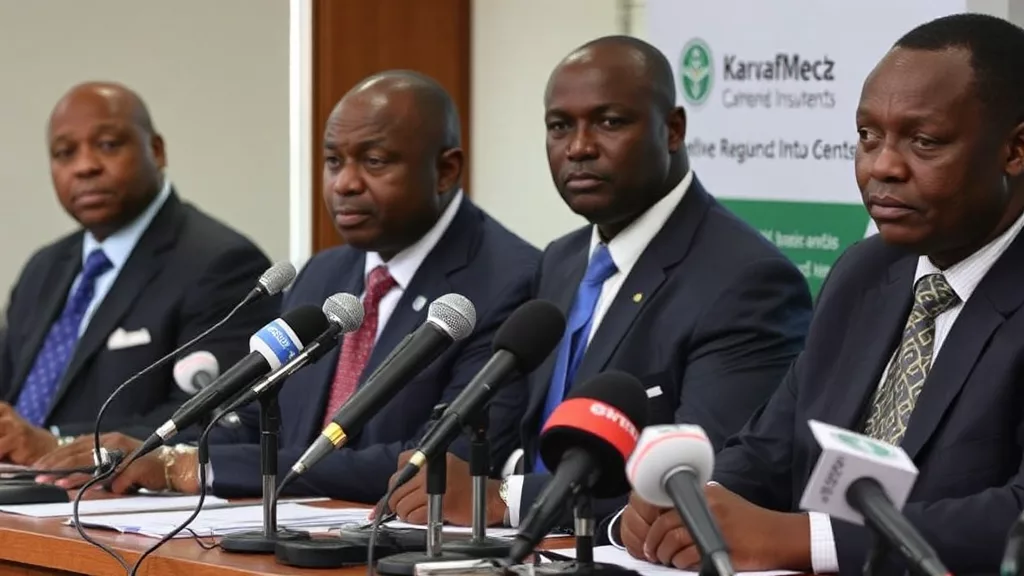
The Insurance Regulatory Authority (IRA) has taken enforcement action against 23 insurance companies operating in Kenya, in what officials are describing as the most comprehensive compliance sweep the sector has seen in more than a decade. The crackdown, announced in June 2026, targets persistent failures to settle legitimate claims, chronic capital shortfalls, and opaque corporate governance structures that the regulator says have eroded consumer confidence in a sector that ought to be a cornerstone of Kenya's financial resilience.
Of the 23 firms cited, six have had their licences suspended pending recapitalisation, while 11 have been issued with show-cause notices and given 60 days to demonstrate solvency or risk outright cancellation. The remaining six received administrative fines totalling Ksh 340 million for mis-selling practices and delayed claims settlement, some involving policyholders who had been waiting for payouts for over three years.
A Sector Under Scrutiny
IRA Commissioner-General Godfrey Kiptum was unapologetic about the severity of the action. "Insurance exists to honour promises. When a company collects premiums for years and then invents reasons not to pay a claim, it is not operating a business — it is running a fraud," he said at a press briefing in Nairobi. "The era of regulatory tolerance is over."
The timing of the crackdown is significant. Kenya's new Social Health Authority (SHA), which replaced the National Hospital Insurance Fund in 2025, relies heavily on private insurers as complementary health finance vehicles for middle-income earners who opt out of the state scheme. Several of the firms cited had health insurance portfolios where claim rejection rates exceeded 40 per cent — a figure that, in the regulator's assessment, could not be explained by legitimate underwriting criteria alone.
Kenya Re and other mid-tier reinsurers have welcomed the move, arguing that the presence of under-capitalised primary insurers distorts pricing across the industry. "If a company is not holding adequate reserves, it can offer premiums that no financially sound insurer can match. That is not competition; it is a race to insolvency that ultimately harms policyholders," said a senior actuary at a Nairobi-based consultancy who asked not to be named.
Capital Adequacy and the 2024 Legacy
The root of many of the capital shortfalls identified by the IRA lies in the El Niño rains of late 2023 and early 2024, which triggered a surge in agricultural and property claims that several smaller insurers had not adequately reserved for. Premium income failed to keep pace with loss ratios, and some firms quietly drew down on solvency buffers to fund operations rather than disclosing their true financial position to the regulator.
New IRA rules effective from January 2026 require all general insurers to maintain a risk-based capital surplus of at least 150 per cent, up from the previous minimum of 100 per cent. Life insurers face a separate set of stress-testing requirements linked to long-tail actuarial liabilities. The 23 firms flagged in June had all failed at least one element of these requirements in their 2025 statutory returns.
Consumer advocacy groups have praised the IRA's resolve while calling for faster resolution mechanisms for aggrieved policyholders. The Kenya Insurance Ombudsman processed 4,200 formal complaints in the first quarter of 2026 alone, a 37 per cent increase year-on-year, underscoring the depth of public frustration. Civil society organisations have called for a statutory compensation fund — similar to the Policyholders Protection Board that exists in South Africa — to provide a backstop for claimants whose insurer is placed into administration.
President Ruto's administration, heading into the 2027 electoral cycle, has identified consumer financial protection as a visible governance win, and Treasury officials have signalled that amendments to the Insurance Act may be tabled before Parliament before the end of the year. For now, Kenya's insurance industry faces a reckoning that is long overdue — and the 23 firms in the IRA's crosshairs are only the most visible face of a deeper structural challenge.