Top Kenyan Students Win 14 Scholarships to Ivy League Universities in 2026
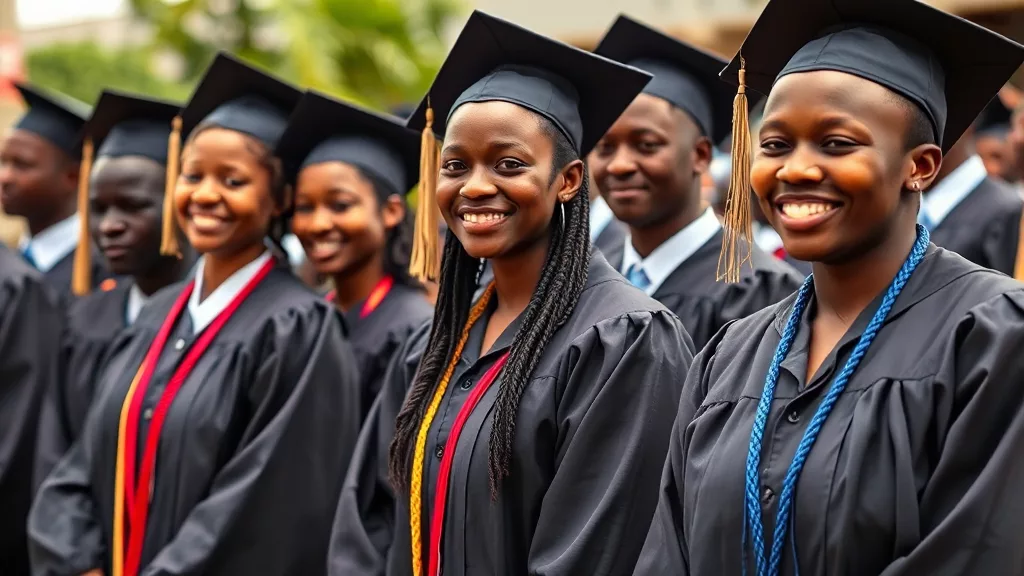
A record fourteen Kenyan students have secured full scholarships to Ivy League universities in the 2026 admissions cycle, the highest number ever recorded in a single year and a milestone that the Ministry of Education has attributed to the growing reach of scholarship mentorship programmes, improved access to standardised test preparation, and a cohort of public school graduates who have demonstrated that academic excellence in Kenya is not confined to elite private institutions.
The fourteen scholars — whose awards span Harvard, Yale, Princeton, Columbia, and the University of Pennsylvania — include nine graduates of public national schools, a proportion that scholarship advocates say represents a meaningful shift from the pattern of previous years when private schools such as Aga Khan Academy, Brookhouse, and Braeburn dominated Kenya's Ivy League admission results. Among the cohort are students from Alliance High School in Kikuyu, Starehe Boys' Centre in Nairobi, Kisumu Girls' High School, and St Joseph's High School in Kitale.
Who the Scholars Are
The group is diverse in gender, geography, and intended field of study. Eight of the fourteen are young women — itself a record for a single Kenyan cohort — and their academic interests range from computational biology and public health to international law and architecture. Faith Wanjiku, 19, from Limuru Girls' Secondary School, will study Computer Science at Princeton on a full financial aid package after her research project on machine-learning applications for detecting counterfeit medicines caught the attention of the Princeton admissions office through the African Leadership Academy's Bridge to University programme.
Omar Hassan, 18, from Garissa — a county where education infrastructure has historically been among the most fragile in the country — will read Economics at Yale following a near-perfect score on the SAT and an essay on fiscal policy for conflict-affected economies that his Yale interviewer reportedly described as "more sophisticated than most undergraduate thesis proposals we receive." Hassan attended a Garissa County day school and prepared for the SAT using free resources and a mentorship partnership between his school and the Aga Khan Education Service.
"These students are not anomalies," said Dr Anne Muigai, Executive Director of the Kenya Scholarship Network, which coordinates application support across 34 counties. "They are what Kenya produces when talented young people get information about opportunities, help navigating a complex application process, and encouragement to aim beyond what their immediate environment tells them is possible."
The Role of Mentorship Infrastructure
The record result in 2026 is not accidental. Over the past four years, a network of organisations including the Kenya Scholarship Network, the US Embassy's EducationUSA programme, the Mastercard Foundation Scholars programme, and the Africa-America Institute has substantially expanded its presence in public schools outside Nairobi. Annual SAT preparation camps — held in Nairobi, Mombasa, Kisumu, Nakuru, and Eldoret — enrolled 3,200 students in 2025, up from 650 in 2021. Online application workshops delivered by Kenyan alumni at US universities, many of them conducted via Zoom with groups in county libraries using Safaricom's 5G-enabled connectivity, have democratised access to application coaching that previously required a family's ability to pay for a private consultant.
The US Embassy in Nairobi has played a facilitative role, issuing student visas for 97 per cent of Kenyan Ivy League and US university-bound students within fifteen days in 2025 — a processing speed that compares favourably with many other nationalities and which Embassy officials attribute partly to Kenya's strong diplomatic relationship with Washington, reinforced by President Ruto's state visit in May 2024 and Kenya's peacekeeping contributions in Haiti.
Brain Drain Debate Reignited
The scholarships have inevitably reignited the periodic debate about brain drain and the tension between celebrating individual achievement and retaining human capital in Kenya. A vocal segment of social media commentary — led, characteristically, by Gen Z voices on X and TikTok — has questioned whether the education system's ultimate measure of success should be the number of students it exports to American elite universities or the number it equips to transform Kenyan institutions.
Dr Muigai rejects the dichotomy. "A Kenyan with a Harvard degree in public health who returns to work at the Ministry Of Health, or starts a health-tech company in Nairobi, is not a brain drain — they are a brain gain. The question is not whether to send students abroad but whether we build the conditions at home that make return worth choosing." The Kenya Diaspora Investment Network, for its part, has launched a returnee incentive package in partnership with Nairobi County offering affordable office space and business registration support to graduates returning within five years of completing their studies.