Wajir students win national science prize with AI drought-risk system
Key points
- Two Form Three students from Wajir won the overall prize at the ninth Young Scientists Kenya National Science and Technology Exhibition in Nairobi.
- Winners: Hafsa Ibrahim Adan and Asha Harun Yarow of Senior Chief Adano Girls Day Secondary School.
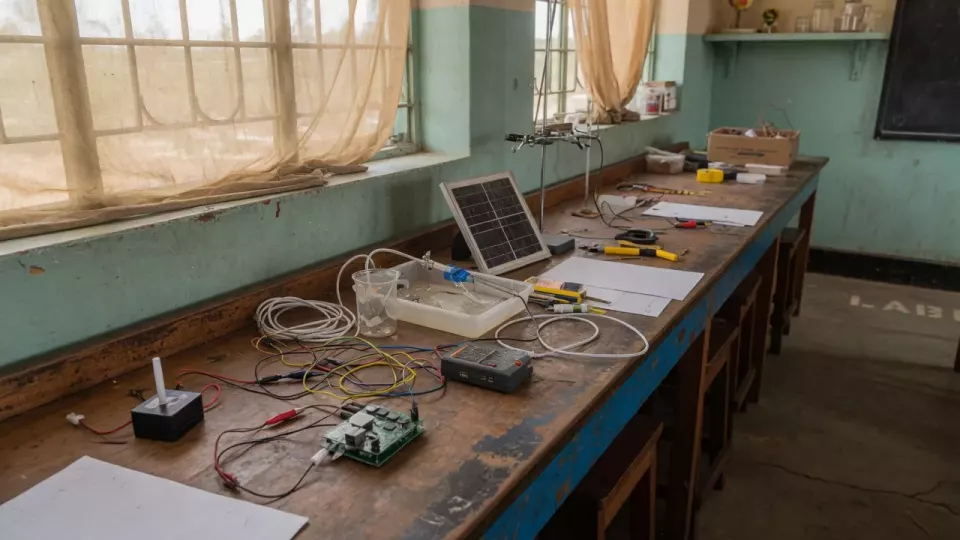
- Their project uses sensors for soil moisture, temperature, humidity and rainfall, then an AI model to indicate drought-risk levels and prediction confidence.
- Goal: earlier drought signals for northern Kenya communities instead of waiting for severe conditions.
Two Form Three girls from Wajir just beat the national science fair with a drought early-warning idea rooted in their own county’s long dry seasons. Eastleigh Voice reported that Hafsa Ibrahim Adan and Asha Harun Yarow of Senior Chief Adano Girls Day Secondary School took the overall prize at the ninth Young Scientists Kenya exhibition in Nairobi.
Their project gathers environmental readings — soil moisture, temperature, humidity and rainfall — through sensors. An artificial-intelligence model then assesses the readings and produces a drought-risk indication, including how reliable the prediction is. The aim is an earlier signal for communities in Wajir and other northern counties that still wait until drought is already severe.
From classroom sensors to pastoral decision tools
Northern Kenya’s pastoral economy lives or dies on timing: when to move herds, when to destock, when to demand county water trucking. A school prototype is not a national early-warning service — but it shows students treating climate risk as an engineering problem, not only a headline. Scale-up would need open weather data, rugged sensors and county extension partners.
Technology desk: Technology. Verified names, school and sensor list from Eastleigh Voice; accuracy benchmarks against Kenya Meteorological Service data were not published in the same package.
Ministries of education and ICT should fund field trials in Wajir wards, not only trophies. The prize is a start; deployment is the exam.
Investors chasing agritech should notice: talent is already building climate tools outside Nairobi’s usual demo circuit.
Education and ICT ministries should fund Wajir field trials with meteorological baselines. A trophy without deployment leaves northern drought early-warning where it started: in a classroom prototype.
Young Scientists Kenya 2026 put northern climate risk on stage: two Form Three students and sensors for soil moisture, temperature, humidity and rainfall feeding a drought-risk score counties can trial in the short rains.
Based on Eastleigh Voice reporting of the Young Scientists Kenya awards. Project performance claims are as described by organisers/students.