
Closing Africa's Radiotherapy Gap: Why Cancer Care Must Not Stay a Privilege
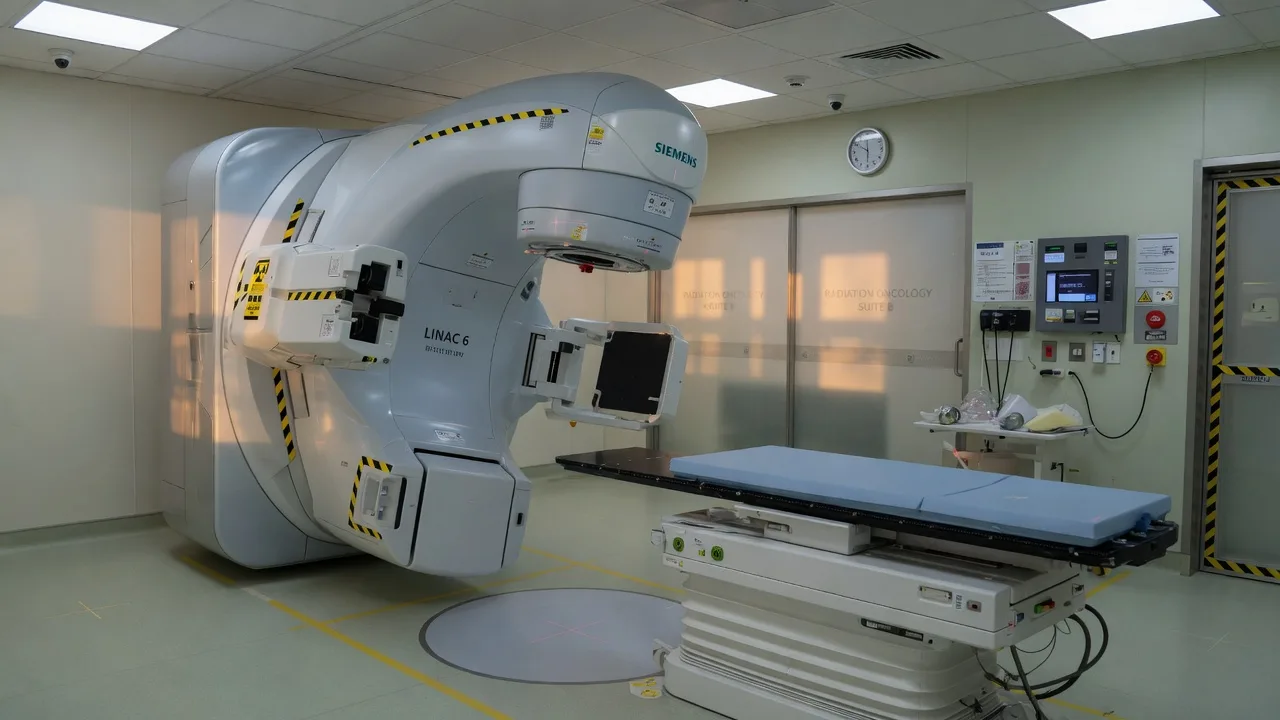
When cancer strikes in sub-Saharan Africa, the odds of surviving it are shaped less by medicine than by circumstance — where a patient lives, how much money they have, and whether their country's single functioning treatment machine happens to be working that week. Writing in Nation.Africa, a cancer survivor makes a direct and uncomfortable case: that survival across the continent has become a matter of privilege rather than possibility, and that this must change.
Key points
- A cancer survivor writing in Nation.Africa argues radiotherapy access in sub-Saharan Africa is determined by wealth and geography.
- The author contends precision radiotherapy technology already exists but remains inaccessible to most Africans.
- Sub-Saharan Africa faces acute shortages of radiotherapy machines, trained specialists, and equitable treatment facilities.
- The piece calls for ending treatment of life-saving radiotherapy technology as a premium-only service.
The writer's argument draws on lived experience as much as systemic analysis. Having navigated a cancer diagnosis from inside what the piece describes as a deeply unequal system, the author contends that innovations in precision radiotherapy — treatments capable of targeting tumours with far greater accuracy than older methods — already exist and already work. The obstacle is not science but access. Africa, the opinion piece argues, must stop treating life-saving technology as a premium service reserved for those wealthy enough, or fortunate enough, to reach it.
A Continent's Stark Equipment Deficit
The evidence on the ground supports that charge. Of the approximately 189 linear accelerators spread across Africa's 160 radiotherapy centres, more than 60 percent are concentrated in just three countries — South Africa, Egypt and Morocco — according to International Atomic Energy Agency data. More than half of the continent's nations have no radiotherapy facilities at all. The IAEA has estimated that only around 10 percent of cancer patients in low-income countries can access radiotherapy treatment, compared with 90 percent in high-income nations. The WHO's global cancer report further documents that in sub-Saharan Africa, a woman diagnosed with breast cancer faces roughly a 39 percent chance of surviving five years — against 85 percent for patients in wealthy countries. The gap is not biological. It is structural.
Kenya's Machine Crisis as a Microcosm
Kenya offers a revealing case study in how that structural failure plays out in practice. Kenyatta National Hospital, the country's leading public referral facility, has repeatedly seen its linear accelerator break down, leaving cancer patients stranded without access to advanced radiotherapy. Waiting times at KNH doubled to an average of 37 days in the financial year ended June 2025. At one point the hospital fell back on an older cobalt machine that cut daily treatment capacity in half, with those turned away left to seek alternatives they often cannot afford. Private institutions, by contrast, have begun commissioning state-of-the-art systems such as the TrueBeam linear accelerator, capable of image-guided, precision tumour targeting — technology that exists in Kenya but remains beyond the reach of most Kenyans.
This is precisely the fault line the Nation.Africa writer draws attention to. The piece does not argue that cutting-edge radiotherapy is absent from Africa — it argues that it is being concentrated by geography and economics, accessible only to the fortunate few referenced in the headline.
The Cost of Standing Still
Africa is projected to record more than 1.5 million new cancer cases annually within the coming years, a figure that makes the current treatment deficit increasingly untenable. Governments, health planners and international partners must, the piece argues, treat radiotherapy infrastructure as essential public health provision — not a secondary concern to be addressed when higher-profile priorities allow it.
Surviving cancer, the writer insists, should not be a question of luck or income. The tools to change outcomes across the continent already exist. What remains missing is the political will, and the sustained investment, to put them where they are needed most.
Sources: Nation.Africa.