
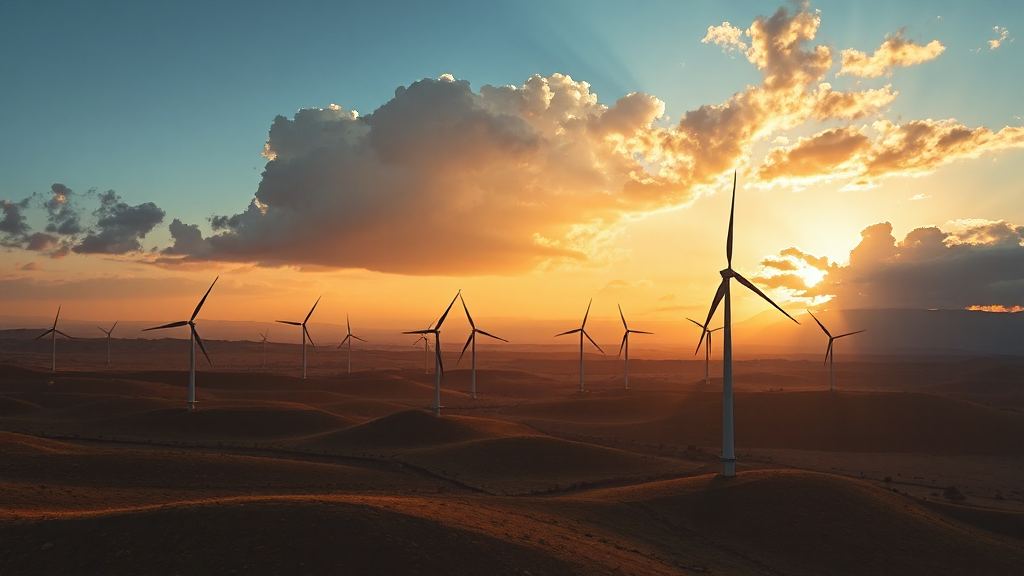
Wind power has emerged as the dominant technology in Kenya’s new electricity generation pipeline for the remainder of the decade, with three major projects totalling over 500 megawatts under active development and the government having definitively shelved its long-contested coal power ambitions. The shift, confirmed in Kenya’s updated Least Cost Power Development Plan published in May 2026, marks the culmination of years of advocacy by climate campaigners, shifting economics that have made wind energy unambiguously cheaper than coal in the Kenyan context, and growing pressure from international development finance institutions to align with Paris Agreement-compatible pathways.
Energy CS Davis Chirchir was unequivocal when presenting the updated plan to the Cabinet. “Coal is not in Kenya’s future. It never was a good fit for a country with the geothermal, wind, and solar resources we have. The question now is how fast we build out what we know works,” he told journalists. The statement drew immediate praise from environmental groups including the Kenya Climate Action Network and a measured welcome from the World Bank, which has conditioned a $300 million development policy loan on Kenya’s continued alignment with clean energy commitments.
Lake Turkana and the Northern Wind Corridor
The Lake Turkana Wind Power (LTWP) project in Marsabit County remains the cornerstone of Kenya’s wind strategy. With its original 310 MW from 365 turbines having operated successfully since 2019, the project’s developer — a consortium including Aldwych International and KLP Norfund Investments — received government approval in March 2026 to proceed with a 150 MW expansion that will add 89 new turbines on the eastern shore of the lake. The expansion, financed through a mix of development finance from the European Investment Bank and project refinancing of the original facility, is scheduled for commissioning by mid-2028.
The LTWP site benefits from the channelling effect of the Turkana corridor — a geographic feature that produces consistent, high-velocity winds averaging 11 metres per second, among the strongest and most reliable wind resources on the African continent. Capacity factors at the site consistently exceed 55 per cent, compared with a global onshore wind average of approximately 35 per cent, making the levelised cost of electricity from LTWP expansion one of the lowest of any new generation source in Kenya’s planning period.
Two additional wind projects are in advanced development. The Kipeto Wind Energy Centre in Kajiado County, already partially operational at 100 MW, is adding a 60 MW second phase expected online in early 2027. And a new greenfield project, the Meru Wind Farm proposed by a Kenyan-Danish joint venture, is targeting 120 MW in the highland zone north of Meru town where resource assessments have recorded wind conditions comparable in quality to the Turkana corridor.
Coal’s Definitive Exit
The Lamu Coal Power Station — a 981 MW project that was for years among the most contentious infrastructure proposals in Kenya — has been formally removed from the power development plan after years of legal challenge, community resistance led by the Save Lamu campaign, financing withdrawals by major international banks, and ultimately a 2021 National Environmental Tribunal ruling that its environmental impact assessment was unlawful. Although proponents attempted several times to revive the project with modified configurations, the 2026 LCPDP closure marks what planners and campaigners alike describe as a final administrative conclusion.
The Amu Power Company, which held the Lamu coal licence, has not publicly responded to the plan’s publication. Government sources say the company’s remaining contractual claims are being settled through a confidential negotiation process. The land that had been earmarked for the power station site is being considered for a solar-plus-storage facility under a new competitive tender expected to launch in 2027.
The coal phase-out aligns Kenya with a regional trend: Uganda definitively cancelled its proposed Kabale coal plant in 2024, and Tanzania has redirected its own power development plan toward gas — which, while a fossil fuel, carries substantially lower emissions intensity than coal and serves as a transition fuel in the EAC’s larger, less renewable-rich electricity markets.
Grid Integration and Storage
The accelerating share of variable renewable energy — wind and solar combined are projected to reach 25 per cent of Kenya’s installed capacity by 2028 — is creating new grid management challenges. The Kenya Electricity Transmission Company (KETRACO) has been tasked with developing a grid flexibility investment plan, including battery energy storage system procurement at strategic nodes and the enhancement of interconnection capacity with Uganda and Tanzania to enable renewable export during surplus periods and import during low-generation hours.
A 50 MW grid-scale battery storage facility at Olkaria, co-located with the geothermal complex, has been approved as a pilot under a competitive solicitation process. The project, expected to be financed through a combination of Green Climate Fund concessional finance and private equity, will provide frequency regulation and spinning reserve services — functions currently performed by diesel peakers whose operating hours are expected to decline sharply as the wind-geothermal combination provides more consistent baseload and cycling capability.
For a country that less than five years ago was still debating whether to build a coal plant, Kenya’s 2026 energy trajectory represents a genuine strategic transformation — one that places it at the forefront of Africa’s clean energy transition and creates an industrial foundation well suited to competing for the green manufacturing investment that the continent is expected to attract over the coming decade.

0 comments