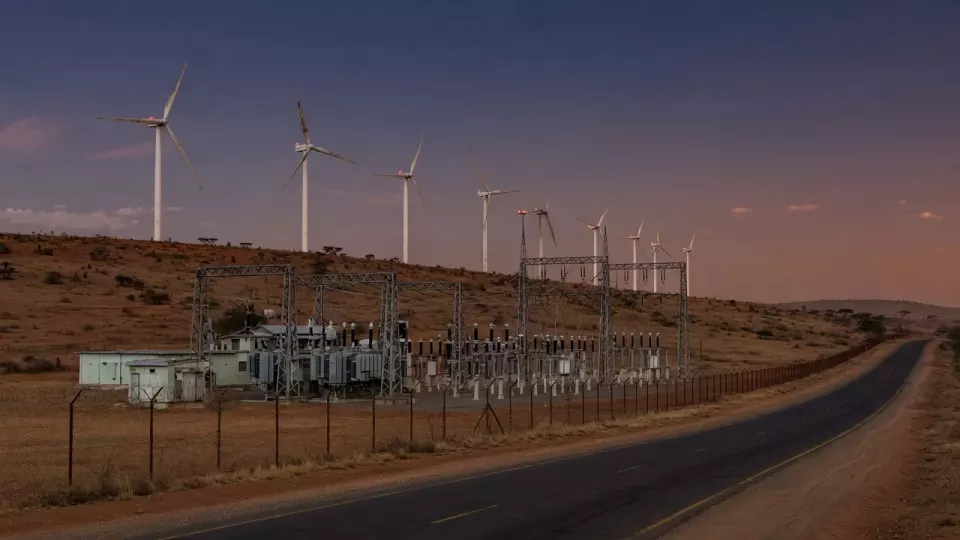
Kenya's Geothermal Capacity Expands to 1,200 MW, Powering 4 Million Homes
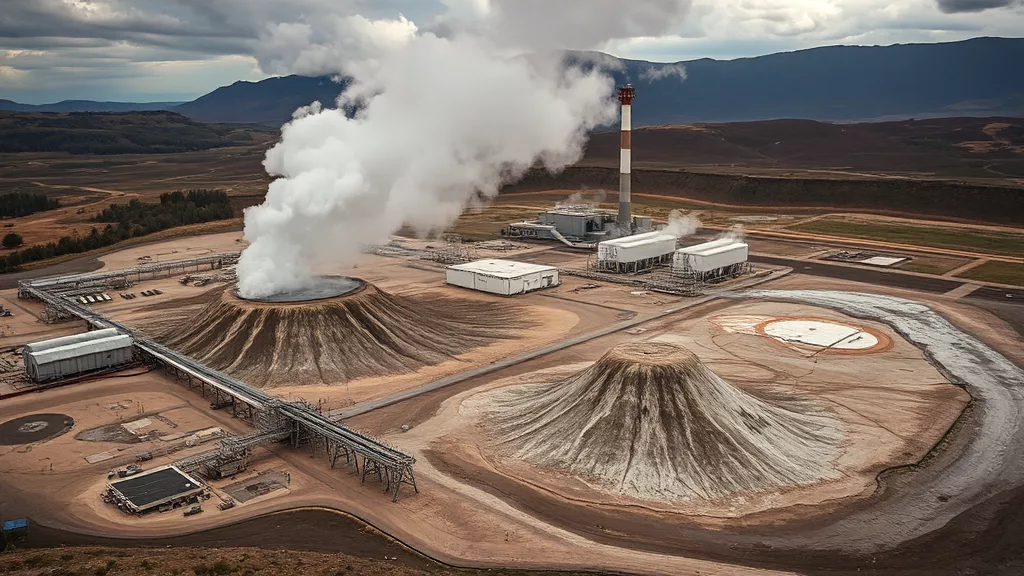
Kenya has crossed a landmark threshold in its renewable energy journey, with installed geothermal generation capacity reaching 1,200 megawatts — enough to power an estimated four million homes and placing the country eighth in the global ranking of geothermal producers. The milestone, confirmed by the Energy and Petroleum Regulatory Authority in a June 2026 bulletin, was made possible by the commissioning of the final 105 MW phase of the Olkaria VI project in Nakuru County and the completion of new steam wells at the Menengai Geothermal Development Project.
Energy and Petroleum CS Davis Chirchir called the achievement a "structural turning point" for Kenya's grid. "For decades, Kenya has talked about its geothermal potential. Today that potential is generating electricity for millions of Kenyans at a cost per kilowatt-hour that no imported fuel could match," he said at a commissioning ceremony attended by President Ruto at the Olkaria complex in Hell's Gate National Park. "This is climate action that also makes economic sense."
Olkaria and Menengai: The Twin Pillars
Kenya Electricity Generating Company (KenGen) remains the dominant force in geothermal development, operating the Olkaria complex that now spans six distinct generating stations with a combined nameplate capacity of approximately 900 MW. The Olkaria VI expansion, financed through a $340 million concessional loan from the Japan International Cooperation Agency supplemented by KenGen's own revenues, took four years to complete and involved drilling 38 new production wells to depths averaging 2,800 metres.
The Menengai project, developed through the Geothermal Development Company (GDC) in a public-private partnership model, has had a more complex history — years of steam disputes between GDC and the three independent power producers contracted to build surface plants delayed progress significantly. But with all three plants now commercially operational, Menengai contributes 105 MW to the national grid, and GDC's chief executive Dr. Jared Othieno told a Nairobi energy conference last month that a Phase 2 drilling programme targeting a further 200 MW is already in the feasibility stage.
Geothermal now accounts for approximately 47 per cent of Kenya's total installed generation capacity of roughly 3,900 MW, making it the country's single largest energy source by far. Combined with hydro, wind, and solar, Kenya's renewables share of installed capacity now exceeds 92 per cent — a figure that draws frequent admiration from international climate negotiators and positions Kenya as a genuine African model for green industrialisation.
Grid Reliability and the Distribution Challenge
The expansion of generation capacity has, however, thrown Kenya Power's distribution network into sharp relief. Transmission bottlenecks between the Rift Valley generating cluster and major demand centres — particularly the Nairobi metropolitan area and the Coast region — mean that a significant share of available geothermal output cannot always reach end consumers when they need it most. Kenya Power reported in its latest annual results that system technical losses averaged 17.8 per cent in the financial year to June 2025, well above the regulatory target of 14 per cent.
The government is addressing this through the Least Cost Power Development Plan's transmission investment programme, which includes a new 400 kV transmission line from Olkaria to Isinya in Kajiado County and a proposed high-voltage direct-current link to Mombasa. Both projects are in advanced procurement, with construction expected to begin before the end of 2026.
Rural electrification, accelerated through the Rural Electrification and Renewable Energy Corporation's Last Mile Connectivity programme, has absorbed a growing share of the additional geothermal output. The 500 villages connected in 2026 alone — detailed separately in the rural electrification programme — are predominantly served by the expanded grid rather than stand-alone systems, making geothermal the de facto power source for millions of newly connected rural households.
Climate and Economic Significance
Kenya's geothermal expansion arrives at a moment of acute global interest in firm, dispatchable renewable power. Unlike solar or wind, geothermal delivers consistent baseload generation around the clock regardless of weather conditions — a characteristic that has grown more valuable in the aftermath of the El Niño event that ravaged East Africa's hydro reservoirs in 2023 and 2024. The Tana River hydro cascade, which once contributed nearly 40 per cent of Kenya's grid power, is still recovering to pre-drought storage levels, making the geothermal buffer critical to grid stability.
Industrial consumers, including East Africa's growing data-centre sector and the Athi River cement cluster, have cited the reliability and competitiveness of geothermal power as a key factor in their Kenya investment decisions. The average geothermal tariff paid to KenGen under its power purchase agreement with Kenya Power stands at around KES 6.90 per kWh — substantially below the cost of thermal generation alternatives and competitive even against large-scale solar on a firm-energy basis.
With another 500 MW of geothermal capacity in the exploration or early development pipeline, Kenya is on course to surpass 1,700 MW by 2029 — a trajectory that analysts say could make the country a net electricity exporter to Uganda and Tanzania through the evolving East African Power Pool before the end of the decade.