Kenya's New Witness Protection Programme Shields 300 Corruption Case Witnesses
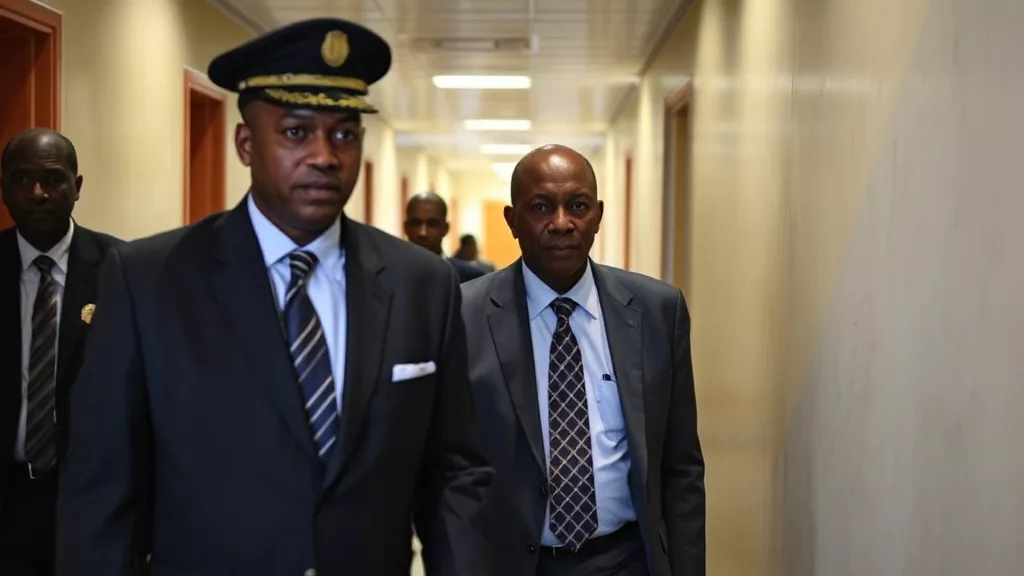
The Kenya Witness Protection Agency has announced that it is currently providing active protection to 300 witnesses in corruption, organised crime and terrorism cases under a significantly expanded programme backed by Sh1.8 billion in new government funding — the largest single investment in witness protection since the agency's establishment under the Witness Protection Act of 2006. The announcement, made by WPA Director John Githinji at a press briefing in Nairobi on Wednesday, marks what officials describe as a turning point in Kenya's ability to successfully prosecute complex cases against entrenched criminal and corrupt interests.
The 300 protected witnesses are enrolled across 67 active cases, including 23 corruption cases being prosecuted by the Ethics and Anti-Corruption Commission, fourteen organised crime cases before various courts, eight cases arising from the 2024 anti-Finance Bill protest killings, and a number of terrorism-related prosecutions linked to the Al-Shabaab threat in the coastal and northeastern regions.
What the Programme Provides
Under the expanded programme, protected witnesses receive a tiered package of support calibrated to the assessed threat level of their individual situation. At the highest tier, witnesses and their immediate families are relocated to secure accommodation outside their home counties — and in some cases outside Kenya — provided with monthly stipends ranging from Sh25,000 to Sh80,000, given new documentation, and supported through a reintegration pathway including vocational training and small enterprise startup grants.
Lower-tier protection, for witnesses facing moderate risk, includes 24-hour police liaison, regular security assessments, court-day escort arrangements, and legal assistance. The WPA now employs 140 protection officers nationally, up from 62 in 2024, following a recruitment drive funded by the new allocation.
"The history of failed prosecutions in this country is, in significant measure, a history of witnesses who were threatened, bribed or killed before they could testify," Director Githinji told journalists. "We have had some of the most important corruption cases collapse at the eleventh hour because a witness recanted under pressure. This programme is designed to make that outcome as difficult as possible for those who want to pervert justice."
Cases Already Impacted
The DPP's office cited three ongoing high-profile cases where witness protection had been critical to keeping proceedings on track. The trial of former government procurement officials charged with defrauding the National Youth Service of Sh9 billion — a case that first came to public attention in 2018 and has been repeatedly derailed — has seen three key witnesses enrolled in the programme, and the prosecution describes their testimony as the backbone of its case going forward.
In the corruption case arising from inflated tenders under the Kenya Medical Supplies Authority during the COVID-19 pandemic, four mid-level procurement officers who turned state witnesses were relocated with their families after receiving credible threats in 2025. Prosecutors say those witnesses are now expected to testify in September 2026, a development that had been in doubt as recently as eight months ago.
Anti-corruption watchdog Transparency International Kenya said the WPA expansion was one of the most concrete steps the Ruto administration had taken to demonstrate commitment to accountability. "If this programme delivers — and the proof will be in convictions, not announcements — it represents a genuine structural improvement in Kenya's anti-corruption architecture," said Executive Director Sheila Masinde. She cautioned, however, that protection of witnesses must be matched by judicial efficiency: "A witness can be kept safe for years only for a case to collapse on procedural grounds or a judge transfer. Safety and speed must go together."
Funding and International Support
The Sh1.8 billion envelope draws on both the national budget and contributions from development partners including the United States through the USAID Strengthening Prosecution and Judicial Accountability programme, the European Union's Kenya Justice Programme, and the United Kingdom's Foreign Commonwealth and Development Office. UK High Commissioner Neil Wigan said at the announcement that Kenya's investment in witness protection was "a signal to both corrupt actors and to ordinary Kenyans that this government is serious about consequences."
The WPA is also in advanced discussions with Uganda, Tanzania and Rwanda through the East African Community Justice framework to develop a regional witness relocation protocol — potentially the first of its kind in sub-Saharan Africa — that would allow witnesses facing threats that cannot be safely managed within Kenya to be temporarily hosted in partner states, and vice versa. Director Githinji said a memorandum of understanding was expected to be finalised before the end of 2026.
With the 2027 elections approaching and multiple major corruption trials expected to reach verdict stage in the next eighteen months, the effectiveness of the expanded WPA will be tested precisely when the political stakes are highest. Civil society observers say this is exactly as it should be: accountability, they argue, is not meaningful if it only functions when there is nothing to lose.