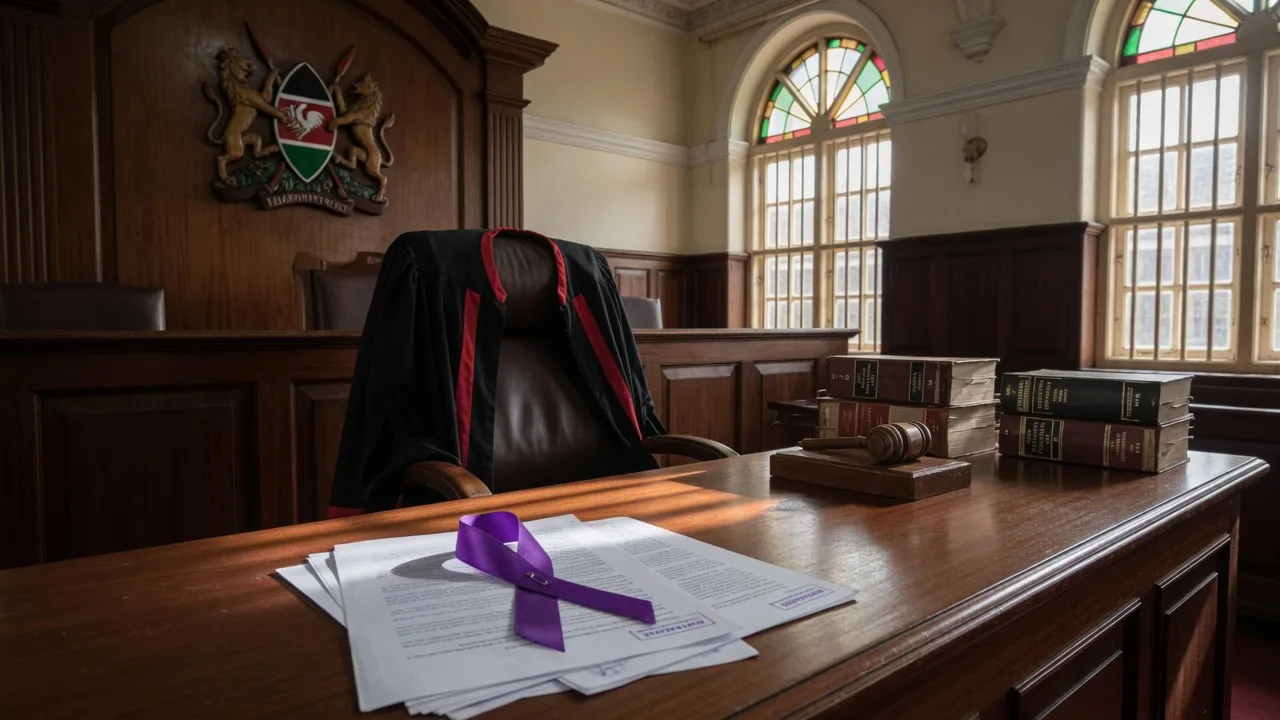
115 years for Al-Shabaab membership and terror offences at Kahawa court

Key points
- A Kahawa Law Courts magistrate imposed a combined 115-year sentence on seven terrorism-related counts.
- Membership in Al-Shabaab alone drew 20 years; other counts covered collecting information and possessing terror-linked articles.
- All terms were ordered to run concurrently; the court also ordered a prison deradicalisation programme.
- Conviction rested on 10 prosecution witnesses and phone forensics after a September 2022 Eastleigh arrest.
One hundred and fifteen years — that is the headline total Principal Magistrate Gideon Kiage recorded at Kahawa Law Courts after convicting a man of multiple terrorism offences, including membership of the outlawed Al-Shabaab group, Eastleigh Voice reported, citing the Office of the Director of Public Prosecutions.
Kiage found that prosecutors had proved seven counts beyond reasonable doubt: membership in the Somalia-based extremist organisation, three counts of collecting information for the commission of terrorist acts, and three counts of possessing articles linked to terrorism. Ten witnesses carried the State’s case. For belonging to Al-Shabaab alone, the court imposed 20 years; additional custodial terms on the remaining six counts pushed the arithmetic total to 115 years.
Concurrent time and phone evidence
Importantly for time actually served, the magistrate ordered that the sentences run concurrently — served together rather than stacked end to end — so the practical custody block is not 115 consecutive years. The court also directed prison authorities to enrol the convict in a deradicalisation programme during incarceration, framing rehabilitation alongside punishment.
Prosecutors told the court that forensic examination of a mobile phone recovered from the accused revealed videos containing extremist propaganda associated with recruitment, radicalisation and terrorist training. The man was arrested in September 2022 during a security operation in Nairobi’s Eastleigh area. The ODPP said the conviction underscores how forensic digital evidence and coordinated investigations can sustain terrorism prosecutions in Kenyan courts.
Crime desk: Crime. Verified package facts: Kiage judgment, 115-year combined total, seven counts, 20-year membership term, concurrent order, 10 witnesses, Sept 2022 Eastleigh arrest, phone propaganda videos, deradicalisation directive, ODPP statement. The convict retains appeal rights; appellate courts can re-open both conviction and sentence structure. Security agencies will also watch whether similar Eastleigh and other urban files continue to rest on phone forensics rather than only human intelligence.
Community leaders in Eastleigh and wider Nairobi have long argued that hard sentences must be paired with transparent investigations so lawful businesses are not tarred by association. Concurrent sentencing also matters for prison planning: deradicalisation slots, classification and parole-review clocks run differently when terms sit side by side rather than in a long consecutive chain.
Based on Eastleigh Voice reporting of the ODPP statement and Kahawa court judgment. Allegations proven at trial may still be challenged on appeal; full judgment text controls legal wording.