
Kenya's Ed-Tech Boom: 3 Million Students Access Digital Learning Platforms in 2026
Technology

Kenya’s Ed-Tech Boom: 3 Million Students Access Digital Learning Platforms in 2026

Three million Kenyan students are now actively using digital learning platforms aligned to the Competency-Based Curriculum, the Ministry of Education confirmed in its mid-year sector report released last week, marking what education officials are calling a structural shift in how teaching and learning occurs across the country’s 33,000 primary and secondary schools.

The figure — up from approximately 800,000 in 2023 — reflects a confluence of falling data costs, expanded school connectivity under the government’s Last Mile Connectivity Programme, device availability through both government procurement and the private market, and an explosion in CBC-specific digital content produced by Kenyan ed-tech companies responding to the curriculum transition that began in 2017.

The Platforms Driving Adoption

Several domestic platforms have emerged as market leaders. Zeraki Learning, founded in Nairobi in 2019, now serves over 800,000 students across 4,200 schools with a platform that provides CBC-aligned lesson content, automated teacher performance analytics, and parent progress reports delivered via SMS and WhatsApp. The company raised USD 5 million in Series A funding in early 2026 and is already expanding into Uganda and Tanzania, following the East African Community’s decision in 2025 to recognise the Kenyan CBC framework as a regional curriculum model.

Longhorn Publishers’ digital arm, which has digitised its entire CBC textbook catalogue, reports 650,000 active student licences — driven partly by a government bulk procurement arrangement under which the Ministry of Education purchased digital access for students in 1,200 underserved schools at a negotiated Ksh 400 per student per year. Eneza Education’s mobile-first platform, which delivers curriculum content via basic phone SMS alongside a smartphone app, continues to serve rural learners in areas where smartphones and data remain unaffordable, with 420,000 registered users in counties including Turkana, Wajir, and Tana River.

The platforms are generating data that was previously unavailable to Kenya’s education system. Teachers using Zeraki can see, at lesson level, which learning outcomes their students are struggling with. The Ministry’s education analytics team, for the first time, has granular near-real-time data on learning outcomes by school, sub-county, and county — not just end-of-year examination results that historically arrived too late to inform teaching interventions.

Infrastructure: The Remaining Gap

Cabinet Secretary for Education Julius Ogamba acknowledged at the report launch that digital adoption remains highly uneven. In Nairobi, Kiambu, and Mombasa, some schools report near-universal student device access, with teachers routinely integrating platforms into daily lesson delivery. In contrast, schools in Marsabit, Isiolo, and much of North Eastern remain largely offline, limited by electricity reliability, connectivity costs, and the absence of affordable devices.

“We have three million students benefiting, and we have celebrating to do,” Ogamba said. “We also have 15 million students who are not yet benefiting, and we have urgent work to do.” The government’s digital devices procurement programme — which targeted delivery of 800,000 student tablets by mid-2026 — has delivered approximately 520,000 to date, with procurement disputes accounting for the shortfall.

Teacher Training as the Critical Variable

Education researchers are consistent in identifying teacher readiness as the binding constraint on ed-tech impact. A Kenya Institute of Curriculum Development study published in March 2026 found that student outcomes on digital platforms improved by 34 per cent when teachers received structured professional development on platform integration, versus platforms provided to students without corresponding teacher training.

The Kenya National Union of Teachers has called for paid professional development time built into the school timetable specifically for digital skills — a request the Ministry has partially accommodated through a new Friday afternoon slot at schools piloting the digital integration programme. As the CBC itself continues to mature through successive grade cohorts, the ed-tech ecosystem is maturing alongside it: a convergence that, if properly resourced and managed, could position Kenya’s students for the digital economy their government has promised them.


Read More
KRA Deploys AI to Detect Tax Evasion, Recovers Ksh 4 Billion in Hidden Revenues
Technology

KRA Deploys AI to Detect Tax Evasion, Recovers Ksh 4 Billion in Hidden Revenues

The Kenya Revenue Authority has recovered Ksh 4 billion in previously undisclosed tax liabilities through an artificial intelligence-driven compliance engine deployed at scale in the financial year ending June 2026, Commissioner-General Humphrey Wattanga announced at the authority’s performance review briefing in Nairobi this week. The figure, which KRA describes as a direct attribution to the AI system rather than general enforcement activity, represents a significant early return on a Ksh 780 million investment in the technology made under the 2024 Medium-Term Revenue Strategy.

The AI system, developed in partnership with a consortium of local and international technology firms under a competitive tender, operates across five analysis modules: VAT gap detection, income underreporting in the SME sector, digital economy revenue tracking, real estate income reconciliation, and customs valuation fraud identification. Each module trains on a combination of KRA’s own historical declaration data, third-party financial flows, and cross-agency data sharing with institutions including the Land Registry, the Central Bank’s Financial Intelligence Unit, and the Insurance Regulatory Authority.

How the System Finds Hidden Money

The VAT module has proven the most immediately productive. By comparing declared turnover against M-Pesa Lipa Na M-Pesa transaction flows — accessible under a data-sharing agreement with Safaricom signed in 2024 — the system identifies businesses whose declared VAT-able revenues are statistically inconsistent with their actual customer transaction volumes. Wattanga said the module had generated 4,200 audit flags in its first operational year, of which 1,840 were escalated to compliance officers and 620 resulted in assessed additional liabilities.

“A trader who declares Ksh 800,000 in monthly turnover but processes Ksh 3.2 million through their till M-Pesa is flagged automatically. The compliance officer receives a pre-populated audit file with three years of transaction history,” said Wattanga. “The human’s job is no longer to find the discrepancy. It is to assess it and pursue it.”

The digital economy module targets a category of taxpayer that KRA acknowledges it has historically struggled to capture: freelancers, content creators, and micro-entrepreneurs earning through international platforms including Fiverr, Upwork, YouTube, and various e-commerce aggregators. By monitoring foreign exchange inflows through the CBK’s reporting system and cross-matching them against income tax returns, the system identified approximately 28,000 individuals receiving regular foreign currency income but filing minimal or no income tax returns.

Real Estate and the Wealthy

The real estate reconciliation module has attracted the most political attention. By cross-referencing Land Registry transfer data against market valuations and mortgage drawdowns visible through banking system data, the AI flags transactions where declared sale prices are implausibly low relative to known market rates — a well-documented form of both tax evasion and illicit wealth transfer in Kenya’s property market.

KRA declined to name individuals identified through the real estate module, citing ongoing legal proceedings, but Wattanga confirmed that 14 high-value assessments totalling Ksh 1.1 billion had been raised against property transactions in Nairobi, Mombasa, and Naivasha, with collections of Ksh 340 million already secured and the remainder under dispute or enforcement.

The tool carries clear political symbolism in the context of Kenya’s IMF programme. Treasury Cabinet Secretary John Mbadi has repeatedly faced criticism from Gen Z-aligned civil society groups who argue that austerity measures disproportionately burden ordinary Kenyans while wealthy elites evade liability. A KRA AI system that visibly pursues elite tax evasion rather than squeezing PAYE workers offers the government a politically useful counter-narrative heading into 2027.

Expansion Plans

KRA intends to extend the AI system’s scope in the 2026/27 financial year to include withholding tax compliance in the professional services sector and excise duty monitoring for alcohol and tobacco manufacturers. The authority’s medium-term target, embedded in the National Tax Policy approved in 2025, is to raise the country’s tax-to-GDP ratio from its current 14.7 per cent to 18 per cent by 2030. The AI compliance programme is projected to contribute an incremental Ksh 25 billion annually by the time all modules reach full maturity — a target that independent economists describe as ambitious but not implausible given the evidence of the first year’s results.

Read More
Kenya's Cybersecurity Market Grows to Ksh 18 Billion as Attacks on Banks Rise
Technology

Kenya’s Cybersecurity Market Grows to Ksh 18 Billion as Attacks on Banks Rise

Kenya’s cybersecurity industry has expanded to an estimated Ksh 18 billion in annual revenues, according to data published by the Communications Authority of Kenya this month, driven in significant part by a sharp rise in the sophistication and frequency of attacks targeting the country’s banking and financial services sector. The figure represents a 62 per cent increase from Ksh 11.1 billion recorded in 2023, reflecting both genuine threat escalation and the accelerated response by institutions that can no longer treat cyber risk as a secondary operational concern.

The Central Bank of Kenya reported in its 2025 Financial Sector Stability Report that attempted cyberattacks on licensed commercial banks increased by 287 per cent between 2023 and 2025, with confirmed successful breaches resulting in direct losses of Ksh 3.8 billion during that period. The attacks range from SIM-swap fraud exploiting mobile banking credentials to highly sophisticated supply-chain intrusions targeting core banking system vendors.

The Nature of the Threat

Kenya’s cyber threat landscape has evolved considerably from the opportunistic phishing attacks that dominated the early 2020s. The country’s Cybersecurity Directorate under the National Intelligence Service documented 14 incidents in 2025 that bore the hallmarks of organised criminal syndicates operating across borders, with forensic evidence pointing to coordination between actors in Nigeria, Eastern Europe, and — in at least two cases — North Korea-linked groups known to target African financial institutions for hard currency.

The most damaging single incident involved a Tier 2 bank that lost Ksh 890 million over a 72-hour window in October 2025 after attackers gained access through a compromised third-party software update. The bank’s name has not been publicly disclosed, but CBK Governor Kamau Thugge confirmed the incident in parliamentary testimony in February 2026, adding that full recovery had been effected and no depositors ultimately suffered losses — a reassurance that nonetheless highlighted the fragility of existing defences.

Mobile money platforms remain a particular target. The CA’s cyber monitoring unit recorded over 4.2 million attempted fraudulent M-Pesa transactions in the first quarter of 2026 alone, of which Safaricom’s fraud detection systems successfully blocked 99.3 per cent. The 0.7 per cent that were not blocked cost users an estimated Ksh 240 million — significant enough to maintain public anxiety about mobile money security even as the absolute success rate is high.

Regulatory Response

The CBK issued revised Cyber Security Guidance Notes in March 2026, making mandatory what had previously been recommended practice. All licensed banks are now required to maintain a dedicated Chief Information Security Officer at executive committee level, conduct penetration testing at least quarterly rather than annually, maintain cyber incident response plans tested through live simulation exercises, and report any attempted breach within four hours of detection rather than the previous 24-hour window.

“We are not waiting for a systemic event to happen and then respond,” Thugge told the Kenya Bankers Association annual conference. “The regulatory expectation is that every bank in Kenya treats cyber risk with the same seriousness it treats credit risk. That means capital allocation, board oversight, and continuous testing.”

The CA has also launched a national Cyber Threat Intelligence Sharing Platform allowing financial institutions, telcos, and government entities to share anonymised threat data in near real time. Twelve major institutions are currently participating, with the CA reporting that shared intelligence has enabled pre-emptive blocking of at least three major attack campaigns since the platform went live in January 2026.

A Growing Industry

The threat environment has created commercial opportunity. Nairobi has seen a rapid increase in locally founded cybersecurity firms, including Serianu, Weza Tele, and newcomer ArcShield Technologies, founded by ex-Safaricom security engineers. International firms including Palo Alto Networks and Check Point have expanded their Nairobi offices, drawn by both the domestic market and the opportunity to use Kenya as a base for pan-African managed security services.

Kenya’s Ministry of ICT has invested Ksh 1.2 billion in the National KE-CIRT/CC since 2024, tripling its analyst headcount and deploying new threat monitoring infrastructure. The centre’s 2025 annual report noted a tenfold increase in entities actively seeking its assistance compared with 2022 — a sign that awareness, if not yet full preparedness, is improving across the economy. With the 2027 election cycle approaching and digital financial services ever more central to everyday Kenyan life, cybersecurity has become a matter of national infrastructure rather than a niche technical specialism.

Read More
Nairobi Ranked Africa's Top City for Tech Ecosystem Strength in 2026 Report
Technology

Nairobi Ranked Africa’s Top City for Tech Ecosystem Strength in 2026 Report

Nairobi has been ranked the strongest technology ecosystem on the African continent for the second consecutive year, according to the 2026 Africa Tech Ecosystem Index published this month by the Amsterdam-based research consultancy Startup Genome in partnership with the African Union’s Innovation and Technology Division. The Kenyan capital outscored Cairo, Lagos, Cape Town, and Kigali across a composite index measuring venture capital deployment, startup density, talent pipeline depth, regulatory environment quality, and digital infrastructure.

The ranking places Nairobi in the global top 40 technology ecosystems for the first time, sitting between Stockholm and Bangalore on the overall global index — a leap of seven positions from its 2025 ranking that has generated significant attention from international investors and technology multinationals considering African expansion.

The Numbers Behind the Ranking

The index draws on data from the 12 months to March 2026. During that period, Nairobi-based startups raised a combined USD 1.2 billion in disclosed venture capital — a 34 per cent increase on the prior year and a record for any African city outside South Africa. Fintech continues to dominate, accounting for 44 per cent of total investment, but the index notes a diversification trend, with health technology, agritech, and climate-focused startups collectively attracting USD 380 million.

Startup density — measured as registered technology companies per 100,000 working-age residents — stands at 47 for Nairobi, compared with 38 for Lagos and 31 for Cairo. The report attributes this partly to Kenya’s accessible company registration process, which since 2022 can be completed online via the eCitizen portal in under 48 hours, and partly to the presence of major technology multinationals that create both talent and spin-off entrepreneurship.

Google’s Africa headquarters and Microsoft’s Africa Development Centre, both in Nairobi, are identified in the report as anchor institutions that train talent and generate a culture of technical ambition. Amazon Web Services’ 2025 launch of a Nairobi cloud region — one of only three on the continent — has significantly reduced infrastructure costs for Kenyan startups, eliminating the need to route workloads through European data centres at considerable latency and cost penalty.

Safaricom’s Ecosystem Role

The report devotes a full chapter to Safaricom’s outsized influence on the Nairobi ecosystem, noting that M-Pesa’s 35 million active Kenyan users provide a distribution channel for fintech products that is unmatched anywhere else on the continent. The telco’s Spark Accelerator programme graduated 22 startups in its 2025 cohort, three of which have since raised Series A rounds. Safaricom’s ongoing 5G rollout — now covering all of Nairobi, Mombasa, Kisumu, and major highway corridors — is identified as a key infrastructure enabler for the next generation of connectivity-dependent products.

“When your customer acquisition cost is near zero because you can distribute through M-Pesa’s agent network, and your cloud bills drop 30 per cent because AWS is now local, the unit economics of a Nairobi startup look very different from even two years ago,” said Mbugua Ngugi, partner at early-stage fund Catalyst Fund.

Challenges the Report Does Not Ignore

The index is notably frank about persistent weaknesses. Kenya’s foreign exchange environment remains a constraint: startups raising in USD and spending in shillings face volatility risk that several founders interviewed for the report described as a material operational burden. The Central Bank’s 2025 foreign exchange management reforms have helped at the margin but not resolved the underlying issue.

Talent retention also appears as a structural challenge. Kenya produces approximately 12,000 computer science and IT graduates annually — the largest pipeline in East Africa — but emigration rates among trained software engineers remain high. The United States, United Kingdom, Canada, and increasingly Gulf states are actively recruiting Kenyan tech talent with compensation packages that local firms struggle to match.

Deputy President Kithure Kindiki, speaking at Nairobi Innovation Week in May, acknowledged the ranking while cautioning against complacency. “First place is not a destination. Kigali is investing at extraordinary speed. We must continue to improve the regulatory environment, cut the cost of capital, and ensure our young people have reasons to build here rather than elsewhere.” For the Ruto administration, the ranking is politically welcome: the Silicon Savannah narrative is central to the government’s economic transformation story, and a measurable global benchmark provides a rare piece of unambiguously good news in a period dominated by fiscal austerity.

Read More
Kenya's Blockchain Land Registry Pilot Reduces Title Deed Fraud by 90%
Technology

Kenya’s Blockchain Land Registry Pilot Reduces Title Deed Fraud by 90%

A blockchain-powered land title registry system piloted across three Kenyan counties has achieved a 90 per cent reduction in fraudulent title deed transactions, the Ministry of Lands, Public Works and Housing has confirmed, marking one of the most significant anti-corruption outcomes recorded by any government technology project in East Africa.

The pilot, which ran from January 2025 through May 2026 in Nakuru, Mombasa, and Kajiado counties, deployed a permissioned distributed ledger on which every land transaction — transfer of ownership, creation of a charge, discharge of a mortgage, or subdivision — is recorded as an immutable entry verifiable by any authorised party in real time. The system was developed in partnership with Nairobi-based software firm Twiga Blockchain Solutions and co-funded by the African Development Bank.

The Scale of the Problem Being Solved

Land fraud in Kenya is not a marginal problem. The Ministry of Lands’ own task force estimated in 2023 that fraudulent title deeds cost Kenyan property buyers and financial institutions an average of Ksh 12 billion annually. The National Land Commission has recorded cases of single parcels bearing up to four separate title deeds issued at different times to different parties — a product of paper-based registries that were susceptible to manipulation, backdating, and outright forgery.

The three pilot counties were chosen deliberately. Nakuru has experienced rapid peri-urban growth as Nairobi’s commuter belt expands westward. Mombasa’s coastal strip, where land values are high and historical title disputes numerous, represented a stress test of the system’s ability to handle complex ownership chains. Kajiado, covering much of Nairobi’s southern hinterland, is a hotspot for subdivision fraud targeting unsuspecting buyers from the city.

During the 17-month pilot period, disputed land transactions fell from 3,200 cases in the comparable prior period to 312. Of those 312 cases, investigators found that all were initiated through attempts to transact against legacy paper records that had not yet been migrated to the digital system — underscoring the importance of comprehensive data migration.

How the System Works

The architecture uses a permissioned Hyperledger Fabric network in which nodes are operated by the Ministry of Lands registry office, the Kenya Revenue Authority for stamp duty verification, the Land Registrar at county level, and participating commercial banks. When a property buyer and seller initiate a transfer, the system cross-checks the proposed transaction against the immutable chain of prior ownership, flags any discrepancies, and requires multi-party cryptographic sign-off before a new entry is accepted.

“A duplicate title cannot be created on this system because the ledger will reject any entry that conflicts with an existing valid record,” explained Dr Grace Mwangi, Chief Digital Officer at the Ministry of Lands. “You cannot delete or alter a past transaction. You can only add a new valid one, and that requires verified digital identities from all parties.” The system is integrated with Kenya’s Huduma Namba national identification infrastructure and with Safaricom’s M-Pesa payment rails, allowing stamp duty payments to be executed and verified within the same transaction flow rather than through a separate paper process.

Path to National Rollout

Lands Cabinet Secretary Justin Muturi announced in June 2026 that the government had approved a Ksh 6.8 billion budget to extend the blockchain registry to all 47 counties by December 2028. The rollout will proceed in two tranches: 20 counties in 2027 and the remaining 27 in 2028.

The Kenya Bankers Association has strongly endorsed the national rollout. “Mortgage fraud is one of our largest non-performing loan risk factors. A verifiable, tamper-proof title system changes the risk calculus for property lending entirely,” said KBA Chief Executive Raimond Molenje. Several banks have already indicated they will reduce collateral verification costs and potentially extend lower-rate mortgage products once blockchain title verification is standard.

Civil liberties groups have called for a robust public access framework to ensure that ordinary citizens can independently verify title status without engaging a solicitor or paying search fees. The Ministry of Lands has committed to a free public query portal as part of the national system design, a commitment that digital rights advocates are watching closely as technical specifications are finalised.

Read More
Digital Literacy Programme Trains 500,000 Kenyans in AI and Coding Skills
Technology

Digital Literacy Programme Trains 500,000 Kenyans in AI and Coding Skills

Kenya’s flagship Digital Literacy Programme (DLP) has crossed the 500,000 trainees milestone, the Ministry of Information, Communications and the Digital Economy announced this month, cementing the country’s ambition to build the largest pool of digitally skilled workers in sub-Saharan Africa by the end of the decade.

The programme, relaunched with an expanded curriculum in 2024 following recommendations from a Presidential Task Force on the Digital Economy, now covers artificial intelligence fundamentals, Python programming, data analysis, and cloud computing certification pathways. Delivered through a hybrid network of county digital hubs, Safaricom-partnered community hotspots, and a nationally available e-learning portal, it has reached citizens from Mandera to Mombasa, with notable uptake in historically underserved counties.

Who Is Being Trained and Where

Of the 500,000 graduates to date, 54 per cent are women — a figure that Cabinet Secretary for ICT Margaret Ndung’u described as a deliberate policy outcome rather than coincidence. “We restructured the 2024 cohort intake to prioritise women’s enrolment in the STEM tracks. We partnered with women’s groups, churches, and polytechnics specifically to reduce the cultural barrier around women in tech spaces,” she told a briefing at Telposta Towers in Nairobi.

Geographically, Nairobi County accounts for the largest absolute number of graduates — some 87,000 — but the highest growth rates are recorded in Nyamira, Vihiga, and West Pokot, where county governments have invested in reliable solar-powered connectivity at training centres. Kisumu’s Kondele Digital Hub, opened in partnership with the Mastercard Foundation in early 2025, has alone produced over 12,000 certified graduates.

The curriculum has undergone significant revision since the programme’s original 2016 incarnation, which critics derided as little more than basic computer literacy. The current framework includes a foundational level covering digital tools and internet safety, an intermediate level covering spreadsheets, basic coding, and digital financial services, and an advanced track in which learners can specialise in AI prompt engineering, machine-learning applications, or cybersecurity fundamentals.

Connecting Training to Employment

The more difficult challenge has been converting certification into employment. An internal audit published by the ministry in April 2026 found that 38 per cent of DLP graduates were in formal or freelance digital employment within 12 months of completing their training — a figure the ministry regards as encouraging but acknowledges falls short of the programme’s original 60 per cent target.

“The training is working. The jobs pipeline needs more work,” admitted Ndung’u. The ministry has consequently launched a partnerships desk within the programme’s secretariat, tasked with brokering agreements with business process outsourcing firms, Nairobi’s growing fintech sector, and international remote-work platforms. Andela’s Nairobi office and several BPO operators in the Nairobi CBD have signed preferred-hire agreements for DLP graduates.

The private sector has also engaged directly. Safaricom’s M-Pesa Foundation has co-funded 23 advanced-track training facilities in counties where mobile money use is high but formal digital employment is low, reasoning that digitally skilled populations create better markets for financial services. Microsoft has contributed cloud computing curriculum resources and examination vouchers for Azure certifications.

The Gen Z Dividend

The programme carries particular political resonance in the context of Kenya’s post-2024 Gen Z protest moment. Youth unemployment remains the administration’s most politically sensitive pressure point, and DLP enrolment data shows that 68 per cent of trainees are between the ages of 18 and 30. For President Ruto, who has staked his economic legacy on the hustler economy and digital transformation narrative, the 500,000 figure offers a tangible data point ahead of the 2027 election cycle.

Independent observers caution, however, that skills training alone cannot substitute for structural reforms in the labour market. “Half a million trained people competing for the same 50,000 available digital roles is not a solution,” said Dr Bitange Ndemo, professor of information systems at the University of Nairobi. “We need to stimulate demand, not just supply.” The government’s planned Silicon Savannah expansion at Konza Technopolis, now entering its most ambitious construction phase, is intended to address precisely that gap.

Read More
East African Community Signs Single Currency Roadmap, Kenya to Lead Transition
International

East African Community Signs Single Currency Roadmap, Kenya to Lead Transition

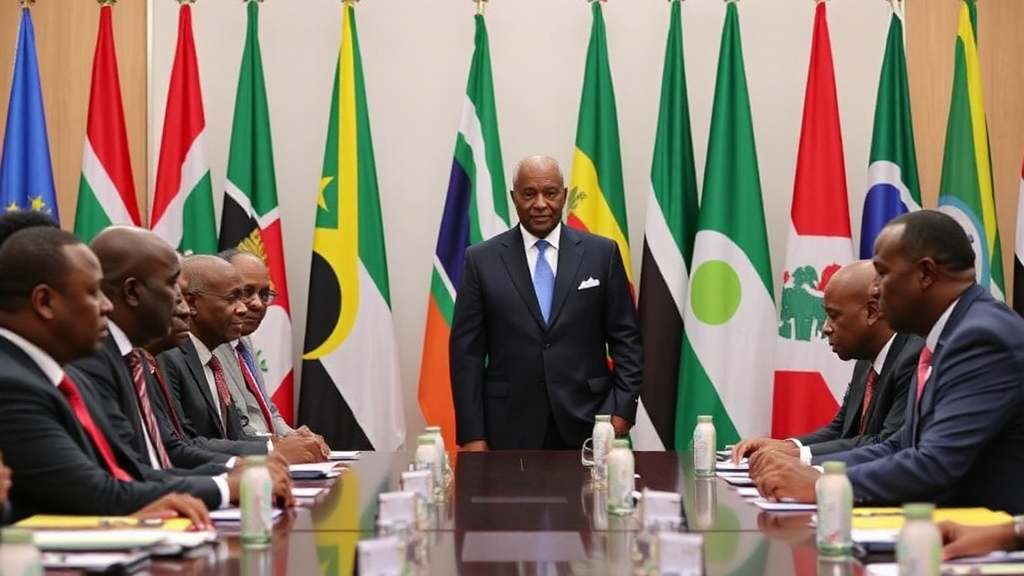
The heads of state of the East African Community’s seven member states gathered in Arusha, Tanzania last weekend for a summit that produced what EAC Secretary-General Peter Mathuki called “the most consequential single document in the bloc’s 25-year history” — a detailed, time-bound roadmap toward the introduction of a single East African currency, targeting full monetary union by 2031. Kenya’s President Ruto, in his capacity as the current EAC chair, presided over the signing ceremony and was designated to chair the new EAC Monetary Integration Technical Transition Committee, positioning Nairobi at the centre of what will be a five-year process of extraordinary economic and institutional complexity.

The roadmap, formally titled the Arusha Monetary Integration Framework, commits all seven member states — Kenya, Tanzania, Uganda, Rwanda, Burundi, South Sudan, and the Democratic Republic of Congo, which joined the EAC in 2022 — to a phased convergence programme with defined milestones. The first phase, running through 2027, focuses on the harmonisation of fiscal policies, with member states required to achieve budget deficit targets of no more than 3 per cent of GDP and inflation rates converging toward a corridor of 5 to 8 per cent. The second phase, 2028 to 2030, involves the establishment of an East African Central Bank and the design of a common currency instrument. The third phase, targeting completion by December 2031, involves the withdrawal of national currencies and the introduction of the East African Shilling — a name agreed at the summit over the previously proposed “Shilingi ya Afrika Mashariki.”

Kenya’s Central Role

Kenya’s designation as leader of the transition committee reflects both its economic weight within the bloc — the Kenyan economy accounts for approximately 35 per cent of EAC GDP — and the Ruto administration’s consistent advocacy for deeper regional integration. Nairobi will host the transition committee’s permanent secretariat, which will be staffed by economists seconded from member state central banks and financed through a special integration fund to which each member state will contribute proportionally.

Central Bank of Kenya Governor Kamau Thugge, who led Kenya’s technical negotiating team at the Arusha summit, acknowledged the ambition of the timeline. “We are not pretending this is simple,” he told reporters after the signing. “Monetary union requires sustained political will across seven governments with very different fiscal positions. But the roadmap is designed to be honest about that difficulty, with trigger mechanisms that allow phases to be extended without the entire framework collapsing.”

The framework includes a fiscal convergence monitoring mechanism, administered jointly by the EAC Secretariat and the African Development Bank, that will publish quarterly assessments of each member state’s progress against convergence targets. Member states that fall materially behind their targets will enter a consultation process with their peers before any punitive measures — described in the framework as “corrective engagement protocols” — are applied.

Sceptics and Structural Challenges

Not all economists share the summit’s optimism. Among the most frequently cited concerns is the extraordinary heterogeneity of the seven member states, whose GDP per capita ranges from approximately $260 in Burundi to over $2,100 in Kenya. Integrating monetary policy across economies at such different stages of development — and with such different fiscal institutional capacities — will require transfers and adjustment mechanisms that the current framework, critics argue, does not adequately fund.

Former Treasury PS Kamau Maigua, speaking to ZaKenya.com, noted that the eurozone’s experience provided both inspiration and warning. “The single currency dream is real and achievable,” he said. “But Europe took 50 years and still nearly fell apart in 2011. We are attempting something comparable in a decade. The targets are political statements as much as economic plans.”

What It Means for Kenya

For ordinary Kenyans, the immediate implications are modest — the single currency remains five years away even under the most optimistic scenario. But the medium-term stakes are significant. A functioning monetary union would eliminate exchange rate costs and risks for businesses trading within the EAC, deepen capital markets, and potentially enhance the bloc’s collective negotiating power in global trade and investment attraction. For Kenya specifically, whose Safaricom M-Pesa platform already processes cross-border transactions across several EAC countries, the integration of monetary systems represents both an opportunity and a responsibility. The Kenyan shilling’s relative stability compared to several partner currencies will be an asset in the convergence process — provided Kenya maintains the fiscal discipline its IMF programme currently enforces.

Read More
Kenya Wins Seat on UN Security Council for 2027-2028 Term
International

Kenya Wins Seat on UN Security Council for 2027-2028 Term

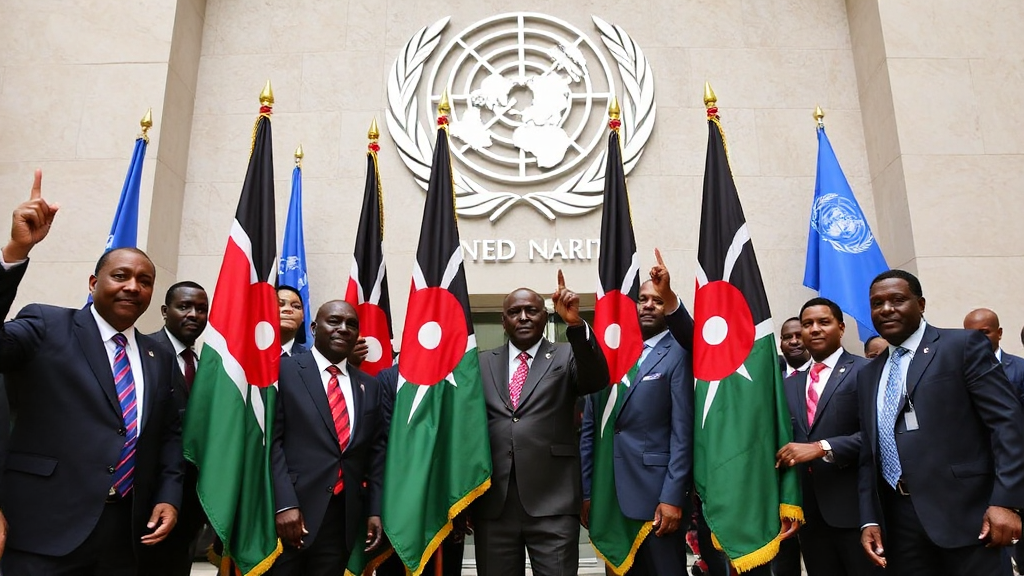
Kenya’s flag was raised in celebration outside the Ministry of Foreign Affairs on Harambee Avenue on Thursday evening after the United Nations General Assembly in New York elected Nairobi to a non-permanent seat on the UN Security Council for the 2027-2028 term, securing the Africa Group’s allocated seat with 181 votes out of 193 — the highest vote share recorded by any African candidate in the election’s modern history. Foreign Affairs Cabinet Secretary Musalia Mudavadi, present at UN headquarters in New York for the vote, described the result as “a ringing affirmation of Kenya’s place in the world.”

The election, held on the first Thursday of July during the General Assembly’s regular session, saw Kenya run unopposed for the seat following the Africa Group’s decision in May to endorse Nairobi as the continent’s consensus candidate, ending a brief competition with Ghana that had been resolved through diplomatic consultations in Addis Ababa. The 181-vote tally nonetheless reflects remarkable breadth of international support, including from countries across the Global South with whom Kenya has invested in relationship-building under the Ruto administration’s Nairobi Consensus foreign policy framework.

A Campaign Years in the Making

Kenya last held a Security Council seat in 1997-1998. The campaign to return to the Council was formally launched by the Kenyatta administration in 2021 and carried forward and substantially intensified by President Ruto after his election in 2022. The effort involved a methodical programme of bilateral diplomacy — Kenya’s foreign missions filed more than 200 individual lobbying reports in 2025 alone — alongside multilateral positioning through the African Union, the Commonwealth, and the Global South platforms Ruto has championed.

Key to the campaign was Kenya’s credibility as a contributor to international peace and security. The country’s decade-long AMISOM and ATMIS presence in Somalia, its current leadership of the Haiti MSS Mission, its mediation role in the DRC’s Nairobi Process, and its diplomatic engagement on the Sudan crisis were all explicitly cited in advocacy materials as evidence that Kenya was not merely seeking a platform but bringing operational capacity and diplomatic gravitas to the Council’s work.

“Every vote we secured came from a relationship we built over years,” said Principal Secretary for Foreign Affairs Macharia Kamau. “This is not a lucky outcome. It is the return on a deliberate investment.”

What the Seat Means

Non-permanent members of the Security Council hold genuine, if circumscribed, power. They participate in all Council deliberations and negotiations, vote on resolutions including those authorising peacekeeping operations and imposing sanctions, and can shape Council agendas during their presidency months. Kenya is expected to hold the Council presidency — the rotating monthly chairmanship — twice during its two-year term, providing opportunities to convene high-level meetings on issues of Kenya’s choosing.

CS Mudavadi outlined three priority themes that Kenya intends to champion from the Council seat: sustainable peace financing — the idea that peace operations must be integrated with development programming to be durable; climate-security nexus issues, particularly the role of resource competition in driving conflict on the African continent; and reform of the Security Council itself, including the longstanding demand for permanent African representation on a body whose current structure was designed in 1945.

Domestic Reception

In Nairobi, the reaction was one of broad national pride that cut across political lines. Even opposition figures who have been sharply critical of President Ruto’s domestic governance offered congratulations on the diplomatic achievement. The win arrives at a moment when Ruto’s domestic approval ratings, shaped by austerity measures linked to the IMF programme and the legacy of the 2024 protests, are under pressure — and the Council seat provides a genuine point of unifying national achievement. “This is not Ruto’s victory or Jubilee’s victory or Azimio’s victory,” said Nairobi political commentator Jaindi Kisero. “This is Kenya’s victory, and we should own it as such.”

Read More
Kenya Triples Peacekeeping Troops in Haiti as Security Situation Deteriorates
International

Kenya Triples Peacekeeping Troops in Haiti as Security Situation Deteriorates

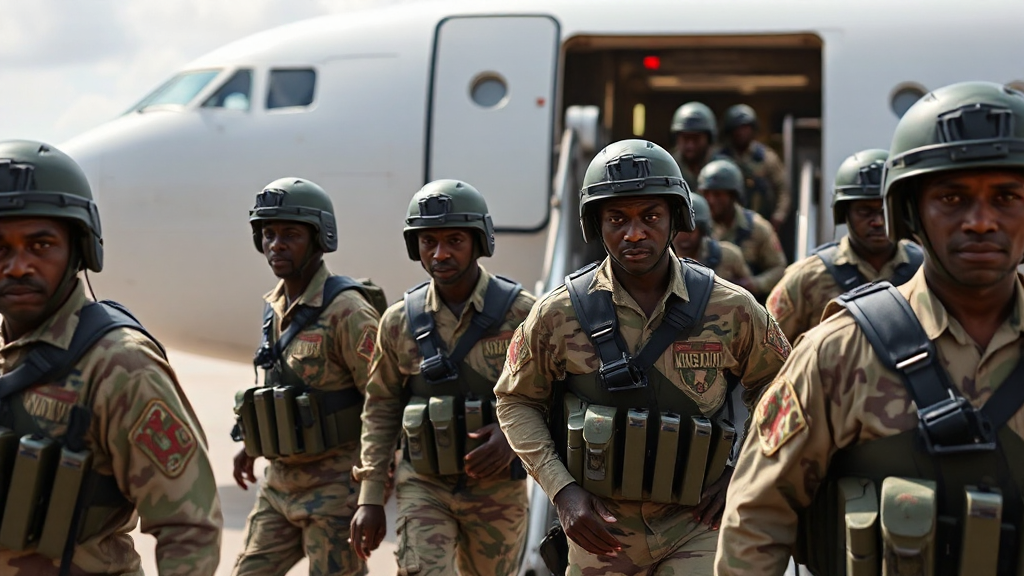
The Cabinet on Thursday approved the deployment of an additional 2,000 Kenya Defence Forces and National Police Service personnel to Haiti, tripling the country’s peacekeeping contingent to 3,000 officers and bringing Kenya’s investment in the Caribbean nation’s security crisis to its highest level since Nairobi assumed leadership of the Multinational Security Support Mission in June 2024. The decision, announced by Interior Cabinet Secretary Kithure Kindiki, reflects a dramatically deteriorated security situation in Haiti that has seen gang coalitions expand their territorial control to an estimated 85 per cent of the capital Port-au-Prince.

The escalation has come at a moment of acute testing for the mission. Of the original 1,000 Kenyan officers who deployed in mid-2024, a rotating force has been in continuous operation for two years under conditions that officials describe as among the most challenging any Kenyan security deployment has encountered. Gang formations, particularly the G9 alliance led by former police officer Jimmy Chérizier, known as Barbecue, have demonstrated tactical sophistication — including the use of armoured vehicles, night-vision equipment, and coordinated multi-point attacks — that has challenged the mission’s resources.

A Dangerous Escalation

The immediate trigger for the troop increase was a five-day offensive in late June during which gang forces overran three police precincts in the Delmas and Carrefour districts of Port-au-Prince, killing 14 officers including two Kenyan advisers in what the UN described as a “catastrophic breakdown” of the security perimeter around the capital’s government district. UN Secretary-General Guterres made an emergency appeal to the Security Council on 28 June, calling for expanded international support for the mission and citing a protection of civilians crisis of “extraordinary gravity.”

The UN’s Office for the Coordination of Humanitarian Affairs reports that over 700,000 Haitians are now internally displaced, with food insecurity affecting an estimated 5 million people — nearly half the population. The World Food Programme has suspended distribution in parts of Port-au-Prince after aid convoys were attacked on three separate occasions in June.

“Haiti is not failing — Haiti has already failed in significant respects,” said Dr Macharia Munene, a security analyst at United States International University-Africa. “The question for Kenya is whether its expanded deployment has a realistic mandate and realistic resources, or whether it is being asked to do the impossible.”

Domestic Political Tensions

The tripling of the Kenya deployment has reignited domestic debate about the mission’s strategic rationale and cost. In the National Assembly, opposition leader Raila Odinga’s Azimio coalition has tabled a motion calling for a parliamentary review of the deployment’s mandate, citing the deaths of Kenyan officers and what it describes as insufficient financial compensation from the United Nations. The UN has pledged $600 million in support for the mission but disbursements have been slow, leaving Kenya to absorb significant upfront costs estimated by the National Treasury at Ksh 18 billion over the first two years.

Gen Z civil society groups, whose political engagement has remained high since the 2024 protests, have organised online campaigns questioning the equity of deploying Kenyan security personnel — many from working-class backgrounds — to a foreign crisis while domestic security challenges persist. The hashtag #KenyansNotMercenaries trended nationally on Thursday following the Cabinet announcement.

The Government’s Position

President Ruto, addressing a State House briefing on Friday, defended the expanded deployment as an expression of Kenya’s continental and global responsibility. “Kenya has always answered the call when stability is threatened. Our officers in Haiti are not mercenaries. They are patriots serving humanity,” he said. He confirmed that Kenya was in negotiation with the US and the UN for an enhanced financial support package to cover the expanded deployment, and that a Status of Forces Agreement providing improved legal protections for Kenyan personnel had been finalised. The additional troops are expected to complete pre-deployment training by August and begin arriving in Port-au-Prince on a phased basis through September.

Read More
US-Kenya Free Trade Agreement Negotiations Resume After Two-Year Pause
International

US-Kenya Free Trade Agreement Negotiations Resume After Two-Year Pause

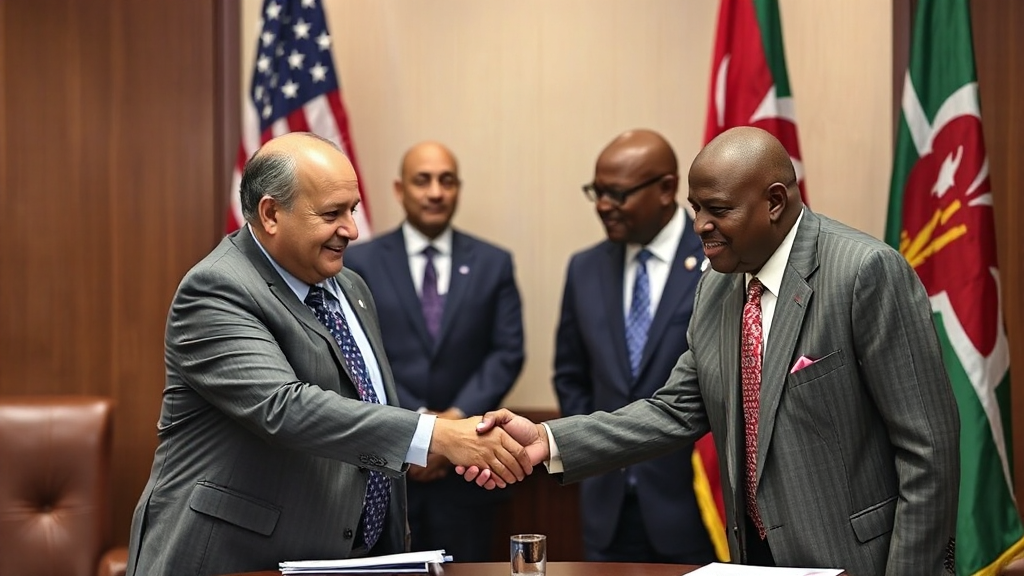
Trade negotiators from the Office of the United States Trade Representative and Kenya’s Ministry of Investments, Trade and Industry convened in Nairobi on Monday for the resumption of formal bilateral free trade agreement talks, ending a hiatus of nearly two years that had been attributed to shifting US domestic political priorities and Kenya’s own concerns about the pace of engagement. The resumption, announced jointly by USTR Katherine Tai’s successor Ambassador Marcus Webb and Trade CS Salim Mvurya, signals renewed political will on both sides for a deal that, if concluded, would represent the United States’ first bilateral FTA with a sub-Saharan African country.

The talks were originally launched in July 2020 under the Kenyatta administration and the first Trump term, generating considerable early momentum and seven rounds of negotiation before stalling in late 2024 following the US election cycle and Kenya’s own post-protest political turbulence. The joint statement issued on Monday described the resumption as reflecting “shared commitment to a comprehensive, high-standard agreement that supports inclusive economic growth, strengthens supply chains, and deepens people-to-people ties between our two nations.”

What Is on the Table

The scope of the agreement, based on previous rounds and the updated joint framework released on Monday, covers market access for goods and services, digital trade, intellectual property, labour standards, environmental provisions, and government procurement — a substantially broader remit than the sector-specific arrangements that characterise Kenya’s existing preferential access under the African Growth and Opportunity Act, which expires in 2025 and has operated under a series of extensions.

Kenya’s primary offensive interests in the negotiation centre on duty-free access for agricultural products including tea, coffee, fresh cut flowers, and processed horticultural goods, which currently face tariffs and sanitary barriers that Kenyan exporters describe as significant market constraints. The Kenya Flower Council estimates that preferential and barrier-free access to the US market could increase cut flower export revenues by up to 40 per cent within five years of implementation.

The United States’ interests, broadly speaking, focus on services market access — particularly financial services, telecommunications, and digital economy provisions — government procurement transparency, and stronger intellectual property enforcement, particularly for pharmaceuticals and technology products. US negotiators are also expected to push for labour and environmental standards that exceed Kenya’s current statutory framework, a demand that has historically generated pushback from local industry groups.

Domestic Concerns and IMF Dimensions

The negotiations are proceeding against a complicated domestic economic backdrop. Kenya’s ongoing IMF programme, whose eighth review was completed in May 2026, imposes fiscal consolidation requirements that constrain the government’s ability to offer transitional support packages to sectors exposed to import competition — a standard component of free trade agreement implementation. Several Kenyan manufacturers, particularly in the textile and footwear sectors, have expressed concern that duty-free access for US goods could undermine domestic industries that are still recovering from the combined effects of the COVID-19 era and post-El Nino commodity volatility.

CS Mvurya acknowledged the concern but argued that the overall balance of the agreement would favour Kenya. “We are not naive about the adjustments this will require,” he said at a press briefing. “But we are also clear that AGOA’s expiration and the restructuring of global supply chains make a modern, comprehensive trade relationship with the United States a strategic imperative, not a luxury.”

Timeline and Political Context

Both delegations have set an ambitious target of concluding substantive negotiations by March 2027 — a deadline driven partly by the recognition that Kenya’s general election campaign, expected to formally begin in mid-2027, will absorb political bandwidth and potentially shift policy priorities. Ambassador Webb noted that the US administration was “fully committed to the pace necessary to reach that objective.” Six technical working groups will operate in parallel between now and October, when a high-level ministerial review is scheduled. Whether the timeline proves achievable will depend significantly on the two sides’ capacity to bridge gaps on agriculture market access and labour standards — the same two issues that generated the sharpest disagreements in previous rounds.

Read More