Kenya Triples Peacekeeping Troops in Haiti as Security Situation Deteriorates
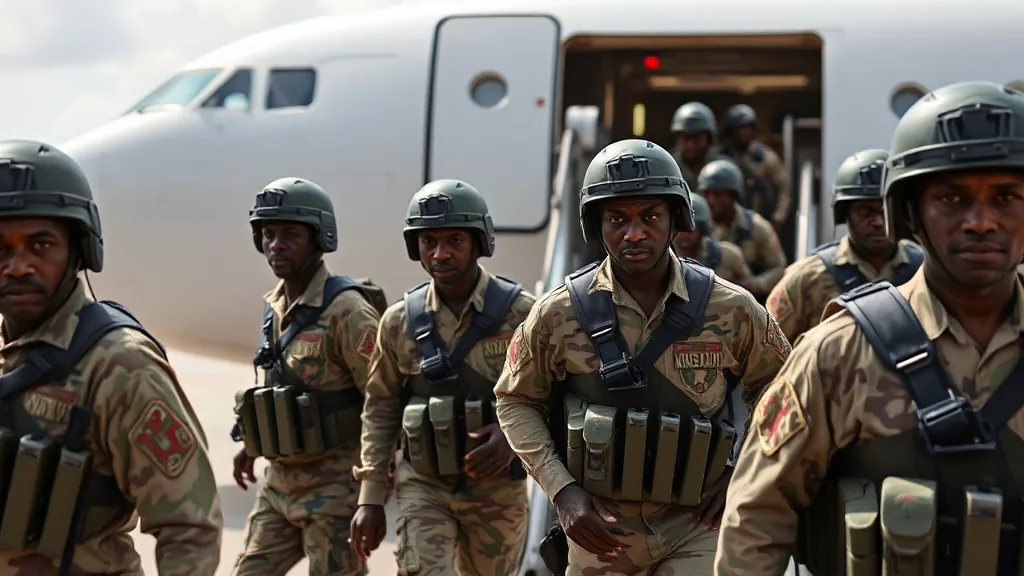
The Cabinet on Thursday approved the deployment of an additional 2,000 Kenya Defence Forces and National Police Service personnel to Haiti, tripling the country's peacekeeping contingent to 3,000 officers and bringing Kenya's investment in the Caribbean nation's security crisis to its highest level since Nairobi assumed leadership of the Multinational Security Support Mission in June 2024. The decision, announced by Interior Cabinet Secretary Kithure Kindiki, reflects a dramatically deteriorated security situation in Haiti that has seen gang coalitions expand their territorial control to an estimated 85 per cent of the capital Port-au-Prince.
The escalation has come at a moment of acute testing for the mission. Of the original 1,000 Kenyan officers who deployed in mid-2024, a rotating force has been in continuous operation for two years under conditions that officials describe as among the most challenging any Kenyan security deployment has encountered. Gang formations, particularly the G9 alliance led by former police officer Jimmy Chérizier, known as Barbecue, have demonstrated tactical sophistication — including the use of armoured vehicles, night-vision equipment, and coordinated multi-point attacks — that has challenged the mission's resources.
A Dangerous Escalation
The immediate trigger for the troop increase was a five-day offensive in late June during which gang forces overran three police precincts in the Delmas and Carrefour districts of Port-au-Prince, killing 14 officers including two Kenyan advisers in what the UN described as a "catastrophic breakdown" of the security perimeter around the capital's government district. UN Secretary-General Guterres made an emergency appeal to the Security Council on 28 June, calling for expanded international support for the mission and citing a protection of civilians crisis of "extraordinary gravity."
The UN's Office for the Coordination of Humanitarian Affairs reports that over 700,000 Haitians are now internally displaced, with food insecurity affecting an estimated 5 million people — nearly half the population. The World Food Programme has suspended distribution in parts of Port-au-Prince after aid convoys were attacked on three separate occasions in June.
"Haiti is not failing — Haiti has already failed in significant respects," said Dr Macharia Munene, a security analyst at United States International University-Africa. "The question for Kenya is whether its expanded deployment has a realistic mandate and realistic resources, or whether it is being asked to do the impossible."
Domestic Political Tensions
The tripling of the Kenya deployment has reignited domestic debate about the mission's strategic rationale and cost. In the National Assembly, opposition leader Raila Odinga's Azimio coalition has tabled a motion calling for a parliamentary review of the deployment's mandate, citing the deaths of Kenyan officers and what it describes as insufficient financial compensation from the United Nations. The UN has pledged $600 million in support for the mission but disbursements have been slow, leaving Kenya to absorb significant upfront costs estimated by the National Treasury at Ksh 18 billion over the first two years.
Gen Z civil society groups, whose political engagement has remained high since the 2024 protests, have organised online campaigns questioning the equity of deploying Kenyan security personnel — many from working-class backgrounds — to a foreign crisis while domestic security challenges persist. The hashtag #KenyansNotMercenaries trended nationally on Thursday following the Cabinet announcement.
The Government's Position
President Ruto, addressing a State House briefing on Friday, defended the expanded deployment as an expression of Kenya's continental and global responsibility. "Kenya has always answered the call when stability is threatened. Our officers in Haiti are not mercenaries. They are patriots serving humanity," he said. He confirmed that Kenya was in negotiation with the US and the UN for an enhanced financial support package to cover the expanded deployment, and that a Status of Forces Agreement providing improved legal protections for Kenyan personnel had been finalised. The additional troops are expected to complete pre-deployment training by August and begin arriving in Port-au-Prince on a phased basis through September.