IEBC Announces 2027 General Election Registration Drive Starting January
Politics

IEBC Announces 2027 General Election Registration Drive Starting January

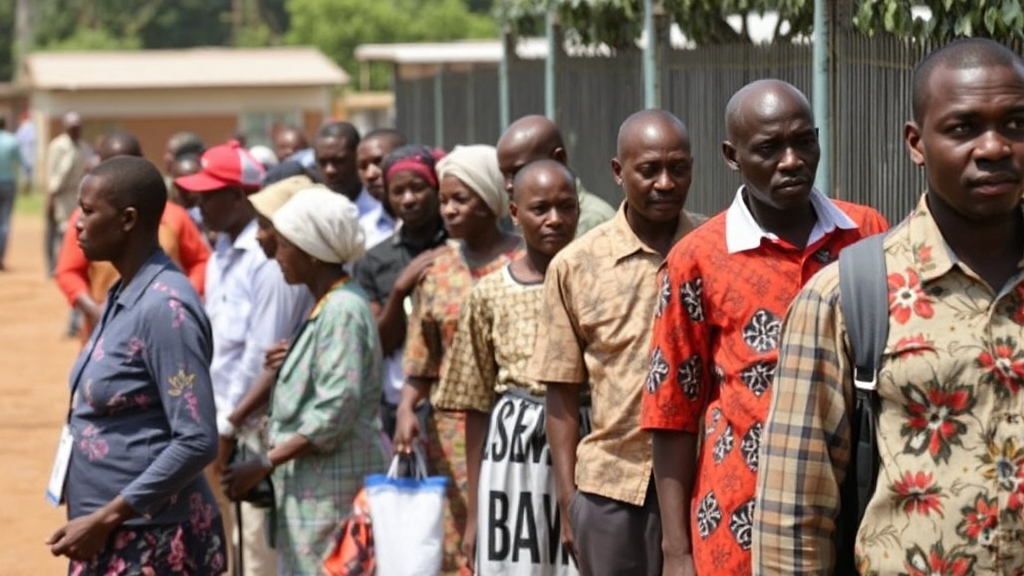
The Independent Electoral and Boundaries Commission announced on Tuesday that it would launch a nationwide continuous voter registration drive in January 2027, with an ambitious target of adding 7 million new voters to the national register before the close of registration ahead of the August 2027 general election. The drive, the most extensive since the mass registration exercise ahead of the 2017 polls, will deploy 12,000 biometric registration kits across all 47 counties.

IEBC Chairperson Molu Hassan, addressing a press conference at Anniversary Towers in Nairobi, said the commission had drawn lessons from the 2022 election cycle, in which an estimated 4.3 million eligible Kenyans — a disproportionate number of them young urban voters — remained unregistered despite several registration windows. “We cannot afford another election where millions of Kenyans want to participate and cannot because they were not on the register,” Mr Hassan said.

Targeting Youth and First-Time Voters

The commission’s data shows that Kenya’s population aged 18 to 35 accounts for approximately 58 per cent of all potential voters, yet this cohort has consistently been underrepresented on the electoral register relative to their demographic weight. Following the 2024 Gen Z protests, which demonstrated the political mobilisation capacity of young Kenyans, the IEBC has made youth registration its explicit strategic priority.

The January drive will operate a dedicated digital pre-registration portal, developed in partnership with the State Department for ICT, that allows citizens to complete preliminary registration using their Huduma Namba and national identity card number before visiting a registration centre for biometric capture. This hybrid model, piloted in Kisumu and Mombasa in March 2026, reduced average registration time per person from 18 minutes to under seven minutes.

Universities and national polytechnics will serve as designated registration centres throughout February and March, targeting the estimated 680,000 students currently enrolled in tertiary institutions. The commission has signed memoranda of understanding with the Kenya Universities and Colleges Central Placement Service and the Technical and Vocational Education and Training Authority to embed registration officers within institutions for six-week periods.

Diaspora and Special Voter Provisions

The 2027 election will also see an expanded diaspora voter registration programme. The IEBC plans to extend registration to Kenyan embassies and high commissions in 15 countries, up from eight in 2022. The expansion includes countries with significant Kenyan communities — the United Kingdom, the United States, Canada, Qatar, the United Arab Emirates, and several east and southern African nations.

Kenyan peacekeeping personnel currently deployed in Haiti under the multinational security support mission will also be provided dedicated registration and voting arrangements, following a parliamentary petition by the families of serving officers who argued that deployment abroad should not disenfranchise them.

A separate provision will cater to voters with disabilities, with the commission procuring 4,000 accessible biometric kits equipped with audio guides in Swahili and English, and committing to locate at least one accessible polling station within five kilometres of every significant population centre for persons with mobility limitations.

Technology, Integrity, and Past Controversies

The IEBC’s announcement was met with cautious approval from election observers, tempered by the institutional memory of the controversies that surrounded the 2017 and 2022 electoral cycles. The Kenya Domestic Observation Forum called on the commission to publish its technology procurement specifications publicly and to commission an independent cybersecurity audit of the voter registration database before January 2027.

“The biometric register is the foundation of election integrity. If that foundation is compromised, everything built on it is suspect. We need complete transparency about who built the system, who maintains it, and what access controls are in place,” said KEDO Coordinator Grace Maingi.

Mr Hassan said the commission had already engaged the Kenya National Information and Communications Technology Authority to conduct a system penetration test, with results to be published before registration opens. The commission will also establish a 24-hour public complaints hotline integrated with an online tracking dashboard — both in Swahili and English — so that registration grievances can be logged and resolved in real time.

The final voter roll from 2022 contained 22.1 million registered voters. If the IEBC achieves its 7 million target, Kenya would enter 2027 with nearly 29 million registered voters — the largest electoral roll in the country’s history and a figure that would make the outcome of the presidential race deeply uncertain for all candidates currently in the field.
Read More
Raila Odinga Returns from AU Commission Role with New Political Agenda
Politics

Raila Odinga Returns from AU Commission Role with New Political Agenda

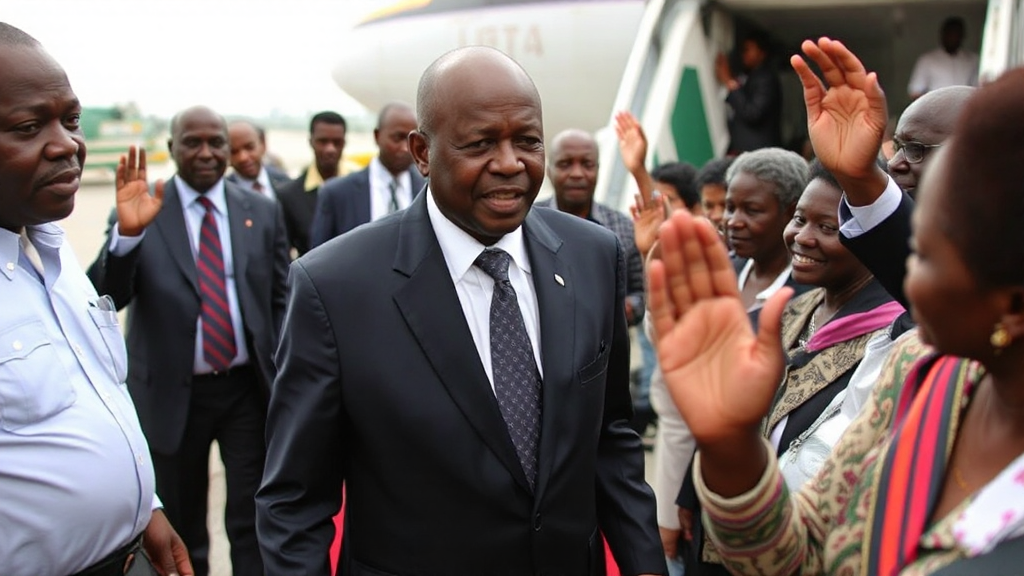
Raila Amolo Odinga touched down at Jomo Kenyatta International Airport on Saturday to a reception that blended the ceremonial enthusiasm of a returning statesman with the tactical curiosity of a political class eager to understand what the veteran opposition leader intends to do with the two years remaining before the next general election.

Mr Odinga, 81, spent the past 18 months as Kenya’s candidate for the chairpersonship of the African Union Commission, a bid that ultimately fell short in the February 2025 election but nonetheless raised his continental profile and kept him substantively engaged with pan-African policy debates at the highest level. His return marks a pivot back to domestic politics at a moment of maximum uncertainty: President Ruto’s administration is navigating IMF austerity, a resurgent youth political movement, and a 2027 election cycle that analysts describe as genuinely open.

What Raila Said at JKIA

Speaking to journalists from the tarmac of the VIP terminal, Mr Odinga delivered a prepared statement that was carefully calibrated to signal both continuity and reinvention. He called for a national conversation on constitutional reform, specifically the return of a prime ministerial position, the expansion of the Bill of Rights to include economic and social guarantees, and the creation of an independent fiscal council to audit government borrowing in real time.

“I have spent a year and a half working with African heads of state, finance ministers, and development banks. I have seen what governance can look like when institutions function. Kenya deserves nothing less, and I intend to advocate for that standard,” Mr Odinga said.

He conspicuously avoided any direct statement about whether he would contest the 2027 presidential election, deflecting the question twice with the phrase “there is time for all things.” The studied ambiguity was widely noted by political correspondents as characteristic of a politician who has lost presidential contests four times and is unlikely to make another bid without first assessing the landscape with great care.

Relations with Ruto and the Broad-Based Government

Mr Odinga’s relationship with President Ruto is the central enigma of Kenya’s current political moment. The so-called broad-based government arrangement, in which ODM joined the Ruto administration following the 2024 protests, has given Odinga’s party several cabinet positions and a degree of influence over policy — but has also muddied the distinction between government and opposition that gives Mr Odinga his most potent political identity.

ODM’s Secretary-General Edwin Sifuna, who accompanied the party leader to JKIA, said ODM remained committed to the broad-based government in principle but would be evaluating its continued participation on the basis of “measurable policy outcomes, not personal arrangements.” The statement was interpreted as a signal that ODM is beginning to calibrate an exit from the arrangement as 2027 approaches.

Analyst Mutahi Ngunyi, speaking on Citizen TV’s morning programme, suggested that Mr Odinga’s most valuable strategic asset was precisely his ambiguity. “As long as Raila has not declared, he is relevant to everybody — to Ruto as a potential threat, to Kalonzo as a potential partner, to Martha Karua as a potential rival, and to the Gen Z movement as a potential elder statesman. The moment he declares, he becomes relevant to only some of those groups.”

A New Economic Message

In a departure from previous campaigns, Mr Odinga’s returning statement placed economic policy — particularly public debt, youth unemployment, and the cost of living — at the forefront of his agenda. Kenya’s public debt stands at approximately Ksh 11.2 trillion, and the government’s commitment to an IMF-imposed primary budget surplus has translated into visible service cuts that have fed public discontent.

“The generation that filled the streets in 2024 was not fighting for abstract freedoms. They were fighting because they cannot afford unga, they cannot find jobs, and they watch the government collect taxes to pay foreign creditors while hospitals run out of medicine,” Mr Odinga said. The framing was a clear attempt to claim the Gen Z protest legacy — a move that PFK’s founding chairperson Wanjiru Kamau immediately challenged on social media, writing: “You were not on the streets with us. The people who were are still here.”

The exchange underscored the complexity of Kenyan opposition politics heading into 2027: the field is crowded, the youth vote is genuinely in play, and no candidate — including the most experienced political operator of his generation — can take the next two years for granted.

Read More
Kenya Parliament Passes Data Protection Amendment Strengthening Citizen Privacy
Politics

Kenya Parliament Passes Data Protection Amendment Strengthening Citizen Privacy

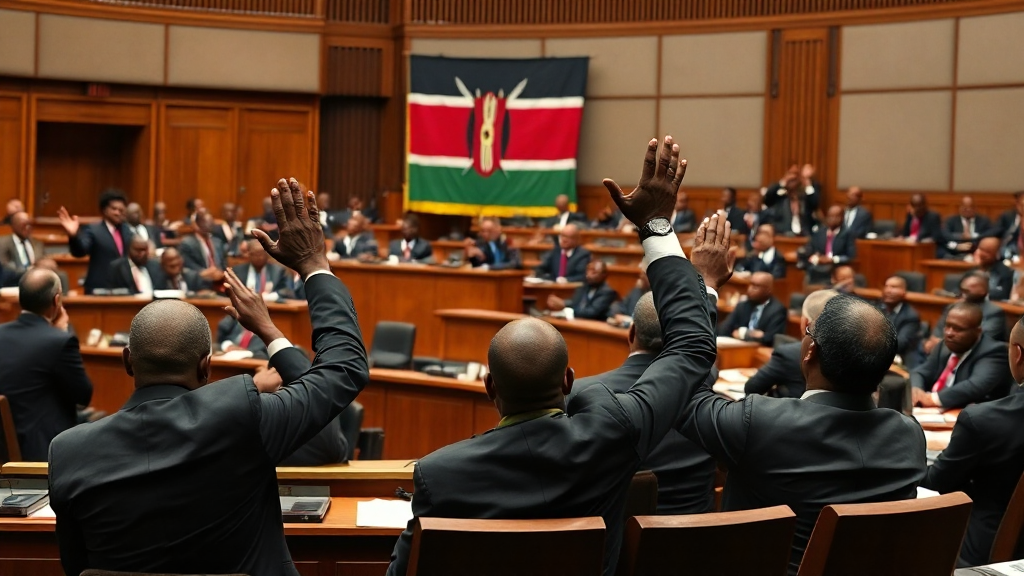
Kenya’s National Assembly passed the Data Protection (Amendment) Act 2026 on Wednesday evening, legislating the most significant overhaul of the country’s digital privacy framework since the original Data Protection Act was enacted in 2019. The bill cleared the House with 198 votes in favour and 34 against, before receiving Senate concurrence in an expedited sitting that concluded past midnight.

The amendments, developed over 14 months of consultation coordinated by the Office of the Data Protection Commissioner, were partly driven by a wave of high-profile personal data breaches in 2024 and 2025 that exposed the records of an estimated 4.7 million Kenyans held by telecommunications companies, financial institutions, and government agencies. A particularly damaging breach at a third-party SHA data processor in November 2025 exposed health records and M-Pesa transaction data linked to roughly 1.2 million subscribers.

Key Changes in the Amendment

The amendment’s most consequential provision introduces mandatory breach notification within 72 hours of a data controller becoming aware of a personal data breach. Under the previous act, no specific timeline existed, and the Data Protection Commissioner’s office recorded multiple instances where Kenyans learned about breaches affecting their data from media reports rather than from the institutions holding their data.

Penalties for violations have been substantially increased. The maximum fine for a data breach attributable to negligence has been raised from Ksh 5 million to Ksh 10 million for individuals and to three per cent of annual turnover for corporate entities — a provision deliberately calibrated to bite meaningfully at large telcos and banks rather than simply writing a manageable cheque.

The amendments also introduce a genuine opt-in consent standard for sensitive personal data categories, including health records, biometric data, political opinions, and financial information. Previously, companies could rely on buried consent clauses in multi-page terms and conditions. Under the new rules, consent for sensitive data must be “granular, specific, and separately obtained” — language borrowed from the European Union’s General Data Protection Regulation, which the amendment explicitly benchmarks against.

A new right to data portability has been introduced, requiring data controllers to provide individuals with a machine-readable copy of their personal data within 21 days of a request. This provision is expected to have particular commercial significance given Safaricom’s dominance in mobile financial services and the large volumes of behavioural data held within the M-Pesa ecosystem.

Industry Reaction

The Kenya Bankers Association and the Association of Kenya Insurers both expressed concern about the compliance costs associated with the amendment’s 72-hour breach notification requirement, arguing that complex technical investigations often cannot be completed within that window. Data Protection Commissioner Immaculate Kassait, however, was firm. “Seventy-two hours is about notifying us that you believe a breach has occurred, not about handing us a completed forensic report. There is no excuse for silence,” the commissioner said.

Safaricom, whose M-Pesa platform processes over Ksh 25 billion in daily transactions and holds financial behavioural data on more than 32 million Kenyans, said it welcomed the amendment’s clarity on consent standards and would commission an independent audit of its data governance practices within 90 days of the act’s commencement.

Civil Society and Digital Rights

Digital rights organisations, including the Kenya ICT Action Network (KICTANet) and Article 19 East Africa, gave the amendments a qualified welcome. KICTANet’s chair Grace Githaiga described the bill as a “meaningful step forward” but flagged two remaining concerns: the absence of independent algorithmic auditing requirements for artificial intelligence systems deployed by public bodies, and the dilution of a proposed clause that would have restricted KRA from accessing financial data without a court order.

That latter omission is politically significant. The KRA’s aggressive use of financial data under its enhanced compliance programme, in which M-Pesa transaction histories have been used to reconstruct taxpayers’ income, has generated considerable public discomfort. Parliament’s decision to exclude a judicial warrant requirement for KRA data requests reflects the government’s prioritisation of revenue enforcement under its IMF programme commitments over enhanced taxpayer privacy protections.

The Act commences 90 days after presidential assent, which President Ruto is expected to grant before the end of July.

Read More
Nairobi County Government Launches Sh8 Billion Road Repair Programme
Politics

Nairobi County Government Launches Sh8 Billion Road Repair Programme

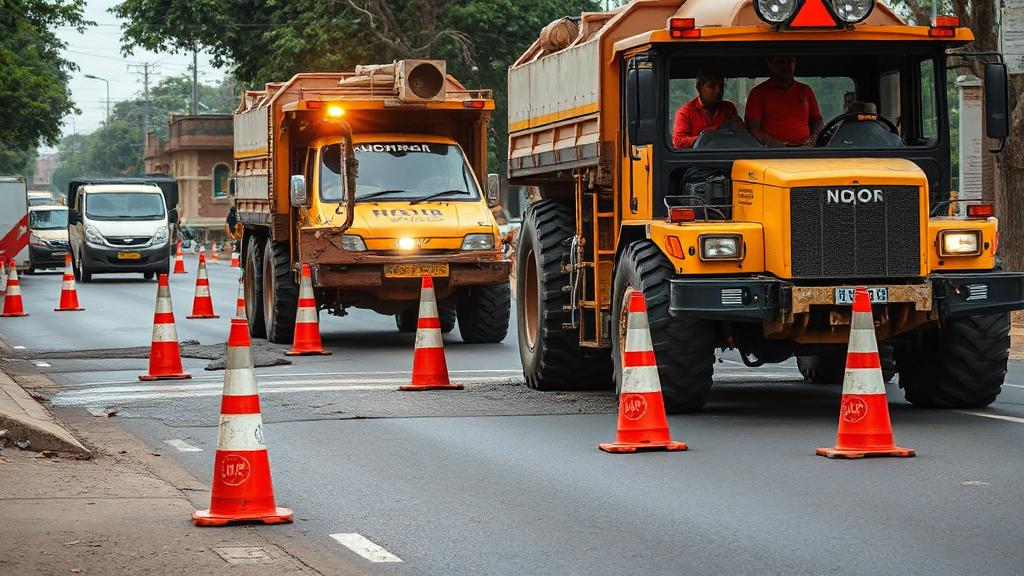
Nairobi Governor Johnson Sakaja on Thursday launched an Sh8 billion road rehabilitation programme that he described as the most comprehensive investment in city road infrastructure since the Nairobi Metropolitan Services era. The programme, branded Barabara Bora Nairobi, targets 312 kilometres of roads across all 17 sub-counties, with particular focus on the inner city estates that have endured years of potholed, flooded, and impassable streets.

Speaking at a launch ceremony on Jogoo Road — one of the first stretches earmarked for rehabilitation — the governor said the programme was financed through a combination of county own-source revenues, a Ksh 3.1 billion allocation from the national Roads Maintenance Levy Fund, and a Ksh 2.4 billion concessional loan from the French Development Agency, AFD, whose Nairobi urban mobility portfolio has grown steadily since 2021.

Which Roads Are on the List

The programme targets roads in three priority categories. Category A, absorbing Sh3.2 billion, covers major arterial routes including sections of Outering Road in Embakasi, Jogoo Road through Makadara, Ngong Road between the City Mortuary roundabout and Dagoretti Corner, and the Eastleigh First Avenue corridor. These are roads that carry commercial traffic, public service vehicles, and in several cases serve as critical links to Nairobi’s main industrial zones.

Category B, allocated Sh2.9 billion, focuses on residential feeder roads in Mathare, Kibera, Mukuru Kwa Njenga, and Korogocho — informal settlements where road degradation has compounded public health problems by making ambulance and fire engine access intermittently impossible. The governor committed that at least 40 per cent of works contracts in Category B would be awarded to youth-owned enterprises resident in the affected communities.

Category C, with Sh1.9 billion, covers drainage and kerbing works across the central business district and Upper Hill, where blocked culverts have turned routine rain events into flash floods that paralyse commerce. The 2023 El Nino significantly worsened this drainage infrastructure, with the CBD recording 14 days of severe flooding in a single quarter.

Contractors and Accountability Measures

A total of 34 contractors have been prequalified for the programme, following a competitive tender process overseen by the Nairobi City County Procurement Department. The county has partnered with the Engineers Board of Kenya to deploy a real-time monitoring dashboard, publicly accessible via the Nairobi City County website, that will display geo-tagged progress photographs uploaded weekly by resident engineers on each site.

“Every shilling of this programme is traceable. We have learned from the scandals of past road projects in this county and we are not repeating them,” Governor Sakaja said, alluding to a 2019 National Audit Office report that flagged Ksh 1.2 billion in questionable road expenditure by a previous Nairobi administration.

The Ethics and Anti-Corruption Commission has been invited to embed an observer in the programme’s oversight committee, a request the commission’s Director-General Twalib Mbarak confirmed had been accepted.

Commuters and the 2027 Electoral Clock

Nairobi residents, who endure some of the worst traffic congestion in sub-Saharan Africa, received the news with cautious optimism. On social media and in vox pops conducted along Tom Mboya Street, the predominant sentiment was sceptical hope — a well-worn disposition for a city whose residents have seen infrastructure promises cycle through administrations without fulfilment.

“I will believe it when I stop losing two tyres a month on Mombasa Road,” said Mary Wanjiku, a matatu driver plying the Route 33 corridor. “But if he delivers even half of this before 2027, I will vote for him again.”

The political dimension of the programme is unmistakable. Governor Sakaja, who faces a potentially competitive re-election bid in August 2027, has made urban service delivery the centrepiece of his second-term pitch. Works are scheduled to commence simultaneously on all Category A roads within 21 days, with the programme’s full completion projected for April 2027 — squarely within the election campaign window.

The Kenya Urban Roads Authority, which manages national roads within Nairobi, has separately committed Sh1.6 billion for expressway link roads to the Nairobi Expressway, though that programme operates independently of the county initiative.

Read More
Kenya-Tanzania Border Relations Improve as Heads of State Sign Trade Pact
Politics

Kenya-Tanzania Border Relations Improve as Heads of State Sign Trade Pact

Presidents William Ruto and Samia Suluhu Hassan signed a landmark bilateral trade and cooperation agreement in Arusha on Friday, formally closing a chapter of commercial friction that had periodically soured relations between East Africa’s two largest economies. The Joint Nairobi-Dar es Salaam Economic Cooperation Framework, as the pact is formally titled, was witnessed by cabinet ministers from both countries and a delegation of business leaders drawn from the Kenya Private Sector Alliance and Tanzania’s Confederation of Tanzania Industries.

The signing ceremony, held at the Arusha International Conference Centre, comes two years after a diplomatic rupture triggered by Tanzania’s temporary ban on Kenyan poultry and dairy products, and the subsequent tit-for-tat restrictions on Tanzanian cement and sugar entering Kenya. Both restrictions have now been formally lifted under the new agreement.

Key Provisions of the Pact

The agreement’s most significant provision is the elimination of 23 identified non-tariff barriers that had impeded bilateral trade, which stood at Ksh 187 billion in the 2025 calendar year — well below the Ksh 280 billion that the East African Business Council estimated the corridor should be generating given the size of both economies.

Among the barriers removed are duplicative standards inspections at the Namanga and Isebania border crossings, which had added between two and five days to the transit time for perishable goods. Kenyan fresh produce exporters, particularly horticulture firms in the Mt Kenya region, have long complained that Tanzanian phytosanitary checks effectively functioned as a protectionist instrument rather than a legitimate regulatory tool.

A new Joint Border Economic Zone will be established at Namanga, straddling the two countries’ territory, with a combined investment incentive package including a 10-year corporate tax holiday, a single customs window, and co-located standards testing laboratories. The zone is expected to become operational by the first quarter of 2028 and has drawn early expressions of interest from manufacturers seeking to serve both the Kenyan and Tanzanian markets from a single location.

President Ruto described the signing as a decisive step towards the East African Community’s goal of a fully operational common market. “The distance between Nairobi and Dar es Salaam is three hours by flight. The distance between our two economies has been far longer than that, and today we begin to close it,” President Ruto said.

President Hassan, speaking in Swahili, said Tanzania had moved beyond any suspicion that deeper integration with Kenya meant economic subordination. “Ushirikiano si udhalilishaji — cooperation is not subjugation. It is the path to prosperity for all our people,” she said, drawing warm applause from the assembled delegates.

SGR and Infrastructure Links

The pact also includes a joint commitment to accelerate feasibility studies for the extension of Kenya’s Standard Gauge Railway from Naivasha to Kisumu and onward to the Tanzanian border at Sirare. The SGR, which has seen passenger numbers rise 34 per cent year-on-year in 2026, is viewed by both governments as the backbone of a future integrated transport corridor connecting Mombasa to Dar es Salaam via the interior.

A complementary road upgrade programme along the B8 highway between Namanga and Arusha will be jointly funded, with the African Development Bank already having signalled willingness to co-finance the Tanzanian section. Kenya’s National Construction Authority will provide technical oversight for the Kenyan segment, with works expected to begin in early 2027.

Business Reaction and EAC Context

The Kenya Association of Manufacturers welcomed the pact, with CEO Tobias Alando describing it as “the most commercially meaningful bilateral agreement Kenya has signed in a decade.” The East African Community Secretariat in Arusha also applauded the development, noting that persistent bilateral barriers between anchor economies had been the single greatest obstacle to the customs union’s functioning as designed.

Trade economists caution that implementation will be the real test. Previous agreements between the two countries — including a 2016 memorandum of understanding on border management — remained largely unimplemented due to bureaucratic inertia and vested interests among border officials accustomed to informal revenue streams at crossing points. Both governments have committed to a six-monthly joint review mechanism, chaired by their respective trade ministers, to monitor progress against agreed timelines.

Read More
Gen Z Political Movement Registers as Formal Party Ahead of 2027 Vote
Politics

Gen Z Political Movement Registers as Formal Party Ahead of 2027 Vote

Two years after a generation of young Kenyans stormed Parliament Buildings and fundamentally altered the country’s political conversation, the movement that emerged from those protests has crossed a critical milestone: on Monday, the Registrar of Political Parties, Anne Nderitu, formally gazetted the People’s Front Kenya as a registered political party, clearing the way for the organisation to field candidates in the 2027 general election.

The registration, confirmed in a Gazette Notice dated 30th June 2026, marks the culmination of an 18-month process during which the movement’s core organising committee collected over 1,800 signatures from members in at least 24 counties, satisfying the Elections Act’s threshold for national party status.

From the Streets to the Ballot Box

The People’s Front Kenya, known colloquially as PFK, traces its lineage directly to the June and July 2024 protests against the Finance Bill 2024. Those demonstrations, unprecedented in their scale and organisation, were coordinated largely through social media and drew hundreds of thousands of young Kenyans into the streets, with at least 39 protesters killed in clashes with security forces.

PFK’s founding chairperson, 28-year-old software developer Wanjiru Kamau, said the decision to formalise was driven by a recognition that protest alone had reached its limits. “We occupied Parliament for a day. Now we intend to occupy it for five years, through the ballot box and by running candidates who actually represent our generation’s values,” Ms Kamau told journalists at a packed press conference at the Nairobi Serena Hotel.

The party’s founding manifesto, released simultaneously, centres on four pillars: fiscal transparency and public debt accountability; expansion of digital public infrastructure; climate adaptation funding; and an end to what it calls “extractive procurement” — the tender irregularities that independent audits have repeatedly flagged across government ministries. Notably absent is any tribal or regional framing, a deliberate departure from the majoritarian ethnic arithmetic that has dominated Kenyan electoral politics for decades.

A Party Built on Technology

PFK’s organisational model is conspicuously different from established parties. Membership is managed through a mobile application called Sauti, integrated with M-Pesa for the collection of a nominal Ksh 50 monthly contribution. The party claims 340,000 registered app users, of whom approximately 190,000 have made at least one monthly payment — a digital financial backbone that established parties, dependent on wealthy patrons and harambee fundraisers, do not possess.

The Safaricom partnership that enabled Sauti’s M-Pesa integration has attracted scrutiny. Opposition figures, including some within the Azimio coalition, have questioned whether a commercial entity’s infrastructure should underpin a political party’s financial systems. PFK counters that all transactions are publicly auditable on a blockchain ledger published on its website.

The party has already identified 47 prospective gubernatorial candidates, 290 parliamentary aspirants, and over 1,400 ward representative candidates. However, political analysts caution that name recognition and grassroots organisation at the ward level remain PFK’s greatest weaknesses. “Twitter followings do not translate automatically into votes in Murang’a Central or Kajiado North,” said University of Nairobi political scientist Professor XN Iraki.

Reaction from Established Parties

Kenya Kwanza’s Secretary General Veronica Maina described PFK’s registration as a welcome development for democratic pluralism, while noting that the ruling coalition remained confident in its grassroots networks. ODM’s Director of Elections Junet Mohammed was blunter, saying that Kenyans ultimately “vote for people they can see and touch, not apps.”

International observers are watching more closely. The National Democratic Institute, which monitored the 2022 elections, said PFK represented the most significant structural challenge to Kenya’s dominant party duopoly since Safina was registered in 1997. With voter registration for 2027 set to commence in January, PFK has six months to translate its digital momentum into registered, motivated voters.

Read More
Governors Forum Demands Ksh 400 Billion County Allocation in 2027 Budget
Politics

Governors Forum Demands Ksh 400 Billion County Allocation in 2027 Budget

The Council of Governors convened an emergency plenary in Naivasha on Wednesday and issued its most aggressive budget demand to date, calling on the National Treasury to allocate at least Ksh 400 billion to county governments in the 2027/28 financial year, up from the Ksh 385 billion approved for the current cycle.

The demand, contained in a detailed memorandum forwarded to Treasury Cabinet Secretary John Mbadi and the Controller of Budget, argues that anything below Ksh 400 billion would force counties to implement painful cuts to health services, roads maintenance, and agricultural extension — the three pillars of devolution most felt by ordinary Kenyans.

Healthcare Crisis at the Centre

Governors singled out the transition to the Social Health Authority as a principal driver of their budget request. Under SHA, counties are responsible for facility-level service delivery while reimbursements from the national authority have, in numerous cases, arrived months late. Murang’a Governor Irungu Kang’ata, chairing the plenary, said counties had collectively absorbed an unfunded SHA mandate worth approximately Ksh 28 billion in the past 18 months.

“We are not asking for more money to build governor’s residences. We are asking for the money the Constitution already promises us, because right now nurses are going unpaid, hospitals are running out of gloves and sutures, and patients are suffering,” Governor Kang’ata said.

The governors also pointed to a specific grievance: the conditional grant for Level 4 and Level 5 hospitals, which was cut by 14 per cent in the current budget as part of the government’s IMF programme commitments. Restoring that grant alone would require an additional Ksh 11.6 billion.

Roads, Climate, and the El Nino Deficit

Beyond health, the governors’ memorandum dedicates considerable space to infrastructure repair. The 2023-2024 El Nino rains caused catastrophic damage to county roads, with the Kenya National Highways Authority estimating that 34,000 kilometres of county roads were either damaged or rendered impassable. Treasury disbursed only Ksh 9.4 billion for emergency repairs against a documented need of Ksh 52 billion.

Kitui Governor Julius Malombe, speaking on behalf of arid and semi-arid counties, noted that climate adaptation had become an unavoidable recurrent expenditure item. “Every year we budget for drought response. Every other year we budget for flood recovery. We cannot do both on allocations that have not kept pace with inflation since 2019,” Governor Malombe said.

The governors also demanded the Treasury clear a Ksh 14.2 billion backlog in equalisation fund disbursements owed to marginalised counties under Article 204 of the Constitution. The equalisation fund, chronically underfunded, has been a source of contention between national and county governments for over a decade.

Treasury’s Position and Political Undercurrents

Treasury insiders, speaking on condition of anonymity, acknowledged the legitimacy of several governors’ complaints but said the Ksh 400 billion figure was unlikely to survive the medium-term expenditure framework process without significant domestic revenue improvement by KRA. The Kenya Revenue Authority collected Ksh 2.17 trillion in the 2025/26 fiscal year, falling short of its Ksh 2.4 trillion target.

Analysts at Cytonn Investments noted that the governors’ demand carries obvious political weight as the country approaches 2027. “You have 47 governors, most of whom are eyeing either Senate seats or a second gubernatorial term. A united stand on budget allocation is also a show of political muscle,” said Cytonn Research Analyst Angela Mwangi.

The Inter-Governmental Budget and Economic Council is scheduled to convene in August to formalise preliminary budget ceilings, and it is there that the governors’ demand will either be accommodated or revised downward. A parallel petition has been filed with the Senate Budget Committee, which has invited public submissions through 15th August 2026.

Read More
Kenya's Senate Passes Constitutional Amendment Bill on Devolution Funding
Politics

Kenya’s Senate Passes Constitutional Amendment Bill on Devolution Funding

Kenya’s Senate passed a historic Constitutional Amendment Bill on Tuesday that would entrench a minimum 35 per cent share of nationally collected revenues for county governments, in what legislators described as the most consequential reform to the devolution framework since the promulgation of the 2010 Constitution.

The bill, formally titled the Constitution of Kenya (Amendment) Bill 2026, sailed through with 45 senators voting in favour, 12 against, and three abstentions. The passage follows months of tense negotiations between the Council of Governors, the National Treasury, and the Commission on Revenue Allocation, against a backdrop of growing frustration among county administrations over delayed and inadequate disbursements.

What the Bill Changes

Under the current constitutional arrangement, the equitable share transferred to counties must be at least 15 per cent of the most recently audited revenues. In practice, the National Treasury and Parliament have negotiated allocations that typically hovered between 25 and 29 per cent, leaving counties perpetually underfunded relative to their constitutional mandates in health, early childhood education, and local infrastructure.

The new bill proposes to replace the existing minimum floor with a binding 35 per cent threshold, calculated on audited revenues from two fiscal years prior. Critically, the bill also introduces a penalty clause: any delayed disbursement beyond 15 working days of the first day of a new quarter would automatically attract an interest surcharge equivalent to the Central Bank of Kenya’s prevailing lending rate.

Senate Majority Leader Aaron Cheruiyot, who shepherded the bill through committee, said the legislation was non-negotiable. “Counties are not charity cases receiving handouts from Nairobi. They are constitutional partners in governance, and this bill ensures the Treasury treats them accordingly,” Senator Cheruiyot said during the final reading debate.

National Assembly and Referendum Hurdles

The bill must now clear the National Assembly, where it requires a two-thirds majority, before proceeding to a referendum under Article 255 of the Constitution. President William Ruto’s administration has neither publicly endorsed nor opposed the bill, choosing instead a studied neutrality that analysts read as political calculation ahead of the 2027 general election.

Treasury Cabinet Secretary John Mbadi cautioned that a constitutionally mandated 35 per cent floor would constrain the national government’s ability to fund critical services including security, tertiary health care, and national infrastructure. “We are not opposed to the spirit of the bill. We are concerned about the arithmetic,” Mr Mbadi said at a post-vote press briefing at Treasury House.

The Commission on Revenue Allocation has already signalled its conditional support, provided the bill is accompanied by stronger county public financial management reforms. CRA Chairperson Mary Githinji said the commission would release a formal position paper within three weeks.

Context: Devolution Under Strain

The push for the amendment comes after a bruising two years for county governments. The aftermath of the 2023 El Nino rains destroyed local infrastructure worth an estimated Ksh 47 billion across 19 counties, while the Ruto administration’s IMF-guided austerity programme froze several conditional grants. The rollout of the Social Health Authority, replacing the former National Hospital Insurance Fund, has further complicated the fiscal relationship between Nairobi and counties, as counties bear delivery costs while disbursements lag.

Civil society organisations, including Mzalendo Trust and the Institute of Economic Affairs Nairobi, welcomed the Senate vote but urged caution. “The law alone will not fix devolution. We need concurrent reforms to audit capacity at county level, otherwise we risk locking in higher transfers to systems that still cannot absorb them accountably,” said IEA Executive Director Dr Kwame Owino.

The bill now moves to county assemblies for public participation hearings, which must be concluded before the National Assembly reconvenes in September. If it clears all legislative hurdles, a referendum could be scheduled alongside the August 2027 general election, making devolution funding the defining ballot question of the next electoral cycle.

Read More
Kenya's Organic Farming Certification Programme Opens New European Market Doors
Agriculture

Kenya’s Organic Farming Certification Programme Opens New European Market Doors

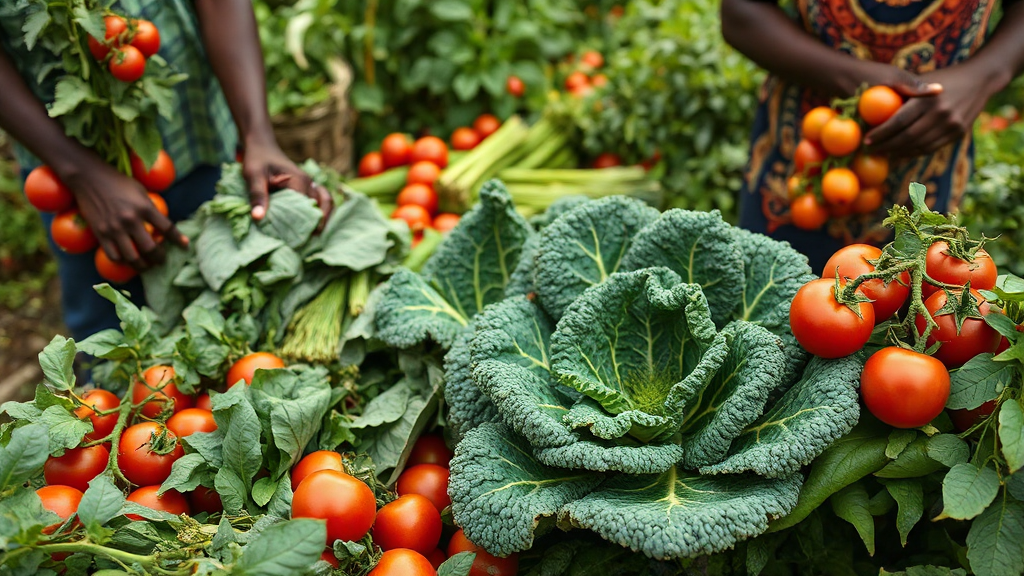
A quiet revolution is under way in Kenya’s horticultural and specialty crop sectors, driven not by a new seed variety or irrigation technology but by a piece of paper: the organic farming certificate. Since the launch of the Kenya Organic Agriculture Network (KOAN) certification programme in its expanded, government-backed form in early 2024, more than 4,500 farms across 24 counties have received accreditation under standards equivalent to the European Union’s Regulation (EU) 2018/848. The consequence is access to a premium market — and premium prices — that have transformed the economics of farming for thousands of smallholder households.

What the Certificate Opens

Organic certification under EU-recognised standards allows Kenyan exporters to market their produce as certified organic in all 27 EU member states, the world’s second-largest organic food market after the United States, with annual consumer expenditure exceeding 50 billion euros. The price premium for certified organic produce over conventional equivalents ranges from 30 to 50 per cent for vegetables, 40 to 65 per cent for coffee, and up to 80 per cent for certain rare spices, according to data from the Fresh Produce Exporters Association of Kenya (FPEAK). For a smallholder farmer earning Ksh 180,000 annually from conventional French beans, an organic premium of 40 per cent translates into an additional Ksh 72,000 per year — a significant uplift that compounds over time.

Kenya’s horticultural exports to the European Union — predominantly cut flowers, French beans, snow peas, avocados, and mangoes — were valued at approximately $750 million in 2025. The organic segment remains a small fraction of that total, but it is the fastest-growing component. “European consumers have made their preferences clear,” said FPEAK Chief Executive Okisegere Ojepat. “They want pesticide-free, traceable, sustainably produced food. Kenya has the climate, the labour, and increasingly the certification infrastructure to meet that demand. We are no longer just a conventional supplier competing on price.”

How the Programme Works

The certification pathway is tiered to accommodate different farm sizes. Individual farmers with more than two hectares may apply directly through KOAN’s online portal, supported by a farm inspection conducted by one of twelve accredited certification bodies operating in Kenya. Smallholders with less than two hectares are encouraged to join Participatory Guarantee System (PGS) groups, in which clusters of 15 to 30 neighbouring farmers undergo peer-review inspections supported by a certified facilitator. The PGS model brings the per-farmer cost of certification to approximately Ksh 8,000 per year, compared with Ksh 35,000 for an individual inspection. The government’s contribution — a Ksh 1.4 billion allocation across the 2024/25 and 2025/26 financial years — has funded county-level organic extension units, the training of 680 certified organic extension officers, and a partial subsidy on inspection fees for PGS groups in ASAL and lower-income counties. KRA has also provided a tax exemption on imported certified organic inputs, reducing a cost barrier that had previously deterred farmers from initiating the three-year transition period required before certification can be granted.

From the Farm to the Supermarket Shelf

In Kirinyaga County, a group of 28 women farmers organised as the Mwea Organic Growers Cooperative received their KOAN group certificate in October 2025 and made their first consignment to a Dutch supermarket chain in January 2026 — certified organic baby spinach and rocket salad in biodegradable packaging. “We used to sell to the local broker at Ksh 30 per kilogramme for spinach. Now we sell to the export aggregator at Ksh 85 per kilogramme,” said cooperative coordinator Wanjiru Kamau. “We are the same farmers, the same land, the same climate — but the certificate changed everything.” In Meru County, three cooperatives producing single-origin Arabica at high altitude have attracted interest from specialty roasters in Germany, Sweden, and the United States willing to pay green coffee prices of $5.80 to $7.20 per kilogramme, well above the Nairobi Coffee Exchange average of $3.10 for conventional grade. The programme is not without friction. The three-year conversion period is financially difficult for smallholders, and bridging loans from the Agriculture Finance Corporation have been slow to disburse. Counterfeit certification is an emerging concern — the Kenya Bureau of Standards issued a warning in April 2026 that some exporters had attached fraudulent organic claims to conventional produce, jeopardising Kenya’s EU standing. A dedicated KEBS inspection unit for organic exports was established in response. The incident served as a reminder that certification is not a one-time achievement but an ongoing obligation that Kenya’s growing organic sector must take seriously.

Read More
Meru Miraa Farmers Face Collapse as Exports to Somalia Drop 70%
Agriculture

Meru Miraa Farmers Face Collapse as Exports to Somalia Drop 70%

Along the dusty trading corridors of Maua town in Imenti North, Meru County, the evidence of an industry under severe stress is unmistakable. Dozens of miraa bundles lie unsold at the roadsides where, two years ago, they would have been snapped up within hours for refrigerated freight to Mogadishu, Baidoa, and Kismayo. Farmers who once earned Ksh 15,000 to Ksh 25,000 per week from the clan-organised export trade are reporting weekly incomes below Ksh 4,000. Some have abandoned their plots entirely. The Meru miraa economy, which supports an estimated 300,000 people in Meru and Tharaka-Nithi counties and was generating export revenues of approximately Ksh 8 billion annually at its peak, is in a state of acute crisis.

The Collapse of the Somali Market

Somalia has historically been Kenya’s largest miraa export destination, absorbing between 60 and 70 per cent of Meru County’s total output by volume. In late 2024 and early 2025, a combination of factors began to erode that market with devastating speed. The Federal Government of Somalia, under pressure from religious conservative factions and public health advocates, imposed new restrictions on miraa imports through Mogadishu’s Aden Adde International Airport, the primary entry point for Kenyan miraa. The measures included increased customs inspections that slowed clearance times beyond the 48-hour freshness window critical for miraa, which begins to deteriorate rapidly after harvest. Simultaneously, Mogadishu port authorities introduced a new documentation requirement — a phytosanitary certificate linked to a Somali Shilling-denominated fee — that traders say was implemented with no transition period and inconsistently enforced, causing some Somali buyers to explore alternative suppliers in Ethiopia’s Harar region. “One day the planes were flying, the next day we were told there was a new rule and our cargo was being held,” said Hassan Kimathi, a miraa trader who has operated the Meru-Mogadishu route for 19 years. “By the time we understood what was needed, our customers had found other suppliers.”

The Human Cost in Meru

The secondary economic consequences in Meru County are severe and widening. County government tax receipts from the miraa cess — levied at Ksh 2 per kilogramme — have dropped by approximately Ksh 320 million in the past twelve months, a gap the county is struggling to absorb without cutting services. The miraa trade directly employs harvesters, sorters, packers, freight handlers, and traders, with a further ring of dependency among food vendors, boda boda operators, and input suppliers whose business volumes track miraa revenues. Meru Governor Kawira Mwangaza, who has lobbied the national government for emergency support, told a community forum in Maua in April that the situation required a presidential-level intervention. “This is not a farming problem. This is a national economic emergency affecting three hundred thousand Kenyans.” Agriculture CS Mwangangi dispatched a trade delegation to Mogadishu in May, but the talks are reported to have produced only vague commitments with no concrete timeline for policy revision.

Alternative Markets and Hard Realities

The suggestion that Meru farmers should diversify into other crops is one that local leaders receive with frustration and resignation. Miraa is a perennial crop that produces year-round income from the second year after planting and grows well in Meru’s specific altitude band — between 1,000 and 1,800 metres — where alternatives such as tea, coffee, and macadamia require significant capital investment and multi-year establishment periods before generating income. A farmer who uproots a miraa plot and replants with macadamia faces four to five years of near-zero income from that land. The United Kingdom and the Netherlands banned miraa imports in 2014, closing off the diaspora markets that once provided a secondary revenue stream. Some farmers are exploring pilot exports to Djibouti and the UAE, where khat consumption among Somali and Yemeni communities is legal. Early volumes are modest, but whether these nascent routes can compensate for a 70 per cent collapse in the primary market is an open question that Meru’s farmers are living through with dwindling resources and deepening anxiety.

Read More