Kenya's Senate Passes Constitutional Amendment Bill on Devolution Funding
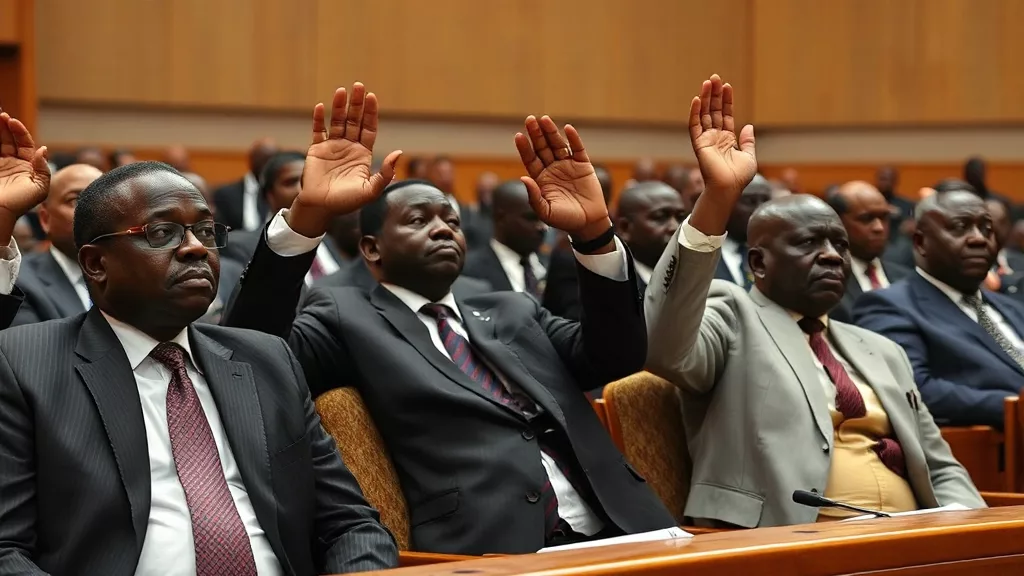
Kenya's Senate passed a historic Constitutional Amendment Bill on Tuesday that would entrench a minimum 35 per cent share of nationally collected revenues for county governments, in what legislators described as the most consequential reform to the devolution framework since the promulgation of the 2010 Constitution.
The bill, formally titled the Constitution of Kenya (Amendment) Bill 2026, sailed through with 45 senators voting in favour, 12 against, and three abstentions. The passage follows months of tense negotiations between the Council of Governors, the National Treasury, and the Commission on Revenue Allocation, against a backdrop of growing frustration among county administrations over delayed and inadequate disbursements.
What the Bill Changes
Under the current constitutional arrangement, the equitable share transferred to counties must be at least 15 per cent of the most recently audited revenues. In practice, the National Treasury and Parliament have negotiated allocations that typically hovered between 25 and 29 per cent, leaving counties perpetually underfunded relative to their constitutional mandates in health, early childhood education, and local infrastructure.
The new bill proposes to replace the existing minimum floor with a binding 35 per cent threshold, calculated on audited revenues from two fiscal years prior. Critically, the bill also introduces a penalty clause: any delayed disbursement beyond 15 working days of the first day of a new quarter would automatically attract an interest surcharge equivalent to the Central Bank of Kenya's prevailing lending rate.
Senate Majority Leader Aaron Cheruiyot, who shepherded the bill through committee, said the legislation was non-negotiable. "Counties are not charity cases receiving handouts from Nairobi. They are constitutional partners in governance, and this bill ensures the Treasury treats them accordingly," Senator Cheruiyot said during the final reading debate.
National Assembly and Referendum Hurdles
The bill must now clear the National Assembly, where it requires a two-thirds majority, before proceeding to a referendum under Article 255 of the Constitution. President William Ruto's administration has neither publicly endorsed nor opposed the bill, choosing instead a studied neutrality that analysts read as political calculation ahead of the 2027 general election.
Treasury Cabinet Secretary John Mbadi cautioned that a constitutionally mandated 35 per cent floor would constrain the national government's ability to fund critical services including security, tertiary health care, and national infrastructure. "We are not opposed to the spirit of the bill. We are concerned about the arithmetic," Mr Mbadi said at a post-vote press briefing at Treasury House.
The Commission on Revenue Allocation has already signalled its conditional support, provided the bill is accompanied by stronger county public financial management reforms. CRA Chairperson Mary Githinji said the commission would release a formal position paper within three weeks.
Context: Devolution Under Strain
The push for the amendment comes after a bruising two years for county governments. The aftermath of the 2023 El Nino rains destroyed local infrastructure worth an estimated Ksh 47 billion across 19 counties, while the Ruto administration's IMF-guided austerity programme froze several conditional grants. The rollout of the Social Health Authority, replacing the former National Hospital Insurance Fund, has further complicated the fiscal relationship between Nairobi and counties, as counties bear delivery costs while disbursements lag.
Civil society organisations, including Mzalendo Trust and the Institute of Economic Affairs Nairobi, welcomed the Senate vote but urged caution. "The law alone will not fix devolution. We need concurrent reforms to audit capacity at county level, otherwise we risk locking in higher transfers to systems that still cannot absorb them accountably," said IEA Executive Director Dr Kwame Owino.
The bill now moves to county assemblies for public participation hearings, which must be concluded before the National Assembly reconvenes in September. If it clears all legislative hurdles, a referendum could be scheduled alongside the August 2027 general election, making devolution funding the defining ballot question of the next electoral cycle.