Safaricom Launches 5G Network in Five Kenyan Cities, Targeting Full Rollout by 2028
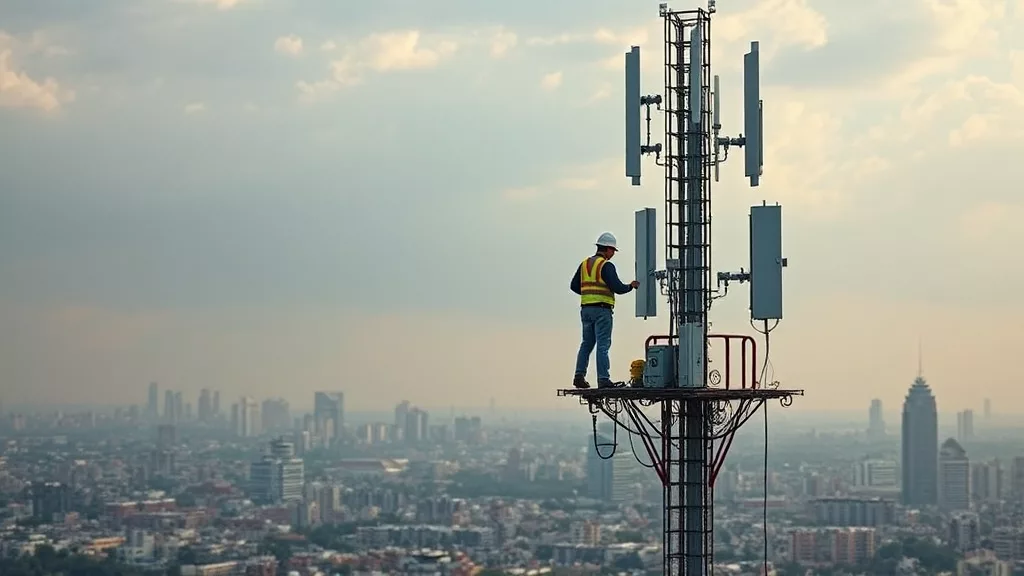
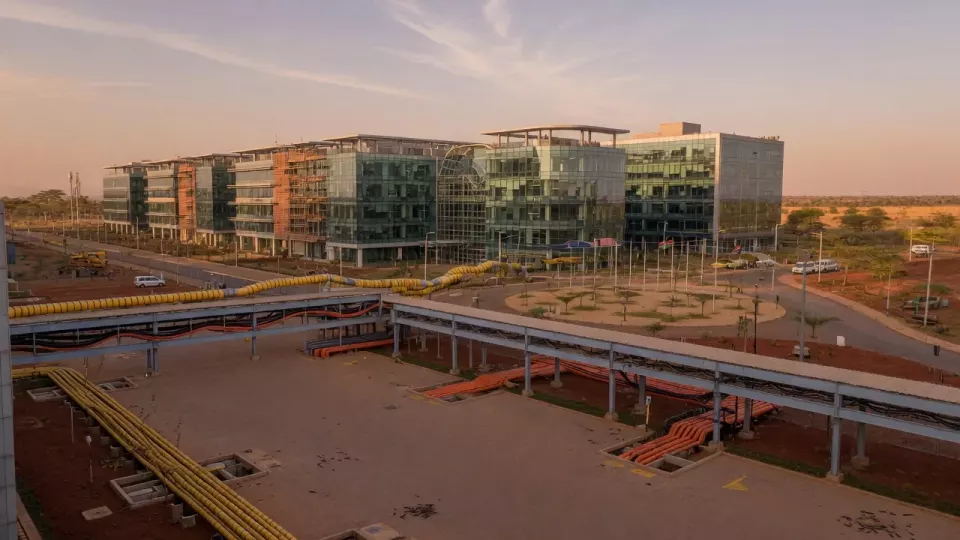
Safaricom has formally activated commercial fifth-generation mobile network services across five Kenyan cities simultaneously, marking the country's most significant telecommunications infrastructure event since the launch of M-Pesa in 2007. The go-live, which switched on 5G in designated zones of Nairobi, Mombasa, Kisumu, Nakuru, and Eldoret on 1 June 2026, follows two years of frequency allocation negotiations with the Communications Authority of Kenya and an infrastructure build-out programme that Safaricom says has involved laying more than 3,800 kilometres of new fibre backbone and installing 1,240 5G-compatible base stations.
What the Launch Delivers -- and What It Does Not
The initial 5G footprint covers central business districts, major commercial zones, universities, and selected residential neighbourhoods in the five cities. Safaricom is using the 3.5 GHz mid-band spectrum allocated by the Communications Authority, which provides a practical balance between coverage area and the higher throughput speeds that define 5G. In testing conducted by Safaricom and independently verified by the CA, average download speeds in covered areas reached 650 Mbps, with peak speeds in optimal conditions exceeding 1.2 Gbps -- compared with an average of 22 Mbps on Safaricom's existing 4G network.
"This is a genuine step change, not an incremental upgrade," said Safaricom CEO Peter Ndegwa at the launch event, held at the Westgate Shopping Centre in Nairobi. "At these speeds and at this latency, you can do things that simply were not possible before: remote surgery, real-time industrial automation, augmented reality applications in education and tourism. We are not launching 5G for faster YouTube. We are launching it to unlock a different category of application."
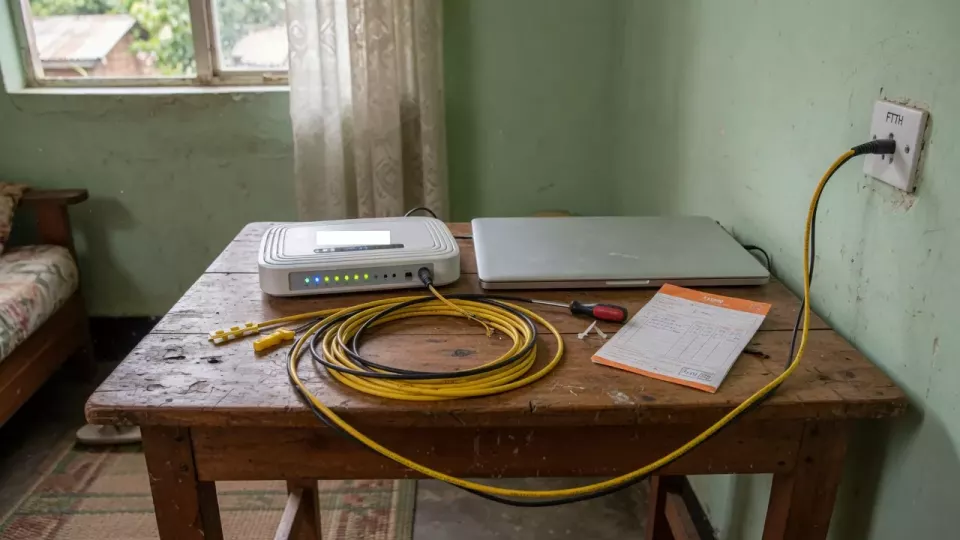
The caveats are real nonetheless. Consumer 5G devices capable of connecting to the network remain expensive by Kenyan standards, with the lowest-priced compatible smartphones retailing at approximately Ksh 28,000. Safaricom has partnered with Samsung, Tecno, and OPPO to offer instalment payment plans, but analysts at Analysys Mason estimate that 5G-capable devices will account for less than 15 per cent of Safaricom's handset base by the end of 2026. For the foreseeable future, 5G revenue will be driven primarily by enterprise fixed wireless access, mobile broadband substitution for home internet, and business-to-business verticals rather than mass-market consumer services.
Enterprise and Public-Sector Applications
The enterprise pipeline is already taking shape. Safaricom Business has announced 5G contracts with three Nairobi hospitals for high-definition medical imaging transmission, with the Kenyatta National Hospital planning to use 5G connectivity to link its main campus with a new satellite radiology centre in Ruiru by the end of 2026. The Kenya Ports Authority in Mombasa has signed an agreement to deploy a 5G-enabled private network for container tracking and autonomous vehicle management across the port's expanded berths, expected to cut container dwell times by approximately 18 per cent.
The government itself is a significant potential 5G customer. The Smart Nairobi initiative, under which the Nairobi City County is deploying intelligent traffic management, waste monitoring sensors, and public safety cameras, has been redesigned around 5G connectivity following the launch. County technology officials say 5G's lower latency -- the network's round-trip communication delay in covered zones averages 8 milliseconds, against 45 milliseconds on 4G -- is essential for the real-time responsiveness that smart infrastructure applications require.
The Road to 2028 and National Coverage
Safaricom's commitment to extend 5G to all 47 counties by 2028 is widely regarded as ambitious, particularly for the arid northern and coastal hinterlands where fibre infrastructure is sparse and power supply unreliable. The company has pledged to invest a total of Ksh 145 billion in the rollout over four years, funded through a combination of retained earnings, a Eurobond facility arranged through Citi and Standard Chartered, and co-investment from the Kenyan government's Kenya National Digital Master Plan infrastructure programme.
For Kenya's Los Angeles 2028 Olympic campaign, 5G connectivity has an unexpected relevance: the sports ministry has indicated that training centres for athletes in high-performance disciplines will be equipped with 5G-enabled biomechanical monitoring and coaching analytics tools. It is a small application in global terms, but one that illustrates how the technology's reach is expected to extend well beyond commercial and consumer contexts as the rollout matures. Whether Safaricom meets its 2028 all-county target remains to be seen, but the five-city launch has at least established that Kenya's 5G era has genuinely begun.