M-Pesa Processes Over 1 Trillion Kenyan Shillings Monthly for First Time
M-Pesa, the mobile money platform that has defined Kenya's financial landscape for nearly two decades, has crossed a milestone that few analysts predicted would arrive this soon: for the first time in its history, the service processed more than one trillion Kenyan shillings -- approximately $7.7 billion at current exchange rates -- in a single calendar month. Safaricom announced the achievement in its half-year results presentation on 14 May 2026, disclosing that April 2026 saw a total transaction value of Ksh 1.02 trillion, a 19 per cent year-on-year increase driven by merchant payments, business disbursements, and the continued integration of M-Pesa with government service platforms.
What is Driving the Volume
The crossing of the one-trillion-shilling threshold is the product of several converging trends rather than any single catalytic event. The integration of M-Pesa into the eCitizen portal and the new Social Health Authority (SHA) platform -- which replaced the National Hospital Insurance Fund -- has dramatically increased government-related transaction flows. SHA premium collections, government pension disbursements, and county government supplier payments are now routed through M-Pesa for a large share of transactions, adding what Safaricom CFO Ilann Darsa estimates is between Ksh 45 and Ksh 60 billion per month in previously bank-dominated or cash-based flows.
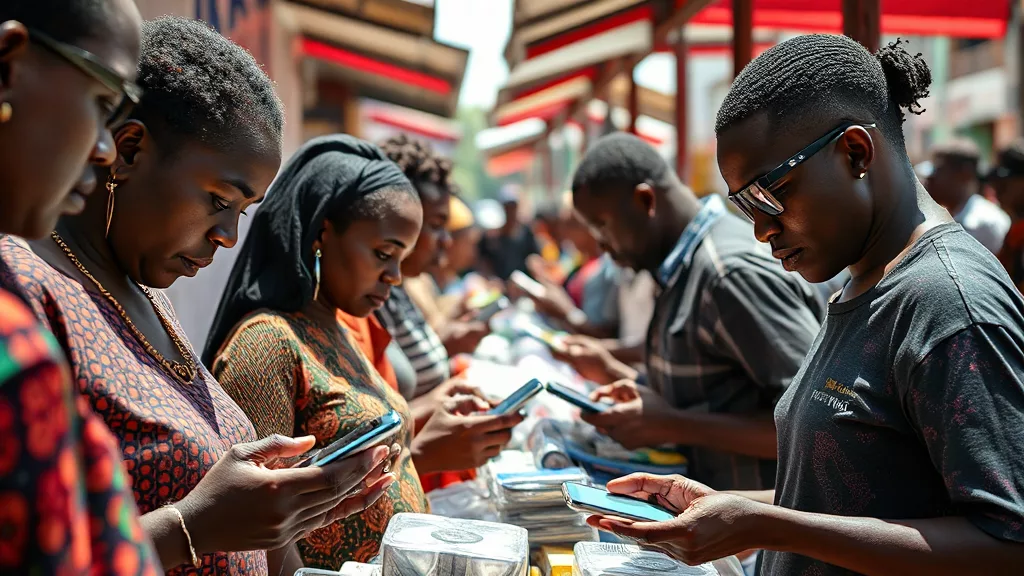
The Lipa na M-Pesa merchant payment network has also surged, with 730,000 active merchant tills as of March 2026, up from 540,000 a year earlier. Safaricom's partnership with point-of-sale terminal providers and the expansion of QR code payments into informal market sectors -- including the jua kali artisan economy, matatu fare collection, and roadside food vendors -- have brought a new wave of small-value but high-frequency transactions into the system. The average transaction size on Lipa na M-Pesa is Ksh 420, modest individually but enormous in aggregate at the volumes involved.
"One trillion shillings in a month means that M-Pesa is now processing more value than the combined lending portfolio of most Kenyan commercial banks," said Safaricom CEO Peter Ndegwa at the results presentation. "That tells you something about the role this platform plays in the real economy."
The Cross-Border and East Africa Dimension
Cross-border M-Pesa transactions, long a relatively small contributor to overall volumes, have grown substantially as EAC economic integration deepens. The M-Pesa Global platform now supports direct transfers to and from Tanzania, Uganda, Rwanda, Ethiopia, Mozambique, Ghana, and Egypt, with interoperability agreements covering an additional six countries under negotiation. Inbound remittances through M-Pesa grew 34 per cent year-on-year in the first quarter of 2026, partly reflecting Kenyan peacekeeping personnel in Haiti using the platform to send money home, but more significantly driven by the Kenyan diaspora in the Gulf states and North America shifting from traditional wire services to mobile-first channels.
The Central Bank of Kenya's latest Payment System Report confirms that M-Pesa accounts for 87 per cent of all mobile money transactions in Kenya and approximately 62 per cent of the country's total retail payment value, including card and bank transfer channels. For international observers, these figures are a reminder that Kenya's fintech leadership is not merely a function of early adoption -- it reflects a deeply embedded ecosystem in which mobile money has become the default financial infrastructure for citizens, businesses, and government alike.
Competition, Regulation, and the Road to $10 Billion
The trillion-shilling milestone is not without its complications. The Competition Authority of Kenya has long scrutinised Safaricom's dominance, and the company's market position has returned to the regulatory agenda in 2026 following complaints from banks and fintech startups that M-Pesa's deep integration with Safaricom's mobile network constitutes an unfair barrier to entry. The CBK's proposed Interoperability Framework, which would require Safaricom to allow other payment service providers to initiate M-Pesa transactions on equal terms, is expected to be finalised before the end of the year.
Safaricom has welcomed the interoperability proposals in public while lobbying, according to industry sources, to ensure implementation timelines are gradual enough to allow the company to retain its structural advantages. For the time being, with M-Pesa's transaction value growing at nearly 20 per cent per annum, the platform appears on track to breach the $10 billion monthly threshold -- equivalent to roughly Ksh 1.3 trillion -- within 18 months, a figure that would represent one of the most remarkable expansions of a single financial utility in emerging-market history.