Kenya's Drone Delivery Service Expands Medical Supplies to 50 Rural Hospitals
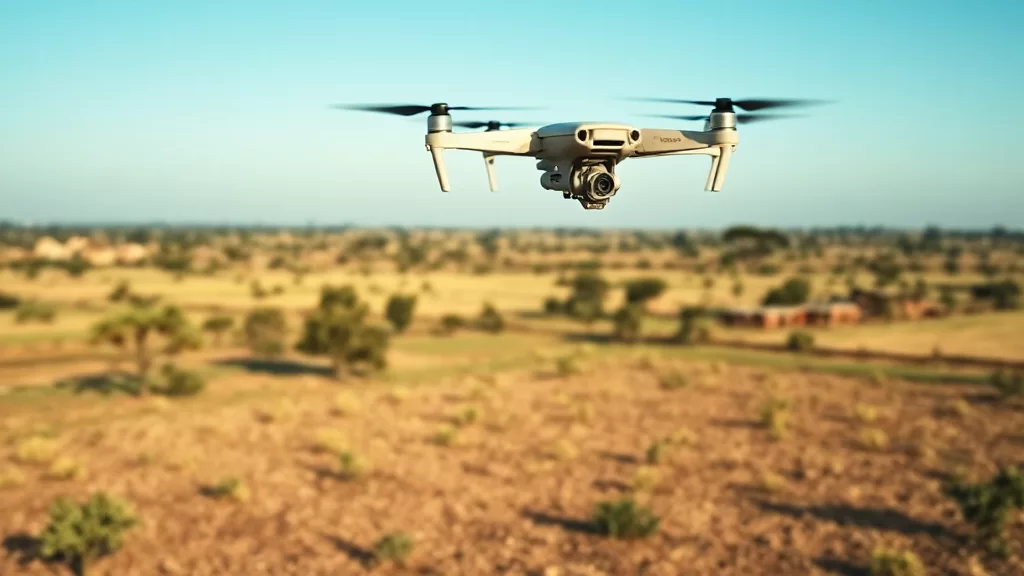
Kenya's medical drone delivery network, which began as a pilot programme serving a handful of remote health facilities in 2023, has expanded to cover 50 rural hospitals across seven counties, the Ministry Of Health announced in June 2026. The network, operated by a public-private consortium anchored by Zipline International and the Kenya Medical Supplies Authority (KEMSA), is now delivering blood products, anti-snake venom, emergency medicines, and obstetric supplies to facilities that previously waited an average of four to six hours for urgent stock replenishment. Since expanding to its current footprint, the consortium reports average delivery times of 42 minutes, regardless of road conditions or distance.
How the Network Operates
The delivery system uses fixed-wing autonomous aircraft -- commonly referred to as drones but more precisely unmanned aerial vehicles with a range of up to 160 kilometres -- launched from three distribution hubs located in Kiambu, Kisumu, and Garissa. Hospital pharmacists and clinical officers place orders through an SMS and smartphone interface integrated with KEMSA's inventory management system. Once an order is confirmed, the appropriate supplies are loaded into an insulated delivery pod, the UAV is programmed with GPS coordinates, and the aircraft is catapult-launched within an average of 14 minutes. On arrival at the destination health facility, the pod is parachuted to a marked landing zone and confirmed received via mobile alert.
The system has been particularly transformative for emergency obstetric care. Blood transfusion for post-partum haemorrhage -- the leading direct cause of maternal death in Kenya -- requires compatible blood products to be available within a narrow time window that rural hospitals, dependent on road deliveries from county blood banks, could not reliably meet. Dr Lilian Onditi, medical superintendent at Hola District Hospital in Tana River County, told ZaKenya that the drone network had changed the clinical calculus for her team fundamentally.
"Before the drones, if a mother came in haemorrhaging at night and we did not have the right blood group in our store, we were in serious trouble. The county blood bank is four hours away on a good road -- and these are not always good roads," Dr Onditi said. "Now I order on my phone and 40 minutes later the blood lands in the compound. We have had three cases since January where I believe drone delivery is the reason a mother survived."
Challenges: Airspace, Weather, and Cost
The programme's expansion has not been without obstacles. The Kenya Civil Aviation Authority's regulatory framework for beyond-visual-line-of-sight drone operations, updated in 2024, requires each expansion to a new county to be preceded by an airspace integration assessment and community consultation process that consortium partners describe as rigorous but slow. Meru and Marsabit counties, identified as priority expansion sites, have both had their go-live dates pushed back by an average of five months due to assessment backlogs at the KCAA.
Weather reliability is a second operational challenge. The UAVs used in the network are rated to operate in winds up to 55 kilometres per hour and can fly in light rain, but heavy cloud cover and tropical downpours -- common across western Kenya and the coast -- ground the fleet for extended periods. The consortium is exploring a second-generation aircraft with improved all-weather capability, but deployment is not expected before 2027.
The cost structure of the service has also drawn scrutiny. KEMSA subsidises the per-delivery cost to participating hospitals, but the true cost per delivery, including aircraft depreciation, maintenance, and hub operations, is estimated by the National Treasury at Ksh 4,200 -- approximately three times the cost of a road delivery when roads are functioning. Proponents argue that the comparison ignores the value of speed in emergency situations and the cost savings from reduced wastage of temperature-sensitive medicines when cold chains fail on road journeys.
Expansion Plans and the Universal Health Coverage Link
The Ministry of Health has tied the drone delivery expansion explicitly to Kenya's Universal Health Coverage agenda under the SHA framework. Ensuring that rural and marginalised communities have access to the same quality of emergency medical supplies as urban facilities is a stated equity objective of the SHA transition, and drone delivery is presented as a practical mechanism for closing the gap where road infrastructure falls short.
By the end of 2027, the Ministry projects the network will serve 120 facilities across 15 counties, with a fourth hub planned for Isiolo to serve the northern ASAL regions. International interest in the Kenyan model has been significant: health ministries from Uganda, Tanzania, and Ethiopia have sent technical delegations to Kisumu and Garissa to observe operations, and the African Union's Africa Centres for Disease Control has cited Kenya's programme as a continental reference model for last-mile medical supply chains.