Ruto Eyes 2027 Re-Election with New Youth Economic Empowerment Package
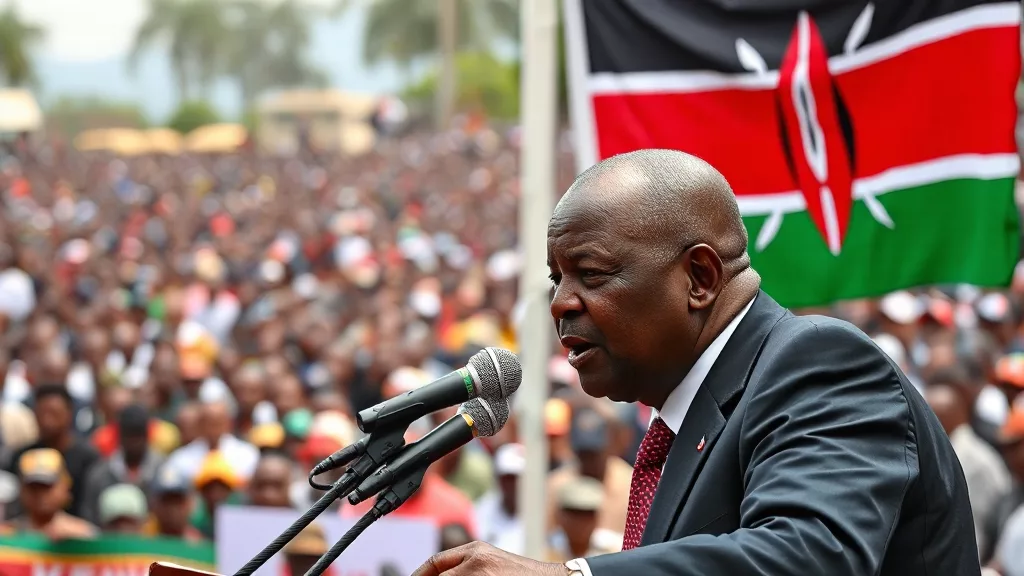
President William Ruto used a nationally televised address at State House on the last day of June to unveil what he called the Maisha Bora Youth Economic Empowerment Package — a Ksh 120 billion multi-year programme targeting job creation, digital skills training, startup finance, and the creative economy that his administration hopes will reshape his political standing among the under-35 voters who delivered the most consequential political shock of his presidency: the June 2024 Gen Z protests that nearly toppled his government.
The package, which will be funded partly through the national budget and partly through a new Kenya Youth Development Bond to be listed on the Nairobi Securities Exchange, represents the most ambitious social investment commitment Ruto has made since taking office in September 2022. It also, most political analysts agree, marks the formal opening of his 2027 re-election campaign.
What the Package Contains
The Maisha Bora package has five headline components. First, a Ksh 35 billion expansion of the Hustler Fund, with new product lines targeting small and medium enterprises that can access loans of up to Ksh 500,000 at concessionary interest rates. Second, a Ksh 28 billion national digital skills programme that commits to training 500,000 young Kenyans in ICT, artificial intelligence, and green technology skills by 2027, delivered through a partnership between the Technical and Vocational Education and Training (TVET) system and private sector technology companies including Safaricom, Microsoft East Africa, and Google Kenya.
Third, a Ksh 22 billion manufacturing internship and placement scheme that will pay a monthly stipend of Ksh 15,000 to recent TVET and university graduates placed with participating private sector employers — a programme modelled in part on a South African scheme but adapted to Kenya's jua kali-dominated employment landscape. Fourth, a Ksh 18 billion creative and sports economy fund targeting content creators, musicians, athletes training for the 2028 Los Angeles Olympics, and the film and gaming sectors. Fifth, a Ksh 17 billion county youth enterprise fund distributed through devolution to all 47 counties, with mandatory gender equity provisions requiring at least 40 per cent of beneficiaries to be women.
"In June 2024, young Kenyans told us something important," Ruto said in the address. "They told us that opportunity must be real, not rhetorical. This package is our answer — not in words but in shillings, in skills, in space for your ambition." The framing was deliberate: a direct acknowledgement of the protests, something the President had resisted doing for much of the preceding two years.
The Political Calculation
Ruto enters the 2027 electoral cycle in a position of considerable political complexity. His approval ratings, which collapsed following the Finance Bill protests and the deadly security response in which more than 60 demonstrators were killed, have partially recovered — the latest Infotrak poll, conducted in May, put his net approval at minus 11, an improvement from minus 31 in October 2024 but still deeply negative by historical re-election standards.
His base among the Mt Kenya region — which provided the numerical foundation for his 2022 victory alongside the Rift Valley — has frayed after the political rupture with former Deputy President Rigathi Gachagua and the subsequent realignment of Kikuyu political networks. The Maisha Bora package is partly designed to rebuild that base through its county enterprise fund distributions, but its primary political target audience is unmistakably the urban youth cohort that swings elections in Nairobi, Mombasa, Kisumu, and Nakuru.
Political analyst Dr Nerima Wako-Ojiwa of the University of Nairobi told ZaKenya.com that the package was "well-targeted in diagnosis but carries credibility risks given the implementation record of similar initiatives." She noted that the Hustler Fund's original phase had been criticised for high default rates and limited reach to genuinely low-income borrowers, and that the new expansion would need to address those structural weaknesses rather than simply scale a flawed model.
Opposition and Civil Society Reactions
Opposition figures were predictably dismissive. Wiper leader Kalonzo Musyoka described the package as "a pre-election sweetener funded by the same taxpayer who has been squeezed by fuel levies and VAT for three years." The Azimio coalition issued a statement challenging the Treasury to publish the financing mechanism within 30 days, noting that commitments of this magnitude require credible budget allocations, not political announcements.
Civil society organisations were more nuanced. The Youth Lobby Group, which emerged from the 2024 protest movement, published a detailed technical analysis of the package within 48 hours of the announcement, identifying specific implementation benchmarks it would use to track delivery. "We will not be managed with press releases," the lobby's executive director stated. "Specific deliverables, measurable timelines, independent audits. That is the standard now."
Whether the Maisha Bora package succeeds as politics depends, in the end, on whether it succeeds as policy — a calculation that 13 months of political management have apparently persuaded Ruto's advisers to take seriously.