US Strikes Iran for Ninth Day as Oil Tankers Reported Ablaze in Strait of Hormuz
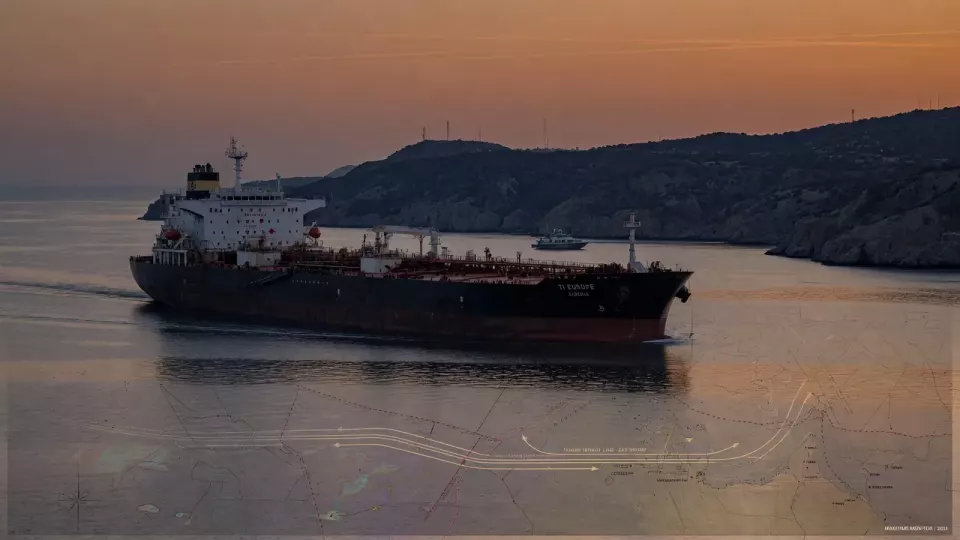
Washington pressed ahead with a ninth consecutive day of strikes against Iran on Monday as Tehran's Islamic Revolutionary Guard Corps claimed that two oil tankers had exploded and been immobilised in the Strait of Hormuz — the narrow chokepoint through which roughly a fifth of the world's seaborne oil once flowed.
Key points
- Washington launched a ninth consecutive day of strikes against Iran on Monday, targeting military and maritime sites.
- CENTCOM said strikes aimed to degrade Iran's ability to attack commercial vessels in the Strait of Hormuz.
- Iran's Revolutionary Guards claimed two oil tankers exploded and were immobilised in the Strait of Hormuz.
- Oil prices rose above $90 a barrel following the reported tanker incidents; Reuters could not verify Iran's account.
US Central Command (CENTCOM) said it had launched "a new wave of strikes" aimed at "degrading" Iran's ability to attack commercial vessels in the strait. According to CENTCOM statements carried by international media, the operation targeted Iranian military command centres, air-defence and coastal surveillance sites, maritime capabilities, and missile and drone launch positions.
Iran's Revolutionary Guards said the two tankers had exploded and been immobilised after attempting to transit what the Guards described as an unsafe southern passage through Hormuz, and alleged the vessels had been encouraged by the US military to use that route. Reuters said it could not immediately verify the account.
Secretary of State Marco Rubio framed the American position plainly. "The Strait of Hormuz are international waterways," Rubio said. "As long as Iran insists on controlling an international waterway, we're gonna have to respond."
Shipping Throttled, Prices Climb
The pace of transits through the strait has slowed sharply. Reports citing shipping data said only four vessels crossed on Sunday, down from eight the day before. Before the conflict began on 28 February, roughly 20 million barrels of crude and refined petroleum products a day moved through the waterway. US Energy Secretary Chris Wright said about 14 million barrels a day — roughly two-thirds of that pre-conflict volume — was still moving through the chokepoint. Global oil prices rose around two per cent to top US $90 a barrel on Monday, according to market data carried by international news agencies.
The US military has suffered 17 personnel killed and more than 420 wounded since hostilities began, according to figures carried by international media. Iran has separately claimed strikes on US facilities in Jordan, Syria, and Kuwait; those claims have not been independently verified.
Kenya's Fuel Bill in the Crosshairs
For Kenya and East Africa, the continued restriction of Hormuz traffic carries direct economic consequence. Kenya's Energy and Petroleum Regulatory Authority (EPRA) held pump prices unchanged for the current July–August cycle, but energy analysts cited by People Daily warn that a prolonged disruption could push future review cycles higher. Diesel — Kenya's most critical transport and logistics fuel — had already risen nearly 69 per cent between February and March, climbing from around US $636 to over US $1,073 per cubic metre, according to People Daily data tracking the early weeks of the conflict.
A report by the UN Conference on Trade and Development (UNCTAD) warns that Strait of Hormuz disruptions expose import-dependent economies to broader shocks, with rising energy costs feeding into inflation, food prices, and strained public finances. Africa as a whole holds only 15 to 25 days of fuel reserves on average — well below the 90-day international benchmark — leaving the region with limited cushion should the conflict deepen further.
Sources: Nation.Africa; GMA News Online; People Daily (Kenya); UNCTAD.