
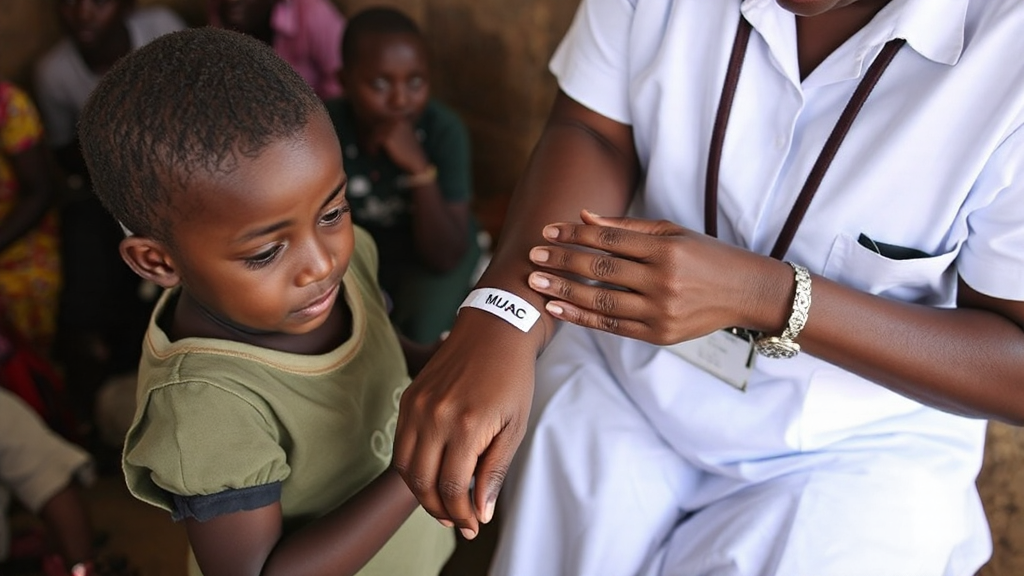
One in every five children under the age of five in Kenya’s arid and semi-arid lands is stunted — their physical and cognitive development permanently compromised by chronic undernutrition — according to the Kenya Demographic and Health Survey supplementary report released by the Ministry of Health in June 2026. In the worst-affected counties of Turkana, Wajir, Mandera, and Samburu, the stunting rate rises to 28 per cent, more than three times the national average of eight per cent and well above the World Health Organisation’s emergency threshold of 15 per cent.
The findings land against the backdrop of a protracted food security emergency in Kenya’s north and northeast, where the aftermath of the El Niño rains of 2023-2024 — which caused devastating floods followed by prolonged dry spells — has disrupted both pastoralist livelihoods and small-scale agriculture for the third consecutive year. The World Food Programme estimates that 2.4 million Kenyans remain in acute food insecurity as of mid-2026, with children under five and lactating mothers disproportionately affected by the collapse in dietary diversity that extended drought and displacement produce.
More Than Hunger: A Systemic Failure
Nutritionists are careful to distinguish stunting — which reflects chronic, long-term undernutrition rather than acute hunger — from the more visible crisis of acute wasting. Stunting is the invisible emergency: children may appear physically present and functional while their brains are developing at permanently reduced capacity. Research consistently links early-childhood stunting to reduced educational attainment, lower adult earnings, and increased susceptibility to non-communicable disease in later life, creating what economists describe as an intergenerational poverty trap.
Dr. Lucy Muita, Director of Nutrition at the Ministry of Health, said the figures should be read as evidence of structural failure rather than a single-season crisis. “Stunting is measured at 24 to 59 months. The children showing these numbers today were gestating and being born during the drought emergency of 2022 to 2023. We failed them before they were old enough to show symptoms,” she said. “The window to prevent stunting is the first 1,000 days of life. That is where our investment must be concentrated.”
The SHA’s maternal and child health package includes free antenatal care visits, iron and folate supplementation, and facility-based delivery — all of which are positively associated with reduced stunting risk. However, SHA uptake in ASAL counties remains below 40 per cent, hampered by poor network coverage, low digital literacy among beneficiaries, and the sheer distances involved in reaching accredited facilities. A mother in rural Mandera may live 80 kilometres from the nearest SHA-accredited facility, making four antenatal visits practically impossible without direct transport support.
Government and Partner Response
The national government, in partnership with UNICEF, WFP, and the European Union, launched the Kenya Integrated Nutrition Programme in January 2026 with a budget of Ksh 8.7 billion over three years. The programme targets 200,000 children under five and 60,000 pregnant women across 11 ASAL counties with a package including ready-to-use therapeutic food distribution, blanket supplementary feeding during lean seasons, community-based management of acute malnutrition, and nutrition counselling delivered through community health promoters.
Community health promoters — the frontline workforce of 100,000 trained volunteers established under the Primary Health Care Act — are seen as the critical delivery mechanism in areas without fixed health facilities. Each promoter is now equipped with a mid-upper arm circumference tape and a simple screening protocol. Early results from Marsabit County, where the programme launched as a pilot in September 2025, show a 19 per cent reduction in severe acute malnutrition cases presenting at the county referral hospital within six months.
The Politics of Hunger
Advocacy groups have warned that with the 2027 general elections approaching, the political temptation to pursue food aid distributions — which are visible and vote-productive — over unglamorous long-term nutrition investments could set back gains already achieved. The Gen Z civic movement, increasingly engaged with development issues since its emergence in 2024, has begun amplifying calls for a dedicated constitutional allocation for nutrition in ASAL areas, modelled on the existing equitable share formula for health. Parliament’s Committee on Health is expected to table a report on nutrition governance in September. Children in Turkana and Mandera cannot wait much longer.

0 comments