Kenya's Carbon Credit Market Attracts $400 Million in Investment

Kenya has cemented its position as the continent's foremost carbon market destination after attracting $400 million in voluntary carbon credit investment in the first six months of 2026, according to figures released by the Ministry of Environment and Climate Change. The sum, which already exceeds the full-year 2025 total of $310 million, reflects a confluence of favourable factors: rising global carbon prices, Kenya's diversified portfolio of high-integrity projects, and a regulatory framework that foreign buyers increasingly trust.
The Nairobi Securities Exchange's newly operationalised Carbon Exchange Facility, which began clearing trades in October 2025, processed 4.2 million carbon credits in Q1 2026 alone. The facility, developed with technical support from the International Emissions Trading Association and capitalised through a joint Kenyan Treasury and World Bank grant, provides standardised verification, transparent pricing, and settlement infrastructure that previously forced Kenyan project developers to route transactions through expensive offshore registries.
Project Types Driving the Boom
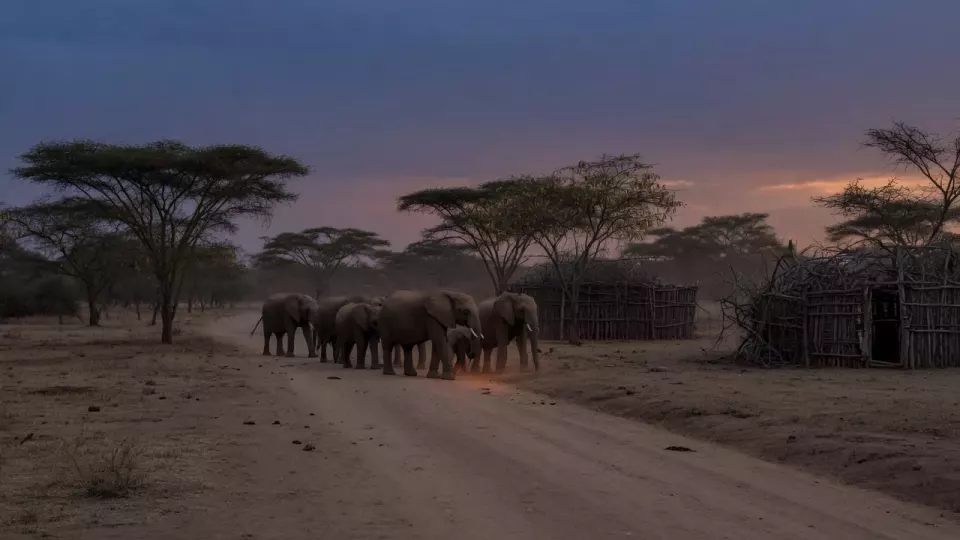
The investment surge is spread across three dominant project categories. Savannah protection credits, issued under methodologies validated by Verra and Gold Standard, account for roughly 45 per cent of Kenya's current credit issuance. The Northern Rangelands Trust, which manages carbon projects across 42,000 square kilometres of community conservancy land in Laikipia, Samburu, Isiolo, and Marsabit counties, issued 1.8 million credits in the first half of 2026 and signed forward-purchase agreements worth $85 million with European utility buyers.
Improved cookstove projects represent the second pillar. The Kenya Cookstoves Alliance, a consortium of 17 manufacturers and distributors, reported sales of 2.3 million improved biomass cookstoves since January 2025, generating verified emission reductions that are bundled into tradeable credits. Each efficient stove, by burning 40–60 per cent less wood than a traditional three-stone fire, produces approximately two tonnes of CO2-equivalent reductions per year. South Pole, the Swiss carbon project developer, alone has $60 million of active cookstove credit offtake agreements in Kenya.
Mangrove restoration along the 600-kilometre Kenyan coast represents the third growth pillar. The Kenya Forest Service has partnered with Blue Forest Carbon and the Mikoko Pamoja community project in Gazi Bay — the world's first certified mangrove carbon project — to scale restoration to 4,500 hectares by 2028. Mangrove carbon sequesters CO2 at up to five times the rate of tropical forest per unit area, commanding premium prices of $25–40 per credit in current markets.
Regulatory Credibility and the Ruto Factor
President Ruto, who has positioned Kenya as the intellectual leader of African climate finance since his high-profile address at COP27, has made the carbon market a centrepiece of his administration's third-year economic narrative. Facing IMF-mandated austerity that has squeezed domestic spending and heightened public discontent, the administration is eager to present carbon revenues as a route to climate-resilient growth that does not require additional taxation. "Carbon markets channel global wealth into Kenyan landscapes and Kenyan communities. This is not aid — it is a market, and Kenya has earned its place in it," President Ruto said at the June 2026 Africa Climate Summit in Nairobi.
Critics, including the Kenyan civil society coalition Climate Justice Kenya, argue that community benefit-sharing arrangements remain inadequate. A March 2026 audit of 12 savannah carbon projects found that pastoral communities hosting the projects received on average only 18 per cent of credit revenues, against the 40–50 per cent promised in project documentation. The Environment Ministry responded in May 2026 by gazetted Carbon Market Benefit-Sharing Regulations requiring project developers to place community payments in ring-fenced M-Pesa trust accounts auditable by county governments.
With the East African Community advancing a regional carbon trading protocol that would integrate Kenyan, Ugandan, Tanzanian, and Rwandan markets by 2028, sector analysts expect Kenya's first-mover advantage to compound further. The NSE Carbon Exchange Facility is already in discussions with Uganda's proposed carbon bureau to act as the regional clearing house. For a government navigating fiscal tightening under the IMF programme, a $400 million half-year carbon inflow represents both economic validation and a compelling electoral narrative heading into 2027.