Kenya's Informal Sector Accounts for 83% of Employment in 2026 Census Data
The Kenya National Bureau Of Statistics (KNBS) has released employment data from the 2026 Population and Housing Census that, while expected by labour economists, has reignited political debate about the country's development model: 83.4 per cent of all Kenyans in employment work in the informal sector, a figure that has barely shifted in a decade despite successive government programmes pledging to grow formal employment.
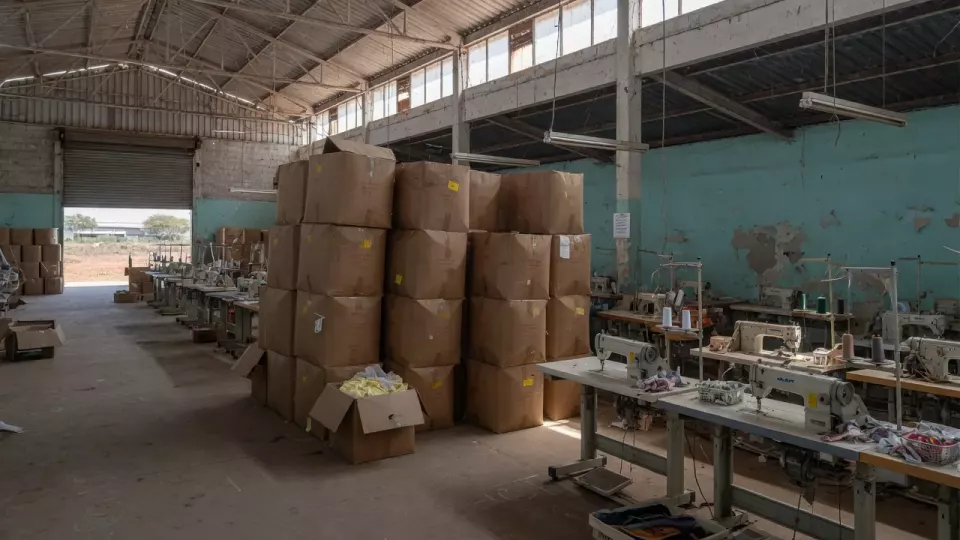
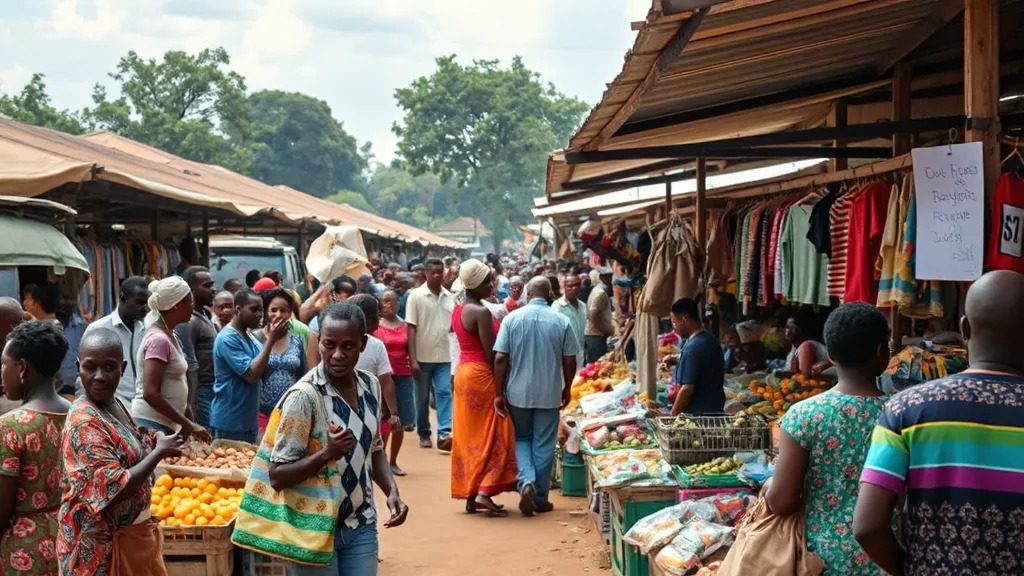
In absolute terms, the informal economy — encompassing the jua kali artisan workshops of Kamukunji and Gikomba, the boda boda networks that move millions daily, the vegetable traders of Marikiti, the domestic workers, the matatu touts, the mobile phone repair technicians in every town centre — supports approximately 17.6 million workers. The formal economy, including government employment, registered companies, and the organised private sector, accounts for the remaining 3.5 million.
What the Numbers Actually Show
KNBS statistician-general Macdonald Obudho was careful at the data launch to frame the informal sector not as a measure of failure but as a measure of the economy's actual structure. "The informal sector is not a waiting room for formal employment," he said. "For the majority of Kenyans, it is the destination. Our policy frameworks need to stop treating it as a transitional phenomenon."
The sectoral breakdown reveals important nuances. Wholesale and retail trade accounts for 34 per cent of informal employment; agriculture, including subsistence and semi-commercial smallholder farming, accounts for 29 per cent; transport and storage (principally boda boda and matatu operations) account for 11 per cent; and accommodation and food service — the vast economy of roadside hotels, mama mbogas, and catering — accounts for a further 9 per cent.
The census also captures educational attainment within the informal sector for the first time. A striking finding is that 31 per cent of informal workers hold a secondary school certificate or higher qualification — meaning that informality is not simply a function of low education, but reflects a formal labour market too narrow to absorb Kenya's expanding educated workforce.
That finding is politically charged in the aftermath of the June 2024 Gen Z protests, which were partly animated by graduate unemployment. Many of the young people who marched on Parliament were university-educated and facing the prospect of joining the informal economy by default rather than by choice.
Policy Implications and the SHA Dimension
The 83 per cent figure carries direct implications for the rollout of the Social Health Authority (SHA), which replaced the National Hospital Insurance Fund (NHIF) in 2024. SHA's funding model depends on contributions from workers, but collecting contributions from informal workers — who have no payroll mechanism, variable incomes, and deep historical scepticism about government deductions — remains the scheme's central operational challenge.
SHA Chief Executive Officer Elijah Wachira acknowledged to ZaKenya.com that registration of informal sector workers in the scheme was "below target" and that the agency was working with county governments and mobile money platforms to create contribution pathways that did not require formal employment records. An M-Pesa-based contribution channel, piloted in Kisumu and Nakuru counties, is being evaluated for national rollout.
Similarly, the Kenya Revenue Authority's ongoing push to bring the informal sector into the tax net — under the Turnover Tax regime and the newly digitised Simplified Tax Return system — is made considerably more complex by the scale of informality. KRA Commissioner-General Humphrey Wattanga has repeatedly stated that broadening the tax base, not raising rates on formal earners, is the authority's medium-term priority. The census data puts the ambition of that task in stark relief.
Rethinking the Jua Kali as an Asset
Several economists argue that the framing of informal work as a problem to be solved misses the sector's dynamism. The jua kali economy has been the primary absorber of Kenya's youth bulge for two generations, generating innovation, flexible supply chains, and localised resilience that formal enterprises rarely match.
The Micro and Small Enterprises Authority (MSEA), which has a mandate to formalise and upgrade informal enterprises, is piloting a cluster-development model in Eldoret and Kisii that provides shared workspace, equipment access, and business registration support without demanding that artisans abandon the flexible structures that allow them to survive. Early results, MSEA Director-General Patrick Mwenda says, suggest that enterprises offered formalisation on their own terms are more likely to engage than those confronted with a regulatory compliance burden they cannot afford.
The 2026 census data should, at minimum, force a reckoning with the gap between Kenya's formal development ambitions and the economy its citizens have actually built.