
Cryptocurrency Regulation Bill Passes Parliament, Creating Legal Framework for Digital Assets
Finance

Cryptocurrency Regulation Bill Passes Parliament, Creating Legal Framework for Digital Assets

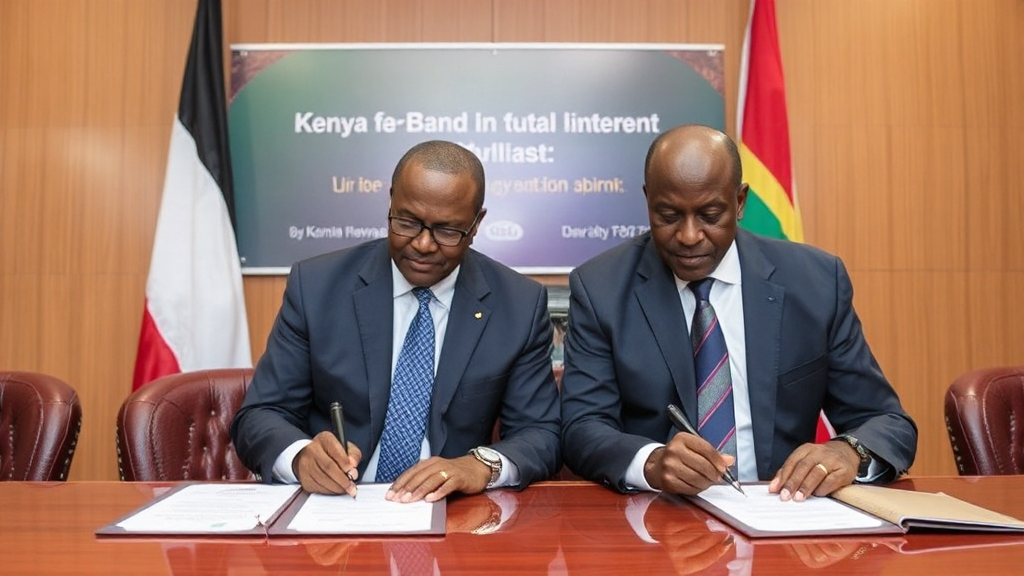
Kenya’s National Assembly and Senate have passed the Virtual Assets and Service Providers (VASP) Act 2026, creating a comprehensive domestic legal framework for cryptocurrency trading, digital asset issuance, and blockchain-based financial services. The legislation, which now awaits presidential assent, positions Kenya as the first East African country — and one of the first on the continent — to enact purpose-built cryptocurrency regulation, ending years of legal ambiguity that had simultaneously limited institutional adoption and exposed retail investors to significant risk.

The bill passed with broad cross-party support following months of committee hearings that drew submissions from technology companies, commercial banks, the CBK, the Capital Markets Authority (CMA), and a vocal community of Kenyan retail cryptocurrency users estimated at over 4 million people. Kenya consistently ranks among the top five countries globally by peer-to-peer cryptocurrency transaction volume, a statistic that underscored the urgency of providing legal clarity.

Key Provisions of the VASP Act

The Act establishes a licensing regime under the CMA for entities operating as virtual asset service providers — defined broadly to include cryptocurrency exchanges, digital wallet providers, token issuers, and digital asset custodians. Applicants must demonstrate minimum capital requirements (set at Ksh 50 million for exchange operators), maintain segregated client funds, implement anti-money laundering and counter-terrorism financing controls aligned with FATF standards, and appoint locally resident compliance officers.

Consumer protection provisions require exchanges to publish real-time prices, maintain reserve proof through regular independent audits, and provide clear risk disclosures before onboarding retail customers. The Act also establishes a compensation fund — modelled loosely on the investor protection framework governing the NSE — that provides limited recourse for retail investors in the event of licensed operator failure.

Notably, the legislation does not give Bitcoin or any other cryptocurrency legal tender status — a step taken by El Salvador and the Central African Republic that the CBK had firmly opposed. Instead, digital assets are classified as property for tax and commercial law purposes, meaning capital gains on cryptocurrency transactions will be subject to income tax at the standard rate.

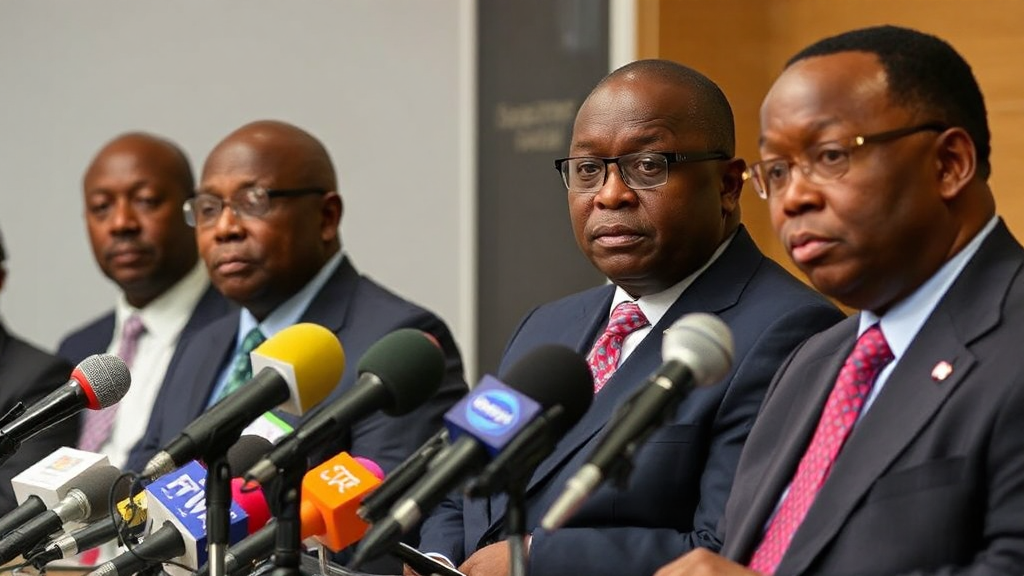
“This is a landmark moment for Kenya’s digital economy,” said CMA Chairman James Ndegwa. “We are not trying to stifle innovation — we are creating the conditions in which it can flourish safely. With a clear legal framework, institutional investors, pension funds, and banks can now engage with digital assets without regulatory uncertainty hanging over them.”

Industry and Civil Society Reactions

Kenya’s crypto community responded with cautious optimism. BitPesa (now AZA Finance), Kotani Pay, and several domestic blockchain startups welcomed the legislation as overdue, though some argued that the Ksh 50 million capital requirement for exchange licences could squeeze out smaller indigenous operators in favour of well-capitalised international platforms. The Kenya Blockchain and Cryptocurrency Association called on the CMA to establish a regulatory sandbox that allows startups to test products with lighter-touch oversight before graduating to full licensing.

Commercial banks, which have historically been reluctant to provide services to crypto businesses due to regulatory ambiguity and AML concerns, indicated they would review their policies in light of the new framework. Co-operative Bank and NCBA are understood to be evaluating cryptocurrency custody and trading services that could be offered through their existing digital channels — an integration that, if it proceeds, would bring crypto access to millions of M-Pesa and mobile banking users.

The Act also has implications for Kenya’s ambitions as a regional fintech hub. Nairobi competes with Lagos, Kigali, and Cape Town for the title of Africa’s leading technology ecosystem, and a well-designed regulatory framework for digital assets is increasingly seen as a marker of ecosystem maturity that attracts international investment and talent. With the 2028 Los Angeles Olympics — where Kenya hopes to make a digital payments showcase — on the horizon, the government has an additional incentive to ensure the country’s digital finance infrastructure is both innovative and credible.

Read More
Kenya Revenue Authority Exceeds Half-Year Tax Collection Target by Ksh 18 Billion
Finance

Kenya Revenue Authority Exceeds Half-Year Tax Collection Target by Ksh 18 Billion

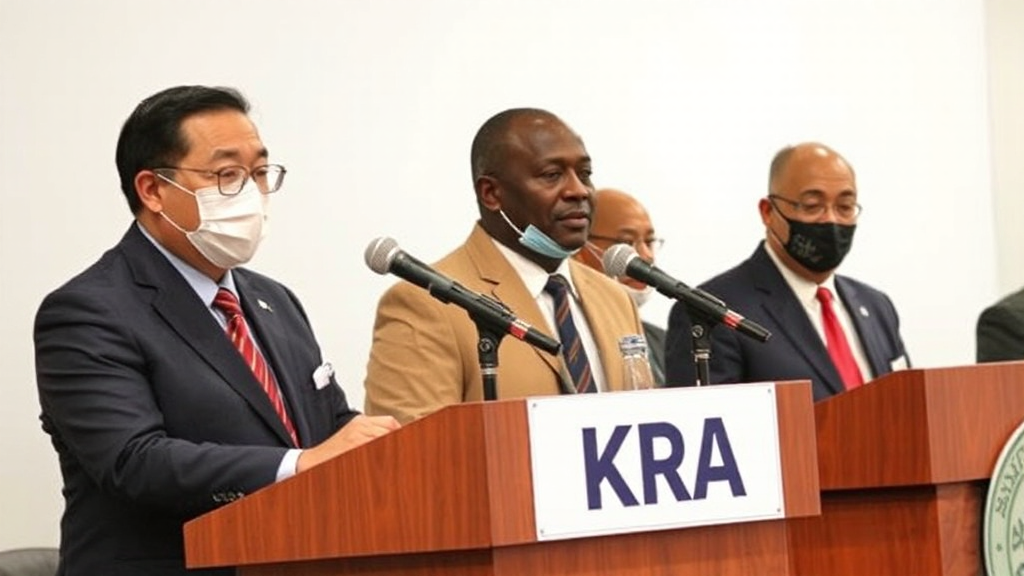
The Kenya Revenue Authority has reported a tax collection outturn of Ksh 1.143 trillion for the first half of the 2025/26 financial year, exceeding the programmed target by Ksh 18 billion — a 1.6 per cent positive variance that represents one of the authority’s best half-year performances in recent memory. The figure, covering the period July to December 2025, was announced by KRA Commissioner-General Humphrey Wattanga at a press briefing that also outlined the technology investments and enforcement actions that underpinned the result.

Income tax — from both Pay As You Earn (PAYE) deductions on formal sector workers and corporate income tax payments — was the largest contributor to the overperformance, coming in Ksh 7.4 billion above target. Value Added Tax collections exceeded projections by Ksh 5.9 billion, while customs and excise duties together added a further Ksh 4.7 billion. The results came despite a deliberately cautious economic environment in which businesses and households remained wary of discretionary spending.

Technology as the Game Changer

Commissioner-General Wattanga attributed the overperformance primarily to the continued rollout of the KRA’s digital compliance infrastructure. The Electronic Tax Invoice Management System (eTIMS), which mandates real-time invoice transmission from registered businesses directly to KRA servers, has now been adopted by over 290,000 businesses — up from roughly 80,000 at the start of 2025. The system has made VAT evasion through fake invoices and suppressed sales significantly more difficult, with KRA data showing that declared VAT turnover from eTIMS-registered businesses rose 23 per cent year-on-year.

“eTIMS is transforming our relationship with taxpayers,” said Wattanga. “Instead of chasing compliance after the fact, we now have a continuous, real-time picture of economic activity. The honest majority of businesses benefit because we can focus enforcement resources on genuine bad actors.”

The KRA’s data analytics unit has also been using machine learning models to identify anomalies in tax returns, cross-referencing business declarations with data from the National Transport and Safety Authority (vehicle imports), the Lands registry (property transactions), and Safaricom’s M-Pesa agent network. Several high-profile enforcement actions against major retailers and importers — some resulting in criminal prosecutions — were credited with encouraging voluntary compliance across their respective sectors.

Multinational Tax and the Transfer Pricing Push

A notable component of the overperformance came from KRA’s Large Taxpayer Office, which handles the roughly 2,000 companies that account for approximately 70 per cent of total tax revenue. The authority has intensified its transfer pricing audits of multinational corporations operating in Kenya, pursuing claims that inter-company transactions have been structured to shift profits to lower-tax jurisdictions. Three settlements reached in the second half of 2025 — involving companies in the telecommunications, fast-moving consumer goods, and oil marketing sectors — contributed an estimated Ksh 4 billion in additional assessments.

Kenya is also participating in the OECD’s global minimum tax framework, which establishes a 15 per cent effective tax floor for large multinational enterprises. KRA is preparing domestic legislation to implement the Qualified Domestic Minimum Top-Up Tax (QDMTT), which would allow Kenya to collect top-up taxes on MNCs that have been paying effective rates below 15 per cent — a measure projected to yield an additional Ksh 8–12 billion annually once fully operational.

The half-year overperformance is politically significant for the Ruto administration, which has faced intense criticism over its revenue-raising ambitions since the Finance Bill 2024 was withdrawn following the Gen Z protests. The government has been forced to find alternative revenue measures that are less politically toxic than broad-based tax increases, and the KRA’s enforcement-and-digitisation strategy has emerged as the most viable path. Whether the momentum can be maintained in the second half of the year — typically more challenging due to seasonal patterns in corporate tax payments — will be the key test.

Read More
Sh50 Billion Eurobond Buyback Reduces Kenya's External Debt Pressure
Finance

Sh50 Billion Eurobond Buyback Reduces Kenya’s External Debt Pressure

Kenya’s National Treasury has completed a liability management operation that retired approximately Sh50 billion (around $400 million) of its outstanding Eurobond obligations, reducing the country’s exposure to expensive commercial external debt and easing the rollover risk that has overshadowed sovereign borrowing decisions since the near-crisis of 2024. The buyback was executed through a tender offer to existing bondholders, funded principally through proceeds from a concessional World Bank loan and fiscal savings accumulated under the ongoing IMF programme.

The bonds repurchased were primarily from the 2024 issuance tranche, which carried a coupon of 9.75 per cent per annum — among the most expensive in Kenya’s external debt portfolio. By retiring this paper ahead of maturity, the Treasury estimates it will save approximately $38 million in annual interest payments, freeing resources that can be redirected towards development spending or further debt reduction.

Context: From Crisis to Cautious Stabilisation

To appreciate the significance of this development, it is necessary to recall Kenya’s Eurobond saga. In 2023 and early 2024, market anxiety about Kenya’s ability to repay the $2 billion Eurobond maturing in June 2024 reached fever pitch, with some analysts predicting a debt restructuring that would have severely damaged Kenya’s credit standing and access to capital markets. The government ultimately managed the repayment through a combination of IMF disbursements, a partial rollover into a new issuance at higher rates, and emergency support from the World Bank — an experience that left Treasury officials determined to reduce the country’s reliance on commercial external borrowing.

The current buyback is therefore as much about signalling as it is about arithmetic. By proactively retiring expensive debt rather than waiting for maturities to force its hand, the Treasury is demonstrating a quality of fiscal agency that creditors and rating agencies regard positively. Moody’s and S&P, both of which downgraded Kenya’s sovereign rating in 2023, are expected to review their outlooks later this year, and the buyback is likely to weigh in Kenya’s favour.

“This operation reflects our commitment to actively managing the debt portfolio rather than passively accepting its costs,” said Treasury Principal Secretary Chris Kiptoo. “We are not just focusing on how much we owe, but on the structure and cost of what we owe. That discipline will pay dividends for future generations of Kenyans.”

Market and Credit Implications

Reaction in secondary bond markets was broadly positive. Kenya’s outstanding 2031 Eurobond tightened by approximately 45 basis points in the week following the announcement, reflecting improved confidence in the sovereign’s debt management trajectory. The yield compression translates into lower borrowing costs if Kenya needs to access international capital markets in the future — a meaningful benefit given the country’s ongoing infrastructure financing requirements.

The operation was structured with support from Citigroup and Standard Bank as lead managers, who ran the tender process across institutional investor bases in London, New York, and the Gulf. Participation from bondholders was described by the Treasury as “strong,” though exact take-up figures have not been publicly disclosed.

Kenya’s total outstanding Eurobond stock now stands at approximately $4.8 billion across three tranches maturing in 2027, 2031, and 2034. The 2027 maturity — worth $900 million — is the next significant commercial debt event on the horizon, and the Treasury has indicated it will begin its refinancing strategy for that obligation in the first half of 2026/27.

Civil society organisations have welcomed the buyback but cautioned against complacency. “Reducing expensive debt is necessary but not sufficient,” said Jason Lakin of the International Budget Partnership Kenya. “What ultimately matters is whether the resources freed up from debt service are being channelled into services that reach ordinary Kenyans — healthcare, schools, and infrastructure that works.” That question will animate Kenya’s fiscal debate well into the 2027 election season.

Read More
Mobile Lending Apps Face New CBK Regulation as Predatory Rates Draw Complaints
Finance

Mobile Lending Apps Face New CBK Regulation as Predatory Rates Draw Complaints

The Central Bank of Kenya has issued comprehensive new regulations governing digital credit providers, imposing an effective annual rate cap, mandatory credit bureau reporting, and stricter disclosure requirements in response to a surge in consumer complaints about predatory mobile lending practices. The new framework, set out in the Digital Credit Providers (Amendment) Regulations 2026, comes into force in September and will cover the estimated 480 digital lenders currently licensed by the CBK.

The regulations cap the total cost of credit — including fees, penalties, and interest — at 40 per cent per annum for unsecured mobile loans, a significant reduction from the effective rates of 100–400 per cent per annum that have been documented by consumer rights groups. Lenders must now disclose the Annual Percentage Rate (APR) in plain Kiswahili and English on the loan application screen before the borrower commits, and are prohibited from deducting fees upfront from the loan principal.

A Crisis Years in the Making

The new rules are the culmination of a regulatory journey that began after a 2019 Kenyan government survey found that over 2.9 million borrowers had been listed with credit reference bureaux for defaulting on mobile loans of less than Ksh 200. The data revealed that millions of Kenyans — disproportionately young, low-income, and first-time borrowers — had been ensnared in debt cycles by aggressive lending algorithms that extended credit with minimal underwriting and then charged exorbitant penalty rates.

Complaints to the CBK’s consumer protection unit rose 34 per cent in 2025 compared with the prior year, with the most common grievances relating to undisclosed fees, harassment by debt collectors, and negative credit bureau listings that effectively blacklisted borrowers from the formal financial system. A parliamentary committee report released in March 2026 found that several apps were issuing loans to borrowers at effective rates exceeding 300 per cent per annum — rates that even the most aggressive Kenyan shylock would find embarrassing.

“What we were seeing was financial technology being weaponised against the very people it was supposed to help,” said CBK Governor Dr. Kamau Thugge at the press conference announcing the regulations. “These rules are about restoring the social licence of digital finance and ensuring that innovation does not become exploitation.”

Industry Response and Implementation Challenges

The Digital Lenders Association of Kenya (DLAK), which represents the larger licensed apps including Tala, Branch, and Zenka, cautiously welcomed the regulations while expressing concern that the rate cap could make lending to high-risk, thin-file borrowers unviable. “The 40 per cent APR ceiling is workable for prime borrowers with established repayment histories, but it does not reflect the risk cost of extending credit to someone with no credit record at all,” the DLAK said in a statement.

Safaricom’s Fuliza overdraft product — by far the most widely used digital credit facility in Kenya, with over 20 million active users — will also fall under the new framework, though the company has indicated its pricing structure is broadly compliant. M-Pesa’s ecosystem advantage means it will adapt more readily than smaller standalone apps, potentially accelerating market consolidation.

Consumer advocates have broadly celebrated the crackdown. The Gen Z cohort, a disproportionate share of digital loan users, was particularly vocal during the 2024 protests about debt stress from mobile apps, and the new regulations are seen in part as a response to that political pressure. The CBK has also announced a financial literacy campaign targeting youth borrowers, working through county governments and the Teachers Service Commission to embed credit education in schools and community centres.

Compliance timelines give existing lenders a six-month window to adjust pricing models and update their consumer-facing disclosures, with the CBK threatening licence revocation for repeated breaches. Whether the regulator has the supervisory bandwidth to monitor nearly 500 digital lenders will be the critical question as the new framework beds in.

Read More
Kenya's National Debt Hits Ksh 12 Trillion as Treasury Seeks New Financing
Finance

Kenya’s National Debt Hits Ksh 12 Trillion as Treasury Seeks New Financing

Kenya’s total national debt has reached Ksh 12 trillion, crossing a psychological threshold that has sharpened debates about the country’s long-term fiscal trajectory. The figure, confirmed in the Treasury’s latest Quarterly Economic and Budgetary Review, includes both domestic debt — primarily Treasury bills and bonds — and external obligations owed to bilateral creditors, multilateral institutions, and commercial lenders. Expressed as a share of GDP, the debt stock stands at approximately 74.8 per cent, more than double the level recorded a decade ago.

The build-up reflects a decade of heavy infrastructure financing — much of it through the Standard Gauge Railway, highways, energy projects, and social spending — that successive governments have justified on growth grounds. However, the cost of servicing that debt has now become the dominant fiscal constraint, with debt service expected to consume Ksh 1.8 trillion in the 2026/27 financial year, equivalent to roughly 51 per cent of ordinary revenue.

The Composition of the Debt

Of the Ksh 12 trillion total, domestic debt accounts for approximately Ksh 5.6 trillion, held predominantly by local commercial banks, pension funds, and insurance companies. External debt stands at Ksh 6.4 trillion, of which about 30 per cent is owed to China (through policy banks such as China Exim Bank and China Development Bank), 25 per cent to multilateral institutions including the World Bank and African Development Bank, and the remaining 45 per cent to Eurobond investors and other commercial creditors.

The Eurobond component has been a particular source of concern since Kenya’s 2024 repayment crisis, which was ultimately resolved through a combination of IMF support, a partial buyback, and a new issuance. The government has since been working to reduce its reliance on expensive commercial debt. A Sh50 billion Eurobond buyback completed earlier this year has marginally reduced the outstanding commercial balance, but analysts caution that the structural challenge remains.

“Twelve trillion shillings is a large number, but what matters more is whether it is being serviced sustainably and whether the debt-financed investments are generating returns,” said Dr. David Ndii, a prominent Kenyan economist and former adviser to the Ruto administration. “On both counts, the record is mixed — some infrastructure projects have clearly boosted growth, but others have underperformed against projections.”

New Financing Strategy

Treasury CS John Mbadi outlined a revised borrowing strategy that prioritises concessional financing over commercial debt. The government has secured a $400 million concessional loan from the World Bank under the Kenya Economic Recovery and Resilience Development Policy Operation, and is in advanced talks with the African Development Bank for a further $300 million facility. Both carry grace periods and below-market interest rates that will ease the near-term debt service burden.

On the domestic front, the Treasury is maintaining a busy bond auction calendar, targeting Ksh 586 billion in net domestic borrowing for 2026/27. Following three consecutive months in which the domestic market was undersubscribed — as investors demanded higher yields amid uncertainty — the government has offered more attractive rates, causing domestic borrowing costs to edge up. The 10-year Treasury bond yield now stands at 16.2 per cent, a level that some analysts describe as crowding out private sector credit.

The debt trajectory is especially sensitive in the context of the approaching 2027 general election. President Ruto’s government faces pressure from within the Kenya Kwanza coalition to unlock spending on development projects — particularly in vote-rich constituencies — at precisely the moment when fiscal discipline demands restraint. Parliamentary pressure for supplementary budgets and off-budget spending commitments has been a persistent feature of Kenya’s fiscal politics, and the Treasury will need to hold the line if it is to maintain programme credibility with the IMF and investor confidence in the sovereign bond market.

Read More
KCB Group Acquires DRC Bank in Strategic East Africa Expansion
Finance

KCB Group Acquires DRC Bank in Strategic East Africa Expansion

KCB Group, Kenya’s largest bank by assets, has completed the acquisition of a 70 per cent controlling stake in Banque Commerciale du Congo (BCC), marking the lender’s entry into the Democratic Republic of Congo and extending its regional network to ten countries across Eastern and Central Africa. The deal, valued at approximately $95 million (Ksh 11.9 billion), was concluded after eighteen months of regulatory approvals in both Nairobi and Kinshasa and is expected to be earnings-accretive within three years.

KCB Group CEO Paul Russo described the acquisition as a “defining moment” in the bank’s continental ambitions. “The DRC is the economic frontier of Central Africa — it has a population of over 100 million people, vast mineral wealth, and a banking penetration rate of under 12 per cent. For KCB, this is not just another acquisition; it is a strategic pivot towards the markets that will define African banking in the next two decades,” he told analysts at a results briefing in Nairobi.

Why the DRC, and Why Now?

The timing of the acquisition is closely linked to the deepening of East African Community (EAC) integration. The DRC’s accession to the EAC in 2022 has gradually unlocked trade corridors between Kinshasa, Goma, and the East African hubs of Nairobi, Kampala, and Dar es Salaam. Kenya’s new infrastructure investments — including the extension of SGR-linked logistics chains and the upgrading of the Northern Corridor — have made the DRC more commercially accessible than at any point in recent history.

The mining sector is a particular draw. The DRC is the world’s leading producer of cobalt and a major source of copper, coltan, and lithium — minerals that are increasingly central to the global green energy transition. Kenyan and East African trading firms have been expanding their presence in Katanga and the Kasai provinces, and demand for dollar-clearing, trade finance, and project finance services is growing rapidly. KCB’s existing expertise in commodity trade finance positions it well to serve this clientele.

Equity Bank, KCB’s domestic rival, has operated in the DRC since 2015 through its Equity BCDC subsidiary — one of the country’s largest banks. KCB’s entry therefore intensifies the Kenyan banking contest on Congolese soil, a dynamic that analysts say will ultimately benefit Congolese consumers through more competitive pricing and product innovation.

Integration Plans and Regulatory Landscape

BCC currently operates 34 branches concentrated in Kinshasa, Lubumbashi, and Goma, with a balance sheet of approximately $620 million. KCB intends to double the branch network within five years and launch mobile banking services that leverage the bank’s KCB Mobi platform. The group also sees significant opportunity in agency banking — replicating the model it has deployed successfully in Kenya, Rwanda, and Uganda.

The DRC’s banking regulator, the Banque Centrale du Congo (BCC regulator), has imposed conditions including localisation of senior management and a requirement to maintain minimum capital ratios above the statutory floor for the first three years of KCB’s ownership. KCB has appointed a Congolese national as managing director of the acquired entity, a move the group says reflects its commitment to local talent development.

Currency risk remains a significant consideration. The Congolese franc has historically been volatile, and the DRC economy is heavily dollarised, meaning that a large proportion of transactions and lending is conducted in US dollars. KCB’s treasury team has indicated it will manage the exposure through a combination of natural hedging and derivatives instruments.

For Kenya’s broader financial sector, the acquisition underscores the increasingly outward-looking character of Nairobi’s banks. KCB, Equity, Co-operative, and NCBA collectively now operate in more than 20 African countries, generating a growing share of group profits from outside Kenya — a trend that analysts say will continue as domestic margins face pressure from digital disruption and intensifying fintech competition.

Read More
Kenya's Pension Fund Assets Cross Ksh 2 Trillion Milestone in 2026
Finance

Kenya’s Pension Fund Assets Cross Ksh 2 Trillion Milestone in 2026

Kenya’s pension industry has crossed a landmark threshold, with total assets under management surpassing Ksh 2 trillion for the first time, the Retirement Benefits Authority (RBA) announced in its mid-year industry report. The milestone, reached in the quarter ending March 2026, reflects nearly a decade of sustained growth in retirement savings participation and marks Kenya’s emergence as one of the most significant institutional investment markets in Sub-Saharan Africa.

The RBA data shows that total pension assets grew by 14.3 per cent over the twelve months to March 2026, outpacing GDP growth and demonstrating the industry’s increasing depth. The National Social Security Fund (NSSF) — the state-run mandatory savings scheme — contributed the largest single pool, with assets of approximately Ksh 380 billion, while the fast-growing occupational schemes and individual pension plans accounted for the bulk of the remainder.

Growth Drivers and Asset Allocation

The growth has been driven by several converging factors. The revised NSSF Act, which raised the upper contribution tier for formal sector employees, added meaningfully to inflows after the Supreme Court upheld its constitutionality in 2025 following years of legal challenges. At the same time, a recovering Nairobi Securities Exchange — the NSE 20 Share Index gained 19 per cent in 2025 — boosted the equity component of pension portfolios.

According to RBA data, domestic equities account for 19 per cent of total pension assets, government securities 44 per cent, property 17 per cent, and the remainder spread across offshore investments, cash, and alternative assets. The government securities weighting reflects both regulatory requirements and the historically reliable returns offered by Kenya’s infrastructure bonds and Treasury bonds, though critics argue it creates an implicit subsidy for deficit financing.

“Crossing Ksh 2 trillion is a statement about the depth of Kenya’s financial system,” said RBA Chief Executive Officer Charles Machira. “These are patient, long-term funds that can be channelled into infrastructure, housing, and productive investment — and we want to see more of that happening through private equity and infrastructure debt instruments.”

The RBA has been pushing to diversify pension portfolios away from government paper, revising its investment guidelines to allow schemes to allocate up to 10 per cent of assets in private equity and up to 15 per cent offshore. Several large schemes have begun deploying capital into Kenyan real estate investment trusts and East African infrastructure debt, though take-up remains gradual.

Coverage Gaps and the Informal Sector

Despite the headline milestone, pension coverage remains woefully low by international standards. Formal sector workers — who make up less than 20 per cent of Kenya’s labour force — account for nearly all pension contributors. The informal sector, which employs the vast majority of working Kenyans including the youth cohorts energised by the 2024 Gen Z movement, is almost entirely excluded from structured retirement savings.

Mobile-phone-based micro-pension schemes, notably Mbao Pension Plan and various products built on the M-Pesa infrastructure, have made inroads but have struggled to achieve the scale needed to be transformative. Safaricom’s fintech ecosystem, which processes over Ksh 35 billion in daily transactions, is seen as the most viable channel for reaching informal workers, and the RBA has been in talks with mobile operators about expanding the regulatory framework for micro-pensions.

The SHA’s introduction has also raised questions about how health savings and retirement savings interact for workers who previously structured their NHIF and NSSF contributions jointly. Pension fund managers have called for a comprehensive social protection review to rationalise the various contribution streams competing for workers’ limited disposable income.

Still, the Ksh 2 trillion milestone is a meaningful signal of Kenya’s financial maturation — one that the government, capital markets, and infrastructure developers will be watching closely as they seek to mobilise domestic resources for the country’s ambitious development agenda.

Read More
IMF Reviews Kenya's Debt Sustainability, Recommends Fiscal Consolidation Path
Finance

IMF Reviews Kenya’s Debt Sustainability, Recommends Fiscal Consolidation Path

The International Monetary Fund has completed its latest Debt Sustainability Analysis (DSA) for Kenya, concluding that the country’s debt remains at “high risk of debt distress” and recommending that Nairobi maintain a credible multi-year path of fiscal consolidation. The findings, published alongside the fourth review of Kenya’s Extended Fund Facility (EFF) and Extended Credit Facility (ECF) arrangement, will be closely watched by international creditors and domestic bond investors.

According to the IMF assessment, Kenya’s public and publicly guaranteed debt stood at approximately 74.8 per cent of GDP at the end of the 2025/26 financial year — a slight reduction from the peak of 77.2 per cent recorded in 2023/24, but still well above the 55 per cent threshold that the Fund considers prudent for emerging markets. External debt service costs continue to absorb a disproportionate share of government revenues, with debt repayments consuming nearly 32 per cent of tax receipts in the year ended June 2026.

IMF’s Core Recommendations

The Fund identified four priority areas in its consolidation roadmap. First, it urged Kenya to continue expanding the tax-to-GDP ratio, which stood at 16.8 per cent — well below the sub-Saharan African average of 18.5 per cent — through improved compliance, digital tax administration, and plugging VAT refund leakages. Second, the IMF called for further rationalisation of recurrent expenditure, particularly within the wage bill, which accounts for roughly 7.5 per cent of GDP. Third, it recommended accelerating the transition from expensive commercial borrowing to concessional multilateral financing. Fourth, the report emphasised maintaining exchange rate flexibility to absorb external shocks.

“Kenya has made commendable progress under the programme, but the consolidation path must be sustained and not reversed as the electoral cycle approaches,” said Ms. Khaled Al-Rashidi, the IMF Mission Chief for Kenya, at a press conference in Nairobi. “Credibility in fiscal management is the single most important anchor for investor confidence at this stage.”

The IMF also noted significant progress in revenue administration by the Kenya Revenue Authority, which exceeded its half-year collection target by Ksh 18 billion — a development the Fund described as encouraging but insufficient on its own to resolve the structural revenue gap.

Government’s Response and Political Pressures

Treasury CS John Mbadi welcomed the review’s positive assessment of progress while acknowledging that “the road ahead remains demanding.” The government has committed to reducing the fiscal deficit to 3.5 per cent of GDP in the 2026/27 budget, down from 4.9 per cent the previous year — a target that requires holding spending firm even as the 2027 election campaign intensifies pressure to loosen the purse strings.

That political arithmetic is not lost on observers. The Gen Z protest movement that shook the country in 2024 was fuelled partly by frustration over austerity measures and new taxation, and the government has been cautious about introducing any levies perceived as regressive. The proposed Social Health Authority (SHA) financing model — which replaces the now-defunct NHIF — has itself become a flashpoint, with questions still circulating about its long-term fiscal sustainability.

Some economists argue the IMF’s consolidation prescription risks being too contractionary at a moment when growth momentum needs nurturing. “We need to be careful that the medicine does not kill the patient,” said Dr. Anzetse Were, a development finance specialist. “Public investment in infrastructure, education, and health underpins long-run growth, and indiscriminate cuts can be counterproductive.”

Kenya’s next IMF disbursement — worth approximately $180 million — is conditional on continued programme performance, including achieving agreed fiscal targets and completing structural benchmarks on state-owned enterprise reform. With the programme’s final review scheduled for early 2027, the government has limited runway to show results before the political season fully consumes policymaking bandwidth.

Read More
Kenya Launches National Cancer Screening Drive Targeting 2 Million Citizens
Health & Fitness

Kenya Launches National Cancer Screening Drive Targeting 2 Million Citizens

The Ministry of Health has launched Kenya’s most ambitious cancer screening campaign to date, setting a target of reaching two million citizens by December 2026. The National Cancer Screening Drive, unveiled by President William Ruto at Kenyatta National Hospital in Nairobi, prioritises cervical, breast, and colorectal cancers — the three malignancies that account for over 58 per cent of cancer-related deaths among Kenyans.

“Cancer has for too long been a death sentence in Kenya, not because it cannot be treated, but because we find it too late,” President Ruto said at the launch. “This programme will change that. We will bring screening to every woman in every ward, to every man in every village, so that we catch this disease when it is still curable.”

The campaign is coordinated through the Kenya National Cancer Institute and will deploy a network of 312 static screening centres at county and sub-county hospitals, supplemented by 94 mobile screening units that will rotate through urban markets, schools, and rural health posts. All screening services are free of charge for SHA members, while non-members can access cervical and breast screening at a subsidised fee of Ksh 200.

The Burden of Cancer in Kenya

Kenya registers approximately 47,000 new cancer cases annually, of which roughly 33,000 result in death. The staggering mortality-to-incidence ratio — higher than the global average — reflects a healthcare system where most patients present at Stage 3 or Stage 4 disease, when treatment options are limited and expensive. Cervical cancer alone kills an estimated 3,200 Kenyan women each year, despite being one of the most preventable cancers when caught early through Pap smear or HPV testing.

Oncology specialists have long argued that investment in screening infrastructure would yield greater lives saved per shilling spent than treatment alone. Dr Catherine Nyongesa, one of Kenya’s leading oncologists and Chief Executive of Texas Cancer Centre in Nairobi, said the launch represented a philosophical shift in how the government approaches the disease. “We have spent years lobbying for this moment. Early detection is not glamorous, but it saves lives at a fraction of the cost of chemotherapy,” she told ZaKenya.com.

The Ministry of Health has also integrated HPV vaccination into the programme, offering catch-up doses to girls and young women aged 15 to 24 who missed the school-based vaccination schedule. Officials estimate that 820,000 women in that age bracket have incomplete or no HPV vaccination records.

Technology and Community Outreach

The campaign relies heavily on digital infrastructure. Citizens can book screening appointments via the eCitizen platform or the SHA mobile application, and results are stored in a secure electronic health record system that links to the patient’s SHA profile. Abnormal results trigger an automated referral pathway to the nearest cancer treatment centre, with the system tracking whether the patient actually attended follow-up appointments.

Community health promoters have been tasked with reaching women who may be reluctant to seek cancer screening due to stigma or fear. In Murang’a County, which piloted an earlier version of the programme in 2025, uptake among women aged 30 to 49 reached 61 per cent of the target population within four months — a result the Ministry now considers a replicable model.

Funding for the campaign totals Ksh 6.2 billion over eighteen months, drawn from the SHA emergency and chronic illness fund, a Ksh 1.8 billion grant from the Global Fund’s cancer prevention window, and bilateral support from the Danish International Development Agency. Kenya’s National Cancer Control Strategy, approved by the Cabinet in March 2025, sets a goal of diagnosing 70 per cent of cancers at Stage 1 or Stage 2 by 2030 — a target that, if met, would represent one of the most dramatic improvements in cancer outcomes on the continent.

Read More