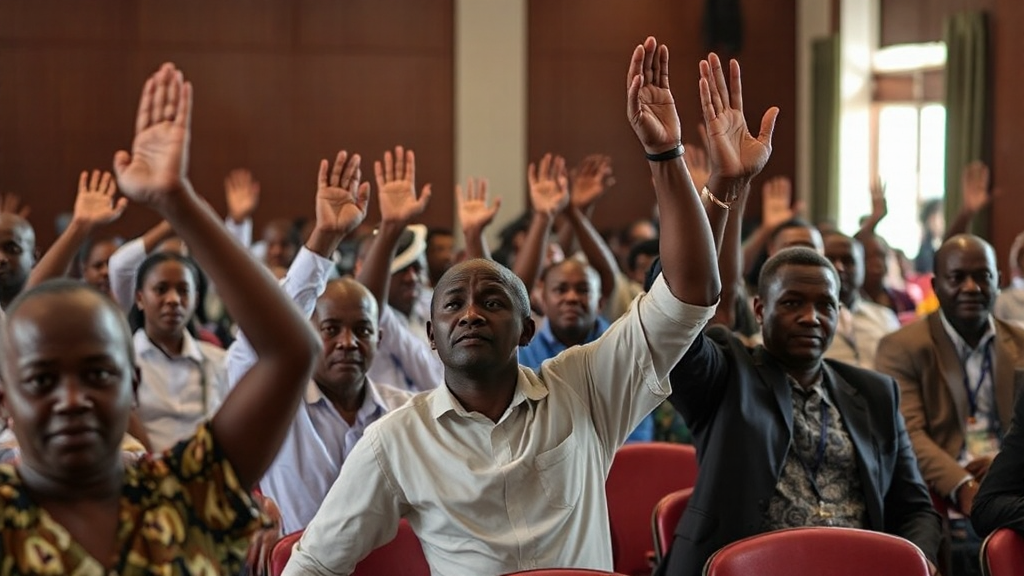
Kenya's 2027 Budget Consultation Process Opens with Public Participation Forums
Politics

Kenya’s 2027 Budget Consultation Process Opens with Public Participation Forums

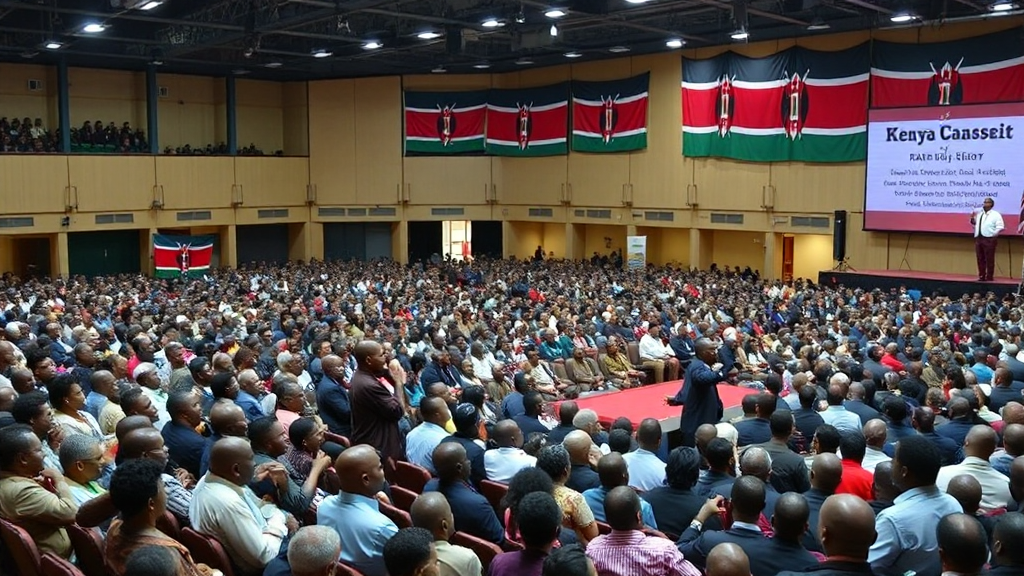
The National Treasury this week opened Kenya’s most ambitious public budget consultation exercise to date, launching simultaneous county-level forums as part of the preparation of the 2027/28 national budget — the first full-year budget to be prepared with the 2027 general election explicitly in view and one that will test the government’s capacity to balance IMF programme commitments against the political pressures of an approaching electoral cycle.

Cabinet Secretary for National Treasury John Mbadi, who oversees an economy that grew at 5.1 per cent in the first quarter of 2026 but continues to face a debt servicing burden consuming 58 per cent of ordinary revenue, said the forums are a constitutional obligation that his ministry intends to take seriously rather than perform perfunctorily. “The era of budgets written in Treasury boardrooms and announced to citizens as fait accompli is over,” Mbadi told the opening forum in Kisumu. “Every shilling the government spends belongs to Kenyans. They have a right to determine its purpose.”

The Forum Structure

Forty-seven simultaneous county forums, running through July and August, will each hear testimony from civil society organisations, business groups, farmer cooperatives, youth associations, professional bodies, and individual citizens. The Treasury has published a 32-page consultation guide in English, Kiswahili, and 14 other local languages, available on e-Citizen and through county government offices. Citizens without internet access can submit written memoranda at sub-county Treasury offices or participate in the in-person forums.

A national synthesis forum will be held in Nairobi in September, drawing together rapporteurs from all 47 county consultations, before the National Treasury presents its Budget Policy Statement to Parliament in October. For the first time, the ministry has committed to publishing a public report documenting which consultation inputs were incorporated into the final budget and explaining the reasoning behind those that were not — an accountability innovation recommended by the International Budget Partnership in its 2025 Open Budget Survey, in which Kenya scored 52 out of 100.

“The Open Budget Survey score tells us we have work to do on participation and oversight,” said Parliamentary Budget Office Director Phyllis Makau. “These forums are a meaningful step if the Treasury follows through on the feedback loop. If they do not, this will be remembered as the most expensive public relations exercise in fiscal history.”

Priority Issues Emerging

Even in the early sessions, clear priority themes have emerged from citizen testimony. Healthcare — specifically the troubled transition from NHIF to the Social Health Authority — dominated the Kisumu, Mombasa, and Nakuru forums, with participants demanding additional funding to stabilise SHA’s operations, clear outstanding payments to hospitals that have been operating without reimbursements since January, and reconsider the co-payment structures that have created barriers to access for low-income households. Health sector advocates are pushing for the health budget to increase from its current 6.8 per cent of national expenditure to the Abuja Declaration target of 15 per cent.

Agricultural inputs and climate adaptation were the dominant concerns in county forums across the Rift Valley, Eastern, and North Eastern regions, where farmers remain acutely exposed following the El Niño disruption of 2023-24 and subsequent irregular rainfall patterns. Delegates at the Garissa forum specifically requested a tripling of the National Drought Management Authority’s budget and called for a permanent insurance scheme for pastoralist livestock losses. Education — particularly the funding gap in the Competency Based Curriculum transition and inadequate ECDE infrastructure — was raised consistently at nearly every forum in the first week of consultations.

The IMF Constraint

What citizens are demanding and what the fiscal framework can accommodate are not the same conversation. Kenya’s Extended Credit Facility with the IMF, currently in its fifth review, imposes a primary balance target and caps on non-concessional borrowing that severely limit the government’s room for new spending commitments. Treasury officials acknowledge privately that the budget consultations will produce a wish list that far exceeds available resources, and that the political art lies in communicating those limitations without alienating the constituencies whose votes will determine the 2027 outcome.

The Kenya Revenue Authority’s ongoing enforcement drive — targeting VAT compliance, digital economy taxation, and undeclared offshore assets under the Common Reporting Standard — is expected to yield additional revenue of between Ksh 80 billion and Ksh 120 billion in the 2027/28 year, partially widening the fiscal space. How that additional revenue is deployed — whether towards debt reduction, as the IMF prefers, or towards public services, as citizens demand — will be the defining political and economic choice of Kenya’s next budget cycle.
Read More
Nairobi Governor's Plan to Ban Boda Bodas from CBD Sparks Protests
Politics

Nairobi Governor’s Plan to Ban Boda Bodas from CBD Sparks Protests

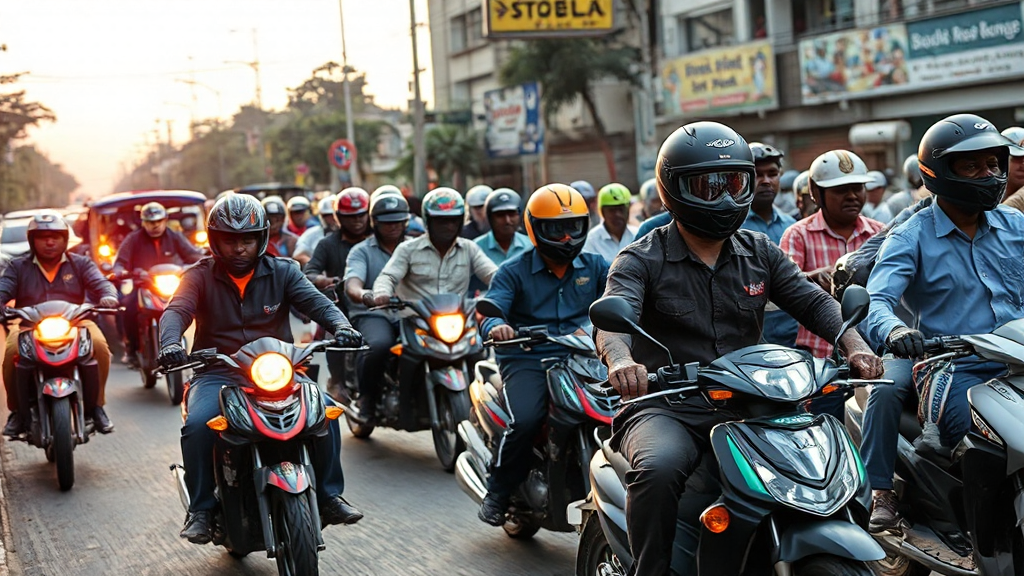
Nairobi Governor Johnson Sakaja’s administration is facing its most significant public backlash since taking office after a policy proposal to prohibit motorcycle taxis — universally known as boda bodas — from operating within the Nairobi Central Business District ignited street demonstrations, a sit-in at City Hall, and a threat from the Boda Boda Association of Kenya to call a nationwide strike that would paralysesixteen of the country’s forty-seven counties.

The proposal, contained in a county traffic management policy paper circulated to stakeholders last month and confirmed by the Governor’s spokesperson as “under active consideration,” would designate the area bounded by Haile Selassie Avenue, Uhuru Highway, University Way and Ngong Road as a boda boda exclusion zone, effective from January 2027 if approved by the Nairobi County Assembly. Enforcement would rely on Nairobi Metropolitan Services officers and county parking officers supported by CCTV-based number plate recognition technology being installed under the Smart Nairobi programme.

The Governor’s Rationale

The administration argues the ban is a necessary component of Nairobi’s urban transformation agenda. Boda bodas in the CBD have been linked to a significant proportion of the city’s road fatalities — Nairobi recorded 847 road deaths in 2025, the highest in a decade, with motorcycle incidents accounting for 38 per cent — as well as to snatching and mugging incidents that the Nairobi police command says are frequently perpetrated by riders who use the congested, narrow streets around River Road and Tom Mboya Street to evade capture.

“We are building a city that will host the world for the 2028 Olympics pathway events and the 2030 World Athletics Championships,” Governor Sakaja told a Rotary Club breakfast in Westlands. “A capital city that cannot manage its own streets is not a competitive city. Boda bodas have a role to play in Nairobi’s transport system, but not in a zone where we have matatus, buses, pedestrian walkways and cycling lanes all sharing space.”

The administration has proposed designated boda boda terminus points at the edges of the exclusion zone — at Ambassadeur, Railways Bus Station, and the Kencom area — from which operators could collect CBD-bound passengers who would complete their journey on foot or by electric shuttle. A county e-hailing app specifically for boda bodas, integrated with M-Pesa, is being developed to facilitate the re-routing.

A Livelihood Crisis for Riders

For the estimated 34,000 boda boda operators who work in and around the Nairobi CBD, however, the proposal threatens an existential economic shock. Many rely entirely on CBD trip income, particularly the lunch-hour and evening commuter rush that generates the highest fares. The Boda Boda Association of Kenya estimates that an average CBD-active rider earns between Ksh 1,200 and Ksh 1,800 per day, and that exclusion from the zone would reduce earnings by 40 to 60 per cent.

“This governor wants to push us out of the only place in Nairobi where there is business,” said James Omondi, a boda boda operator from Kayole who has worked CBD routes for nine years. “Who will feed my children while we wait at a terminus for passengers who will not come? This is not planning — this is persecution of the poor.”

The protest outside City Hall on Tuesday drew approximately 2,000 riders, who blocked Harambee Avenue for three hours before dispersing after a police warning. The national chair of the Boda Boda Safety Association, Antony Karanja, said that if the county assembly approved the ban without adequate transition support — including subsidised loans for alternative livelihoods, relocation incentives, and a phased implementation period of at least two years — operators would exercise their constitutional right to strike.

Political Dimensions

The controversy arrives in a politically sensitive pre-election environment. Boda boda operators constitute an organised and vocal constituency that no politician seeking urban working-class votes can afford to alienate. Several Nairobi Members of County Assembly representing Eastlands wards have broken publicly with the Governor on the issue, and at least one senior ODM MP has threatened to mobilise riders against the county government if it proceeds without negotiation. National Assembly Transport Committee Chair has summoned CS for Roads Davis Chirchir to address a session on the matter, though jurisdiction between national and county governments on urban traffic regulation remains a matter of legal debate. Governor Sakaja faces a genuine dilemma: back down and look weak on urban governance, or proceed and risk the ire of one of Nairobi’s most politically organised constituencies ahead of 2027.

Read More
Kenya's Foreign Affairs Ministry Opens Five New Embassies in Strategic Regions
Politics

Kenya’s Foreign Affairs Ministry Opens Five New Embassies in Strategic Regions

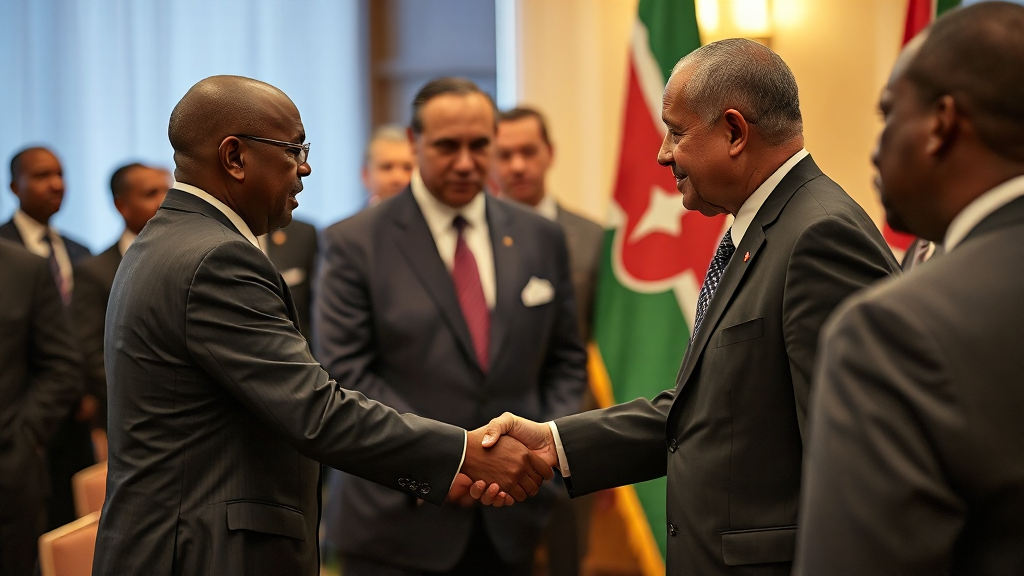
Cabinet Secretary for Foreign and Diaspora Affairs Musalia Mudavadi announced on Wednesday the formal opening of five new Kenyan diplomatic missions, a simultaneous expansion that represents the single largest growth of the country’s overseas presence in a decade and reflects both the ambition and the economic imperatives driving Kenya’s foreign policy under President Ruto’s administration. The new missions are in Riyadh (Saudi Arabia), Jakarta (Indonesia), Doha (Qatar), Dar es Salaam — upgraded from a consulate to a full embassy — and Accra (Ghana), which Kenya had not maintained a resident mission in since 2011.

Mudavadi, speaking at a ceremony at the Ministry’s headquarters on Harambee Avenue, framed the expansion as a direct response to the economic strategy of mobilising foreign direct investment and export market access as alternatives to debt-financed development. “Every embassy is an economic outpost,” he said. “We are not opening these missions for protocol. We are opening them to increase Kenyan exports, attract investment, protect our diaspora, and build the south-south partnerships that will define the next century of Kenya’s development.”

The Strategic Logic

The choice of locations reflects careful prioritisation. Saudi Arabia and Qatar together account for over 30 per cent of Kenya’s diaspora remittance inflows — projected to reach Ksh 640 billion in 2026 — yet until now Kenya’s Gulf diplomatic infrastructure was limited to a single embassy in Abu Dhabi that was formally accredited to both UAE and Saudi Arabia. The Riyadh and Doha missions will also serve as platforms for pursuing Gulf sovereign wealth fund investment in Kenya’s infrastructure pipeline, including the planned Lamu-Isiolo highway and Nairobi metro rail extension, both of which require external financing.

The Jakarta mission targets South-East Asia’s largest economy and a country with which Kenya has largely untapped complementary trade potential: Kenya’s tea, coffee, avocado, and macadamia sectors could access Indonesia’s 270-million-person consumer market, while Indonesian palm oil and electronics manufacturers have shown interest in the East African market through Kenya’s EAC gateway. The two countries signed a bilateral trade agreement in principle during President Joko Widodo’s 2023 Nairobi visit, but implementation has stalled partly owing to the absence of resident diplomatic representation.

The Dar es Salaam upgrade is perhaps the most geopolitically significant. Relations between Kenya and Tanzania have experienced periodic friction over trade barriers, transit fees, and competition for regional business hub status. Elevating the Dar es Salaam mission signals Nairobi’s intention to prioritise the relationship at the highest diplomatic level as EAC integration deepens, and as the two countries compete for the affections of foreign investors who increasingly view the Nairobi-Dar corridor as a single investment destination.

Diaspora Services Under Scrutiny

The announcement was welcomed by Kenyan diaspora associations in all five locations, with particular enthusiasm in the Gulf where community members have long complained of inadequate consular services during labour disputes, imprisonment, and emergency repatriation situations. The Kenyan Workers in the Gulf Coalition, which represents an estimated 180,000 Kenyans in Saudi Arabia and Qatar, issued a statement cautiously praising the missions’ opening while demanding that they be adequately staffed and funded. Past expansions have seen new missions opened with skeleton staff of two or three officials and insufficient resources to handle the case volumes generated by large diaspora communities.

The Foreign Affairs ministry has committed Ksh 3.4 billion in the current financial year to staffing and operationalising the new missions, drawn partly from a reallocation within the diplomatic budget and partly from the Diaspora Development Fund established in 2024. Critics in Parliament have questioned whether this represents adequate resourcing, noting that Kenya’s existing missions in London and Washington remain under-staffed relative to the demands placed on them.

Kenya’s Global Positioning

The embassy expansion is part of a broader diplomatic activation that includes Kenya’s candidacy for a non-permanent seat on the UN Security Council for the 2027-2028 term, its leadership of the Haiti peacekeeping mission, and Nairobi’s growing reputation as a hub for international organisations, with the UN Environment Programme, UN-Habitat, and over 50 other multilateral bodies headquartered in the city. CS Mudavadi has spoken publicly about Kenya’s ambition to establish itself as Africa’s diplomatic capital — a role it shares informally with Addis Ababa and Johannesburg but has not yet formally claimed. These five embassies, modest as they may appear in isolation, are part of that larger project.

Read More
Kenyatta Family Land Dispute Reignites as Court Rules on Historical Claims
Politics

Kenyatta Family Land Dispute Reignites as Court Rules on Historical Claims

A High Court ruling handed down in Nairobi on Friday has reignited one of Kenya’s most politically sensitive and long-running legal dramas, with Justice John Chigiti finding that three land parcels in Kiambu County totalling approximately 4,800 acres and registered in the name of companies associated with the estate of Kenya’s founding president Jomo Kenyatta were acquired through processes that violated the rights of the original African customary owners under the pre-independence framework of colonial land law.

The judgment, which runs to 214 pages and draws extensively on historical surveys conducted by the National Land Commission, stopped short of ordering immediate reversion of the parcels to claimant communities, instead directing the National Land Commission and the Cabinet Secretary for Lands to commence a structured compensation and restitution process within 120 days. It is, however, the most explicit judicial finding yet on the family’s land holdings, and it arrives at a politically charged moment — just weeks after former President Uhuru Kenyatta re-entered the national political arena with his endorsement of Rigathi Gachagua’s presidential bid.

The Background

The disputed parcels — known in legal filings as Kamandura Estate, Thika West Holding, and the Tigoni Parcel — have been the subject of competing claims since the 1960s. The claimant families, comprising descendants of Kikuyu squatters and pre-colonial land users from three locations in Kiambu and Murang’a, first filed formal petitions with the Ndung’u Commission on Illegal and Irregular Land Alienation in 2003, and were among the 200,000-plus submissions that commission received nationally. The NLC took up the matter under its historical injustices mandate in 2019, conducting field surveys and oral evidence sessions before forwarding findings to the Attorney General — findings that were suppressed during the Kenyatta administration and only published in full by the current NLC chairperson in March 2025.

Advocates for the claimant families, led by senior counsel Mbugua Mureithi, described Friday’s ruling as a vindication of three generations of legal effort. “These families watched prime agricultural land be developed into private estates while they were reduced to squatters on their own ancestral ground,” Mureithi told journalists outside the courthouse. “The court has recognised the historical truth.”

The Kenyatta Family’s Response

A statement issued through advocates Kaplan and Stratton on behalf of the Kenyatta family estate acknowledged the ruling and said the family would “engage constructively with the National Land Commission process as directed by the court.” The statement emphasised that the companies involved were legally registered and that all relevant taxes had been paid on the properties, without addressing the substantive historical acquisition findings. Separately, sources close to Uhuru Kenyatta told ZaKenya that the former president views the timing of the ruling — coming days after his high-profile political re-engagement — as “not coincidental,” though no suggestion of judicial interference was made explicitly.

The Ruto administration’s formal response has been careful. The Attorney General’s office said it would study the ruling before commenting. Land reform advocates noted that the administration has a political incentive to be seen upholding land justice in Central Kenya while also managing the diplomatic complexity of a finding that implicates a family with which the current political environment remains deeply entangled.

Wider Implications

The judgment is significant beyond the specific parcels in dispute. Legal analysts say it establishes a precedent for judicial review of acquisition processes for large landholdings in former White Highlands that will embolden hundreds of other historical claimant communities currently navigating the NLC process. The NLC estimates it has over 3,600 unresolved historical injustice cases on its active docket, many involving land linked to prominent political families.

“This case will matter most not for the 4,800 acres in Kiambu, but for what it tells every other community with a claim that the courts are willing to look at the historical evidence honestly,” said Dr Celestine Nyamu-Musembi of the University of Nairobi’s Institute for Development Studies. As Kenya accelerates a digital land registry intended to cement current ownership records, the tension between technological modernity and unresolved historical injustice has rarely been more sharply drawn.

Read More
Lands Ministry Launches Digital Title Deed System to Cut Fraud and Delays
Politics

Lands Ministry Launches Digital Title Deed System to Cut Fraud and Delays

Cabinet Secretary for Lands and Physical Planning Alice Wahome on Monday unveiled the National Digital Land Registry, a blockchain-backed title deed system that the ministry says will fundamentally transform how Kenyans register, transfer, and secure land ownership. The system, accessible through the e-Citizen platform and integrated with Safaricom’s M-Pesa for fee payments, replaces a paper-based title deed process that land law experts have described as among the most fraud-prone in sub-Saharan Africa.

The launch follows a 30-month development process undertaken in partnership with the Safaricom subsidiary Safaricom Digital, the Kenya Revenue Authority for stamp duty digitisation, and Israeli technology firm NayaOne, which provided the distributed ledger infrastructure. A pilot covering Nairobi, Kiambu, and Mombasa counties — the three counties responsible for over 60 per cent of all title fraud complaints nationally — has been running since October 2025, and the ministry reports that processing times in the pilot have fallen from an average of 87 working days to 11 working days.

How the System Works

Each land parcel is assigned a unique digital identifier linked to an immutable entry in the distributed ledger. Any registered transaction — sale, transfer, charge, or lease — generates a cryptographic record that cannot be altered retroactively without detection. Title holders receive both a digital certificate accessible through e-Citizen and a QR-coded physical document that can be authenticated instantly by any government office, bank, or court. Banks including Equity, KCB, and Co-operative have already integrated the verification API into their mortgage processing systems, meaning collateral checks that previously required physical visits to land registries now take under three minutes.

For citizens, the most immediately significant change is the elimination of the notorious title deed queue at Ardhi House, Nairobi’s central land registry, where brokers and fixers had built a multi-billion-shilling industry exploiting processing delays. “That queue is over,” CS Wahome said flatly at the launch event in Nairobi. “If anyone is charging you to access a government service that is now free online, report them to the Ethics and Anti-Corruption Commission.”

The Scale of the Problem Being Addressed

Land fraud has been estimated by the Kenya Law Reform Commission to cost Kenyan property owners between Ksh 15 billion and Ksh 22 billion annually through duplicate titles, forged conveyances, and corrupt registry officials facilitating illegal transfers. High-profile cases — including the Ruaraka land scandal, various grabbing incidents in Nairobi’s Eastlands, and systematic fraud in Coast county involving beach plots — have eroded public confidence in land tenure security. A 2024 World Bank ease-of-doing-business assessment flagged Kenya’s land registration process as one of the top five constraints on private investment in the country.

The new system addresses the structural vulnerability by ensuring that no single official can alter a land record without triggering an auditable alert. All registry officers now operate under two-factor authentication, and supervisory approval is required for any transaction above Ksh 5 million. An AI-powered anomaly detection layer flags patterns associated with historical fraud methods, including sudden multiple transfers of the same parcel within a short period.

Gaps and Concerns

The launch has been broadly welcomed, but implementation gaps remain. Only 42 per cent of Kenya’s approximately 6.2 million land parcels have been mapped to the new digital system so far, with extensive areas in arid counties, community land held under the Community Land Act, and historical trust lands yet to be migrated. Lands sector advocates caution that digitalising a corrupt paper system without first resolving the underlying records — particularly the thousands of cases where two or more physical title deeds claim the same parcel — risks cementing existing injustices in a new technological format.

Access concerns have also been raised. Only 57 per cent of Kenyan adults regularly use smartphones, and e-Citizen digital literacy remains low outside urban centres. The ministry has committed to deploying 890 digital land kiosks at sub-county levels by December 2026, staffed by trained navigators to assist citizens without internet access. Whether the system delivers on its transformative promise will ultimately depend on political will to prosecute the officials who enabled the old system’s abuses — a test that Kenya’s institutions have historically struggled to pass.

Read More
Kenya's Inspector General Orders Nationwide Police Reform Audit
Politics

Kenya’s Inspector General Orders Nationwide Police Reform Audit

Inspector General of Police Douglas Kanja has directed the most comprehensive internal audit of the National Police Service in Kenya’s history, ordering simultaneous reviews of all 47 county police commands to assess compliance with constitutional policing standards, identify corruption networks, document use-of-force incidents, and evaluate staffing levels against population benchmarks. The audit, to be conducted over 90 days beginning this month, was announced without prior public notice and is understood to have been triggered in part by continuing pressure from civil society following the heavy-handed response to the 2024 Gen Z protests.

Internal NPS documents seen by ZaKenya indicate the audit teams will be drawn from the Internal Affairs Unit, the Independent Policing Oversight Authority, and an independent panel of three retired judges appointed by the Inspector General’s office. Critically, serving county commanders will not be informed of the specific date of their audit review until 48 hours before inspectors arrive — a protocol designed to prevent file manipulation and sudden transfer of problematic personnel.

What Triggered the Audit

The proximate cause for the audit’s launch is a damning report by the Independent Medico-Legal Unit published in May, which documented 94 cases of death or serious injury attributable to police action between January 2025 and March 2026. Of these, 71 involved no subsequent Independent Policing Oversight Authority investigation, and in 58 cases the officers involved remained on active duty without disciplinary proceedings. The IMLU report named specific stations — including Kayole, Mathare, and Mombasa’s Tudor — as persistent hotspots for brutality complaints.

Inspector General Kanja, in a statement to the National Assembly’s Security Committee, acknowledged the findings with unusual candour. “The data is unacceptable. A police service that kills citizens without accountability is not a police service — it is an armed liability to the state. This audit is not a public relations exercise. Officers found to have committed offences will face criminal prosecution, not just transfer.”

The Gen Z protests remain a particular point of institutional sensitivity. At least 39 young people were killed during the June-July 2024 demonstrations, the majority by police gunfire. A special tribunal examining those deaths has moved slowly, with only four prosecutions filed to date, drawing fierce criticism from the families of victims and from international human rights bodies including the UN Human Rights Council, which placed Kenya on its Enhanced Review agenda in February 2026.

Staffing and Resource Deficits

Beyond brutality, the audit is expected to surface deep structural problems. Kenya’s current officer-to-population ratio stands at approximately 1:580 against a UN recommended benchmark of 1:450, and the gap is most acute in arid and semi-arid counties such as Turkana, Marsabit, and Garissa, where police presence is sparse but security challenges are severe. The NPS has not completed a full national recruitment cycle since 2021, partly owing to budget constraints under the IMF fiscal programme.

Corruption in traffic enforcement and at land border points represents another focus area. The Ethics and Anti-Corruption Commission shared intelligence with the IG’s office earlier this year identifying at least 12 county commands where bribery collection has been systematised into informal quotas enforced through the officer hierarchy — a pattern the audit will attempt to document and disrupt.

Reactions from Civil Society and the Force

The Kenya National Commission on Human Rights praised the audit announcement as “overdue and welcome” while reserving judgement on whether its findings would translate into genuine accountability. “We have seen internal reviews before that produced reports, recommendations, and no consequences,” said KNCHR Chairperson Roselyn Odede. “What matters is what happens to the findings.”

Within the NPS, reactions are mixed. Senior officers contacted by ZaKenya on condition of anonymity expressed concern that the audit is politically motivated and will be used selectively against commanders perceived as unsympathetic to the current administration. The Kenya Police Union, for its part, issued a statement welcoming the audit but demanding it also examine the working conditions, equipment shortfalls, and insurance failures that leave rank-and-file officers exposed and demoralised. The results of the audit are expected to be presented to the National Security Council by late September.

Read More
ODM Party Conference Sets Policy Agenda for 2027 General Election Campaign
Politics

ODM Party Conference Sets Policy Agenda for 2027 General Election Campaign

The Orange Democratic Movement concluded its five-day national delegates’ conference in Kisumu this week having produced the most detailed and costed policy platform the party has released since its founding, a document its leadership says will serve as the bedrock of a 2027 general election campaign premised on reversing what ODM frames as the economic and governance failures of President Ruto’s administration.

The conference, held at the Lake Basin Mall convention facility and attended by over 3,200 elected delegates from all 47 counties, also resolved a number of internal structural questions that had complicated the party’s positioning since party leader Raila Odinga’s appointment as African Union Commission Chairperson in February 2025. Deputy party leader Wycliffe Oparanya chaired proceedings in Odinga’s absence, though the former Prime Minister addressed delegates via video link from Addis Ababa for a 40-minute session that generated the loudest applause of the week.

The Policy Blueprint

The document, titled ‘Kenya Mpya: Agenda for Shared Prosperity,’ runs to 87 pages and is organised around six thematic pillars: economic revival, healthcare and social protection, education and youth, agriculture and food security, governance and anti-corruption, and devolution strengthening. Key headline commitments include reversing the affordable housing levy on salaries below Ksh 50,000, completing the transition to universal health coverage under a reformed SHA framework with reduced co-payment requirements for low-income households, and creating a Youth Employment Guarantee Scheme targeting one million jobs over five years.

On the economy, the platform takes direct aim at the IMF austerity conditions that have constrained public spending under Ruto. ODM’s shadow finance team, led by former Kisumu Senator Tom Ojienda, proposes a renegotiation of Kenya’s IMF Extended Fund Facility to shift conditionalities away from regressive taxation and towards capital efficiency measures. Economists contacted by ZaKenya were sceptical: Dr Josphat Gachanja of the Kenya Institute for Public Policy Research noted that “no government has successfully renegotiated core IMF structural benchmarks mid-programme without triggering a credit event,” though he acknowledged the political appeal of the argument to a public weary of KRA enforcement actions.

“The people of Kenya did not vote for austerity. They voted for a bottom-up economy and got a top-down tax system,” Oparanya told delegates to sustained applause. “ODM will build an economy that works for the mama mboga, the boda boda rider, and the Gen Z graduate who cannot find a job.”

The Leadership Question

The conference deliberately avoided naming an ODM presidential candidate, reflecting both the complexities of Odinga’s AU role — which formally prevents partisan political activity — and the broader coalition arithmetic that ODM hopes to assemble before 2027. Internal party polling, shared with delegates in a closed session, shows ODM’s vote base concentrated in Nyanza, Western, and the Coast, commanding roughly 28 per cent of the national electorate in isolation. Coalition partners will be essential.

Names in circulation include former Deputy Chief Justice Philomena Mwilu, Kilifi Governor Gideon Mung’aro, and former Nairobi Governor Mike Sonko, though the last was firmly rejected by several women delegates who cited his legal history. A party spokesperson confirmed that formal presidential candidate selection will begin in the first quarter of 2027, following a membership drive targeting two million new registered supporters.

Youth Engagement at the Centre

Recognising that the Gen Z political awakening has created an electorate that is sceptical of party loyalty and transactional politics, the conference established a new ODM Youth Policy Council with real influence over the manifesto drafting process. Twenty-four youth delegates under the age of 35 were elected to the council, and the party committed to reserving 40 per cent of its candidate slots for the 2027 parliamentary elections for young people.

“We understand that the young people of Kenya are watching us with different eyes,” said Martha Karua’s former running-mate, who addressed the conference as a guest speaker. “They do not want slogans. They want structures, accountability, and proof that their vote produces change.” Whether ODM can translate a credible policy document into electoral victory will depend as much on coalition-building and the final candidate field as on the quality of the ideas in those 87 pages.

Read More
Kenya Signs New Security Cooperation Agreement with US to Combat Terror
Politics

Kenya Signs New Security Cooperation Agreement with US to Combat Terror

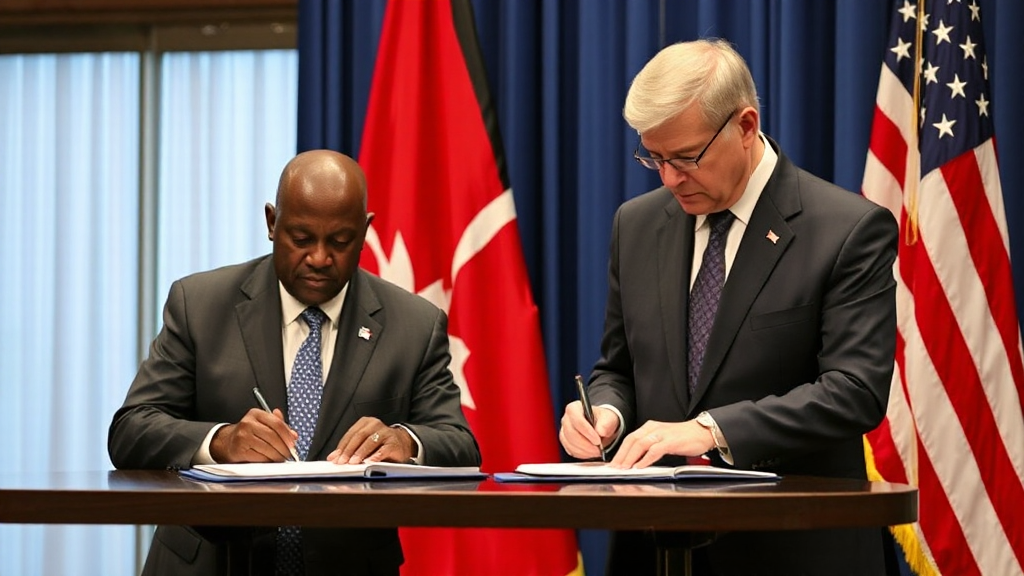
Kenya and the United States signed a landmark Enhanced Security Cooperation Framework in Nairobi on Thursday, formalising what both governments described as the most comprehensive bilateral defence and intelligence partnership in the history of the relationship between the two countries. The agreement, signed by Cabinet Secretary for Defence Aden Duale and visiting US Secretary of State Marco Rubio, covers counterterrorism intelligence-sharing, joint training programmes, cybersecurity cooperation, and a fresh tranche of military hardware transfers valued at approximately 230 million US dollars.

The signing comes at a moment of renewed urgency. Al-Shabaab’s cross-border attacks into Kenya’s north-eastern counties have escalated in frequency over the past eighteen months, with 14 separate incidents recorded between January and June 2026 in Mandera, Wajir, and Lamu counties, killing 47 Kenyan security personnel and 23 civilians. A particularly lethal ambush in Wajir County in March, which claimed the lives of 11 Kenya Defence Forces soldiers, prompted emergency security reviews and accelerated the diplomatic timeline for the new framework.

What the Agreement Contains

Beyond the headline military assistance, the framework establishes a Joint Intelligence Fusion Centre to be housed at Kenya’s National Intelligence Service headquarters in Nairobi, staffed by personnel from both countries and equipped with US-provided signals intelligence technology. American officials say the centre will significantly improve the speed at which actionable intelligence on al-Shabaab movements is shared with Kenyan commanders in the field.

The deal also creates a fast-track channel for Kenya to procure additional armed surveillance drones, building on the country’s existing fleet of Israeli-made Heron UAVs. Three new US-manufactured Predator MQ-9 variants are included in the current transfer, with delivery expected before the end of the calendar year. Separately, the US will fund a training programme at the Eldoret-based Kenya Military Academy for 400 counter-IED specialists over three years.

“This agreement is not merely about hardware,” Secretary Rubio said at a joint press conference at the US Ambassador’s residence in Gigiri. “It is about building the institutional capacity of a partner nation that has been on the front line of the fight against extremism in East Africa for decades. Kenya’s sacrifices have been immense. America stands with Kenya.”

Regional Context and Sensitivities

The agreement has generated nuanced reactions across the region. Ethiopia, whose relations with Nairobi have been complicated by the Nile water dispute and the ongoing Tigray reconstruction period, issued a diplomatic note expressing concern about “militarisation of the sub-region without adequate multilateral consultation.” Somalia’s Federal Government, whose own partnership with the US is a pillar of the anti-Shabaab campaign, welcomed the Kenya deal as complementary to the broader ATMIS transition framework.

Kenya’s peacekeeping contribution in Haiti — which has seen over 1,000 KDF and National Police Service personnel deployed since 2024 under a UN mandate — also featured in the discussions, with Rubio acknowledging Kenya’s extraordinary commitment to global security at a time when many nations have retrenched. The US agreed in principle to provide additional logistical support for the Haiti mission, including air transport capacity.

Human rights organisations raised concerns about oversight provisions. Amnesty International Kenya said the agreement’s intelligence-sharing provisions must be accompanied by clear accountability frameworks to prevent abuses of the kind documented during previous counterterrorism operations in Mandera and Lamu, where civilian communities experienced forced displacements and extrajudicial killings attributed to security forces. The agreement text, portions of which remain classified, is said to include a human rights conditionality clause, though its enforcement mechanisms have not been publicly detailed.

Domestic Reception

CS Duale, whose tenure at the Defence ministry has been marked by a systematic effort to modernise the KDF’s capabilities, described the agreement as a generational investment. “We are not outsourcing our security to anyone,” he said. “We are building partnerships that make our own forces more capable, more lethal against the enemy, and better equipped to protect Kenyan lives.” Opposition figures broadly supported the security dimensions of the deal while demanding full parliamentary scrutiny of its financial annexures before ratification, as required under Article 211 of the Constitution.

Read More
Uhuru Kenyatta Makes Surprise Political Comeback, Endorses Opposition Candidate
Politics

Uhuru Kenyatta Makes Surprise Political Comeback, Endorses Opposition Candidate

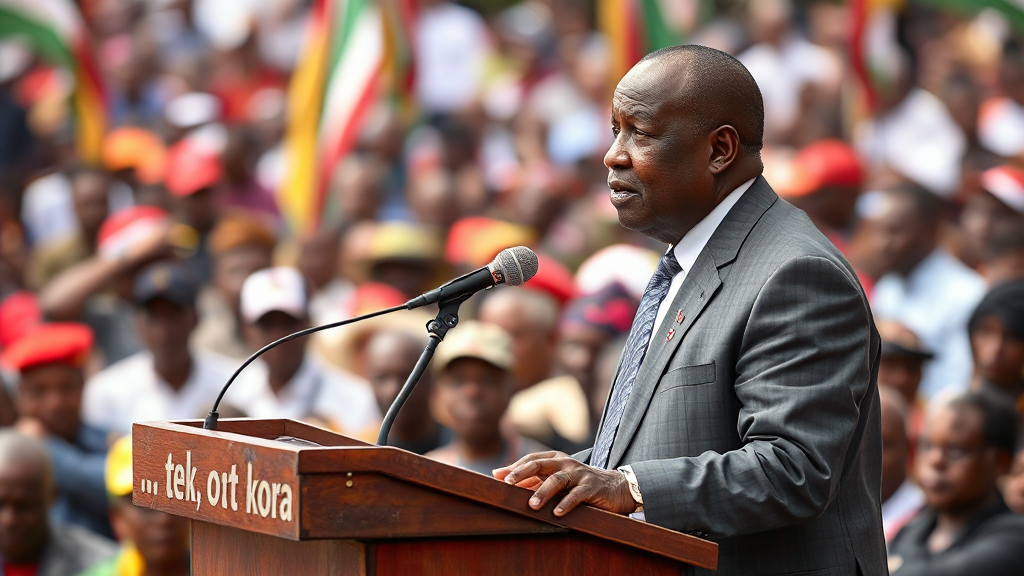
Uhuru Kenyatta, Kenya’s fourth president who retreated into a conspicuous political silence following the collapse of his Azimio coalition’s electoral challenge in 2022, has returned to the national stage with a declaration that will reorder the already volatile arithmetic of the approaching 2027 general election. Speaking before a gathering of over 12,000 supporters at Kasarani Stadium in Nairobi on Saturday, Kenyatta publicly endorsed the candidacy of former Deputy President Rigathi Gachagua, describing him as the right leader to “restore dignity to the House of Mumbi and justice to all Kenyans.”

The endorsement, which had been rumoured in political circles for several weeks but was widely expected to be deferred, sent an immediate shockwave through Kenya’s political establishment. Gachagua, who was controversially impeached from the deputy presidency by Parliament in October 2024, has since reinvented himself as a populist opposition figure, cultivating deep support in the Mount Kenya region and positioning his Democracy for Citizens Party as the vehicle for a 2027 presidential bid.

A Calculated Alliance

The Kenyatta endorsement transforms Gachagua’s campaign from a regionally anchored insurgency into a nationally credible challenge. Kenyatta retains significant organisational capacity through networks linked to the former Jubilee Party machinery, access to resources from the Kenyatta family’s extensive business interests, and residual goodwill among moderate Kikuyu and Embu voters who feel politically orphaned since the Ruto-Gachagua falling-out.

“I do not do this out of personal grievance,” Kenyatta told the Kasarani crowd, dressed characteristically in a brown leather jacket rather than a suit. “I do this because the ordinary mwananchi is suffering. The cost of unga, the cost of medicine, the cost of school fees — these have not come down. We owe this generation a better government.” The reference to unga — maize flour — the perennial barometer of Kenyan living standards, drew thunderous applause.

Political analyst Dr Nerima Wako-Ojiwa of the Africa Policy Institute said the alliance was transactional but strategically sound. “Kenyatta delivers the organisational infrastructure and the Kiambu vote bank. Gachagua delivers the grassroots anger and the Mt Kenya periphery — Nyeri, Kirinyaga, Tharaka Nithi — that feels it got nothing from the Ruto era. Together they are a formidable combination.”

Ruto Camp Responds

The Kenya Kwanza administration was swift to downplay the development. Deputy President Kithure Kindiki, speaking at a separate function in Meru, dismissed the alliance as “political recycling by those who had their chance and wasted it.” State House communications director Hussein Mohamed issued a statement noting that President Ruto remained focused on delivering the bottom-up economic transformation agenda and was unconcerned by “theatrical reunions.”

Behind the composed public messaging, however, sources within the ruling coalition told ZaKenya that the Kenyatta move has prompted urgent consultations about broadening the Kenya Kwanza tent ahead of 2027. Wiper Democratic Movement leader Kalonzo Musyoka, long courted by both camps, is now reportedly being offered a running-mate position by the Ruto side, a proposal Kalonzo’s team has neither confirmed nor denied.

The Gen Z Factor

Perhaps the most uncertain variable is how the youth electorate — galvanised by the 2024 Gen Z protests that fundamentally altered Kenya’s political culture — will respond to a contest dominated by familiar faces. Youth-led civil society groups were quick to issue a joint statement cautioning voters against “recycled elites offering the same solutions with different branding.” The statement, signed by 34 organisations, noted that neither Kenyatta nor Gachagua had meaningfully engaged with the protest generation’s demands for structural governance reforms.

For now, the Kasarani rally has injected energy and drama into a 2027 campaign season that, until this weekend, felt like a slow-motion rerun. Kenyatta’s biographers will note the irony: the man who helped engineer Ruto’s presidency in 2022 has become the most prominent architect of the project to end it.

Read More
Kenya's New Affordable Housing Programme Delivers First 5,000 Units in Nairobi
Politics

Kenya’s New Affordable Housing Programme Delivers First 5,000 Units in Nairobi

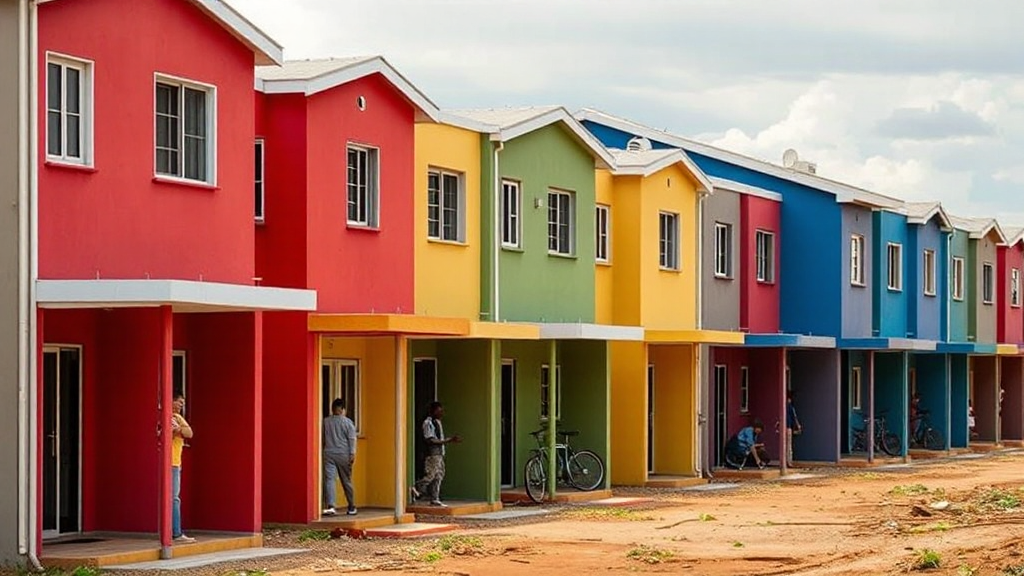
Kenya’s Affordable Housing Programme reached a watershed moment this week when President William Ruto presided over the handover of the first 5,000 completed residential units to new homeowners in Nairobi, delivering on a promise that has defined his administration’s domestic agenda since 2022 and silencing, at least temporarily, critics who labelled the initiative an expensive political gamble.

The units, distributed across three estates — Park Road in Ngara, Jevanjee in Pangani, and a new high-rise development on the former Muthurwa Market site in Starehe — were awarded to beneficiaries drawn from a waiting list of over 320,000 Kenyans who enrolled through the Boma Yangu portal. Monthly mortgage repayments for a standard one-bedroom unit have been pegged at Ksh 5,200, with the government absorbing the land-cost component through the National Housing Corporation.

A Programme Built on Controversy

The journey to this handover has been far from smooth. The Affordable Housing Levy — a 1.5 per cent deduction from gross salaries — was among the triggers for the June 2024 Gen Z protests that convulsed the country and forced the withdrawal of the Finance Bill. After months of legal battles and a Supreme Court ruling that ultimately upheld the levy’s constitutionality under a revised framework, the government resumed full collections in early 2025 and channelled the proceeds into a ring-fenced construction fund now valued at Ksh 84 billion.

“This is not a political event. This is the moment ordinary Kenyans who have rented for decades become owners,” President Ruto told thousands of beneficiaries assembled at the Uhuru Gardens handover ceremony. “The sceptics said it could not be done. Sixty thousand more units are under construction today.”

Lands and Housing Cabinet Secretary Alice Wahome confirmed that a further 22 counties have active construction sites under Public-Private Partnership agreements, with Spanish firm Acciona, Chinese state-owned CSCEC, and local developer Cytonn among the contracted parties. The government estimates the programme will create 150,000 direct construction jobs by mid-2027.

Who Actually Benefits?

Eligibility criteria have drawn scrutiny from housing rights advocates. The Kenya Human Rights Commission noted in a briefing published this month that 68 per cent of successful Boma Yangu applicants in the first allocation round are formally employed, meaning the programme disproportionately serves salaried workers who already contribute the levy, while the urban poor in informal settlements — the demographic most acutely in need — are largely excluded owing to the mortgage qualification threshold of a minimum monthly income of Ksh 18,000.

Mathare MP Anthony Oluoch was blunt in his assessment: “Five thousand units for a city of five million is a rounding error. We need 250,000 units in Nairobi alone, and most of those must be for people earning below the minimum wage.” The government has indicated that a social rental tier, targeting households below the poverty line, will be introduced in the second phase of the programme beginning in January 2027.

Nairobi Governor Johnson Sakaja attended the ceremony and pledged county government support for infrastructure connections — roads, water, and sewerage — at all three new estates, a historically contentious issue where national and county governments have clashed over cost-sharing responsibilities.

Economic Multiplier or Political Optics?

The timing is not lost on political analysts. With the 2027 general election now firmly on the horizon, the housing handover provides the Ruto administration with a tangible symbol of delivery at a moment when public approval ratings, dented by IMF-linked austerity and the SHA health-fund transition from NHIF, have been under pressure. A survey by Infotrak Research released in June placed public satisfaction with the housing programme at 41 per cent nationally, rising to 57 per cent among Nairobi respondents.

For the 5,000 families clutching their title deeds on Wednesday, the politics mattered little. “I have lived in Mathare for 27 years paying rent,” said Wanjiru Muthoni, a primary school teacher and mother of three who received a two-bedroom unit at Park Road. “Today my children have a home.” Her sentiment, replicated thousands of times across the handover queue, is precisely the narrative the administration intends to carry into the next electoral cycle.

Read More