Kenya's Poultry Industry Rebounds After Avian Flu Scare, Farmers Restock
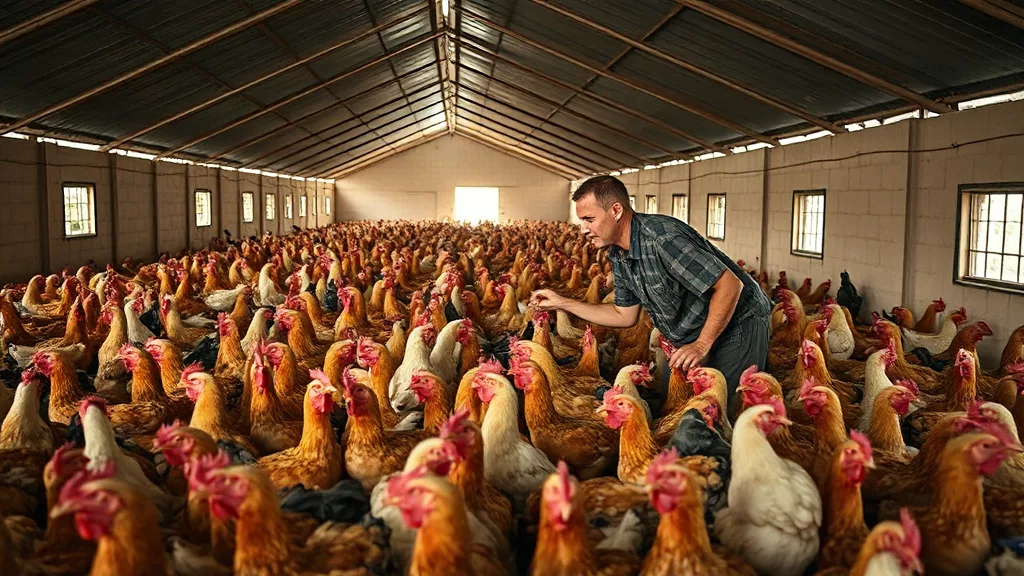
Kenya's poultry industry is staging one of its fastest recoveries on record following the H5N1 highly pathogenic avian influenza outbreak that tore through commercial and backyard flocks in the second half of 2025, culling or killing an estimated 4.2 million birds and costing the sector Ksh 9.7 billion in direct losses. With the government having lifted the final movement restrictions in February 2026, hatcheries are running at full capacity, live bird markets have reopened across all 47 counties, and egg prices -- which peaked at Ksh 22 per unit during the outbreak -- have begun to normalise toward the Ksh 15-16 range, though farmers note that strong demand is keeping margins comfortable.
The Outbreak and the Government Response
The H5N1 outbreak was first confirmed at a commercial farm in Kiambu County in August 2025 before spreading to Nakuru, Uasin Gishu, and Machakos counties within six weeks. The Department of Veterinary Services mounted a rapid response, deploying 340 field veterinarians and enacting movement bans that, while commercially painful, are now credited by epidemiologists at the Kenya Medical Research Institute with containing what could have become a far longer crisis. A total of 127 farms were quarantined and 68 decontaminated under protocols aligned with World Organisation for Animal Health standards.
"The speed of the containment was significantly better than what we saw in 2006 and again in 2017," said Dr Martha Njenga, a virologist at KEMRI who monitored the outbreak. "The real improvement was in passive surveillance -- farmers were calling the hotline within 24 hours of seeing symptoms because they had been trained, and they trusted that the government would compensate them if they reported early." The government paid compensation of Ksh 3.2 billion to affected farmers, a figure that animal welfare advocates described as the most prompt and transparent disbursement in the ministry's history.
Restocking Under a New Biosecurity Regime
The restocking phase has been accompanied by what veterinary authorities are calling a generational shift in biosecurity compliance. Farmers wishing to restock under the government's subsidised Restocking Support Programme -- which provides day-old chicks at 60 per cent of market cost -- must first complete a two-day biosecurity training certified by the Directorate of Veterinary Services and install concrete-slab housing with mesh netting that prevents contact with wild birds. As of June 2026, 38,000 farmers across 22 counties have been certified, with a total of 6.1 million chicks delivered through the programme since March.
Large integrated producers, including Kenchic and Farm Fresh Kenya, have gone further, investing in negative-pressure housing, automated feeders, and on-site PCR testing kits that can return a result within four hours. "We are running a zero-wild-bird-contact protocol across all our sheds," said Kenchic Managing Director Patrick Kimani. "The outbreak was a brutal lesson, but it has pushed biosecurity standards in Kenya closer to what you see in Brazil and the Netherlands. The industry that comes out of this is more resilient than the one that went in."
Market Dynamics and the Backyard Farmer
The recovery has not been uniform. While commercial producers are largely back to pre-outbreak volumes, backyard poultry farmers -- who account for an estimated 80 per cent of Kenya's chicken population but only 30 per cent of commercial output -- have restocked more slowly, constrained by limited access to the government programme and by the higher cost of improved biosecurity housing that most rural households cannot afford. A survey by the Kenya Poultry Farmers Association found that backyard flocks had recovered to only 61 per cent of their pre-outbreak numbers by May 2026.
There are, however, grounds for optimism on the demand side. Chicken consumption, which dipped sharply during the outbreak as consumer anxiety ran high, has rebounded strongly. Fast food chains including KFC Kenya and a clutch of local competitors have reported chicken sales above pre-outbreak levels, attributed partly to pent-up demand and partly to growing urban middle-class appetite for affordable protein. Supermarket chains have also reported a 22 per cent year-on-year increase in packaged poultry sales, with value-added products such as marinated pieces and deboned thighs gaining particular traction.
The Kenya Poultry Farmers Association estimates the industry will return to its 2024 production baseline of 32 million birds per quarter by the fourth quarter of 2026. With 2027 election season approaching and food prices under political scrutiny, the Ruto administration has a direct interest in ensuring that the recovery is sustained -- and in preventing the complacency that has allowed previous avian flu outbreaks to catch producers off-guard.