Climate-Smart Agriculture Programme Protects 200,000 Kenyan Farmers from Crop Failure
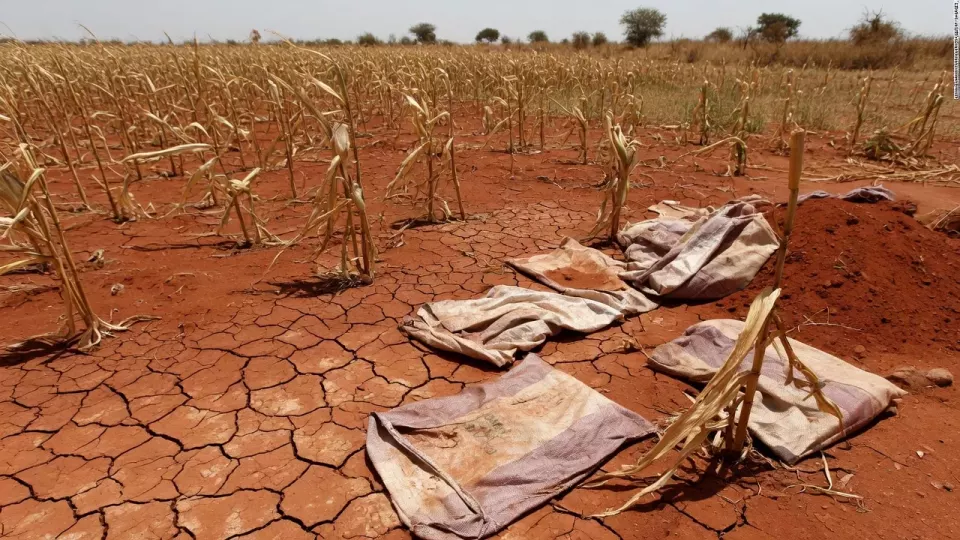
Two years after El Nino disrupted rainfall patterns across East Africa and left hundreds of thousands of Kenyan farming families exposed to food insecurity, a national climate-smart agriculture programme is demonstrating that targeted interventions can meaningfully insulate smallholders from the worst consequences of increasingly volatile weather. The programme, administered by the State Department for Agriculture in partnership with the World Food Programme and the International Fund for Agricultural Development, has enrolled 200,000 farmers across 18 counties and is being credited with preventing what government analysts estimated would have been catastrophic crop shortfalls during the erratic 2025 short rains season.
The Three-Pillar Framework
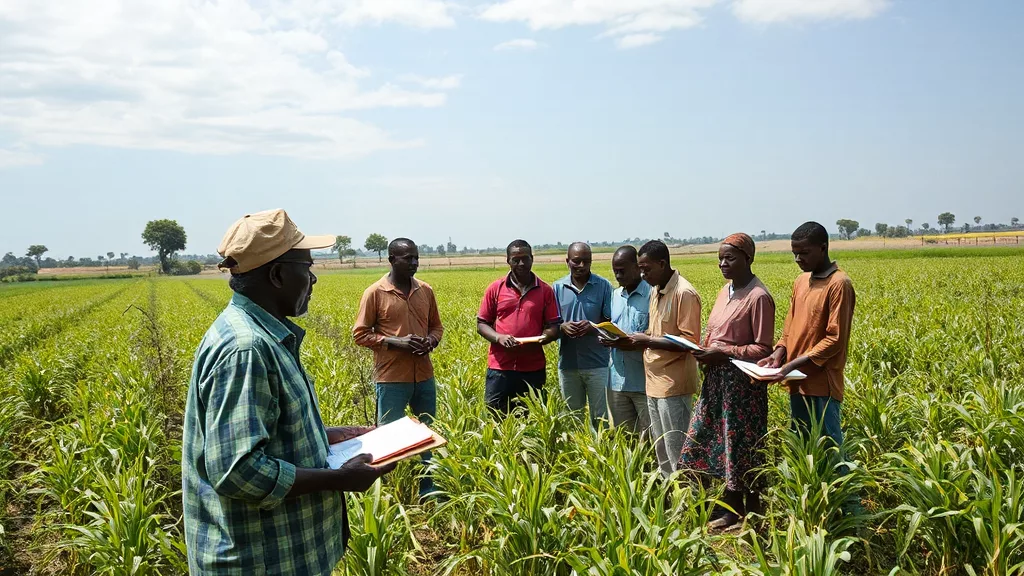
The programme operates on three reinforcing pillars: the distribution of certified drought-tolerant and fast-maturing seed varieties, the provision of area-yield index insurance at heavily subsidised premiums, and the delivery of customised agronomic advisories via SMS and WhatsApp in local languages including Kikuyu, Dholuo, Kipsigis, Somali, and Swahili.
Since the 2025 long rains cycle, enrolled farmers have received seed vouchers redeemable at accredited agro-dealers for varieties developed by KALRO and the International Maize and Wheat Improvement Centre (CIMMYT), including drought-tolerant maize lines that can complete their growth cycle on as little as 350mm of rainfall. Participating counties span the arid and semi-arid lands corridor from Turkana to Kitui, as well as historically productive zones in the central highlands that are now experiencing increasing rainfall unpredictability.
"What distinguishes this programme from previous seed subsidy schemes is the bundling," said Dr Faith Thuita, Director of Climate-Smart Agriculture at KALRO. "The seed alone helps, but when you pair it with insurance that pays out automatically when a satellite detects rainfall deficit, and with weekly advisory messages telling the farmer exactly what to do at each crop growth stage, the combined effect is much larger than the sum of the parts."
Insurance That Pays Without a Claims Form
The index insurance component, underwritten by a consortium led by APA Insurance and Kenya Re and monitored by the Insurance Regulatory Authority, has attracted particular attention from development finance institutions. Unlike traditional crop insurance -- which requires field assessors, paperwork, and dispute resolution processes that can take months -- the area-yield index model triggers automatic payouts when satellite-derived vegetation indices or rain gauge data fall below thresholds defined in each county's policy. Payouts are processed directly to the farmer's M-Pesa wallet within 14 days of a trigger event.
During the 2025 short rains, which were 30 per cent below the seasonal average across most of eastern Kenya, 47,000 enrolled farmers received automatic insurance payouts totalling Ksh 1.34 billion. The Insurance Regulatory Authority confirmed that the average payout per household was Ksh 28,500, sufficient to cover the cost of inputs for the following planting season. "No farmer had to walk into an office, file a form, or argue with an assessor," said IRA Chief Executive Godfrey Kiptum. "The system saw the drought, calculated the shortfall, and paid. That is the model we want to mainstream."
Voices from the Field and the Road Ahead
In Makueni County, one of the arid-zone epicentres of the programme, farmer cooperative chairman Joseph Mumo told ZaKenya that the season's outcome had reshaped attitudes toward formal financial products among his members. "Five years ago, if you said insurance to a farmer here they would laugh at you. They had been burned too many times by schemes that took their premiums and paid nothing. This time, money came to the phone without anyone even asking. Now my whole cooperative wants to sign up."
The government has pledged to expand enrolment to 400,000 farmers by the end of 2027, with the additional funding expected to come from a Ksh 8 billion green climate bond that the National Treasury is preparing to issue on the Nairobi Securities Exchange later this year -- itself part of Kenya's post-El Nino climate adaptation financing strategy. The World Bank's Kenya Climate-Smart Agriculture Project, running concurrently, is also providing technical assistance to county governments on building climate information systems and early warning networks.
Analysts at the African Centre for Food and Agricultural Policy caution that while the programme's early results are impressive, sustaining them will require continued investment in agro-dealer networks, digital infrastructure, and the agronomists needed to keep advisory content current as new climate patterns emerge. "The science is moving fast," said Dr Thuita. "What was a good seed variety in 2020 may underperform in 2030 conditions. We need a programme that keeps learning alongside the climate."