Beekeeping Revolution: Kenya's Honey Exports Target Ksh 5 Billion by 2027
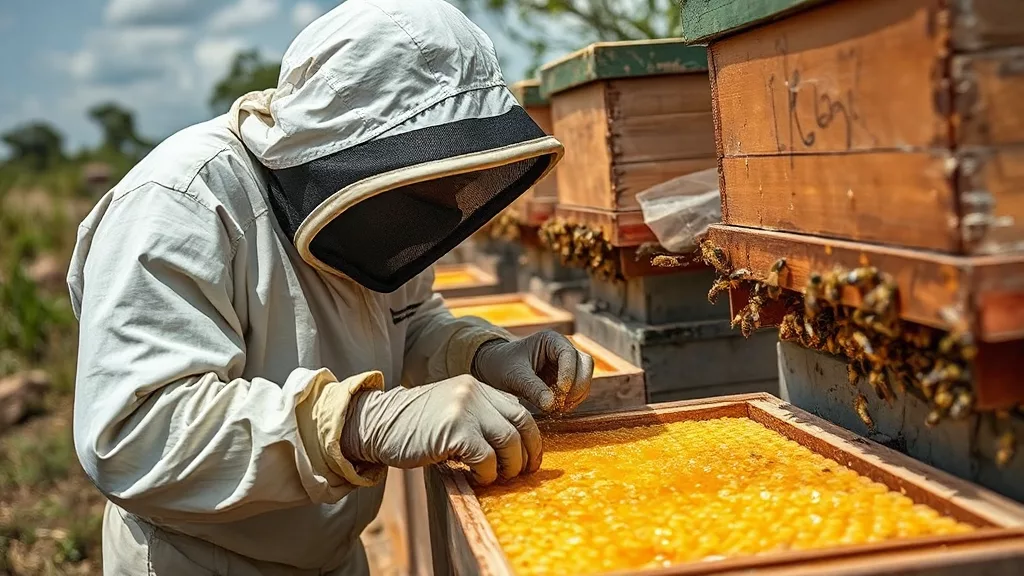
Kenya's honey export sector, long dismissed as a cottage industry of marginal commercial significance, is undergoing a transformation that its advocates describe as nothing less than a revolution. Export earnings from honey and related bee products reached Ksh 2.8 billion in the year to March 2026, more than double the Ksh 1.3 billion recorded in 2021 and a figure that positions the sector as one of the fastest-growing agricultural export categories in the country. The government's stated target of Ksh 5 billion in annual honey export revenue by 2027 is ambitious but, industry observers say, not unreachable.
The Foundation: Hive Expansion and Modernisation
Kenya is home to an estimated 10 million bee colonies — the largest wild and managed bee population in Africa — and its climatic diversity creates honey with distinctive flavour profiles that command premiums in specialist markets in Europe, the Middle East, and North America. The Baringo forest honey, with its dark amber colour and complex tannin notes drawn from Acacia tortilis and other dryland flowers, has developed a following in German specialty food stores. The highland multi-floral honeys of the Aberdare Range and Mt Kenya foothills are sought by Swiss and British artisan brands for their high enzyme content and clean finish. Until recently, the sector's potential was constrained by production technology. The traditional log hive, while culturally embedded across pastoral communities in Baringo, Samburu, West Pokot, and Turkana counties, delivers inferior honey quality and yields per colony that are 40 to 60 per cent lower than the Kenya Top-Bar Hive (KTBH) or the improved Langstroth box hive.
The National Beekeeping Modernisation Initiative, launched in 2023, has distributed more than 120,000 KTBH and Langstroth hives at 60 per cent subsidised cost to farmers in 28 counties, with ASAL counties receiving priority allocation in recognition of their large bee populations and limited alternative livelihoods. "We have not abandoned the traditional hive," said Dr Cecilia Mutuku, Director of the Kenya Bee Products Association. "But we are helping farmers understand that the transition to modern hives can triple their honey yield per colony and also deliver beeswax and propolis that have their own export markets."
Quality Certification and Market Access
The single most significant factor in Kenya's honey export growth has been progress on European Union food safety certification. The Kenya Bureau of Standards, working with the Kenya Veterinary Authority on residue testing protocols, achieved EU third-country listing for honey exports in early 2024 — a regulatory milestone that had been pending for nearly a decade due to concerns about antibiotic residues. The EU listing requires individual processors to maintain traceability records linking each batch to specific apiaries that have been sampled for residues. Eleven Kenyan honey exporters currently hold active EU export certification, up from three in 2023. The government's export promotion agency, KEPROBA, is offering matching grants of up to Ksh 400,000 to qualifying honey businesses to cover certification costs.
Youth Entrepreneurs and Pollination Services
Beyond honey, Kenya's beekeeping sector is attracting interest for pollination services. French bean, avocado, and macadamia producers in Central Kenya increasingly understand that managed pollination can improve yields by 15 to 30 per cent, and a nascent hive-rental market is developing in Murang'a, Kirinyaga, and Meru counties, where a fee of Ksh 3,500 per colony per month supplements honey income without depleting the colony. Youth engagement is a particularly encouraging sign for the sector's long-term vitality. Several Gen Z entrepreneurs — energised by the civic activism and self-reliance ethos that emerged from the 2023 protest movement — have entered commercial beekeeping, establishing direct-to-consumer honey brands with strong social media presences that command Ksh 800 to Ksh 1,200 per 500-gramme jar in urban markets. For a sector that must deliver Ksh 5 billion in exports by 2027, the combination of government infrastructure, EU certification, and entrepreneurial energy may well be enough to close the gap.