
Africa Must Build and Own the AI Infrastructure That Serves Its Own Realities
A striking provocation opens a recent Nation.Africa opinion column: what does it mean when the technology shaping the next generation carries little memory of Africa? For Wanjira Mathai — managing director for Africa and Global Partnerships at the World Resources Institute and chair of the Wangari Maathai Foundation — that question demands an urgent answer. Writing in the publication, she argues that if African knowledge, languages, and ways of understanding are absent from the data that trains artificial intelligence systems, they effectively do not exist to the machine.
Key points
- Wanjira Mathai argues Africa must build its own AI infrastructure rather than remain a passive consumer of foreign systems.
- African languages and knowledge remain largely undigitised, making them structurally invisible to dominant AI models.
- Mathai is managing director for Africa at the World Resources Institute and chairs the Wangari Maathai Foundation.
- AI built on non-African data risks reproducing patterns of exclusion the continent has long worked to overcome.
That absence, Mathai contends, is not incidental — it is structural. AI systems reflect the information they are built on, and the continent's multilingual diversity, cultural heritage, and accumulated local knowledge remain largely undigitised and therefore invisible to the dominant models now reshaping global economies. A digital future constructed on infrastructure designed elsewhere, optimised for other contexts, risks reproducing patterns of exclusion that Africa has spent generations working to overcome.
Infrastructure as a Sovereignty Question
The columnist frames digital infrastructure not merely as a technical concern but as a question of sovereignty comparable to control over natural resources and energy. Africa currently accounts for a small fraction of the world's data centres and advanced AI computing capacity — a structural gap that creates deep dependency. When critical systems, from health records to financial transactions to government services, run on foreign-owned platforms, strategic control follows that data abroad. Mathai points to the example of advanced economies actively resisting influential foreign AI platforms over concerns about national sovereignty and external technological dependence, noting that such caution is treated as common sense when applied to their own digital assets.
The column does not stop at diagnosis. Mathai identifies pioneers already building what she describes as "the infrastructure beneath the infrastructure" — African-owned data systems, climate and environmental intelligence platforms, computing capacity that belongs to the continent, and the policy frameworks that enable African nations to shape AI rather than merely inherit it. Scaling these efforts, she argues, requires collaborative investment models involving multilateral development banks, continental institutions, and domestic capital — with African engineers actively designing these systems, not simply operating what others have built.
Designing for African Realities
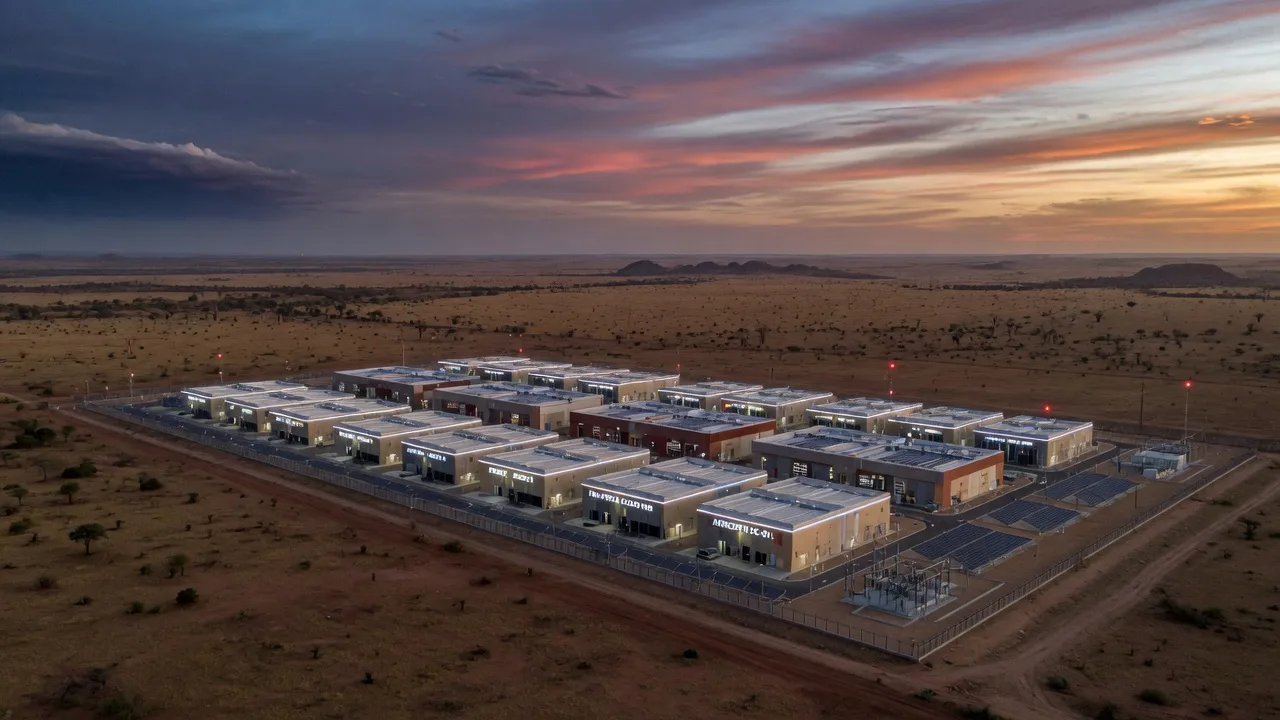
Central to the argument is a design imperative: Africa need not replicate the resource-intensive data centre models developed for very different climates, economies, and priorities. The continent has both the opportunity and the obligation to build facilities suited to its own conditions — AI trained on African languages, data governed under African legal and ethical frameworks, and infrastructure engineered sustainably for the continent's particular realities. Kenya's Konza Technopolis is offered as one illustration of what national commitment to high-tech capability can look like in practice, though Mathai is clear that individual national efforts must be embedded in a broader continental strategy.
The columnist's conclusion, as published on Nation.Africa, is unambiguous: the digital era is not a spectator event. The data that documents Africa's culture, history, and knowledge systems must be digitised, embedded, and owned on the continent — because what is absent from the dataset is absent from the machine's understanding of the world. Shaping the AI age, Mathai insists, begins with owning the infrastructure that makes it run.
Sources: Nation.Africa.