Mombasa launches maritime and hospitality TVET courses under KBEST
Key points
- New courses span outboard engine repair, marine refrigeration/AC, baking, accommodation operations and basic safety/firefighting.
- Training launched at Mtongwe VTC in Likoni and will also run at Kisauni VTC.
- Programme sits under Kenya Blue Economy Skills Training (KBEST) with Colleges and Institutes Canada.
- Extras: Second Chance daycare for student mothers, an automotive workshop under construction, and two new ECDE classrooms.
Mombasa County is betting that blue-economy classrooms will convert youth energy into hireable skill. Specialised maritime, hospitality and technical courses are now live at Mtongwe Vocational Training Centre in Likoni and will extend to Kisauni Vocational Training Centre — 2 public VTCs on the first roll-out map, Eastleigh Voice reported from the launch.
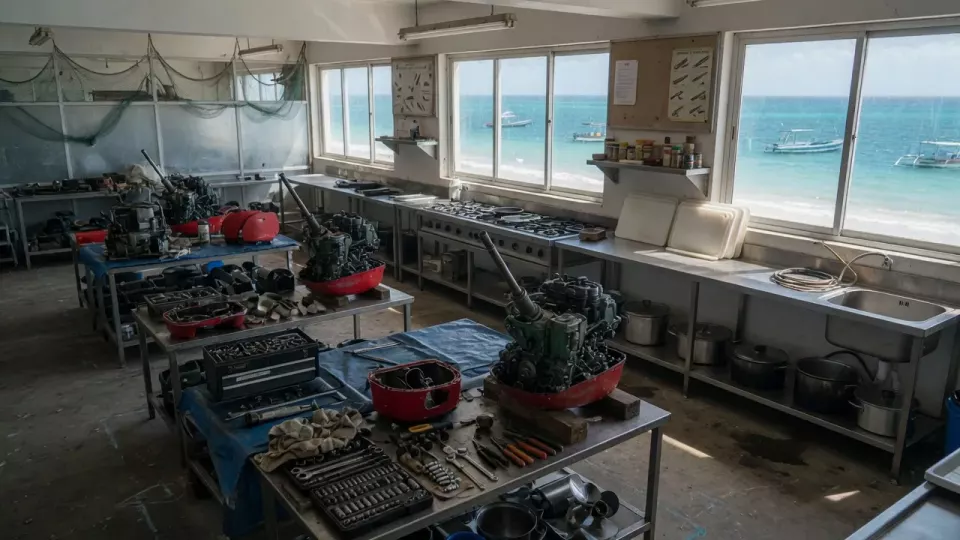
The course list is deliberately practical across at least 5 skill tracks: outboard engine repair under boat building and repair, marine refrigeration and air conditioning, baking technology, accommodation operations, and basic safety and firefighting. The target labour markets are maritime transport, tourism, hospitality and marine services — the industries that already shape coastal pay packets.
KBEST partnership and governor's frame
Governor Abdulswamad Shariff Nassir tied the rollout to the Kenya Blue Economy Skills Training programme implemented with Colleges and Institutes Canada. His pitch was blunt: vocational training must end in jobs, enterprises or self-employment, not certificates without a market. He also pointed to the county's Tourism Innovation Hub as a bridge from campus to business for graduates.
Equity pieces sit beside the technical syllabus. A daycare under the Second Chance Programme is meant to keep young mothers in training. An automotive workshop is under construction for hands-on mechanical skills, and 2 ECDE classrooms expand early-learning space on the same development push that treats skills infrastructure as family infrastructure.
What success must still prove
Launches are easy; placement rates are hard. Industry attachments, toolkits, assessment standards and graduate tracking will decide whether KBEST becomes a coastal employment story or another ribbon-cutting file. Private shipyards, hotels and cold-chain operators need a formal seat in curriculum reviews if "market-aligned" is to mean more than a brochure word.
Education desk: Education. Publish annual graduate employment shares for Mtongwe and Kisauni within 12 months of each cohort — hired, self-employed, or still seeking — so county claims face numbers. Pair that with gender and parent-student completion rates now that daycare is part of the offer, and a 6-month industry attachment target for every full-time trainee.
For coastal youth, the promise is concrete: engines, cold rooms, kitchens and guest-house floors as training floors. Delivery will be judged when those skills clear interviews in Mombasa's ports and hotels, not only when the launch banners come down in 2026.
Based on Eastleigh Voice reporting of the Mombasa County KBEST launch. County and partner programme documents control course lists and intake rules.