EAC governors push 2031 single currency path; gold reserves back on the table
Key points
- EAC central bank governors meeting in Kampala reaffirmed a single regional currency target by 2031.
- No partner state yet meets all four primary convergence criteria (inflation, reserves, deficit, debt).
- Roadmap: hit criteria by 2028 and hold them three years before launch; original 2024 goal slipped after COVID and uneven performance.
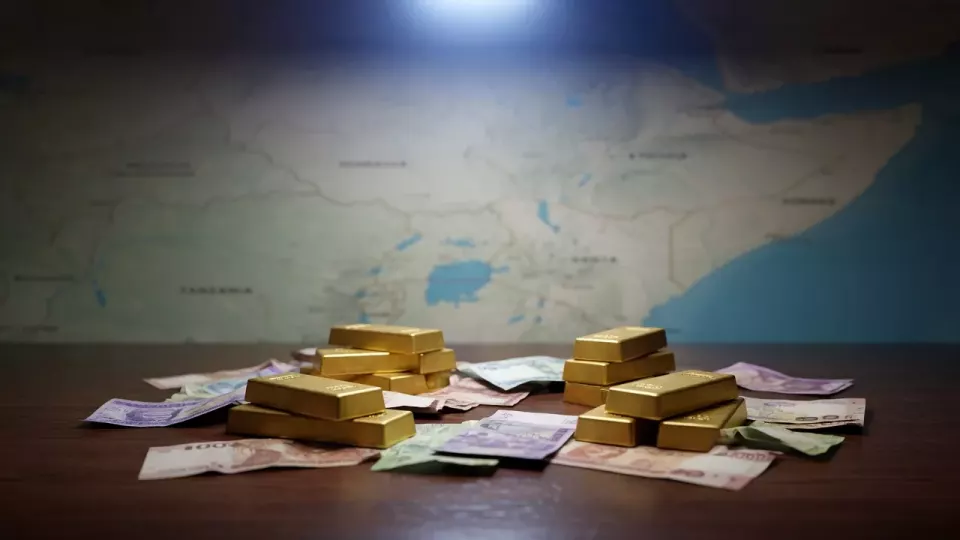
- Governors urged reserve diversification via domestic gold purchases; Bank of Tanzania already bought about 19.38 tonnes (~$3.07bn).
East Africa's central bank chiefs left Kampala still aiming at a single currency by 2031 — and still admitting that none of the eight partner states clears every entry test today, the Standard reported from the 29th Ordinary Meeting of the EAC Monetary Affairs Committee.
The East African Monetary Union protocol, signed in November 2013, once pointed at 2024. COVID shocks, uneven macro performance and political gridlock pushed the horizon to 2031. Members now include Kenya, Tanzania, Uganda, Rwanda, Burundi, South Sudan, the Democratic Republic of Congo and Somalia — a wider club that also widens the convergence homework.
Four gates before one note
Primary criteria remain strict on paper: headline inflation below eight per cent, foreign reserves of at least 4.5 months of imports, fiscal deficit at or under three per cent of GDP, and public debt below 50 per cent of GDP. Under the revised path, states must reach those marks by 2028 and hold them for three straight years before a launch. The committee's own communiqué says reforms are real but progress is uneven — zero partners at full compliance.
For traders the prize is lower friction. Cross-border payments in the region still average about seven per cent of transaction value against a global ambition nearer one to three per cent. Intra-EAC trade is cited around $19.3 billion after a 28 per cent rise — a base a common currency could thicken if exchange risk shrinks.
Gold as a shock absorber
Governors also pushed diversification of international reserves through domestic gold purchases and stronger remittance capture. Tanzania's programme is the concrete regional example: about 19.38 tonnes bought, valued near $3.07 billion. That tracks a global central-bank turn back toward gold as geopolitics and energy shocks — including Hormuz-related oil risk — test buffers. CBK Governor Kamau Thugge was among attendees chaired by Uganda's Michael Atingi-Ego.
Business desk: Business. Political fights over where to host the East African Monetary Institute still matter as much as inflation tables. Watch peer-review scorecards and the Cross-Border Payment System Masterplan milestones more than anniversary speeches about 2031.
Until at least one cluster of states posts three clean years on all four criteria, the single currency remains a disciplined project, not a countdown clock. Gold purchases can harden reserves; they cannot substitute for fiscal and inflation homework each capital still owes the union.
Based on Standard reporting of the EAC Monetary Affairs Committee communiqué and related figures. National central-bank data and EAC protocols control formal convergence status.