
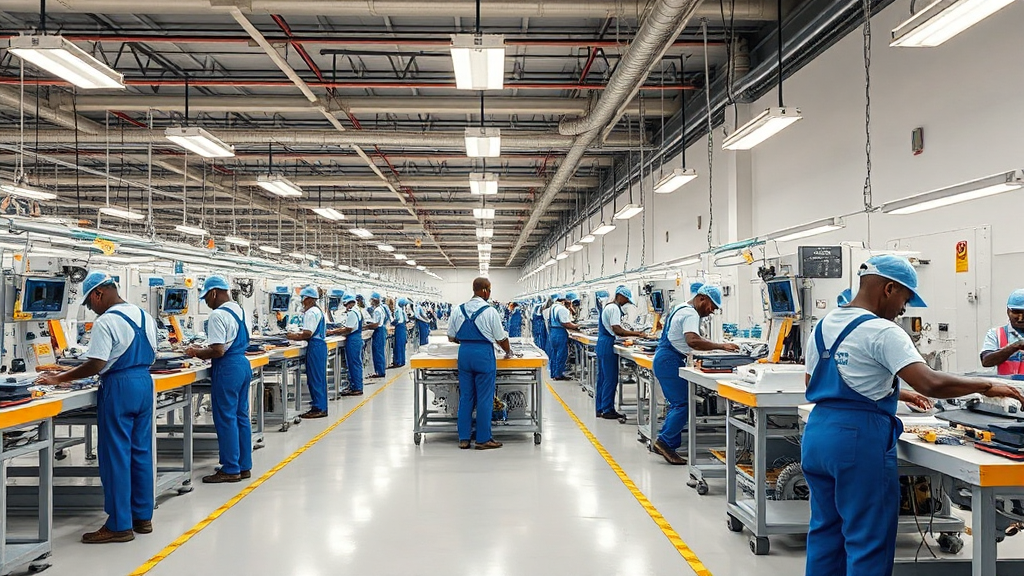
Nakuru’s Soin Industrial Zone, designated as a Special Economic Zone (SEZ) under the SEZ Act in late 2024, has exceeded first-year expectations by attracting 14 manufacturing enterprises and generating 3,200 direct employment positions, county government data confirmed last week. The zone, located on a 420-hectare tract of land 12 kilometres east of Nakuru city centre along the Nakuru-Nairobi highway, has emerged as one of the more tangible industrial decentralisation success stories under the Ruto administration’s Bottom-Up agenda.
The new manufacturers span food processing, agro-chemicals, packaging materials, light engineering, and pharmaceutical ingredients. Among the flagship investors are a Ksh 2.1 billion tomato paste and concentrate plant established by a Kenyan-Italian joint venture, a galvanised roofing sheet manufacturer targeting the affordable housing construction boom, and a subsidiary of India’s Sun Pharma setting up an active pharmaceutical ingredient granulation facility that will supply Kenyan and East African drug manufacturers.
Why Nakuru and Why Now
Nakuru’s emergence as a manufacturing destination is not accidental. The city — Kenya’s fourth-largest, elevated to county city status in 2021 — sits at the junction of two SGR freight connections, straddles the main Nairobi-Kampala highway, and has historically hosted light manufacturing for the Rift Valley agricultural hinterland. County Governor Susan Kihika has aggressively marketed the zone to investors, offering facilitation services that compress land allocation from the national average of 14 months to under 90 days, and the county has invested Ksh 1.4 billion in internal road networks, a 33kV power substation, and a modern effluent treatment plant within the zone.
“We recognised early that investors don’t just buy land — they buy a functioning ecosystem,” Governor Kihika told a manufacturing roundtable in Nakuru in June. “When we could offer serviced land, reliable three-phase power, road access to the SGR, and a pre-positioned customs office, the conversation changed.” KRA has deployed a resident customs team in the zone, enabling on-site goods examination and reducing clearance times for imported capital goods and raw materials.
The SEZ tax incentive package — a 10-year corporate tax holiday followed by a preferential 10% rate, VAT exemption on inputs, and a 100% investment allowance on plant and machinery — has been particularly attractive to manufacturers weighing Kenya against Ethiopia or Tanzania. Several of the investors told ZaKenya.com that Nakuru’s combination of incentives and logistics infrastructure had tipped the balance in Kenya’s favour, even where Ethiopian industrial parks offered cheaper land.
Youth Employment and the Gen Z Dividend
Of the 3,200 jobs created to date, approximately 68% have been taken up by workers aged 18 to 35, county employment data shows. The demographic skew reflects both the age structure of Nakuru’s labour market and deliberate commitments made by investors under their SEZ licensing conditions, which require a minimum youth employment quota of 60%. The requirement was a direct response to the youth unemployment crisis that animated the June 2024 Gen Z protests, which hit Nakuru particularly hard as the city’s large student population took to the streets alongside their Nairobi counterparts.
Nakuru Vocational Training Centre principal David Mwangi said the zone had transformed the practical relevance of his institution’s engineering and food technology programmes. “Twelve months ago, our graduates were largely going to Nairobi to look for work,” he said. “Now we have companies coming to us looking for intake. Three of the new plants have signed formal attachment agreements and have indicated they will offer permanent positions to top-performing students.” The centre has introduced a new plastics processing module in direct response to requests from the packaging manufacturers in the zone.
Outlook: Targeting 10,000 Jobs by 2028
Governor Kihika has set a target of 10,000 direct zone employment positions by 2028, which would require an additional 20 to 25 manufacturers above the current complement. The Kenya Investment Authority (KenInvest) is marketing the zone at upcoming trade fairs in Dubai, Mumbai, and Guangzhou, and a delegation of Nakuru county officials attended the China-Africa Business Council forum in Beijing in May. A second phase of the zone, covering an adjacent 280 hectares, has been master-planned and is awaiting full title allocation. If momentum holds, Nakuru may well become the model that other devolved governments — Mombasa, Kisumu, Eldoret — try to replicate as Kenya’s industrial geography begins to shift beyond its traditional Nairobi-Thika corridor.

0 comments