
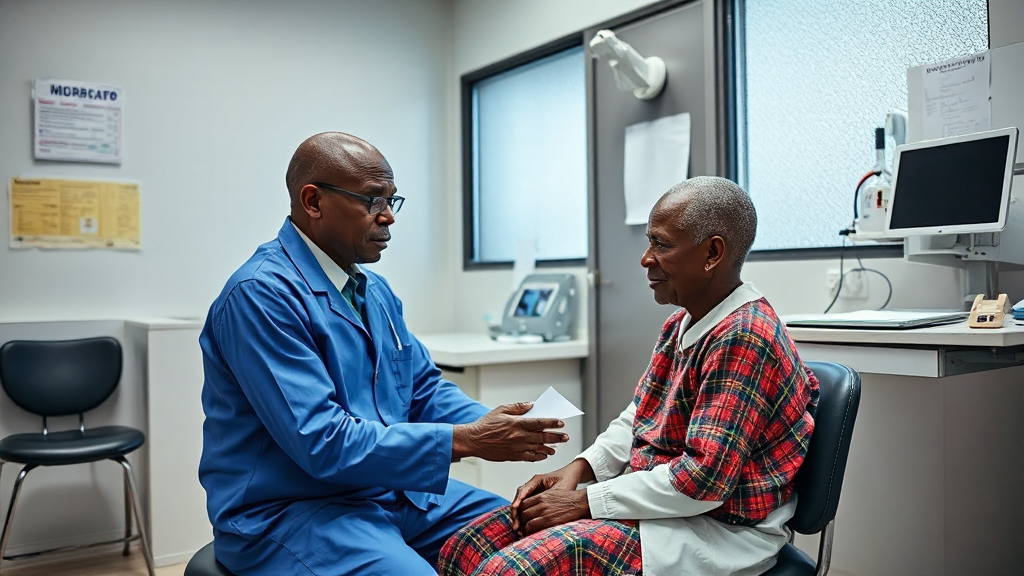
The Ministry of Health has launched Kenya’s most ambitious cancer screening campaign to date, setting a target of reaching two million citizens by December 2026. The National Cancer Screening Drive, unveiled by President William Ruto at Kenyatta National Hospital in Nairobi, prioritises cervical, breast, and colorectal cancers — the three malignancies that account for over 58 per cent of cancer-related deaths among Kenyans.
“Cancer has for too long been a death sentence in Kenya, not because it cannot be treated, but because we find it too late,” President Ruto said at the launch. “This programme will change that. We will bring screening to every woman in every ward, to every man in every village, so that we catch this disease when it is still curable.”
The campaign is coordinated through the Kenya National Cancer Institute and will deploy a network of 312 static screening centres at county and sub-county hospitals, supplemented by 94 mobile screening units that will rotate through urban markets, schools, and rural health posts. All screening services are free of charge for SHA members, while non-members can access cervical and breast screening at a subsidised fee of Ksh 200.
The Burden of Cancer in Kenya
Kenya registers approximately 47,000 new cancer cases annually, of which roughly 33,000 result in death. The staggering mortality-to-incidence ratio — higher than the global average — reflects a healthcare system where most patients present at Stage 3 or Stage 4 disease, when treatment options are limited and expensive. Cervical cancer alone kills an estimated 3,200 Kenyan women each year, despite being one of the most preventable cancers when caught early through Pap smear or HPV testing.
Oncology specialists have long argued that investment in screening infrastructure would yield greater lives saved per shilling spent than treatment alone. Dr Catherine Nyongesa, one of Kenya’s leading oncologists and Chief Executive of Texas Cancer Centre in Nairobi, said the launch represented a philosophical shift in how the government approaches the disease. “We have spent years lobbying for this moment. Early detection is not glamorous, but it saves lives at a fraction of the cost of chemotherapy,” she told ZaKenya.com.
The Ministry of Health has also integrated HPV vaccination into the programme, offering catch-up doses to girls and young women aged 15 to 24 who missed the school-based vaccination schedule. Officials estimate that 820,000 women in that age bracket have incomplete or no HPV vaccination records.
Technology and Community Outreach
The campaign relies heavily on digital infrastructure. Citizens can book screening appointments via the eCitizen platform or the SHA mobile application, and results are stored in a secure electronic health record system that links to the patient’s SHA profile. Abnormal results trigger an automated referral pathway to the nearest cancer treatment centre, with the system tracking whether the patient actually attended follow-up appointments.
Community health promoters have been tasked with reaching women who may be reluctant to seek cancer screening due to stigma or fear. In Murang’a County, which piloted an earlier version of the programme in 2025, uptake among women aged 30 to 49 reached 61 per cent of the target population within four months — a result the Ministry now considers a replicable model.
Funding for the campaign totals Ksh 6.2 billion over eighteen months, drawn from the SHA emergency and chronic illness fund, a Ksh 1.8 billion grant from the Global Fund’s cancer prevention window, and bilateral support from the Danish International Development Agency. Kenya’s National Cancer Control Strategy, approved by the Cabinet in March 2025, sets a goal of diagnosing 70 per cent of cancers at Stage 1 or Stage 2 by 2030 — a target that, if met, would represent one of the most dramatic improvements in cancer outcomes on the continent.

0 comments