
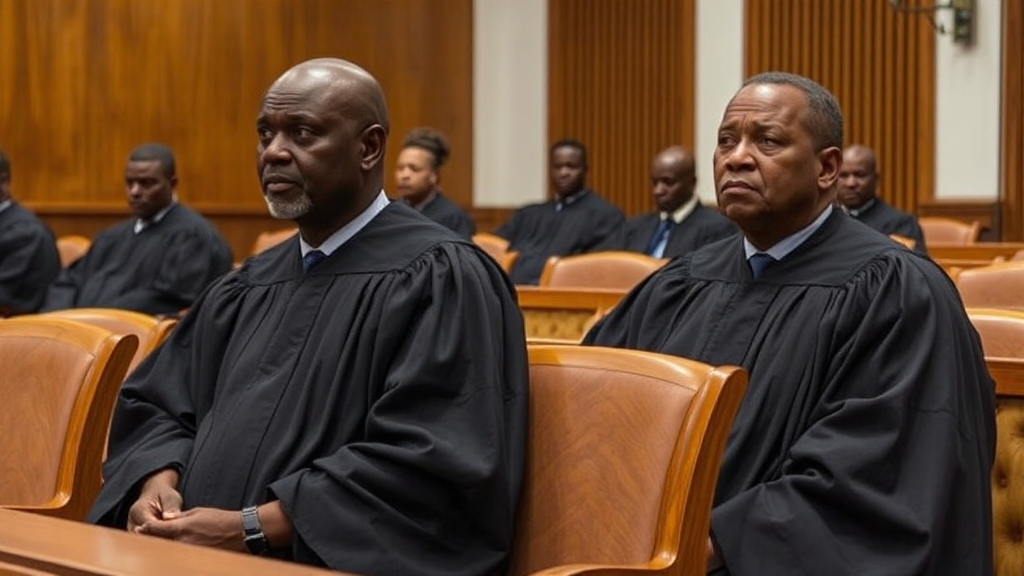
Kenya’s High Court delivered a significant blow to the Kenya Revenue Authority’s enhanced compliance enforcement programme on Monday, declaring sections of the Tax Procedures Act that authorised the authority to seize and freeze taxpayer assets prior to an adjudicated finding of tax liability unconstitutional and void.
Justice Anthony Mrima, sitting in the Constitutional and Human Rights Division, ruled that provisions in Sections 41A to 41F of the Act — inserted by the Tax Laws (Amendment) Act 2024 and aggressively deployed by KRA under its domestic revenue mobilisation programme linked to Kenya’s IMF facility — violated Articles 47 and 50 of the Constitution, which guarantee the right to fair administrative action and the right to a fair hearing respectively.
What the Court Found
The petition was brought by the Kenya Association of Manufacturers and three individual business owners whose bank accounts and physical assets had been frozen following disputed tax assessments. In one case, a Ruiru-based metal fabricator had his equipment seized while an objection to a KRA assessment was still pending before the Tax Appeals Tribunal — a sequence the court found particularly egregious.
“The impugned provisions allow the Authority to act as judge, jury, and enforcement officer simultaneously, before any independent tribunal has made a determination that a tax debt is actually owed. This is constitutionally impermissible in a state governed by the rule of law,” Justice Mrima wrote in his 84-page judgment.
The court found that the provisions inverted the presumption of innocence by requiring taxpayers to prove they did not owe tax — rather than requiring KRA to prove that they did — in order to obtain a suspension of the seizure order. The judge drew a sharp distinction between legitimate revenue enforcement after a tax debt is established and the pre-emptive seizure of assets belonging to a taxpayer who has raised a bona fide dispute.
KRA has been ordered to immediately release all assets and lift all account freezes imposed under the struck-down provisions, and to pay costs of the petition. Taxpayers whose businesses were damaged during the period of wrongful seizure may pursue separate civil claims, the judge noted, without prejudice.
KRA’s Response and Appeal Intentions
KRA Commissioner-General Humphrey Wattanga expressed disappointment with the ruling and said the authority would seek a stay of the judgment pending a Court of Appeal review. In a statement released Monday afternoon, Mr Wattanga said the asset seizure provisions had been essential tools in addressing what he described as a pattern of sophisticated taxpayers deliberately prolonging dispute processes to delay payment of legitimate tax liabilities.
“There are taxpayers who have been raising objections for seven and eight years while continuing to generate revenues and paying nothing. The provisions were designed to address that specific abuse,” the commissioner said. KRA’s own data shows that the Tax Appeals Tribunal has a backlog of over 3,400 cases, with average resolution times exceeding three years.
The National Treasury acknowledged the ruling but declined to comment on whether it would seek an emergency legislative response. The timing is sensitive: Kenya’s IMF programme sets quarterly KRA revenue targets, and the struck-down provisions were credited by the authority with recovering an estimated Ksh 34 billion in additional compliance in 2025 alone.
Implications for Government Revenue
Tax practitioners and business organisations broadly welcomed the ruling. Patrick Mbogo of PKF Kenya, a tax advisory firm, said the judgment would not prevent KRA from collecting legitimate taxes but would require it to follow due process. “This is not a ruling that says KRA cannot enforce tax law. It says KRA must enforce tax law constitutionally. That should not be a controversial proposition,” Mr Mbogo said.
The Law Society of Kenya had filed a supporting brief in the petition and described Monday’s ruling as a vindication of the rule of law in a period when revenue pressure had been generating concerning tendencies towards administrative overreach. LSK President Faith Odhiambo said the society would monitor the government’s response closely, including whether Parliament might seek to re-legislate the provisions with modified due process safeguards.
The ruling is expected to have ripple effects on ongoing KRA enforcement actions. Tax lawyers reported a surge of calls from clients seeking to use the judgment to challenge pending seizure orders, and the Tax Appeals Tribunal is expected to face a fresh wave of applications for reinstatement hearings in the coming weeks.

0 comments