
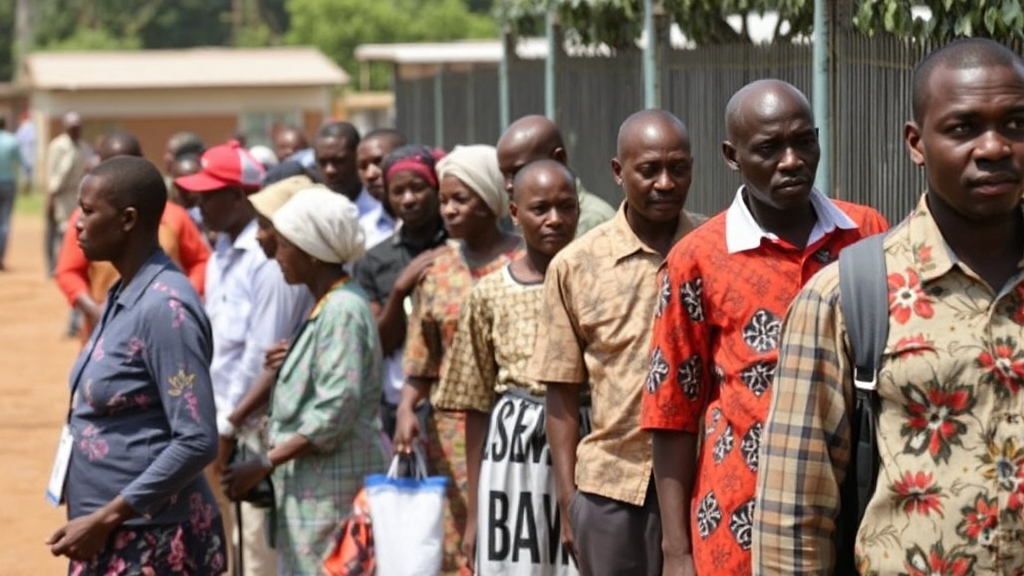
The Independent Electoral and Boundaries Commission announced on Tuesday that it would launch a nationwide continuous voter registration drive in January 2027, with an ambitious target of adding 7 million new voters to the national register before the close of registration ahead of the August 2027 general election. The drive, the most extensive since the mass registration exercise ahead of the 2017 polls, will deploy 12,000 biometric registration kits across all 47 counties.
IEBC Chairperson Molu Hassan, addressing a press conference at Anniversary Towers in Nairobi, said the commission had drawn lessons from the 2022 election cycle, in which an estimated 4.3 million eligible Kenyans — a disproportionate number of them young urban voters — remained unregistered despite several registration windows. “We cannot afford another election where millions of Kenyans want to participate and cannot because they were not on the register,” Mr Hassan said.
Targeting Youth and First-Time Voters
The commission’s data shows that Kenya’s population aged 18 to 35 accounts for approximately 58 per cent of all potential voters, yet this cohort has consistently been underrepresented on the electoral register relative to their demographic weight. Following the 2024 Gen Z protests, which demonstrated the political mobilisation capacity of young Kenyans, the IEBC has made youth registration its explicit strategic priority.
The January drive will operate a dedicated digital pre-registration portal, developed in partnership with the State Department for ICT, that allows citizens to complete preliminary registration using their Huduma Namba and national identity card number before visiting a registration centre for biometric capture. This hybrid model, piloted in Kisumu and Mombasa in March 2026, reduced average registration time per person from 18 minutes to under seven minutes.
Universities and national polytechnics will serve as designated registration centres throughout February and March, targeting the estimated 680,000 students currently enrolled in tertiary institutions. The commission has signed memoranda of understanding with the Kenya Universities and Colleges Central Placement Service and the Technical and Vocational Education and Training Authority to embed registration officers within institutions for six-week periods.
Diaspora and Special Voter Provisions
The 2027 election will also see an expanded diaspora voter registration programme. The IEBC plans to extend registration to Kenyan embassies and high commissions in 15 countries, up from eight in 2022. The expansion includes countries with significant Kenyan communities — the United Kingdom, the United States, Canada, Qatar, the United Arab Emirates, and several east and southern African nations.
Kenyan peacekeeping personnel currently deployed in Haiti under the multinational security support mission will also be provided dedicated registration and voting arrangements, following a parliamentary petition by the families of serving officers who argued that deployment abroad should not disenfranchise them.
A separate provision will cater to voters with disabilities, with the commission procuring 4,000 accessible biometric kits equipped with audio guides in Swahili and English, and committing to locate at least one accessible polling station within five kilometres of every significant population centre for persons with mobility limitations.
Technology, Integrity, and Past Controversies
The IEBC’s announcement was met with cautious approval from election observers, tempered by the institutional memory of the controversies that surrounded the 2017 and 2022 electoral cycles. The Kenya Domestic Observation Forum called on the commission to publish its technology procurement specifications publicly and to commission an independent cybersecurity audit of the voter registration database before January 2027.
“The biometric register is the foundation of election integrity. If that foundation is compromised, everything built on it is suspect. We need complete transparency about who built the system, who maintains it, and what access controls are in place,” said KEDO Coordinator Grace Maingi.
Mr Hassan said the commission had already engaged the Kenya National Information and Communications Technology Authority to conduct a system penetration test, with results to be published before registration opens. The commission will also establish a 24-hour public complaints hotline integrated with an online tracking dashboard — both in Swahili and English — so that registration grievances can be logged and resolved in real time.
The final voter roll from 2022 contained 22.1 million registered voters. If the IEBC achieves its 7 million target, Kenya would enter 2027 with nearly 29 million registered voters — the largest electoral roll in the country’s history and a figure that would make the outcome of the presidential race deeply uncertain for all candidates currently in the field.

0 comments