
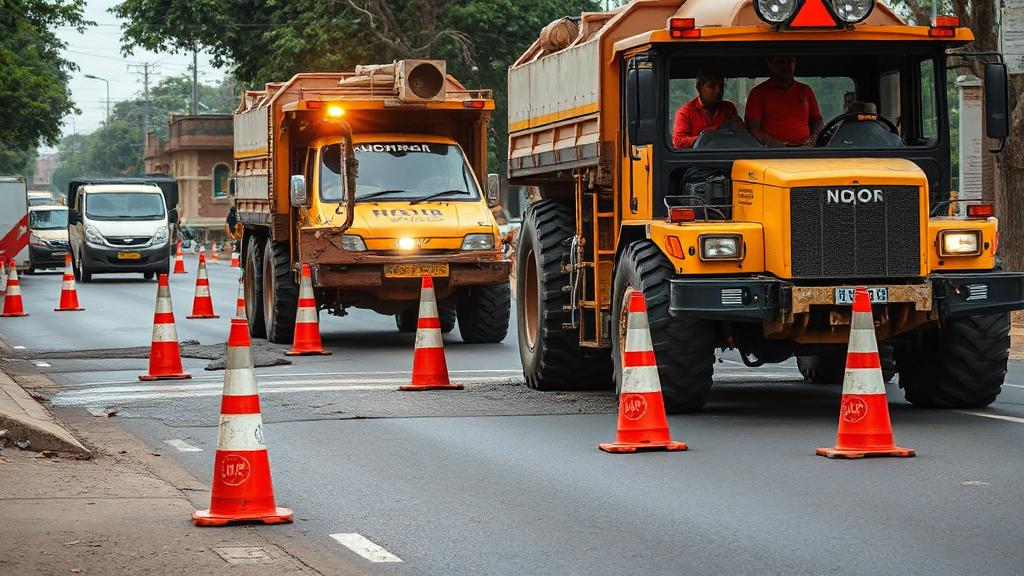
Nairobi Governor Johnson Sakaja on Thursday launched an Sh8 billion road rehabilitation programme that he described as the most comprehensive investment in city road infrastructure since the Nairobi Metropolitan Services era. The programme, branded Barabara Bora Nairobi, targets 312 kilometres of roads across all 17 sub-counties, with particular focus on the inner city estates that have endured years of potholed, flooded, and impassable streets.
Speaking at a launch ceremony on Jogoo Road — one of the first stretches earmarked for rehabilitation — the governor said the programme was financed through a combination of county own-source revenues, a Ksh 3.1 billion allocation from the national Roads Maintenance Levy Fund, and a Ksh 2.4 billion concessional loan from the French Development Agency, AFD, whose Nairobi urban mobility portfolio has grown steadily since 2021.
Which Roads Are on the List
The programme targets roads in three priority categories. Category A, absorbing Sh3.2 billion, covers major arterial routes including sections of Outering Road in Embakasi, Jogoo Road through Makadara, Ngong Road between the City Mortuary roundabout and Dagoretti Corner, and the Eastleigh First Avenue corridor. These are roads that carry commercial traffic, public service vehicles, and in several cases serve as critical links to Nairobi’s main industrial zones.
Category B, allocated Sh2.9 billion, focuses on residential feeder roads in Mathare, Kibera, Mukuru Kwa Njenga, and Korogocho — informal settlements where road degradation has compounded public health problems by making ambulance and fire engine access intermittently impossible. The governor committed that at least 40 per cent of works contracts in Category B would be awarded to youth-owned enterprises resident in the affected communities.
Category C, with Sh1.9 billion, covers drainage and kerbing works across the central business district and Upper Hill, where blocked culverts have turned routine rain events into flash floods that paralyse commerce. The 2023 El Nino significantly worsened this drainage infrastructure, with the CBD recording 14 days of severe flooding in a single quarter.
Contractors and Accountability Measures
A total of 34 contractors have been prequalified for the programme, following a competitive tender process overseen by the Nairobi City County Procurement Department. The county has partnered with the Engineers Board of Kenya to deploy a real-time monitoring dashboard, publicly accessible via the Nairobi City County website, that will display geo-tagged progress photographs uploaded weekly by resident engineers on each site.
“Every shilling of this programme is traceable. We have learned from the scandals of past road projects in this county and we are not repeating them,” Governor Sakaja said, alluding to a 2019 National Audit Office report that flagged Ksh 1.2 billion in questionable road expenditure by a previous Nairobi administration.
The Ethics and Anti-Corruption Commission has been invited to embed an observer in the programme’s oversight committee, a request the commission’s Director-General Twalib Mbarak confirmed had been accepted.
Commuters and the 2027 Electoral Clock
Nairobi residents, who endure some of the worst traffic congestion in sub-Saharan Africa, received the news with cautious optimism. On social media and in vox pops conducted along Tom Mboya Street, the predominant sentiment was sceptical hope — a well-worn disposition for a city whose residents have seen infrastructure promises cycle through administrations without fulfilment.
“I will believe it when I stop losing two tyres a month on Mombasa Road,” said Mary Wanjiku, a matatu driver plying the Route 33 corridor. “But if he delivers even half of this before 2027, I will vote for him again.”
The political dimension of the programme is unmistakable. Governor Sakaja, who faces a potentially competitive re-election bid in August 2027, has made urban service delivery the centrepiece of his second-term pitch. Works are scheduled to commence simultaneously on all Category A roads within 21 days, with the programme’s full completion projected for April 2027 — squarely within the election campaign window.
The Kenya Urban Roads Authority, which manages national roads within Nairobi, has separately committed Sh1.6 billion for expressway link roads to the Nairobi Expressway, though that programme operates independently of the county initiative.

0 comments