
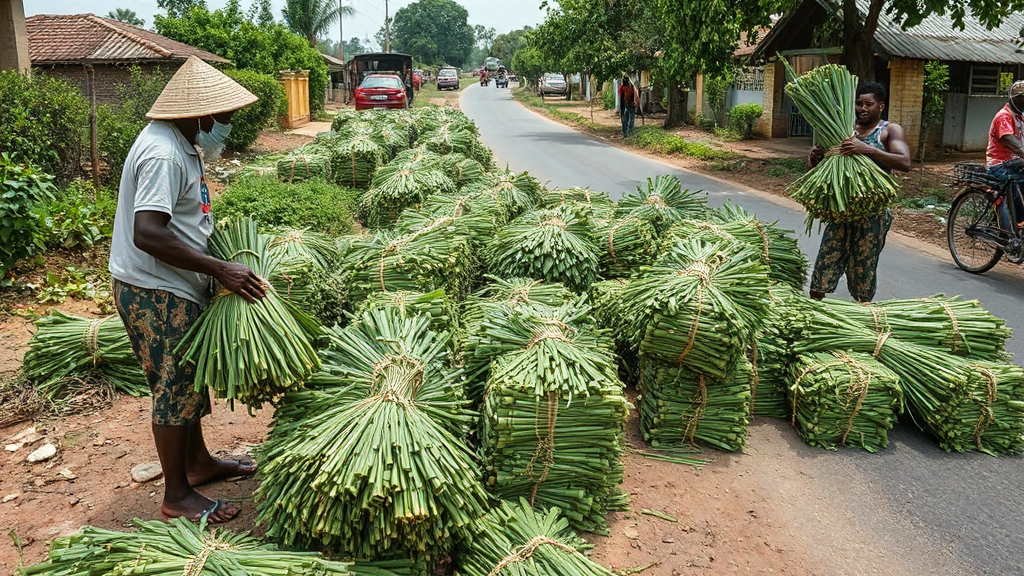
Along the dusty trading corridors of Maua town in Imenti North, Meru County, the evidence of an industry under severe stress is unmistakable. Dozens of miraa bundles lie unsold at the roadsides where, two years ago, they would have been snapped up within hours for refrigerated freight to Mogadishu, Baidoa, and Kismayo. Farmers who once earned Ksh 15,000 to Ksh 25,000 per week from the clan-organised export trade are reporting weekly incomes below Ksh 4,000. Some have abandoned their plots entirely. The Meru miraa economy, which supports an estimated 300,000 people in Meru and Tharaka-Nithi counties and was generating export revenues of approximately Ksh 8 billion annually at its peak, is in a state of acute crisis.
The Collapse of the Somali Market
Somalia has historically been Kenya’s largest miraa export destination, absorbing between 60 and 70 per cent of Meru County’s total output by volume. In late 2024 and early 2025, a combination of factors began to erode that market with devastating speed. The Federal Government of Somalia, under pressure from religious conservative factions and public health advocates, imposed new restrictions on miraa imports through Mogadishu’s Aden Adde International Airport, the primary entry point for Kenyan miraa. The measures included increased customs inspections that slowed clearance times beyond the 48-hour freshness window critical for miraa, which begins to deteriorate rapidly after harvest. Simultaneously, Mogadishu port authorities introduced a new documentation requirement — a phytosanitary certificate linked to a Somali Shilling-denominated fee — that traders say was implemented with no transition period and inconsistently enforced, causing some Somali buyers to explore alternative suppliers in Ethiopia’s Harar region. “One day the planes were flying, the next day we were told there was a new rule and our cargo was being held,” said Hassan Kimathi, a miraa trader who has operated the Meru-Mogadishu route for 19 years. “By the time we understood what was needed, our customers had found other suppliers.”
The Human Cost in Meru
The secondary economic consequences in Meru County are severe and widening. County government tax receipts from the miraa cess — levied at Ksh 2 per kilogramme — have dropped by approximately Ksh 320 million in the past twelve months, a gap the county is struggling to absorb without cutting services. The miraa trade directly employs harvesters, sorters, packers, freight handlers, and traders, with a further ring of dependency among food vendors, boda boda operators, and input suppliers whose business volumes track miraa revenues. Meru Governor Kawira Mwangaza, who has lobbied the national government for emergency support, told a community forum in Maua in April that the situation required a presidential-level intervention. “This is not a farming problem. This is a national economic emergency affecting three hundred thousand Kenyans.” Agriculture CS Mwangangi dispatched a trade delegation to Mogadishu in May, but the talks are reported to have produced only vague commitments with no concrete timeline for policy revision.
Alternative Markets and Hard Realities
The suggestion that Meru farmers should diversify into other crops is one that local leaders receive with frustration and resignation. Miraa is a perennial crop that produces year-round income from the second year after planting and grows well in Meru’s specific altitude band — between 1,000 and 1,800 metres — where alternatives such as tea, coffee, and macadamia require significant capital investment and multi-year establishment periods before generating income. A farmer who uproots a miraa plot and replants with macadamia faces four to five years of near-zero income from that land. The United Kingdom and the Netherlands banned miraa imports in 2014, closing off the diaspora markets that once provided a secondary revenue stream. Some farmers are exploring pilot exports to Djibouti and the UAE, where khat consumption among Somali and Yemeni communities is legal. Early volumes are modest, but whether these nascent routes can compensate for a 70 per cent collapse in the primary market is an open question that Meru’s farmers are living through with dwindling resources and deepening anxiety.

0 comments