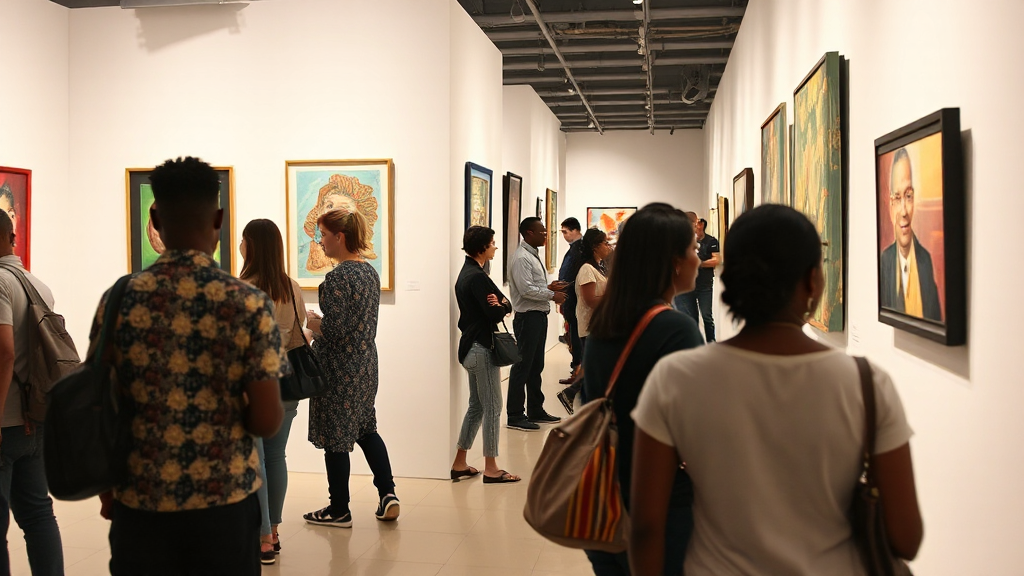
Nairobi Gallery Week returned for its fourth edition last week, transforming the city’s Westlands, Kilimani, and CBD gallery corridor into a ten-day showcase of contemporary visual art that drew collectors, curators, and critics from across Africa, Europe, North America, and the Gulf — and which, by most accounts, marked a coming-of-age moment for East Africa’s visual arts ecosystem.
The 2026 edition featured 60 artists from Kenya, Uganda, Tanzania, Rwanda, South Sudan, and Ethiopia, exhibiting across 18 venues ranging from the flagship Circle Art Agency on Peponi Road to converted warehouses in Industrial Area and pop-up installations at the Nairobi National Museum. Attendance over the ten days exceeded 28,000 visitors, with international visitors accounting for approximately 35 per cent of the total — a significant increase from the 22 per cent recorded in 2024.
Art That Speaks to the Moment
This year’s theme, Tunaunda Nchi Mpya — Swahili for “We Are Building a New Country” — was chosen before the programme was finalised, but proved uncannily resonant given Kenya’s continuing political ferment in the wake of the 2024 protest movement. Several of the most discussed works engaged directly with that moment, including a monumental textile installation by Nairobi-based Zawadi Aoko that wove together printed M-Pesa transaction receipts — accumulated from the families of protest victims — into a ten-metre hanging that dominated the entrance hall of the Kenya National Theatre annex.
Ugandan painter Ronah Mutebi exhibited a series of large-format oils depicting the bodies of East African lakes shrinking under climate pressure — landscapes that were simultaneously documentary and elegiac. Ethiopian photographer Mekdes Hailu’s series on women small-scale traders in Addis Ababa and Nairobi drew a particular crowd, with two prints selling to European institutional collectors at prices above USD 8,000 on opening night.
Kenyan sculptor Rahab Njoki, whose work in reclaimed urban waste has been quietly developing for a decade, experienced what the arts community tends to call a breakout week: her three pieces at the Paa ya Paa Gallery sold within 24 hours and generated approaches from galleries in Berlin and Dubai. “I have been making work for twelve years,” Njoki told ZaKenya.com. “This week has changed what is possible for the next twelve.”
The Market Dimension
For all its cultural seriousness, Gallery Week is also explicitly a commercial event, and the 2026 edition generated sales that organisers say significantly exceeded previous records. Circle Art Agency Director Kuona Trust confirmed that collective sales across member galleries exceeded Ksh 85 million over the ten days — a figure that includes both primary sales of new work and secondary market transactions brokered through the event’s dedicated collector programme.
The growing presence of Gulf collectors — particularly from the UAE and Saudi Arabia, where newly established art institutions are actively building collections of contemporary African work — was a notable feature of this year’s edition. Representatives from the Louvre Abu Dhabi and the newly established Riyadh Contemporary Museum attended as registered collectors, and at least one major institutional purchase by a Gulf museum was confirmed on the event’s final day, though the gallery declined to disclose the specific work or price.
Infrastructure, Policy, and the Road Ahead
The success of Gallery Week has reignited debate about the need for dedicated arts infrastructure in Nairobi. Kenya currently has no public contemporary art museum of international standing — a gap that advocates argue places the city at a disadvantage relative to Lagos, with its burgeoning private museum scene, and Kigali, which has made arts infrastructure a deliberate pillar of its urban development strategy.
Nairobi County Governor Johnson Sakaja attended the opening night and committed to engaging with the arts sector on a proposed Cultural Precinct concept that would cluster galleries, artist studios, and performance venues in a designated zone within the CBD. The proposal has been before county government for three years and has yet to move beyond a feasibility study. Gallery Week organisers expressed cautious optimism while making clear they have heard similar commitments before.
“Nairobi is already the de facto art capital of East Africa,” said Circle Art Agency founder Marko Magni. “The question is whether the infrastructure will catch up with the reality before the opportunity moves elsewhere.”

0 comments