
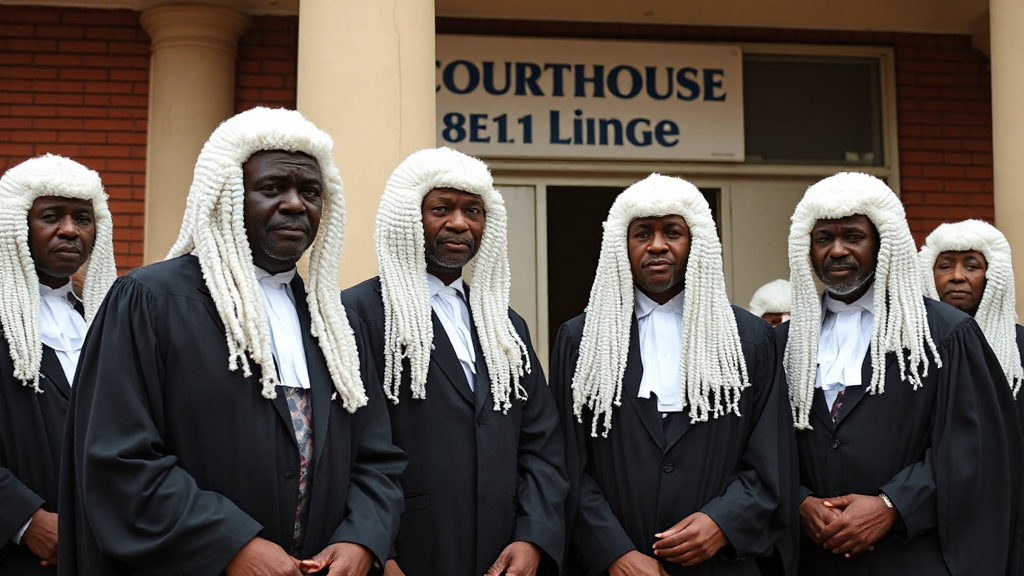
A High Court ruling handed down in Nairobi on Friday has reignited one of Kenya’s most politically sensitive and long-running legal dramas, with Justice John Chigiti finding that three land parcels in Kiambu County totalling approximately 4,800 acres and registered in the name of companies associated with the estate of Kenya’s founding president Jomo Kenyatta were acquired through processes that violated the rights of the original African customary owners under the pre-independence framework of colonial land law.
The judgment, which runs to 214 pages and draws extensively on historical surveys conducted by the National Land Commission, stopped short of ordering immediate reversion of the parcels to claimant communities, instead directing the National Land Commission and the Cabinet Secretary for Lands to commence a structured compensation and restitution process within 120 days. It is, however, the most explicit judicial finding yet on the family’s land holdings, and it arrives at a politically charged moment — just weeks after former President Uhuru Kenyatta re-entered the national political arena with his endorsement of Rigathi Gachagua’s presidential bid.
The Background
The disputed parcels — known in legal filings as Kamandura Estate, Thika West Holding, and the Tigoni Parcel — have been the subject of competing claims since the 1960s. The claimant families, comprising descendants of Kikuyu squatters and pre-colonial land users from three locations in Kiambu and Murang’a, first filed formal petitions with the Ndung’u Commission on Illegal and Irregular Land Alienation in 2003, and were among the 200,000-plus submissions that commission received nationally. The NLC took up the matter under its historical injustices mandate in 2019, conducting field surveys and oral evidence sessions before forwarding findings to the Attorney General — findings that were suppressed during the Kenyatta administration and only published in full by the current NLC chairperson in March 2025.
Advocates for the claimant families, led by senior counsel Mbugua Mureithi, described Friday’s ruling as a vindication of three generations of legal effort. “These families watched prime agricultural land be developed into private estates while they were reduced to squatters on their own ancestral ground,” Mureithi told journalists outside the courthouse. “The court has recognised the historical truth.”
The Kenyatta Family’s Response
A statement issued through advocates Kaplan and Stratton on behalf of the Kenyatta family estate acknowledged the ruling and said the family would “engage constructively with the National Land Commission process as directed by the court.” The statement emphasised that the companies involved were legally registered and that all relevant taxes had been paid on the properties, without addressing the substantive historical acquisition findings. Separately, sources close to Uhuru Kenyatta told ZaKenya that the former president views the timing of the ruling — coming days after his high-profile political re-engagement — as “not coincidental,” though no suggestion of judicial interference was made explicitly.
The Ruto administration’s formal response has been careful. The Attorney General’s office said it would study the ruling before commenting. Land reform advocates noted that the administration has a political incentive to be seen upholding land justice in Central Kenya while also managing the diplomatic complexity of a finding that implicates a family with which the current political environment remains deeply entangled.
Wider Implications
The judgment is significant beyond the specific parcels in dispute. Legal analysts say it establishes a precedent for judicial review of acquisition processes for large landholdings in former White Highlands that will embolden hundreds of other historical claimant communities currently navigating the NLC process. The NLC estimates it has over 3,600 unresolved historical injustice cases on its active docket, many involving land linked to prominent political families.
“This case will matter most not for the 4,800 acres in Kiambu, but for what it tells every other community with a claim that the courts are willing to look at the historical evidence honestly,” said Dr Celestine Nyamu-Musembi of the University of Nairobi’s Institute for Development Studies. As Kenya accelerates a digital land registry intended to cement current ownership records, the tension between technological modernity and unresolved historical injustice has rarely been more sharply drawn.

0 comments