
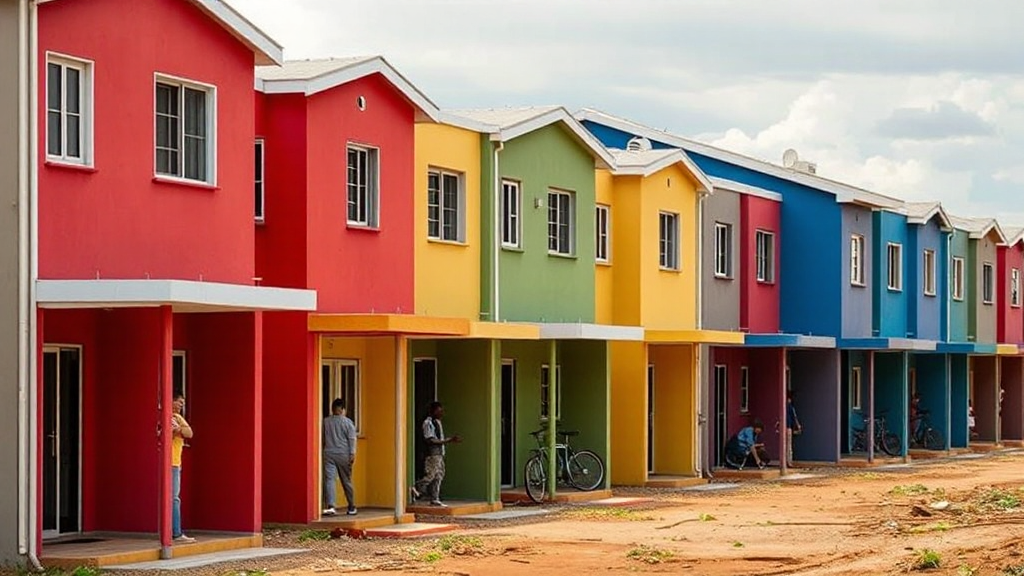
Kenya’s Affordable Housing Programme reached a watershed moment this week when President William Ruto presided over the handover of the first 5,000 completed residential units to new homeowners in Nairobi, delivering on a promise that has defined his administration’s domestic agenda since 2022 and silencing, at least temporarily, critics who labelled the initiative an expensive political gamble.
The units, distributed across three estates — Park Road in Ngara, Jevanjee in Pangani, and a new high-rise development on the former Muthurwa Market site in Starehe — were awarded to beneficiaries drawn from a waiting list of over 320,000 Kenyans who enrolled through the Boma Yangu portal. Monthly mortgage repayments for a standard one-bedroom unit have been pegged at Ksh 5,200, with the government absorbing the land-cost component through the National Housing Corporation.
A Programme Built on Controversy
The journey to this handover has been far from smooth. The Affordable Housing Levy — a 1.5 per cent deduction from gross salaries — was among the triggers for the June 2024 Gen Z protests that convulsed the country and forced the withdrawal of the Finance Bill. After months of legal battles and a Supreme Court ruling that ultimately upheld the levy’s constitutionality under a revised framework, the government resumed full collections in early 2025 and channelled the proceeds into a ring-fenced construction fund now valued at Ksh 84 billion.
“This is not a political event. This is the moment ordinary Kenyans who have rented for decades become owners,” President Ruto told thousands of beneficiaries assembled at the Uhuru Gardens handover ceremony. “The sceptics said it could not be done. Sixty thousand more units are under construction today.”
Lands and Housing Cabinet Secretary Alice Wahome confirmed that a further 22 counties have active construction sites under Public-Private Partnership agreements, with Spanish firm Acciona, Chinese state-owned CSCEC, and local developer Cytonn among the contracted parties. The government estimates the programme will create 150,000 direct construction jobs by mid-2027.
Who Actually Benefits?
Eligibility criteria have drawn scrutiny from housing rights advocates. The Kenya Human Rights Commission noted in a briefing published this month that 68 per cent of successful Boma Yangu applicants in the first allocation round are formally employed, meaning the programme disproportionately serves salaried workers who already contribute the levy, while the urban poor in informal settlements — the demographic most acutely in need — are largely excluded owing to the mortgage qualification threshold of a minimum monthly income of Ksh 18,000.
Mathare MP Anthony Oluoch was blunt in his assessment: “Five thousand units for a city of five million is a rounding error. We need 250,000 units in Nairobi alone, and most of those must be for people earning below the minimum wage.” The government has indicated that a social rental tier, targeting households below the poverty line, will be introduced in the second phase of the programme beginning in January 2027.
Nairobi Governor Johnson Sakaja attended the ceremony and pledged county government support for infrastructure connections — roads, water, and sewerage — at all three new estates, a historically contentious issue where national and county governments have clashed over cost-sharing responsibilities.
Economic Multiplier or Political Optics?
The timing is not lost on political analysts. With the 2027 general election now firmly on the horizon, the housing handover provides the Ruto administration with a tangible symbol of delivery at a moment when public approval ratings, dented by IMF-linked austerity and the SHA health-fund transition from NHIF, have been under pressure. A survey by Infotrak Research released in June placed public satisfaction with the housing programme at 41 per cent nationally, rising to 57 per cent among Nairobi respondents.
For the 5,000 families clutching their title deeds on Wednesday, the politics mattered little. “I have lived in Mathare for 27 years paying rent,” said Wanjiru Muthoni, a primary school teacher and mother of three who received a two-bedroom unit at Park Road. “Today my children have a home.” Her sentiment, replicated thousands of times across the handover queue, is precisely the narrative the administration intends to carry into the next electoral cycle.

0 comments