
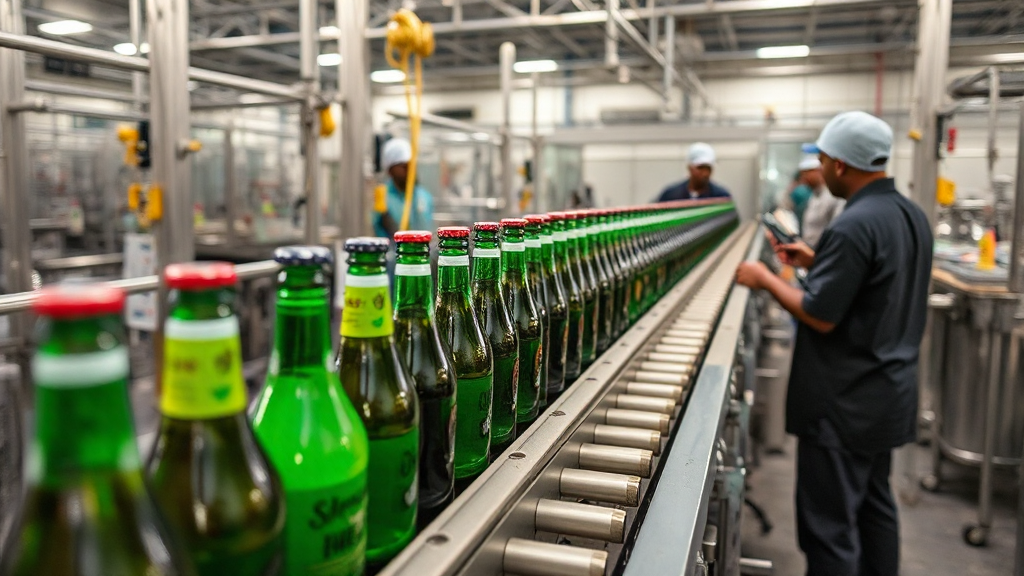
East African Breweries Limited (EABL) has reported consolidated revenue of Ksh 114.3 billion for the financial year ended 30 June 2026, an 8 per cent increase on the prior year’s Ksh 105.8 billion, in results that the company described as a demonstration of brand loyalty and portfolio diversification in the face of meaningful headwinds.
Chief among those headwinds was a 15 per cent increase in excise duties on beer and spirits introduced in the Finance Act 2025, which took effect from July last year. The increase — part of the Kenya Revenue Authority’s sustained push to broaden domestic revenue collection under pressure from the IMF programme — was the second consecutive double-digit excise hike and raised the excise burden on EABL’s flagship Tusker Lager to Ksh 121.80 per litre.
How EABL Absorbed the Pressure
EABL Group Managing Director John Musunga told analysts at the results presentation in Nairobi that the company’s response to the tax environment had been threefold: selective price increases calibrated to avoid volume loss in price-sensitive segments, aggressive portfolio premiumisation in segments where consumers were trading up, and operational efficiency measures that generated Ksh 2.1 billion in cost savings over the year.
Beer volumes, which account for the majority of EABL’s revenue, grew by 4 per cent in volume terms — a respectable outcome given the price environment, attributable largely to the enduring mass-market dominance of Tusker and the continued strong performance of Senator Keg, the duty-paid affordable beer that serves lower-income consumers and has been actively promoted by EABL as a harm-reduction alternative to illicit brews.
The revenue growth rate comfortably outpaced volume growth because the spirits and ready-to-drink (RTD) categories grew faster and at higher margins. Johnnie Walker and White Cap Vodka — both positioned at the premium end — recorded volume growth of 17 per cent and 23 per cent respectively, reflecting a consumer segmentation in which those with stable incomes are trading up while mass-market consumers are moderating consumption frequency. The RTD category, where EABL competes with Smirnoff Ice, grew 31 per cent as younger consumers continued to drive demand.
The Illicit Trade Shadow
EABL’s results presentation devoted considerable attention to illicit alcohol — a consistent competitive threat that the company argues is structurally encouraged by high excise duties. The Kenya Revenue Authority estimates that illicit brews and counterfeit alcohol account for approximately 27 per cent of total alcohol consumed in Kenya by volume, a share that EABL’s internal research suggests has grown since 2024’s excise increases.
“Every time legitimate duty is increased without a parallel enforcement response, the competitive advantage of the illicit operator grows,” Musunga said. He called on the government to intensify enforcement in counties with high reported incidences of chang’aa and illicit spirit consumption, noting that the health costs of unregulated alcohol fell disproportionately on low-income households already under economic pressure.
The KRA has announced a new track-and-trace system for alcoholic beverages, using digitally serialised stamps that are designed to make illicit production and distribution more difficult to conceal. The system is being piloted in Nairobi and Kisumu, with national rollout scheduled for the first quarter of 2027.
Regional Operations and the EAC Opportunity
EABL’s Uganda and Tanzania subsidiaries contributed positively to group performance, with Uganda Breweries delivering revenue growth of 12 per cent in local currency terms and Tanzania’s Serengeti Breweries posting 9 per cent growth. The EAC single customs territory, which has simplified cross-border logistics for manufactured goods, is increasingly material to EABL’s distribution economics, particularly for premium spirit imports that pass through Mombasa Port for distribution across the region.
The company’s capital expenditure for the year was Ksh 8.4 billion, the majority of which went to expanding packaging capacity at its Ruaraka brewery in Nairobi and installing new water treatment infrastructure. EABL has committed to a 50 per cent reduction in water usage per hectolitre of beer produced by 2030, a target that the Ruaraka investments are designed to support.
The board declared a dividend of Ksh 7.50 per share, up from Ksh 6.00 in the prior year, reflecting confidence in the company’s cash generation despite the tax environment. EABL shares closed 3.2 per cent higher on the NSE on the day of the results announcement.

0 comments