
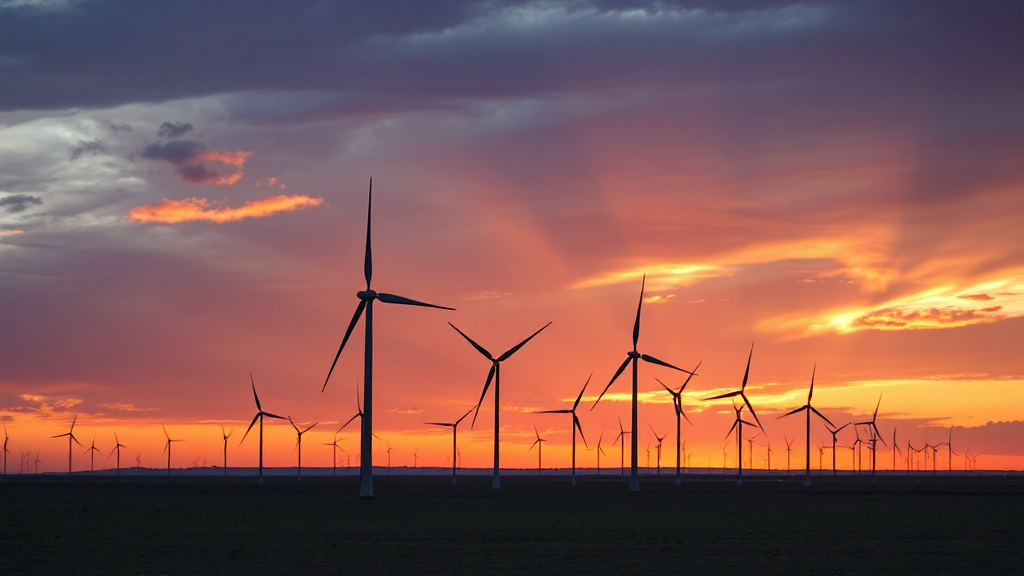
Kenya has crossed a landmark threshold in its clean energy transition, with the country’s installed wind generation capacity surpassing 1,000 megawatts for the first time following the commissioning of 71 new turbines at Lake Turkana Wind Power’s Phase II expansion in Marsabit County. The Energy and Petroleum Regulatory Authority confirmed the milestone on 24 June 2026, noting that the 213 MW added by the new units brings Kenya’s total wind fleet to 1,024 MW — a figure that places the country third in Africa for installed wind capacity, behind South Africa and Morocco, and cements its position as East and Central Africa’s undisputed leader in wind generation.
The Lake Turkana Wind Power project, which began its Phase I operations in 2017 with 365 turbines generating 310 MW, remains the largest single wind installation on the African continent. The Phase II expansion, financed through a $310 million blended finance package combining equity from the European Investment Bank, AFD (the French development agency), and Finnfund alongside commercial debt from Standard Bank and Stanbic Kenya, adds a further 71 Vestas V150-4.5 turbines, each with a hub height of 105 metres — tall enough to fully exploit the relentless north-easterly winds that funnel down the Rift Valley corridor between Chalbi Desert and the lake’s northern shore.
The Grid Impact
The additional 213 MW from Phase II is particularly significant given Kenya’s chronic evening peak demand deficit. Kenya Power, which manages distribution under a grid supplied predominantly by hydroelectric generation at the Tana and Turkana cascades and geothermal plants at Olkaria, has historically relied on expensive diesel-fired emergency peakers to cover demand between 6pm and 10pm when residential consumption peaks. The Lake Turkana wind resource blows most strongly between midday and midnight, making LTWP’s generation profile a useful complement to the morning-dominated hydro output. Energy Cabinet Secretary Davis Chirchir said the Phase II megawatts would allow Kenya Power to retire at least three diesel plants with a combined capacity of 90 MW by December 2026, saving an estimated Ksh 4.2 billion annually in fuel costs.
Kenya’s generation mix at mid-2026 stands at approximately 52 per cent geothermal, 22 per cent hydro, 15 per cent wind, 7 per cent solar, and 4 per cent thermal, giving the country one of the cleanest electricity supply profiles in Africa. The 1,000 MW wind milestone pushes the non-dispatchable renewable share of installed capacity above 30 per cent, a level at which grid stability management becomes more technically demanding. The Kenya Electricity Transmission Company has accelerated the installation of battery energy storage systems at Suswa and Isiolo substations — 50 MWh and 30 MWh respectively — to provide frequency regulation services as variable renewables grow.
Jobs, Communities, and the Marsabit Dividend
The Phase II expansion created approximately 1,200 construction jobs during the 28-month build phase, of which LTWP reported 68 per cent were filled by Marsabit County residents, against a contractual local content target of 60 per cent. Forty-three young engineers from Marsabit, trained through a partnership with the Technical University of Kenya, are now permanent operations and maintenance staff on site. The project’s community development fund, funded at 1 per cent of annual revenues, disbursed Ksh 87 million to Marsabit projects in 2025, supporting water borehole construction, school laboratories, and an equipment workshop for the Laisamis-Loiyangalani road maintenance cooperative.
The Safaricom Foundation has partnered with LTWP to extend 5G connectivity infrastructure along the power transmission line corridor from Marsabit to Suswa, piggybacking fibre optic cables on the high-voltage pylons — an arrangement that will bring high-speed internet to 14 previously unconnected pastoral settlements along the route. “Wind energy built the road. The road brought the fibre. The fibre will bring the schools online,” said Marsabit Governor Mohamud Ali in remarks at the Phase II commissioning ceremony attended by Energy CS Chirchir.
With Kenya’s Vision 2030 energy targets calling for 100 per cent renewable electricity supply by 2030 and the government eyeing green hydrogen exports to Europe as a post-2028 revenue stream, the 1,000 MW wind milestone is a strategic as much as a symbolic achievement. Four additional wind projects totalling 480 MW are in advanced permitting in Kajiado, Meru, and Kwale counties. At current trajectory, Kenya’s wind fleet could reach 1,600 MW before the 2027 general elections — a clean energy record that President Ruto’s administration will be keen to claim as a signature legacy.

0 comments