
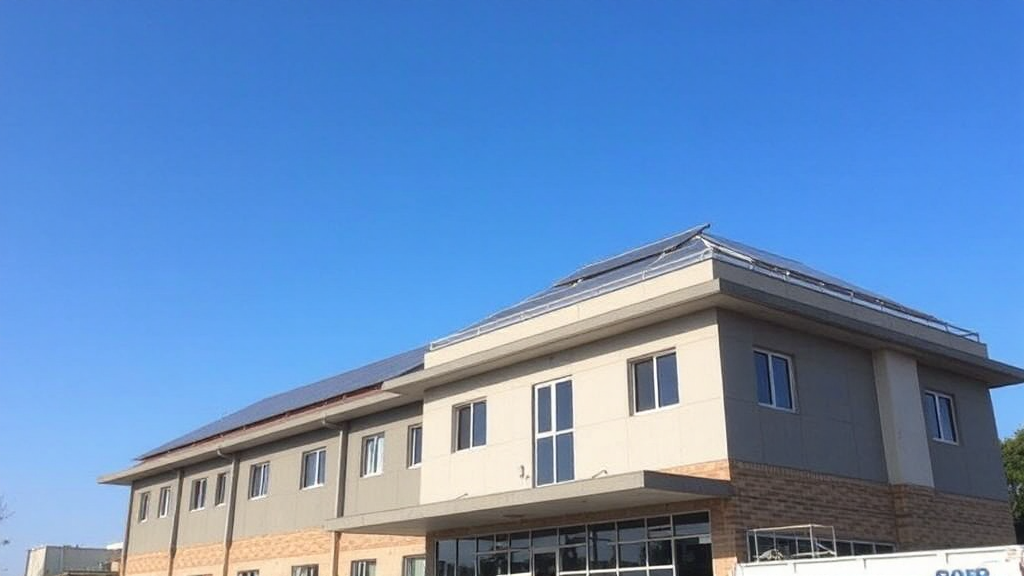
Kenya has taken one of its most decisive steps yet in its transition to clean energy, with the Ministry of Lands and Physical Planning officially gazetted a revised Green Building Code in June 2026 that requires all new commercial structures to install functional solar photovoltaic systems before receiving an occupation certificate. The regulation, which took effect on 1 July 2026, applies to office blocks, retail centres, hotels, hospitals, and warehouses of 500 square metres and above.
The move places Kenya among a small group of African nations — alongside South Africa and Morocco — to embed solar mandates directly into building law rather than relying on voluntary rating systems. It is expected to affect an estimated 4,200 commercial building permits issued annually across the country, according to data from the National Construction Authority (NCA).
What the Code Requires
Under the new provisions, commercial developers must install solar capacity sufficient to offset at least 30 per cent of a building’s projected base-load electricity consumption. Buildings in Nairobi’s central business district and other high-density urban zones must also incorporate battery storage or grid-feedback systems to reduce peak-demand pressure on Kenya Power’s network. The Ministry has partnered with the Kenya Electricity Generating Company (KenGen) to offer technical audits to developers during the design phase at subsidised rates.
“This is not an aspirational guideline — it is law,” said Lands Cabinet Secretary Alice Wahome during the official launch at the Kenyatta International Convention Centre. “Any developer who submits plans without a compliant solar design will have those plans returned. We are done with buildings that leech off the national grid while the sun shines freely overhead.”
The NCA has trained 620 inspectors across 47 counties to assess solar compliance as part of the existing construction inspection cycle. A digital verification portal, integrated with Nairobi City County’s e-permit system, will allow real-time tracking of solar installation milestones.
Context: Energy Cost and Climate Pressure
The regulation arrives against a backdrop of sustained electricity tariff increases that followed Kenya’s IMF-linked fiscal consolidation programme, which removed legacy power subsidies in late 2024. Industrial and commercial consumers have seen effective tariff rates rise by an average of 28 per cent over eighteen months, intensifying demand for off-grid alternatives.
El Niño-related disruptions to hydro generation in 2023 and 2024 also exposed the fragility of Kenya’s generation mix, which still draws roughly 35 per cent of its capacity from hydro sources susceptible to rainfall variability. The green building mandate is framed partly as a climate-adaptation measure, diversifying building-level energy supply in a way that is resilient to hydrological shocks.
“Every rooftop that generates power is a rooftop that cannot be knocked offline by a drought,” noted Dr Edwin Musiega, Director-General of the Energy and Petroleum Regulatory Authority (EPRA), who described the buildings sector as “the most underutilised solar canvas in East Africa.” Government modelling projects the mandate will add between 380 and 520 megawatts of distributed solar capacity within five years as the pipeline of compliant new buildings grows.
Industry Reaction
Reception from the construction and real estate sector has been cautiously positive. The Kenya Property Developers Association (KPDA) issued a statement welcoming the long-term cost benefits but flagging concerns about upfront capital requirements in a tight lending environment. “A 30 per cent solar offset adds between Sh1.2 million and Sh4.5 million to a typical mid-size commercial project,” said KPDA Chair Kenneth Luusa. “We need the Kenya Revenue Authority to fast-track import duty exemptions on solar hardware so that cost does not become a barrier to compliance.”
The Treasury has indicated it is reviewing a proposal to zero-rate VAT on commercial-scale solar installations, a measure that would complement a pre-existing exemption already in place for residential solar kits. A final decision is expected in the August supplementary budget.
Solar installers, meanwhile, are anticipating a significant demand surge. Firms including Starsight Energy, SunCulture, and local outfit Chloride Exide have reported a tripling of commercial enquiries since the draft code was published for public comment in March 2026. Training institutions under the Technical and Vocational Education and Training (TVET) Authority have added solar technician courses in Mombasa, Kisumu, and Eldoret to build the workforce needed to meet projected installation volumes.
For the Ruto administration, which has staked considerable political capital on the “Bottom-Up Economic Transformation” agenda, the mandate represents a dual win: reducing the foreign-exchange burden of fuel imports while creating a green-economy employment pathway for young Kenyans entering the labour market.

0 comments