
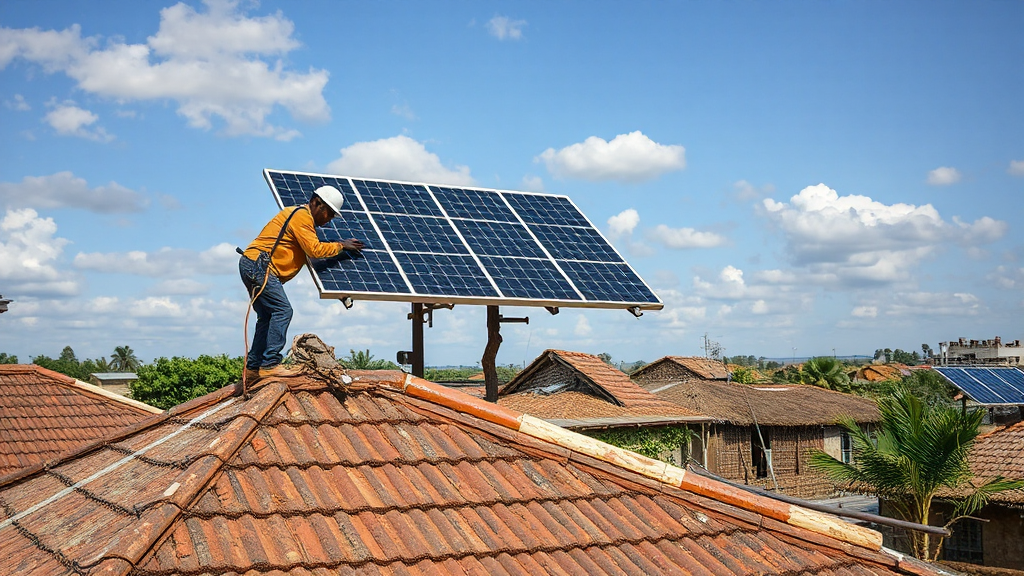
PowerBridge Kenya, a Nairobi-based clean energy startup, has closed a $28 million Series B funding round that will finance the rapid expansion of its solar mini-grid network across Kenya’s off-grid communities. The round, announced on 23 June 2026, was led by Norfund, the Norwegian development finance institution, with participation from the British International Investment, the Renewable Energy Performance Platform (REPP), and three Kenyan institutional investors including the Kenya Pension Fund and the NCBA Group’s impact investment arm. The raise is the largest Series B secured by a Kenyan clean energy company this year and one of the ten largest in sub-Saharan Africa’s renewable energy startup ecosystem to date.
The PowerBridge Model
Founded in 2019 by engineers Winnie Kamau and David Ochieng, PowerBridge operates on a mini-grid-as-a-service model: the company designs, builds, owns, and operates solar photovoltaic generation arrays paired with lithium-iron-phosphate battery storage systems, supplying 24-hour electricity to off-grid rural communities under long-term power purchase agreements. Customers — households, schools, health clinics, and small businesses — pay for electricity consumed through M-Pesa-based smart metres, with tariffs structured on a prepaid basis to eliminate credit risk and reduce collection friction.
PowerBridge currently operates 68 mini-grids serving 82,000 households across parts of West Pokot, Samburu, Turkana, Wajir, and Kwale counties. Its systems average 75 kilowatts of installed capacity per mini-grid, sufficient to power homes, phone-charging kiosks, grain mills, and refrigeration for local traders. The company reports a household connection rate of approximately 87 per cent of the communities it has energised, which it describes as among the highest in the Kenyan market.
“Our metric is not panels installed or kilowatts deployed — it is connected, paying customers,” said co-CEO Winnie Kamau. “A solar panel on a pole that nobody uses is not development impact. We are building a business, and we are building it in places where nobody thought a viable business could exist.”
Expansion Roadmap
The $28 million Series B will finance the construction of 132 new mini-grids over 24 months, bringing the total network to 200 sites and the customer base to approximately 500,000 electricity connections by early 2028. The capital allocation breaks down into approximately $18 million for hardware procurement and construction, $5 million for technology and metering infrastructure, and $5 million for working capital and team expansion. PowerBridge plans to grow its workforce from 340 to over 600 employees, with a majority of new hires drawn from the communities served by the network.
New counties in the expansion plan include Isiolo, Garissa, Mandera, and Marsabit — some of the most remote and challenging environments in Kenya, where grid extension by Kenya Power is not projected within any realistic planning horizon. The government’s Last Mile Connectivity Programme has brought the national grid to hundreds of communities in recent years, but the most isolated off-grid populations in the arid and semi-arid lands remain beyond its economic reach for the foreseeable future.
The Rural Electrification and Renewable Energy Corporation (REREC) has provided co-investment subsidies and viability gap funding to nine of PowerBridge’s existing 68 sites, and the government has indicated it will extend similar support to a portion of the new mini-grids under the Energy Act 2019’s off-grid electrification provisions. “PowerBridge is exactly the kind of partnership we want to deepen,” said REREC Director General Simon Ngure. “Private capital, private management, public co-investment where the numbers do not yet work on a purely commercial basis. That is the right architecture for reaching the last mile.”
Impact Beyond the Light Bulb
The economic consequences of reliable electrification in the communities PowerBridge serves extend well beyond the immediate benefit of electric light. A 2025 study by the International Growth Centre, monitoring communities energised by the company’s mini-grids in Samburu for 18 months post-connection, found that the proportion of households operating a non-farm enterprise increased from 14 to 31 per cent, school children’s study hours rose by an average of 1.4 hours per day, and the proportion of health facilities able to store vaccines at recommended temperatures increased from 48 to 94 per cent.
The funding round also reflects a maturing investor view of Kenyan clean energy startups. After a period of heightened caution following the collapse of several M-KOPA Solar-linked microfinance vehicles and the wider post-2022 funding slowdown in African tech, investors appear to be returning to differentiated models with demonstrated cash flows. PowerBridge reported EBITDA-positive operations across its existing portfolio for the past six consecutive quarters — a track record that Norfund’s Kenya Country Director Eric Odongo described as the primary factor in the investment decision. “We are not funding a concept,” Odongo said. “We are scaling a proven business into a bigger market.”

0 comments