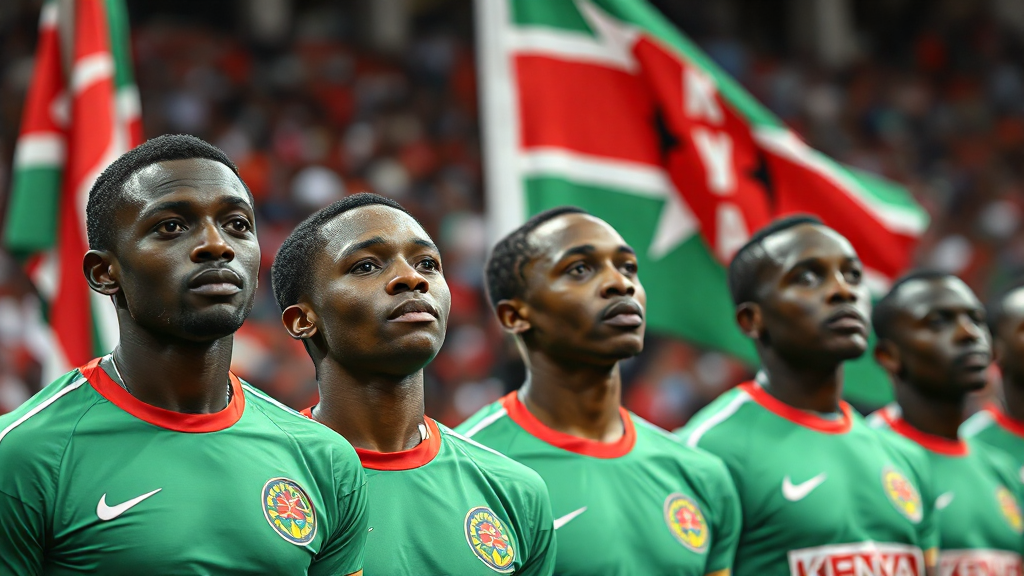
The Kenya Olympic Committee (KOC) has unveiled the country’s most ambitious Olympic preparation framework to date, setting a target of 25 medals at the Los Angeles 2028 Games and committing Sh1.4 billion to a structured four-year preparation programme covering 12 disciplines — a plan that KOC President Paul Tergat described as a coming-of-age moment for Kenya’s approach to elite sport.
The framework, titled Team Kenya 2028: A Plan for Excellence, was launched at a press conference at the Serena Hotel in Nairobi on Wednesday, attended by President William Ruto, Sports Cabinet Secretary Salim Mvurya, and representatives of all national sports federations. It sets out specific medal targets by discipline, athlete identification timelines, training camp schedules, and performance benchmarks tied to annual funding disbursements.
The Medal Targets and Priority Sports
Athletics remains the cornerstone of Kenya’s Olympic ambitions, with KOC projecting 18 medals from track, road and field events — including at least six gold in the distance events from 1500m to the marathon. Wrestling, boxing, rugby sevens and swimming are identified as emerging medal prospects, each with a dedicated two-year pathway programme beginning in January 2027.
“At Paris, we won 11 medals. That was below our internal expectation,” KOC President Tergat said candidly. “Los Angeles demands a step-change, and this plan is how we achieve it. We are not guessing. Every target is based on current World Athletics rankings, head-to-head data against our likely competitors, and realistic projections of athlete development over the next two years.”
The 25-medal target, if achieved, would be Kenya’s best-ever Olympic performance, surpassing the previous record of 23 medals won at the Athens 2004 Games. KOC officials acknowledged the ambition is stretching but insisted it is grounded in data, noting that 34 Kenyan athletes currently rank in the top eight in the world in their respective disciplines — more than at any equivalent point before Paris.
Funding and Administration
The Sh1.4 billion preparation fund will be drawn from four sources: a Sh600 million national government allocation confirmed in the 2026/2027 budget, Sh350 million from the National Sports Fund, Sh280 million in corporate sponsorship already committed by KCB, Safaricom, East African Breweries and Kenya Airways, and Sh170 million in International Olympic Committee solidarity grants.
Each national federation in the 12-priority-sport programme will receive a base allocation plus a performance-linked tranche paid quarterly based on athletes’ international results. Federations that fail to meet agreed performance benchmarks face a reduction in their allocation and a mandatory governance review. “We cannot have national funds flowing to federations that are not performing and not accountable,” Tergat said.
A dedicated Team Kenya preparation office has been established in Westlands, Nairobi, staffed by a performance director, sports scientist, nutritionist, legal counsel and a communications team. An independent audit of all preparation expenditure will be published biannually, a concession to the accountability demands that Kenya’s Gen Z-influenced civic culture now expects from public institutions.
Altitude Camps and Foreign Partnerships
A key feature of the plan is the establishment of three permanent altitude training camps in Iten, Kapsabet and Nyahururu, managed by KOC but available to all Kenya-affiliated athletes year-round. The camps will have residential capacity for 120 athletes each.
Kenya has signed bilateral sports cooperation agreements with Japan, the United States and Australia, under which Kenyan athletes will access overseas training blocks and Kenyan coaches will participate in professional exchange programmes. A specific partnership with USA Track and Field includes two annual joint training camps and shared biomechanical analysis support.
President Ruto, who addressed the launch, linked the Olympic preparation programme to his administration’s broader human capital development agenda. “Our athletes represent Kenya to the world and inspire millions of Kenyans at home. Investing in their excellence is not a luxury. It is a statement about who we are and who we intend to be,” he said, adding that the government would introduce a policy exempting athletes’ Olympic prize money and performance bonuses from income tax — a change that athletics bodies had lobbied for since 2019.
The KOC plan also includes a legacy commitment: every athlete who participates in Team Kenya’s LA 2028 programme will receive structured financial literacy training to help them manage earnings during and after their competitive careers — an acknowledgement of the financial difficulties that have beset many retired Kenyan athletes in recent decades.

0 comments